

Lawmakers Question HECO Plan To Collect $1 Billion From Customers
The utility’s bid to shore up its financial footing with a fund that covers and caps future wildfire liability is backfiring in the Legislature.
Hawaiian Electric Co.’s biggest request to lawmakers this session was a $1 billion fund to cover future wildfire liability, paid for by a small fee on its customers. The utility was looking to shore up its battered credit rating, but instead, it has found a political headache.
Labor organizations, the insurance industry, utility regulators and a long-time environmental activist have criticized the proposed Wildfire Recovery Fund, calling it a benefit for HECO at the expense of ratepayers. Even the governor’s office has weighed in, suggesting HECO should pay more into the fund than the utility’s original bill called for.
The result: proposed amendments that have piled on additional financial burdens HECO says it can’t shoulder.

HECO executives say the measure is key to restoring the company’s credit rating, which fell to junk bond status due to liability from its role in sparking the devastating 2023 Lahaina wildfire. HECO’s original bill had support from Hawaiʻi business stalwarts such as the Chamber of Commerce Hawaiʻi and the renewable energy giants Plus Power, AES and Clearway.
But lawmakers, citing concerns that the bill also limited customers’ right to sue after a disaster, have tacked on amendments that undermine the legislation’s original main purposes.
A Senate amendment, for instance, limits the ability of HECO executives to get raises as long as the state’s largest utility is collecting fees from customers for the fund.
But the central questions involve how much customers will have to contribute toward the $1 billion fund and how much HECO will be protected from future wildfire lawsuits.
Some lawmakers have proposed HECO ante up as much as half of the fund, although that idea might be shelved for now. They’ve also removed a cap on liability the company could face from future property damage lawsuits.
HECO says those two amendments are deal killers. The company is on the hook for $1.9 billion to settle claims related to the wildfire that killed 102 people and destroyed much of Lahaina in August 2023. As a consequence, HECO can’t afford to contribute to the recovery fund, Jim Kelly, HECO’s vice president for government and community relations and corporate communications, said in an interview.
The company reported a net loss of $1.4 billion for 2024 in an earnings announcement on Friday, compared with net income of $199 million in 2023.
“We’re not in a position now to contribute,” Kelly said. “And without some sort of a liability cap, it doesn’t work: it’s open-ended. It’s something that is a key element of the bill from our standpoint.”
Credit Woes Get Passed On To Customers
HECO’s financial profile tanked in the days after the Lahaina wildfire, even before official investigations found utility equipment had sparked the fire. The stock of its parent company, Hawaiian Electric Industries Inc., dropped from around $35 per share to around $10.
The company’s once investment-grade credit rating is now the lowest in the U.S. among regulated utilities, HECO senior vice president Jason Benn on Thursday told the House Finance Committee.
The poor credit rating means HECO has to pay higher interest rates to borrow money, and those higher borrowing costs can be passed to customers in the form of higher electricity rates. In addition, renewable energy companies that want to sell power to HECO can’t get financing to build big new solar and wind farms because of the uncertainty surrounding the utility.
To resolve these woes, HECO has proposed borrowing $1 billion for the new wildfire fund, with the loans secured by new fees amounting to about $4 per month for average residential customers. Because such fees flow directly from customers to lenders, they’re considered less risky than normal company bonds and thus carry low interest rates.
Utilities elsewhere in the country widely use such securitization mechanisms, but HECO needs legislative approval to do it. This year’s legislation is a follow-up to bills that failed last session.
The most controversial aspect of HECO’s legislation is its requirement that ratepayers provide the full $1 billion. HECO by contrast would provide just $5 million to help administer the fund.
Gov. Josh Green, who helped craft the Lahaina wildfire settlement in part to protect HECO from bankruptcy, asked the House Committee on Energy and Environmental Protection to change that part of the bill.
“We respectfully ask that this Committee and the Legislature, consider looking at significantly increasing the initial contribution by Hawaiian Electric Industries to decrease the impact and contributions to the ratepayers of our state,” the governor’s office wrote in testimony.
The Hawaiʻi Public Utilities Commission noted HECO’s proposed Wildfire Recovery Fund conceptually resembles one established in California — but with a significant difference. In California, ratepayers and utility shareholders equally split the cost of the $21 billion fund. Under HECO’s proposal, ratepayers would foot 99.5% of the bill, a “stark contrast” from California’s approach, the commission testified.
The Hawaiʻi Regional Council of Carpenters, an influential construction union, was outspokenly opposed. It cited a report by the Hawaiʻi Department of Business, Economic Development and Tourism finding that households below the poverty level spend as much as 24% of their income on electricity. Another fee would exacerbate the inequity, the union wrote.
“The bottom line is that a $1 billion ratepayer-funded slush fund for an electric utility company is a bad deal for local residents,” the union testified.
Scaling Back HECO’s Request
The Energy and Environmental Protection Committee heeded that testimony, amending the bill to say HECO customers would have to contribute $500 million while shareholders would pay $505 million.

But HECO pushed back during a hearing before the House Finance Committee on Thursday. HECO senior vice president Jason Benn called the proposal to split the $1 billion fund unfeasible. House Finance Chair Kyle Yamashita said the committee would remove references to dollar amounts, leaving open how much ratepayers will have to pay.
That indicates lawmakers still envision HECO shareholders contributing more than the $5 million originally envisioned, HECO’s Kelly said, but maybe less than $500 million.
“It’s not great, but at least it doesn’t predetermine what the split’s going to be,” Kelly said. “And we can work it out over the next weeks.”
No Executive Bonuses?
Also on the chopping block is HECO’s request to limit the liability it could face from future wildfires.
HECO’s original proposal allowed victims to sue rather than participate in the fund, which would be administered by an executive director. But the bill capped the amounts HECO might have to pay out for any single catastrophic fire.
That provision drew criticism from trial lawyers and the insurance industry, which said the bill restricted the rights of victims and insurers to sue wrongdoers to recoup losses.
The Senate committees on Consumer Protection and Energy and Intergovernmental Affairs addressed the concerns by removing from the bill the section limiting liability.
“If we’re going to go down the road of helping HECO out, HECO better have a plan: What are they going to do to reduce rates for consumers?”
Sen. Glenn Wakai
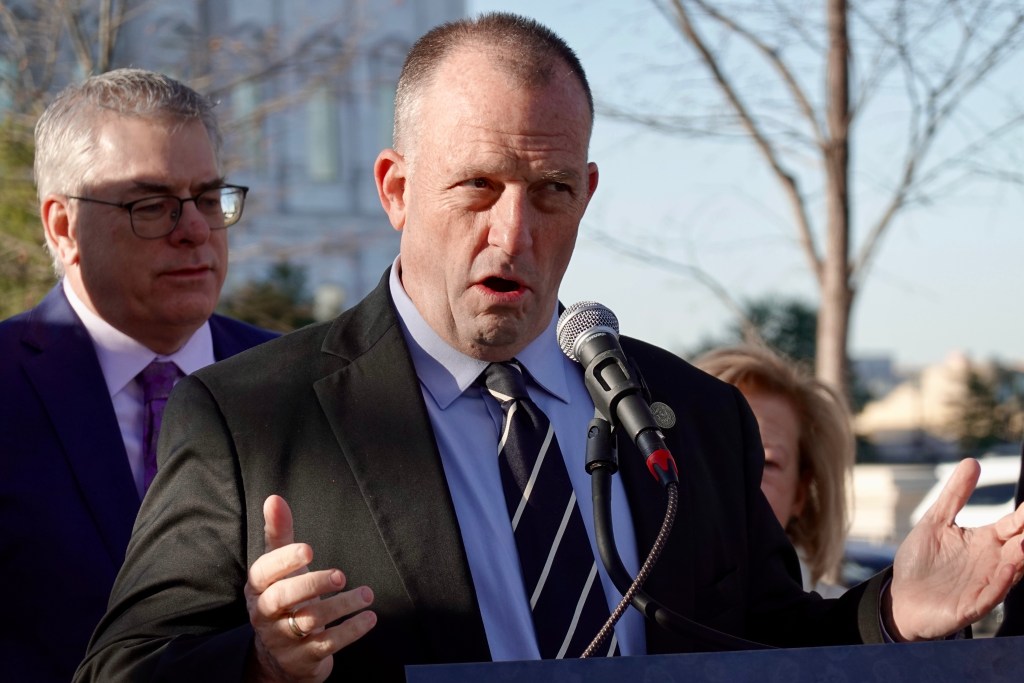
Sen. Glenn Wakai, who chairs the energy and intergovernmental affairs committee, said changes were needed to protect the public’s interest.
“Keep in mind that was HECO’s bill,” Wakai said. “They put in all the stuff that they wanted.”
In addition, Wakai tacked on a provision that he said is modeled after California’s fund. It limits the ability of HECO executives to get raises as long as customers are paying fees to finance the fund.
“As long as the ratepayers are paying into the fund, the executives at HECO cannot get bonuses,” Wakai said. “If you have that much money to get bonuses, maybe you should be paying into the fund.”
Wakai said the proposed $4-a-month fee might seem small, but the costs add up. If HECO expects customers to pay additional fees, it needs a plan to reduce rates.
“If we’re going to go down the road of helping HECO out, HECO better have a plan: What are they going to do to reduce rates for consumers?” Wakai said. “They can’t keep taking, taking, taking.”

