

Federal Cuts May Clip Wings Of Hawaiʻi’s Endangered Birds
Workers who had hoped to spend their careers supporting these at-risk local species have been let go. Now, who might take over remains up in the air.
Conservation efforts to protect some of Hawaiʻi’s most vulnerable native species and their habitats have been upended by the Elon Musk-led push to slash thousands of federal jobs.
On Kauaʻi, the mass firings have disrupted the U.S. Fish and Wildlife Service’s management of three National Wildlife Refuge sites, including wetlands that shelter endangered waterbirds.
On Maui, they’ve hampered the National Park Service’s role in the fight to protect forest birds on the verge of extinction.
And on Hawai‘i Island, the staff stewarding more than 30,000 acres of endangered forest bird habitat has been almost cut in half.
Some of the federal workers dismissed from those jobs say few of the workers who remain are trained or, in some cases, authorized to take over their specialized duties. While some stopgap measures have been put in place, their firings raise questions over how those island conservation projects might be continued in the long term.
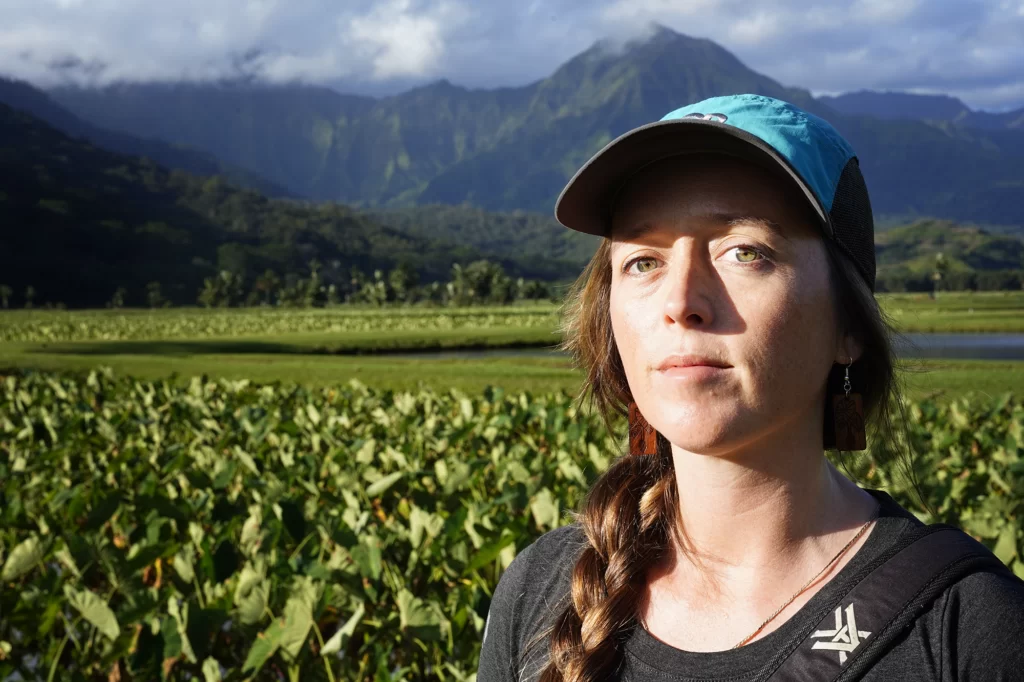
“My boss fought hard for many years to get the funding for this position,” said Bryn Webber, a refuge biologist who was among four Kauaʻi Fish and Wildlife personnel fired last month in the purge of probationary workers.
Losing native species such as the koloa, or Hawaiian duck, or endangered honeycreepers such as the kiwikiu, or Maui parrotbill, could further chip away at a fragile island ecology that’s already under siege by human development, invasive species and climate change.
The cuts coming from Musk and President Donald Trump’s administration have swept broadly across various federal agencies as general cost-saving measures. However, Trump also has previously expressed particular disdain for protecting native species at the expense of other priorities, at times ridiculing those efforts as insignificant.
‘I’m A Steward Of This Land’
Webber had started her job on Kauaʻi in May after previously working as the mosquito research coordinator for the Kauaʻi Forest Bird Recovery Project.
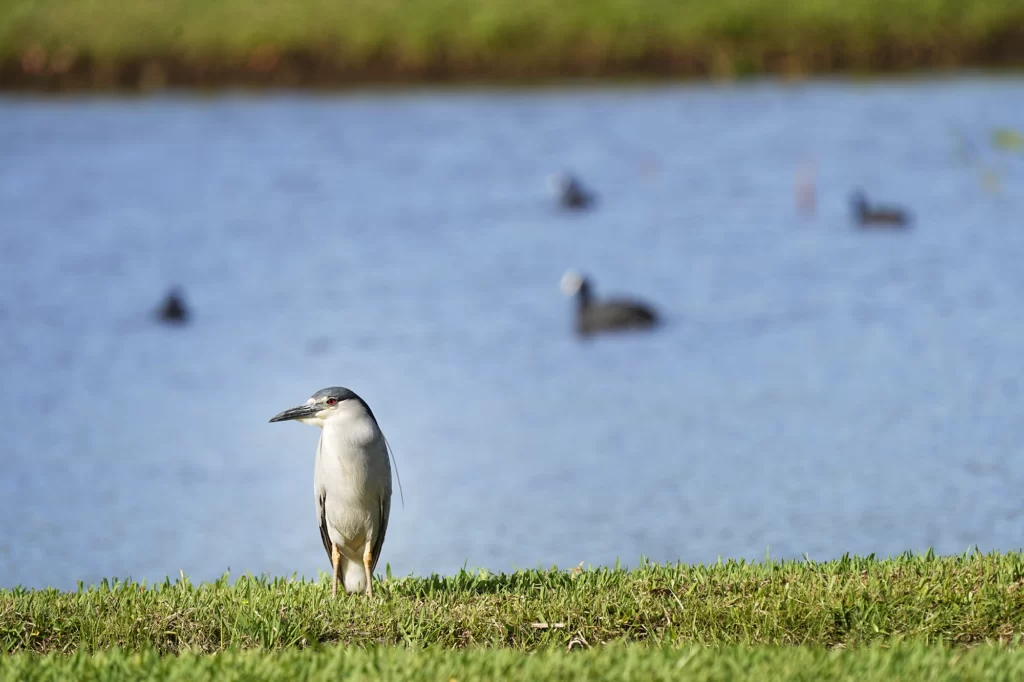
One of her main duties was to monitor the five species of endangered wetland birds on the national refuges for avian botulism and to try and stop the potentially fatal disease from spreading. She also helped keep secure a fence at Kīlauea Point to protect seabirds from cats, pigs and other predators.
Webber was one of four dismissed crew members with the federal agency who helped manage the Kauaʻi refuges at Hanalei, Kīlauea and Hulēʻia.
Another of those former employees, Steven Minamishin, was in charge of checking daily that the ditches and lines feeding river water into the wetlands were flowing properly. He would also use excavators and other heavy equipment to trim back the constantly growing invasive grasses.
Minamishin, who is Native Hawaiian, had been with the Fish and Wildlife Service since 2019 and was recently promoted to the Kauaʻi branch’s maintenance lead. That promotion returned him to probationary status, leaving him vulnerable in the mass sweep.
“I live aloha ʻāina. I’m a steward of this land. So I felt that this job, like, embodied my way of life,” Minamishin said. “It’s a direct attack on my way of life … to lose it so suddenly, without choice, right?”
He had been teaching another worker to help with the heavy equipment when he was fired, Minamishin added, but no one else at the agency is trained to handle the wetlands’ ditches and water lines.
Birdsong Silenced
Meanwhile, on Maui, Katie van Dyk had just returned from a four-day trip in Haleakalā’s rugged backcountry installing meters to record birdsong — part of an ongoing effort to save Maui forest birds from extinction — when she learned that she was fired in an email. It was Valentine’s Day.
“I cried for a very long time,” van Dyk said, adding that being a National Park Service biological science technician was a dream job and the culmination of years of hard work in Hawaiʻi. She had previously worked for several years at the state’s Hawaiʻi Invertebrate Program on Oʻahu. Prior to that, she, like Webber, had worked at the Kauaʻi Forest Bird Recovery Project, as well as Kauaʻi Endangered Seabird Recovery Project.
Van Dyk, who had started the Park Service job in November, was responsible for analyzing thousands of backlogged hours of Maui birdsong data dating back to 2022 to give researchers a clearer understanding of progress in their efforts to save the forest birds from avian malaria.
Specifically, she said, they’re trying to better determine the birds’ location along the slopes of Haleakalā, as well as the density of their numbers.
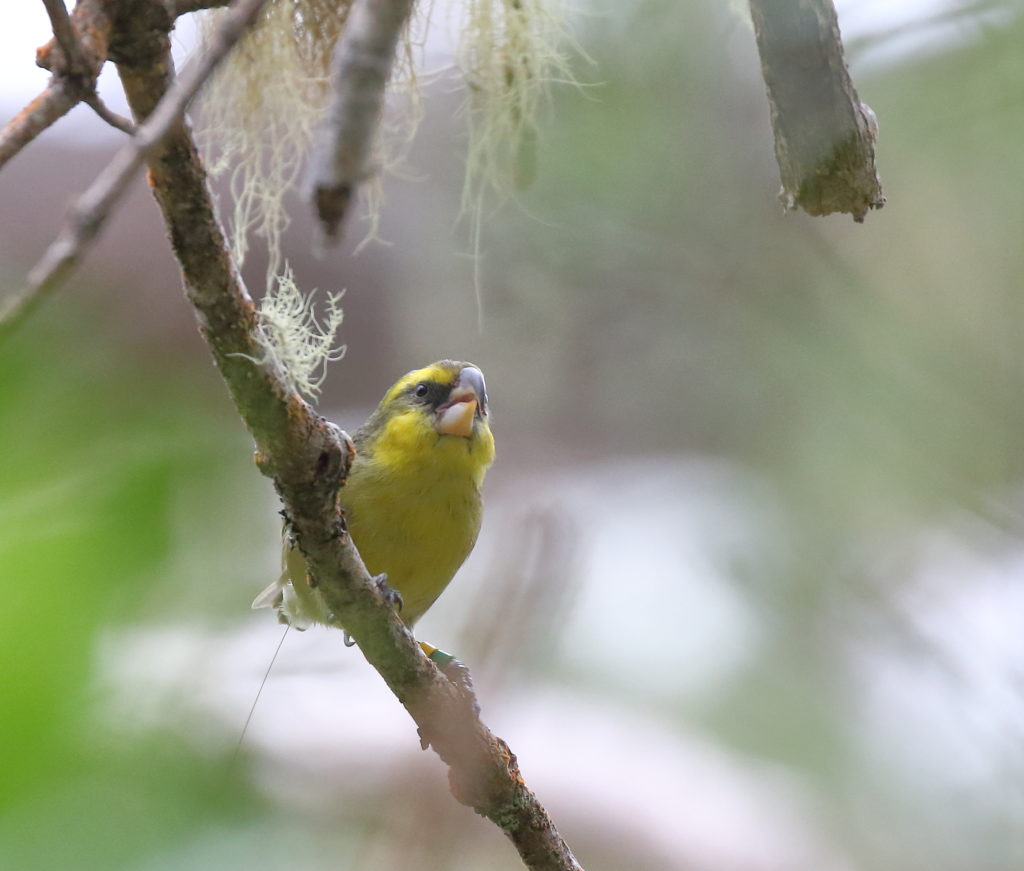
It had taken van Dyk’s superiors at the park service two years to get her job position established to catch up on that work, she added, and with her departure it’s not clear how all of that birdsong data will be analyzed.
It also remains unclear how the two groups spearheading the efforts to save Hawaiʻi’s imperiled forest birds — the Kauaʻi Forest Bird Recovery Project and the Maui Forest Bird Recovery Project — are faring amid the federal cuts by Musk’s Department of Government Efficiency, also known as DOGE.
The groups referred Civil Beat’s questions about their status to the state’s Department of Land and Natural Resources. They receive the bulk of their funding, according to DLNR spokesman Dan Dennison, from the Fish and Wildlife and National Park services.
Dennison declined to comment further, however, because he said Fish and Wildlife Service officials have asked their partners to refer all questions to them. Public affairs officers for both the Fish and Wildlife and National Park services did not respond to subsequent requests for comment.
A Pivot To Volunteers, Seasonal Workers
No official tally of the total Fish and Wildlife and National Park employees fired so far has been released for Hawaiʻi — or for the entire nation. However, former Fish and Wildlife employees have done their own tallies and estimate that some 420 workers have been dismissed from the agency in the purge.
Minamishin said his former colleagues recently got another email from DOGE asking them to look into ways to cut even deeper.
On the Big Island, at the Hakalau Forest National Wildlife Refuge, the staff of 11 has already been trimmed to six. The refuge is home to some of Hawaiʻi’s rarest and most endangered forest birds, including the Hawaiʻi ʻākepa, ʻakiapōlāʻau, and ʻiʻiwi, along with important native flora.
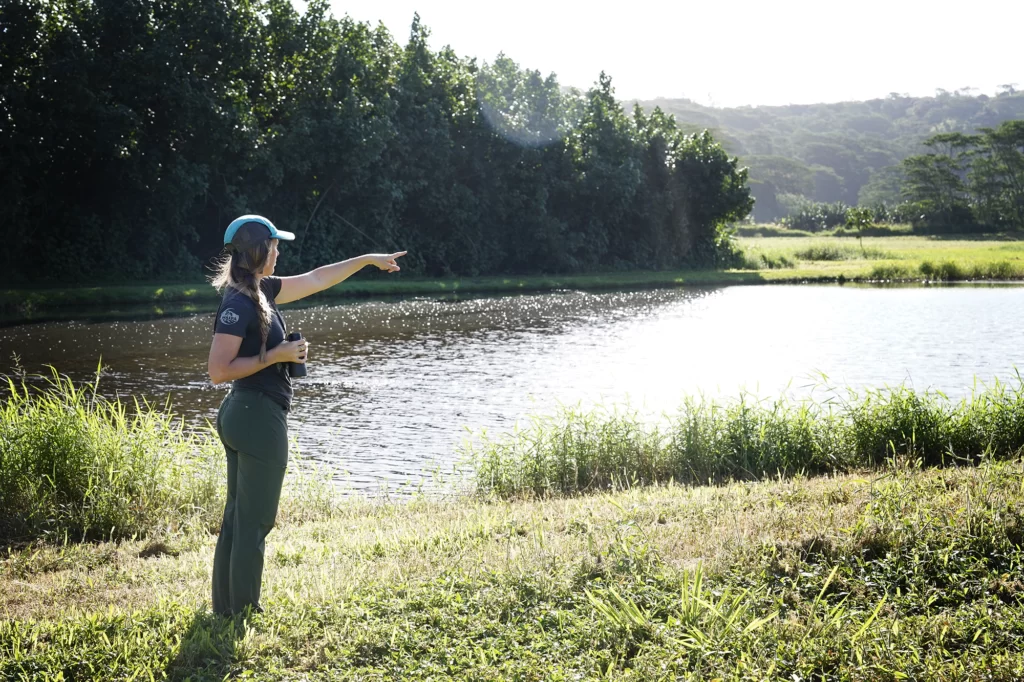
“What’s left is one supervisor and three field people and two interns,” said Eric Preston-Hamren, who managed the refuge’s nursery until Feb. 14. He had two months left of his probation and was fired along with four colleagues.
Within about five minutes of sending out an email to notify the community, Preston-Hamren said he received a job offer from a watershed partnership. The Friends of Hakalau Forest, a nonprofit, meanwhile started raising money to try to fund his position.
It took just four days for Fish and Wildlife to send out another email offering to rehire some of the 420 fired workers, but on a seasonal basis that Preston-Hamren characterized as a “backhanded gesture” that strips benefits from an already modestly compensated job.
“I’ve heard the park service is also allowing seasonal hires but … again it takes away all the stability,” he said.
Van Dyk, meanwhile, said sheʻll be able to stay on at the park service in a limited capacity for the next 12 weeks with funding from the Hawaiʻi Pacific Parks Association. The nonprofit runs the stores for the national parks across the Pacific, according to Executive Director Mel Boehl, and donates profits from sales to the Park Service.
Boehl said that the foundation’s donations are helping several recently fired Park Service employees to keep working temporarily while both they and the agency figure out next steps, although she didnʻt have specifics on how many are being assisted.
Van Dyk is job-hunting on Maui and the mainland.
“I would be very sad to leave Hawaiʻi,” she said, “but I do worry about the ability to expand my career here at the moment.”
Webber, who had hoped to spend her career working among Kauaʻi’s wildlife refuges, has now signed up to volunteer and steward those places through what she called a “really scary phase.” She hopes that other volunteers can help pick up the slack.
The problem, though, is that thereʻs not enough staff left to train them.
Added Minamishin: “They’re not saving any money because each time you hire somebody now you’re paying four times as much in training, reestablishment — all that stuff.”
CORRECTION: The koloa is the Hawaiʻian duck. A previous version of this story misstated that it was a goose.
Civil Beat Reporter Thomas Heaton contributed to this story. Civil Beat’s coverage of climate change is supported by The Healy Foundation, Marisla Fund of the Hawai‘i Community Foundation and the Frost Family Foundation and its coverage of environmental issues on Maui is supported by grants from the Center for Disaster Philanthropy and the Hawai‘i Wildfires Recovery Fund, the Knight Foundation and the Doris Duke Foundation.

