

Honolulu Lawyer In Illicit Marshallese Adoptions Barred From Practicing
Laurie Loomis was facing discipline, but the Supreme Court found she was unable to defend herself because of incapacity — and suspended her practice.
A Honolulu attorney who was part of a black market pipeline offering babies from the Marshall Islands for adoption has been barred from practicing law.
The Hawaiʻi Supreme Court put Laurie Loomis on inactive status last month “due to incapacity.”
Loomis had been facing discipline up to disbarment for allegedly violating 20 professional conduct standards. But that case is now on hold indefinitely because of Loomis’ disability, which was not specified in the ruling.
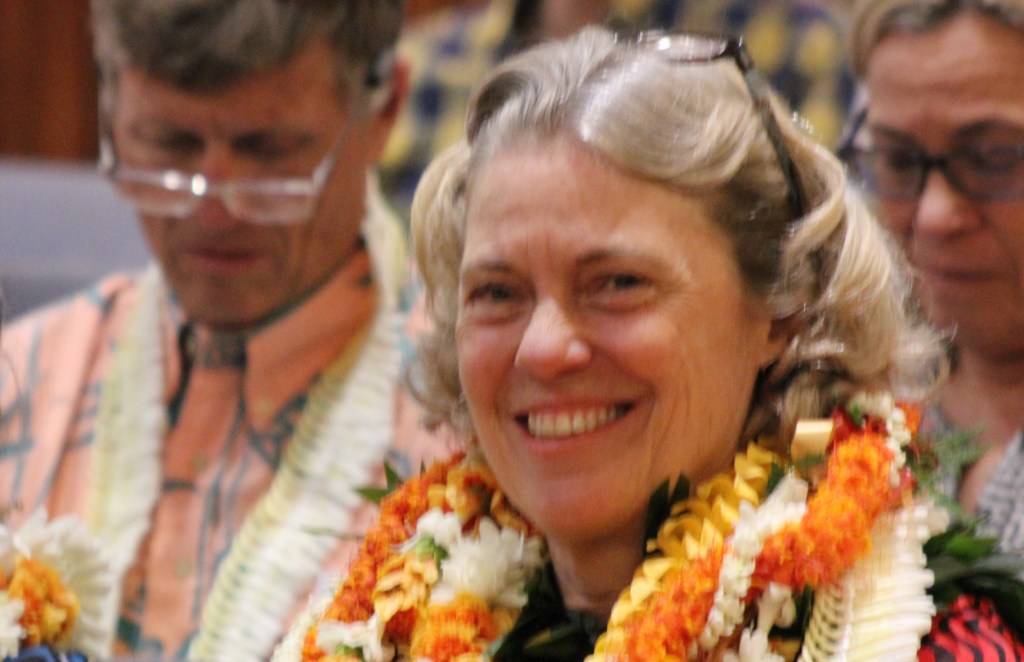
The court cited a rule that requires it to sideline any attorney involved in a disciplinary case if the lawyer claims to be too disabled to mount a defense and the court verifies it through a medical exam or other means.
The disability could be the result of “mental or physical infirmity or illness, or because of the use of drugs or intoxicants.”
The Office of Disciplinary Counsel, which filed a case against Loomis last year, declined to comment. Loomis did not respond to a request for comment.
The office gets from 300 to 600 complaints a year, but only files disciplinary petitions as it did in the Loomis case for four to 10 of them. If in the future the Supreme Court finds that Loomis is no longer incapacitated, the office could resume its disciplinary case against her, according to the ruling.
The action brings to a close — at least for now — a case that began more than five years ago after Civil Beat published a story describing Loomis’ illicit adoption business involving Marshall Islands birth mothers. The day the story was published, the disciplinary counsel’s office said it planned to investigate her based on Civil Beat’s findings.
Civil Beat identified several cases in which Loomis defied Marshall Islands law and the Compact of Free Association treaty to fly pregnant Marshallese birth mothers to Honolulu to give birth and sign over their infants to adoptive parents.
Because of abuses in the early 2000s, the Marshall Islands require that all adoptions go through a central agency, not private attorneys such as Loomis. And, due to the history of exploitation, the U.S. had made an exception to COFA — which allows Marshall Islands citizens to travel to the U.S. without a visa — to prevent pregnant women from entering the country if they intended to give up a child in an adoption.
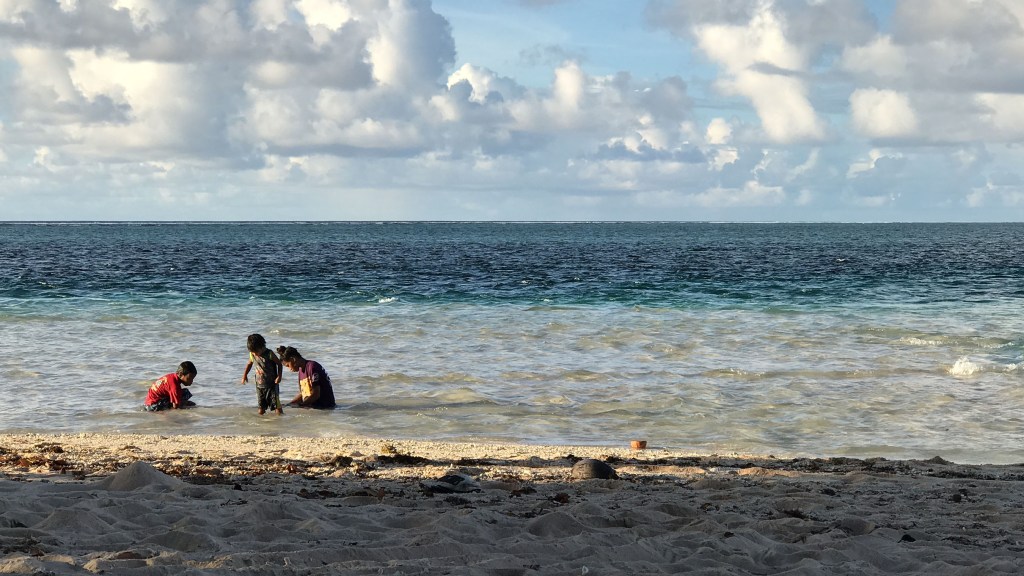
One birth mother said she was seven to eight months pregnant when she flew from the Marshall Islands to Honolulu and was met at the airport by Loomis’ handler. She was put up in various Waikīkī hotel rooms she shared with four other pregnant Marshallese women. All five women gave birth at Kapiʻolani Medical Center for Women and Children.
The woman said she didn’t realize until the papers were being signed at a hotel that the adoption would be closed, meaning she would have no right to see or get information about her child in the future, but felt that she couldn’t back out because of the money and other things she’d received.
In another case, Loomis wrote to a prospective adoptive parent that “I have a new expectant mom who just moved here from the Marshall Islands.”
By 2017, Loomis was no longer housing the women in Waikīkī. Her handler had instead rented an apartment in ʻAiea, where the property owner told Civil Beat that 10 to 15 people sometimes crowded into the two-bedroom unit.
The disciplinary counsel’s case against Loomis did not focus directly on the illicit adoptions. Instead, it alleged that she violated ethics codes by failing to disclose to the state bar the existence of a bank account for holding adoption client fees and making payments to birth mothers and others.
The disciplinary counsel also cited a case involving a Hawaiʻi couple that hired Loomis to represent them in adopting a child from Arizona. The couple said Loomis was unresponsive and did little work on their case, but refused to return any of the $4,588 they had paid. Loomis countered that she had diligently represented them.
Although the disciplinary counsel’s office did not focus on the flights from the Marshall Islands, its petition exposed some of the inner workings of Loomis’ adoption business. It cited a payment she made for “passport & exit fee” and listed two plane tickets whose route is identified as “MH-HI.” MH is the international code for the Marshall Islands.
The disciplinary petition revealed that Loomis had paid $242,950 total to 31 birth mothers over the 31 months ending in July 2018. It’s unclear how many of those women flew in from the Marshall Islands for the adoptions versus coming from elsewhere in the U.S., which is legal.
During this same period of about two-and-a-half years, Loomis paid herself $944,125 in retainers and cost reimbursement. Her fee for one adoption was listed as $23,000.
The disciplinary petition also revealed the consequences of Hawaiʻi’s lack of a law restricting payments to birth mothers. Hawaiʻi is one of the few states that does not restrict paying birth mothers to only expenses to avoid what amounts to baby-selling.
Loomis, it turns out, was paying birth mothers a flat fee – usually $8,500 – in addition to covering their living expenses.
Civil Beat’s series Black Market Babies revealed that several other lawyers specialized in illegal Marshallese adoptions.
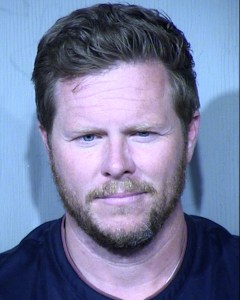
One, Paul Petersen of Arizona, also flew in pregnant women from the Marshall Islands. He defrauded Arizona of about $800,000 by signing them up for Medicaid.
In Loomis’ case, documents showed she had twice enrolled a Marshallese birth mother in Medicaid who traveled from Arkansas for adoptions, even though the program is meant only for those who intend to live here. It was impossible to determine if this was standard practice since Medicaid documents are usually private.
Petersen, the former assessor of Maricopa County, Arizona, was sentenced in 2020 to six years and two months in federal prison, but is scheduled to be released early, on July 15. An Arizona judge sentenced him to more than 10 years, with all but five to run concurrently with the federal term.
A Utah judge, meanwhile, sentenced him to one to 15 years, also to run concurrently. Taken together Petersen’s term adds up to 11 to 15 years, not including time off for good behavior and other possible adjustments.
Loomis has never faced criminal charges.
Civil Beat’s community health coverage is supported by the Atherton Family Foundation, Swayne Family Fund of Hawai‘i Community Foundation, the Cooke Foundation and Papa Ola Lōkahi.

