Maui Council Acts To Fill Vacancies Paralyzing County Boards
Empty seats have hamstrung the volunteer boards that handle everything from homelessness and government ethics to planning and police accountability.
For more stories like this, sign up for the Morning Beat, our free daily email newsletter that keeps you up to date on Hawaiʻi news.
Numerous Maui County boards and commissions have been paralyzed by vacancies for a year, hampered from making decisions that shape life on Maui, Molokaʻi and Lānaʻi.
In some cases, they’ve been effectively shut down for months. Decisions on rebuilding Lahaina, penalty appeals for owners of dangerous dogs and investigations into official misconduct have slowed due to vacancies.
The county’s 37 boards and commissions now have an 18% vacancy rate, with 57 of 304 seats unfilled.
Most of the 57 empty seats are vacant because the newly formed Independent Nomination Board, Mayor Richard Bissen and the County Council missed deadlines in early 2024 to nominate members.
The county charter does not have a mechanism to install residents on panels when a deadline is missed. As a result, the empty seats cannot be filled until their terms expire, which in some cases isn’t until 2029.
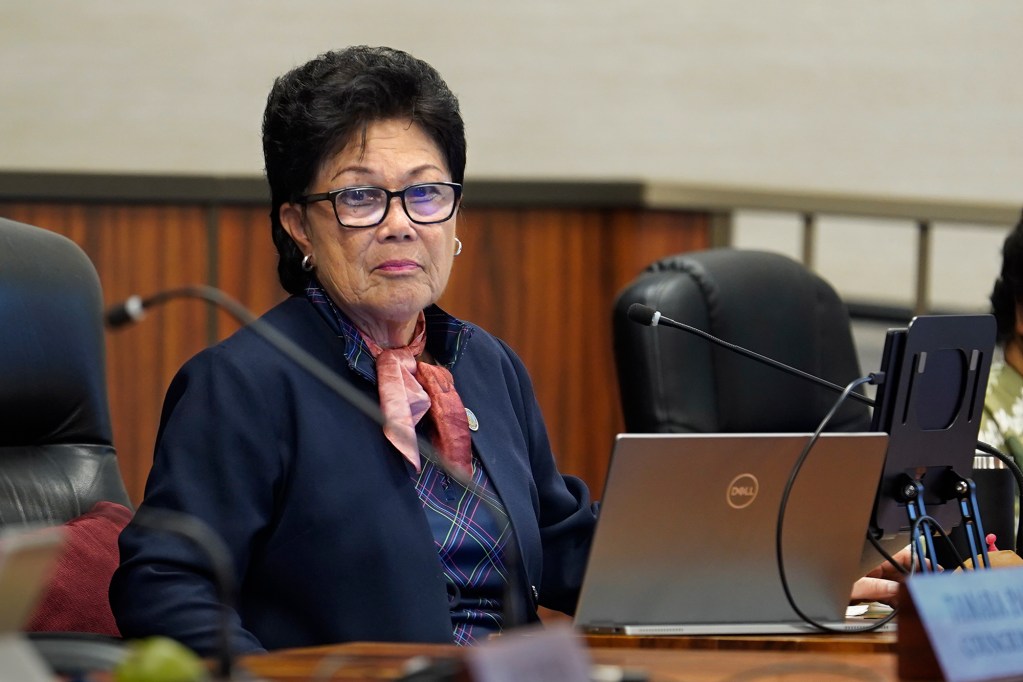
On Friday the Maui County Council unanimously passed an ordinance establishing a process to fill vacancies when the mayor, council or the Independent Nomination Board miss a deadline to do so. The bill awaits Bissen’s signature.
“The charter just assumes that everyone is going to meet their deadlines, and that doesn’t always happen in real life,” said Council Chair Alice Lee. “This legislation tries to fix that, or clear it up, and as we put it into practice, we’ll find out if it’s going to work.”
The problems, however, extend beyond the nomination process. Twenty of the 57 seats are vacant because of the difficulty of recruiting people to serve.
In Bissen’s annual State of the County address Friday, he acknowledged that vacancies are holding up the work of boards and commissions. Because it’s hard to recruit people, he wants to look at eliminating or consolidating them, saying he prefers fewer panels that are strong and productive rather than a greater number of underpowered ones.
‘Work Is Not Getting Done’
Those boards and commissions have important jobs. Some tackle the county’s most pressing challenges, including homelessness, government ethics, community planning and police accountability. Others make binding decisions, such as setting salaries of elected officials and adjudicating disputes over tax bills.

In some cases, meetings have been canceled because there wasn’t a quorum, the minimum number of members needed to conduct business.
“We cannot continue along this path because work is not getting done, and some of the work is critical,” Lee said.
A shortage of members has forced the Board of Ethics, which investigates potential wrongdoing by public officials, to cancel numerous meetings in the last year.
Some aspects of the Lahaina rebuilding have been held up for the same reason, according to council member Tamara Paltin. The Cultural Resources Commission, which advises on historic preservation in Lahaina’s historic district, has met just three times since the August 2023 wildfires.
The Commission on Children and Youth was forced to cancel half of its monthly meetings in the past six months because it didn’t have a quorum.
The vacancies have even stymied an effort to reduce the number of volunteer boards. That’s being handled by the Cost of Government Commission, which was unable to meet from April to August last year because it didn’t have a quorum.
One of the seats on the board is vacant, and without the council’s move Friday it would remain so until a new term begins in 2028, according to interim Chair Evan Dust. The committee is supposed to recommend to the council later this year which panels should be combined or eliminated.
But even if the mayor signs the bill to fix the nomination process, some seats are unlikely to be filled quickly. It’s hard to find people to serve on some boards, such as the Council on Aging. Other seats require people to live in certain places or to have particular occupations, such as engineering or architecture.
Bill Would Axe Hard-To-Fill Lānaʻi Seat
The Cultural Resources Commission advises on historic preservation and helps funnel federal dollars to worthy projects — a key component of the Lahaina rebuilding. But the county charter reserves one of the nine seats on the commission for a Lānaʻi resident, and it hasn’t had any Lānaʻi applicants for months. That has bogged down its work.

Paltin has proposed legislation that would remove the requirement that the commission has at least one representative from each island. At the last council meeting, there were qualified applicants from elsewhere, Paltin said, but the council couldn’t fill the seat “because we’re waiting on a Lānaʻi candidate that never came forward.”
Another bill sponsored by Paltin would remove the Lānaʻi residency requirement for the Board of Variances and Appeals, the Fire and Public Safety Commission, the Liquor Control Adjudication Board, the Liquor Control Commission and the Police Commission. Seats reserved for Molokaʻi residents would not be affected.
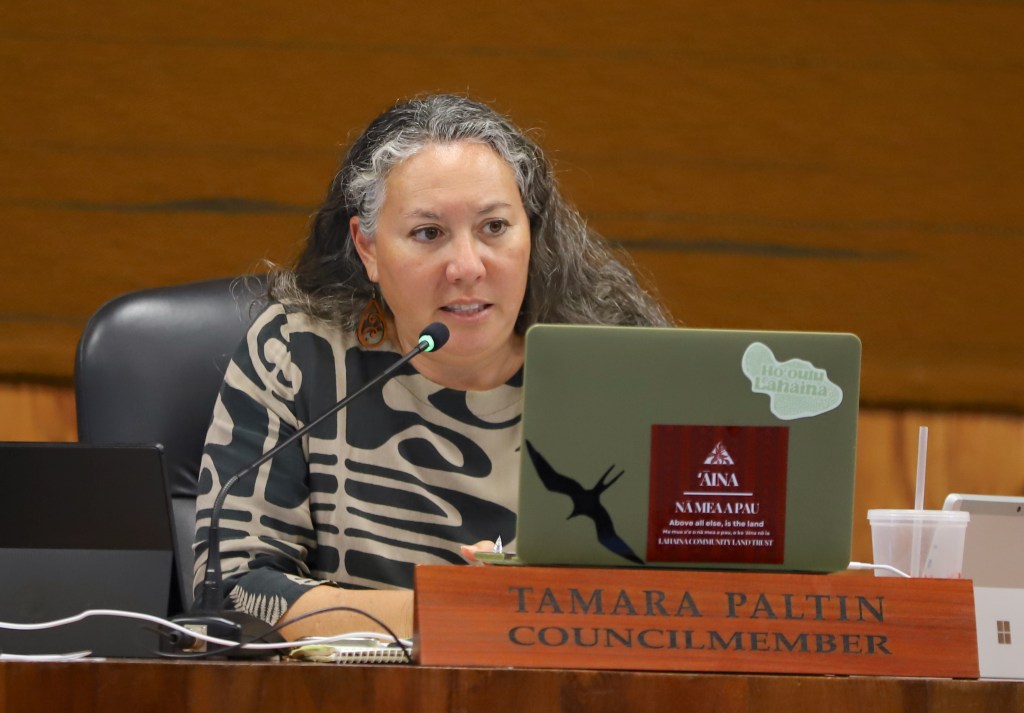
Both bills passed on first reading Friday and await a second reading.
Council member Gabe Johnson, who lives on Lānaʻi, voted against the bills but said more people from Lānaʻi, which has just 3,300 residents, need to serve.
“I fought for my community to be represented on those boards and commissions, so I don’t agree with getting rid of those spots,” he said.
Council member Keani Rawlins-Fernandez, who represents Molokaʻi, said she understands the fear of losing representation, but the work of government can’t be stalled when there are other qualified people willing to step up.
Longtime Volunteer Says Travel Concerns Ignored
Lānaʻi resident Stanley Ruidas, who has served on such bodies for more than 20 years, said in Friday’s council meeting that he won’t seek a seat on another body when his term on the Liquor Control Commission expires this month. That’s due to the county’s travel policy, which he said forces him to wait up to four months to be reimbursed for hotel stays and airfare to attend meetings on Maui.
The Liquor Control Commission encourages members who live on Maui to attend in person; Molokaʻi and Lānaʻi residents can attend remotely.
Ruidas said neither staff with the county office that oversees boards and commissions nor the mayor’s office responded after he left messages over the course of a year seeking to resolve the issue.
Civil Beat’s coverage of Maui County is supported in part by a grant from the Nuestro Futuro Foundation.