

Bill Offering Displaced Tenants Protections Dies At Legislature
The bill’s supporters said one state Senator was responsible for the outcome
UPDATE: This story has been updated to include an additional comment from Sen. Stanley Chang that came in after the story was last updated.
A bill that would have given additional protections to tenants displaced by affordable housing developments appeared to die in the state Legislature Thursday evening.
Legislators have the ability to try and revive the bill through next week by introducing a motion to take it up again, but that’s extremely unlikely.
HB 1325 never got to a vote Thursday because the state Senate did not appoint members known as conferees to hash out differences over the bill with their counterparts in the House of Representatives, a necessary step to move it forward.
Supporters who had watched the bill’s relatively smooth passage through seven House and Senate committee hearings had expected it would at least get that far.
“Ideally, hopefully, maybe there’s a jumping off point for the next session.”
Damien Waikoloa, chapter lead of Hawaiʻi Yimby
“I’m shocked, I’m distraught,” said Lehua Willets, a public housing tenant who spoke in favor of the bill at multiple committee hearings.
She and other advocates for the bill said they hoped it might rise again.
“Ideally, hopefully, maybe there’s a jumping off point for the next session,” said Damien Waikoloa, chapter lead of Hawaiʻi Yimby, a housing advocacy group that testified in support of the bill.
The bill would have required developers of affordable housing projects that receive public financing to offer two key things to certain tenants who have to move out because of the development: the right of first refusal to units in the newly built housing, or relocation assistance including at least three months rent.

“Displacement,” the latest version of the bill read, “whether due to redevelopment, rising rents, or other factors, has profound impacts on individuals, families, and communities. Tenants forced out of their housing due to redevelopment face the loss of social networks and economic stability in addition to their loss of housing.”
But while the House appointed members to confer on the bill – which Rep. Tina Grandinetti introduced – the Senate never did, dooming it.
As of Thursday, of at least 21 housing-related measures that entered the conference period – as this last stage of the process is known – the Senate had assigned conferees to all but HB 1325.
‘Up To Stanley’
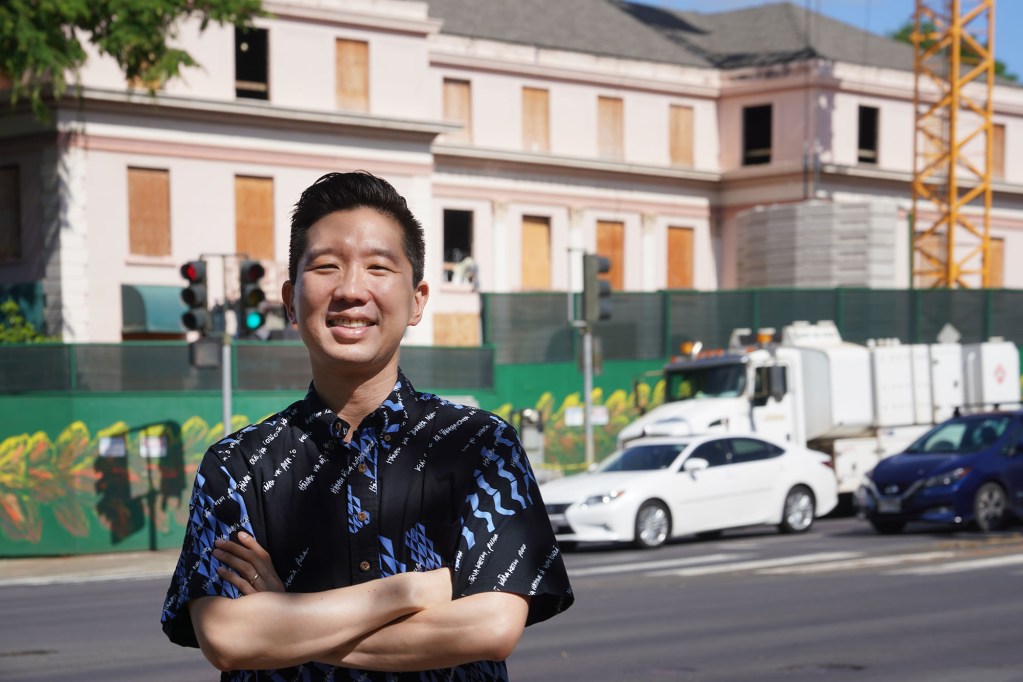
Supporters of the bill believed it was held up by Sen. Stanley Chang, chair of the Senate’s Housing Committee.
Willets, who along with other supporters went up and down the Capitol’s corridors Tuesday night to drum up support for HB 1325, said other legislators told them, “it’s up to Stanley.”
He declined to meet with them, said Willets, one of a large contingent of residents of Kūhiō Park Terrace, a public housing development in Kalihi, who campaigned for the bill.
Several hundred Kūhiō Park Terrace residents are being relocated because the complex is being redeveloped; the bill’s supporters said that process, bumpy and much criticized, shows why more protections are needed.
Senate Leadership appoints the conferees but generally in consultation with committee chairs like Chang. He did not seem to leave room for reconsideration in his response, which came late Thursday.
“We’re disappointed not every worthy bill passed this year,” he said. “Over the interim, I’m looking forward to working with those displaced by the HPHA redevelopments and ensuring that everyone in Hawaii has a stable, affordable, good quality home.”
In an interview earlier on Thursday, Chang told Civil Beat that while he did not oppose HB 1325, it was not a priority.
The Hawaiʻi Housing Finance and Development Corporation, which has a hand in a significant share of the state’s affordable housing projects, already requires developers to take the actions proposed by the bill, he said.
“It would simply put into statute a practice that’s already happening,” Chang said Thursday morning. “Of all the urgent bills that need to move forward that would make a difference right away, this would not.”
In fact, the finance and development corporation was one of the bill’s supporters. In testimony, the agency’s executive director, Dean Minakami, said it “establishes a standard that all projects must meet.”
In a sign, perhaps, of the interest the bill attracted, Minakami issued a statement Thursday afternoon that again noted his agency’s support for it.
“While the HHFDC board can impose conditions for relocation assistance on a case by case basis, we support this bill because it establishes a uniform standard,” the statement said.
‘So Unfair’
Federal law delivers a version of the HB 1325 protections to tenants of public housing complexes who are displaced by redevelopment.
That’s the case at Kūhiō Park Terrace, where 215 tenants are being moved out in the first phase of a project to create more affordable apartments. The bill’s advocates say the problems with how the Hawaiʻi Public Housing Authority and the project’s developer have handled the relocation of residents shows the federal rules aren’t enough.

The bill was even more critical, advocates had argued, because of the state’s plan, dubbed Ka Lei Momi, to partner with a private developer to tear down nine public housing complexes around the state and replace them with at least 10,000 more affordable units, displacing thousands of tenants.
HB 1325 would have applied beyond just public housing tenants – to any publicly financed affordable housing development in Hawaiʻi for displaced tenants making up to 140% of the area median income.
“It’s a good policy, stabilizing current renters so they can stay in their communities and be housed in Hawaii,” said Arjuna Heim, director of housing policy at the nonprofit Hawaiʻi Appleseed. “Because they’re essential parts of it. To not even entertain the conversation is so unfair.”
Grandinetti and Rep. Luke Evslin, chair of the House Housing Committee and one of the House conferees to the bill, said they had no idea why the Senate hadn’t acted.
‘Kill The Bill’
Almost no public opposition to the bill arose in testimony before the committees in the House and Senate where it received a hearing.
One opponent, the Hawaiʻi chapter of the Commercial Real Estate Development Association, said in a letter that “this bill creates unintended financial consequences that will stall affordable housing development, increase project costs, and ultimately reduce the number of affordable units built in Hawai‘i.”
That’s not the case, one prominent Hawaiʻi developer said Thursday before the bill’s demise became apparent, however it indicated additional – but less public – opposition.
“If they were the only ones who testified against it and the bill is not going through, all that happened is that developers didn’t like it, but they won’t testify against it because they’ll just be ‘greedy developers,’” said Peter Savio, who develops affordable housing.
“So they just go to the politicians and say, ‘kill the bill, kill the bill, kill the bill,’” said Savio, who favored the bill and added it didn’t go far enough. “So behind the scenes, the bill’s going to die a slow and painful death.”
When asked if had heard from developers concerned about the bill, Chang said: “I’m not sure. I mean, we’ve gotten a lot of testimony about it. I couldn’t say for sure.”
“So behind the scenes, the bill’s going to die a slow and painful death.”
Peter Savio, affordable housing developer
Senate President Ronald Kouchi did not respond to a request for comment Thursday.
One advocate for the bill, Dina Shek, legal director of Medical-Legal Partnership for Children in Hawaiʻi, said its supporters had included people like Willets who had taken time off work and caregiving duties to press their case.
“Honestly, when you come to these hearings, you mostly see lobbyists and heads of agencies and professional lobbyists, not the people who are most affected by these laws,” Shek said. “So it really stood out to have them participate so fully, which makes it all the more devastating to have it die, especially when there was nothing but support along the way.”
Hawaiʻi’s Changing Economy” is supported by a grant from the Hawaiʻi Community Foundation as part of its work to build equity for all through the CHANGE Framework.

