

Will Hawaiʻi Be The Next State To Legalize Sports Betting?
A gambling bill is cruising through the Legislature, leaving a lot of questions in its wake.
By the time the Final Four teams in the men’s NCAA basketball tournament square off on Saturday, billions will have been wagered on this year’s March Madness.
The majority of states — 38 of them so far — have legalized some form of sports betting. Hawaiʻi could soon be added to the list as lawmakers advance a bill to allow for online wagering on sports contests.
But the gambling measure, which would be Hawaiʻi’s first, still has a lot of open questions.
How much will gambling operators be taxed? What resources, if any, will be dedicated to gambling addiction? How will the state regulate this new industry?
The bottom line is no one fully knows how things will work out for Hawaiʻi, although a few other states hold some clues.

Even as state senators move House Bill 1308 along, they acknowledge the legislation is still a work in progress.
“There are a lot of concerns regarding this measure, and not all of them have been answered,” Sen. Donna Kim said in a recent hearing.
It’s the first time a gambling proposal has made it this far in the Legislature in at least the last decade. The bill was approved by the House and needs approval from one more committee before it goes to a vote of the full Senate. A hearing is scheduled in the Senate Ways and Means Committee on Wednesday.
Hawaiʻi is one of just two states with no legal form of commercial gambling. Even if H.B. 1308 passes, it would only allow for online sports betting. Other states have physical retail sports books where people place bets in person.
Lawmakers have long been reluctant to legalize any form of gambling over fears that it would lead to higher crime rates and strong opposition from community organizations and, in particular, religious groups.
Who Will Regulate It?
If Hawaiʻi legalizes online sports betting, it would be the first state in the country to set up a regulatory agency from scratch. Sports betting only became legal nationwide in 2018, long after most other states already formed gaming or lottery commissions.
Lawmakers have eyed a few agencies to take the lead on gaming regulation, including the state’s Business, Economic Development and Tourism department as well as an agency that regulates commerce.
Nadine Ando, director of the Department of Commerce and Consumer Affairs, opposes the sports betting measure and has said setting up a gambling enforcement office would cost her agency $2.5 million.

Under the current draft of the bill, lawmakers have put sports betting under the purview of the Economic Development department instead. But Director James Tokioka has previously told lawmakers that his agency may not be the best one to regulate gambling.
If the bill passes, whichever agency is selected will have six months to set up a regulatory arm.
The bill requires at least four sports betting operators to become licensed in Hawaiʻi.
Like other states, Hawaiʻi would establish a self-exclusion program, where people who believe they may have a gambling problem can ban themselves from betting sites.
How Much Money Will The State Get?
Industry experts expect Hawaiʻi would bring in about $10 million to $15 million a year in tax revenue based on tax rates in the original draft of the bill. The tax haul is speculative because it is largely based on how much is expected to be wagered in Hawaiʻi, which is unknown.
Increased tax revenues are a key reason lawmakers advanced the measure this far in the session. However, $15 million would account for a little more than one-tenth of 1% of the state’s $10 billion general fund budget.
The original draft of H.B. 1308 would put a 10% tax on gross gaming revenue. Lawmakers have yet to settle on a final tax rate for sports betting.
Sports betting companies typically keep a small percentage as profit. The majority — an estimated 90% of winning bets — goes back to players.
In 2024, sports betting site Bet MGM reported total wagers of more than $13 billion. But it kept just 8.6% of that in gross revenue.
States then take a certain percent off a company’s profit. The amounts can vary significantly, as seen in two states of similar in size to Hawaiʻi — West Virginia and New Hampshire.
The Mountain State — with a sports betting tax rate of 10%, similar to the rate originally proposed in Hawaiʻi — has collected just $16.1 million since sports gambling was legalized in late 2018. In comparison, New Hampshire, with a rate of 50%, raised $30.3 million from sports betting in 2024 alone.
New Hampshire has a contract with just one sports betting website, DraftKings. It won the contract after submitting a proposal that gave the state the most tax revenue compared to other companies, according to New Hampshire Lottery director Charlie McIntyre. The company and state split revenues evenly.

The arrangement has made New Hampshire, which also has an economy dependent on tourism, second in the nation in sports betting tax revenue per capita.
But it ranks low on the amount spent to treat problem gambling, allocating less than the national average of 33 cents on a per capita basis. Oregon, Massachusetts and Delaware spend the most on problem gambling, devoting more than $1.40 per capita for gambling treatment, according to a survey by the National Association of Administrators for Disordered Gambling Services.
The amount Hawaiʻi would spend on problem gambling and prevention has not yet been set in the current version of H.B. 1308. The National Council on Problem Gambling has suggested that Hawaiʻi dedicate between 1% and 10% of its tax revenue to treatment. If Hawaiʻi gets $15 million in tax revenue annually, that translates to about $1 per capita spent on problem gambling.
Who Is Lobbying On The Issue?
The nationwide Sports Betting Alliance — made up of the major sports betting sites Bet MGM, FanDuel, Fanatics Sportsbooks and DraftKings — has been the main proponent for legalizing in Hawaiʻi this year.
The organization reported spending $5,000 on lobbying efforts between Jan. 1 and Feb. 28; spending reports for the last half of the session aren’t available yet. But Meta’s Ad Library shows the alliance spent at least $53,000 on Facebook ads running through early March in support of the legislation.
The companies themselves have yet to report lobbying expenses; the reports were due at midnight Monday.
Boyd Gaming, which caters to Hawaiʻi residents traveling to Las Vegas, has opposed H.B. 1308. It also has yet to file its lobbying expense report.
Last year, Boyd Gaming made just over $9,000 in campaign contributions to Hawaiʻi politicians including Gov. Josh Green, Senate President Ron Kouchi and Kauaʻi Mayor Derek Kawakami, who is running for the state Senate in 2026.
The Sports Betting Alliance donated $1,000 each to the campaigns of three legislators.
Will It Increase Gambling Addiction?
Organizations that handle gambling addiction have reported an uptick in calls since 2018, when a U.S. Supreme Court ruling opened the door nationwide to commercial sports betting.
Calls to a gambling helpline in New Jersey, one of the first states to legalize sports betting, went up 277%, according to media reports.
In New Hampshire, gamblers seeking addiction treatment used to come from casinos and the lottery. Now, most are sports bettors, according to Ed Talbot, executive director of the New Hampshire Council on Problem Gambling.
But those findings are largely anecdotal, and there’s been no national study to say definitively whether sports betting has increased the number of problem gamblers.
“Is there harm? Yeah, there’s harm. But has it moved the needle? We don’t really know,” said James Whelan, executive director of the Tennessee Institute for Gambling Education and Research at the University of Memphis.
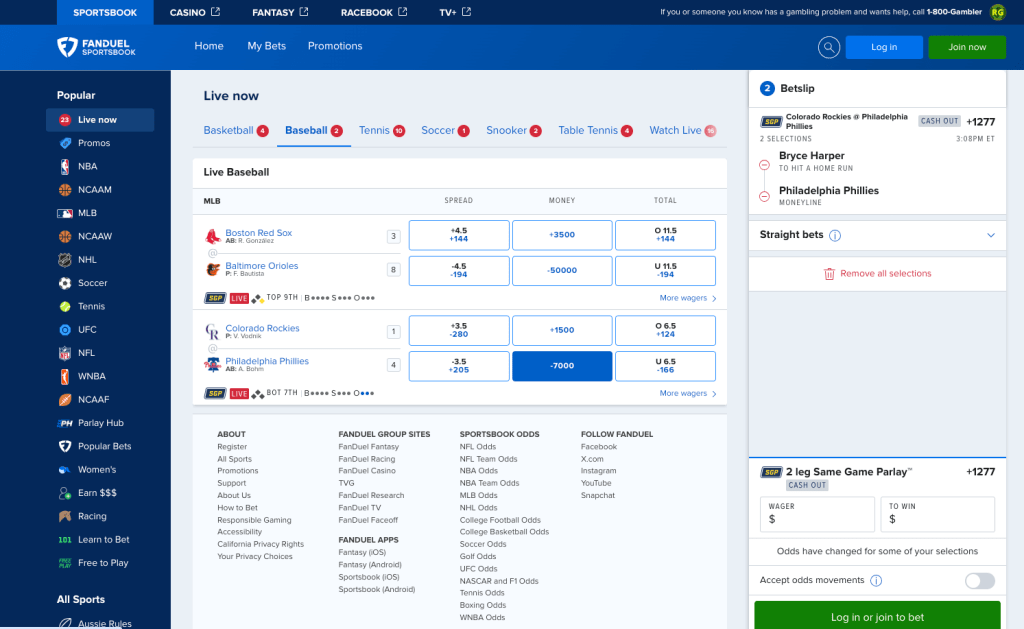
As more states legalized it, there’s been a boom in advertising for sports betting, more than there ever was for casinos or lottery tickets, according to Whelan. And there’s been a softening attitude toward gambling in general.
Sports bettors tend to be younger than other gamblers. A majority of sports bettors are between the ages of 18 and 44, while most gamblers in general are over 45. For casual viewers, betting can also make games more interesting.
“You don’t care about the (Nashville) Predators playing the (St. Louis) Blues,” Whelan said the morning of their March 27 match in the NHL. “But if that’s what everyone else is watching, you put 10 bucks on it, and now you’re interested.”
Bets are often placed mid-game. That can cause trouble for some.
“You can’t apply any rationale or mathematical calculations,” said Lia Nower, director of the Center for Gambling Studies at Rutgers University. “And if you’re drinking, it lends itself to much more impulsivity and overspending.”
A 2023 report on gambling in New Jersey found that 35% of sports bettors were classified as high-risk gamblers, compared to just 3% of all gamblers. And sports bettors were more likely to report alcohol or drug problems, severe mental health issues and thoughts of suicide, the report found.

Researchers at Rutgers University are undertaking another study in New Jersey to determine just how much sports betting has affected gambling addiction. The 2023 report came from data collected in 2021 in the midst of the pandemic and just three years after the state legalized sports betting.
Nower recommended that Hawaiʻi conduct a study to determine the number of problem gamblers before legalizing, so there is a baseline for future assessments on the impact of gambling legalization.
Could It Decrease Illegal Gambling?
Some lawmakers have cited the potential reduction in illegal gambling as one reason to legalize sports betting.
States like Tennessee that have legalized sports betting still find underground casinos and illegal gaming machines.
So legalization may not eliminate illegal game rooms that proliferate in Hawaiʻi, but it could move gamblers away from unregulated betting websites.
The Rutgers studies found that 40% of sports bettors in New Jersey were betting online through unregulated websites before online wagering became legal in 2018.
Another study in Connecticut similarly found that legalization moved sports bettors from illegal sites to legal ones, although other forms of underground gambling, like illegal casinos, persist.

McIntyre, the lottery commissioner from New Hampshire, said he has heard anecdotal evidence from law enforcement that legalization in his state “decimated illegal sports betting.”
“If you have a problem, you can call us,” McIntyre said. “If you’ve got a problem with your local bookie, you can’t do anything.”
Some states with legal sports betting have taken action against offshore sports betting websites like Bovada, which also runs online casinos. The site is now banned in 18 states after receiving cease and desist letters or threats of legal action and fines from state attorneys general.
“Hawaiʻi’s Changing Economy” is supported by a grant from the Hawaiʻi Community Foundation as part of its CHANGE Framework project.
Civil Beat’s community health coverage is supported by the Cooke Foundation, Atherton Family Foundation and Papa Ola Lokahi.

