Fixing It! Sidewalk Corner Passable Now, But More Work Needed
Two street Oʻahu street problems featured by Civil Beat are now in various stages of repair.
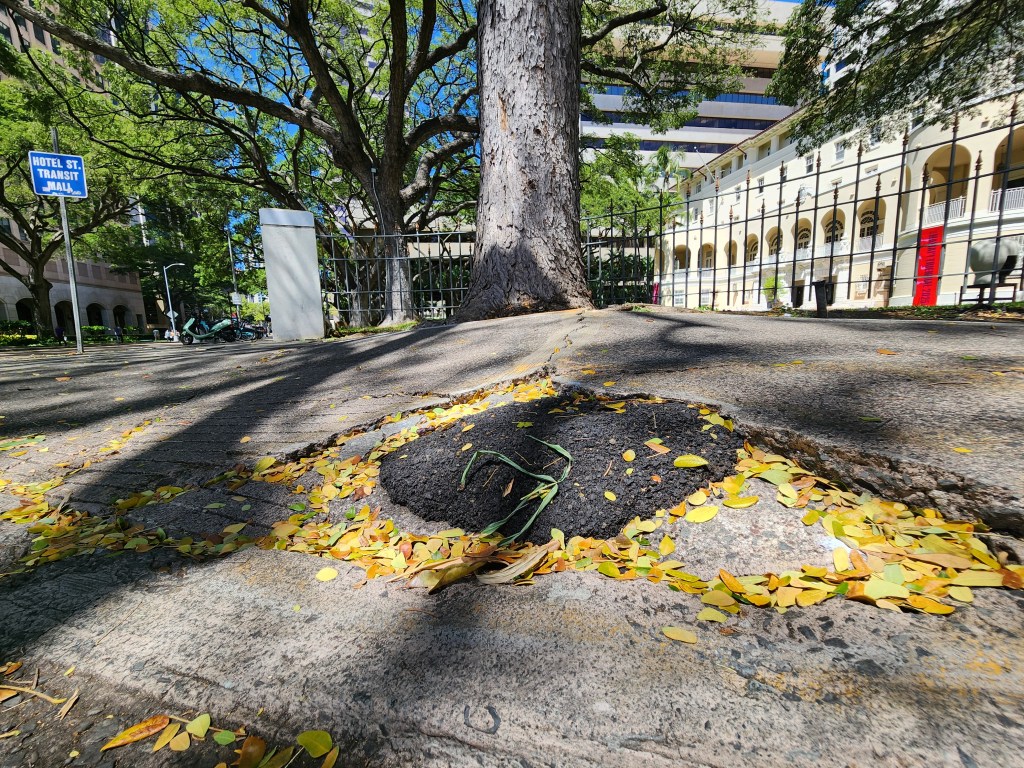
After 18 months of going from bad to worse, the sidewalk is smooth once again at the corner of Richards and South Hotel streets in downtown Honolulu.
The sidewalk at that corner, which Civil Beat called attention to on March 18, had been forced upward by the roots of a monkeypod tree. Badly buckled, it was a trip hazard at best, tough to navigate for someone whose mobility was compromised and probably impassable for someone in a wheelchair.
The state Department of Accounting and General Services Central Services Division removed the tree on March 31 and by April 20 had returned the sidewalk to its original design and condition.
However.
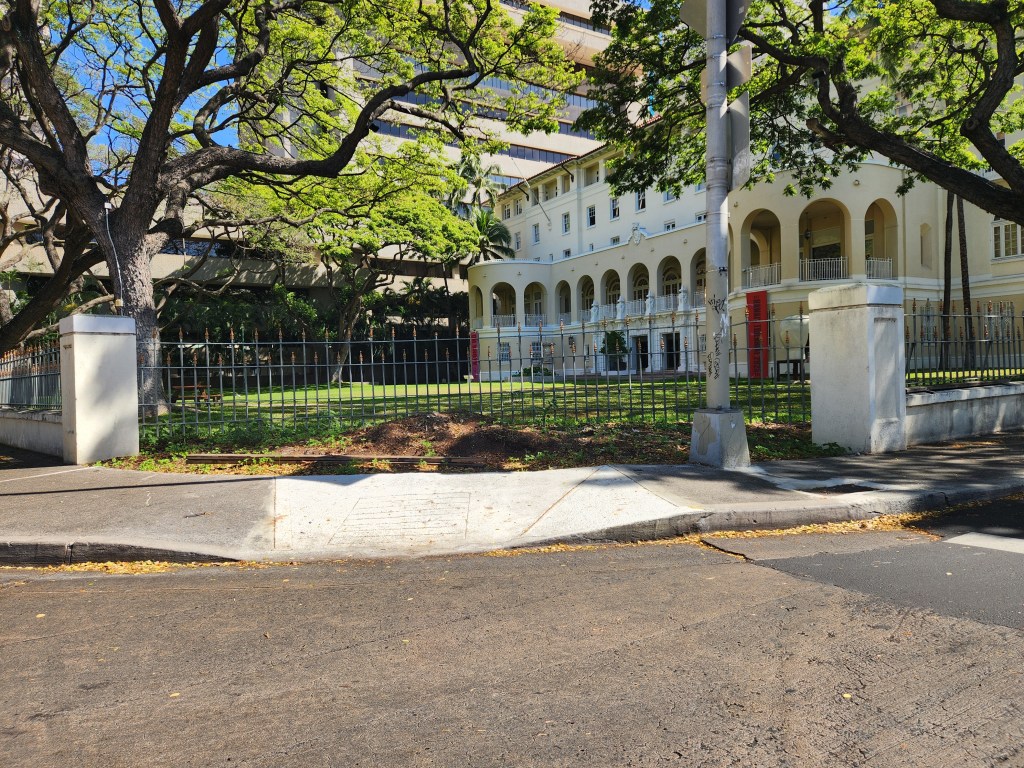
Although the repairs included a ramp to the street for wheelchair access — engineered to previous specifications — current Americans with Disability Act standards require a more gradual slope, said Diane Ako, the department’s communications officer.
More space needs to be cut on either side of the ramp cutout, she said.
So far, the work has cost $42,586. The additional work is projected to cost about $50,000 more and take 18 months to complete, including the time to get a new survey, plans and permits.
Ako said the department chose to move ahead with the initial repair to mitigate the corner’s existing hazards rather than wait for the funding and permitting necessary for the full job.
“That’s, say, a year and a half’s worth of pedestrians who might not trip and fall,” she said.
Update: Steel Plates Soon To Be Gone
Hawaiʻi Gas is on track to complete the relocation of a gas line on Kalākaua Avenue. The project led to steel road plates being temporarily — for six years — placed on the roadway, creating a jarring, tire thrashing and, for bicyclists, dangerous feature.
The plates were put in place following the discovery of a gas leak and remained in place while Hawaiʻi Gas worked with the city to get permits to relocate the utility gas line to the east side of Kalākaua Avenue.
Permits came through in February and Hawaiʻi Gas resumed work on the relocation project in late March, soon after Civil Beat wrote about it. The utility’s communications director, Maggie Engebretson, told Civil Beat this week that the project should be completed in early June.

“We are currently working with contractors to complete the Kalākaua Avenue portion of the project, which includes switching The Plaza at Waikīkī and the (Hawaii) Convention Center over to the new gas line,” Engebretson said. After that, the steel plates will be removed.
The final stage of the work will then take place on Kapiʻolani Boulevard, terminating and sealing the old gas line.
Got A Tip For Fix It!?
Please tell us where the problem is, as specifically as possible. A cellphone photo would be helpful.
Here are ways to get in touch:
You can submit in minutes using this form.
You can send us an email at news@civilbeat.org. Put “Fix It” in the subject line so it doesn’t get lost among the many other news tips we receive.
You can send a letter to the newsroom at P.O. Box 10857, Honolulu, HI 96816.
We won’t use your name without your permission but, if we pursue your fix, we will get back to you with what we find.