

Hawaiʻi Consumer Advocate Pushes Back Against Young Brothers’ Rate Hike
The state watchdog could get behind a more modest increase if public utility regulators investigate the interisland shipper’s relationship with its parent company.
The state Division of Consumer Advocacy says it could support a temporary rate increase for Young Brothers to pay off outstanding debts while maintaining the vital interisland shipping service it provides.
But that’s only if the Hawai‘i Public Utilities Commission opens an investigation into how the freight company manages its finances and its broader relationship with Seattle-based parent company Saltchuk Resources.
Young Brothers has asked the PUC to approve a temporary rate increase of up to 25% to stave off $18 million in anticipated losses for 2025, which would be on top of last year’s losses of just over $23 million.
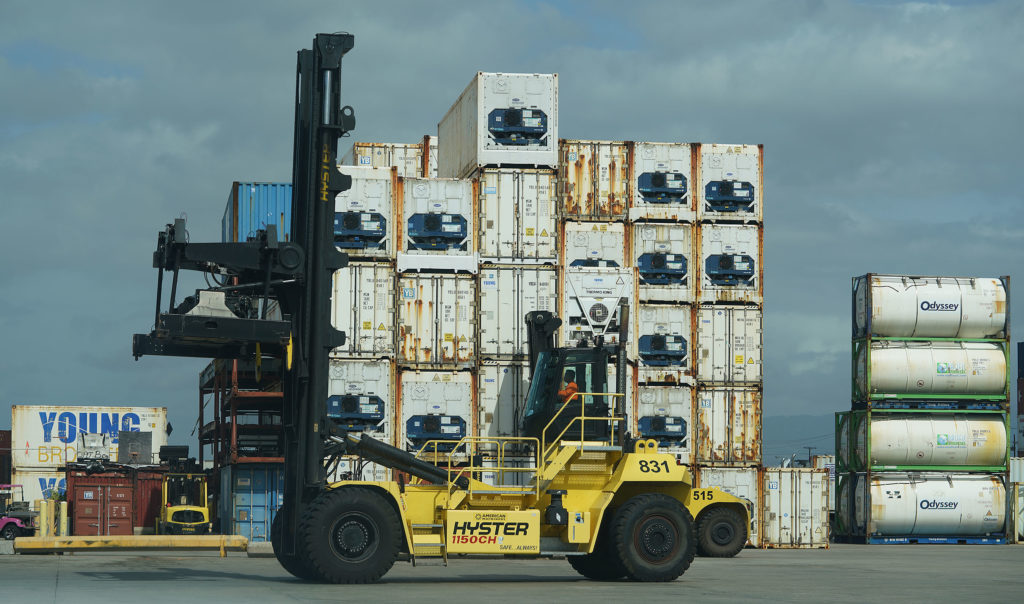
The temporary rate increase is intended as a stopgap measure to keep the company afloat while the PUC considers Young Brothers’ request to permanently increase rates by 27% — a move that some small business owners and others have largely opposed because it would increase costs.
Michael Angelo, the state Consumer Advocate, waded in last week after considering the arguments. In his comments to the PUC, Angelo points at Young Brothers’ “unsustainable pattern” of asking the state to approve huge rate increases several times while under financial distress. That includes the 47% emergency hike regulators approved during the Covid-19 pandemic.
Young Brothers, whose rates are regulated by the commission, provides a crucial link within the state’s supply chains for everything from food to construction materials and vehicles. The shipper is especially critical to the neighbor islands, which depend on Young Brothers for the vast majority of inbound and outbound shipping.
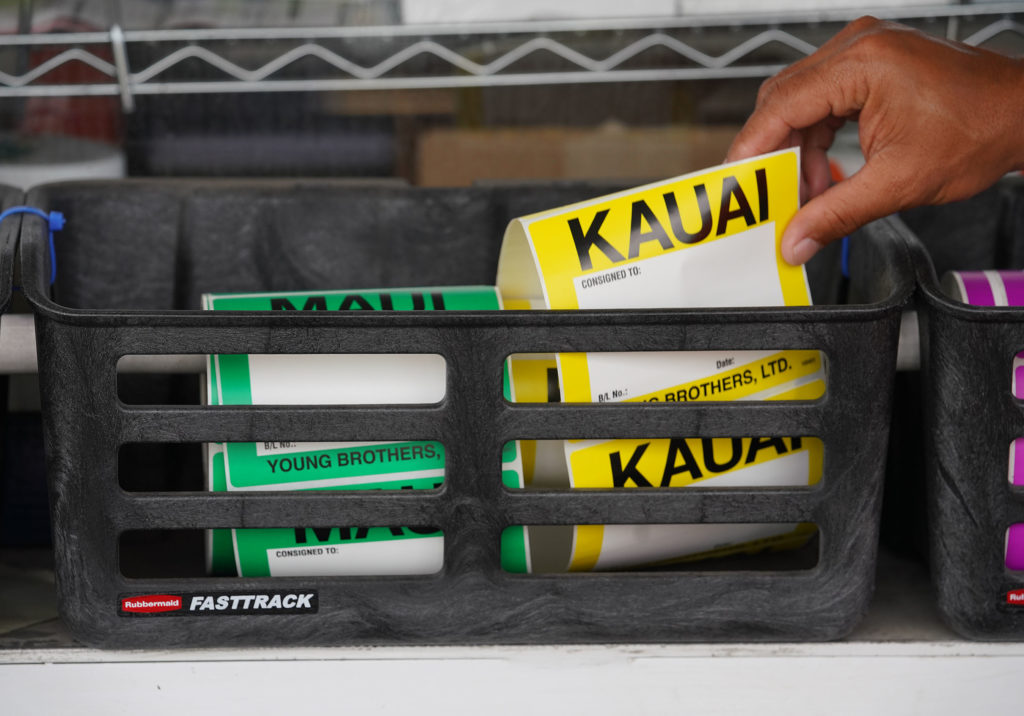
Ultimately, any increases will hurt residents and businesses’ bottom lines, Angelo said in an interview this week.
“These businesses have to forecast ahead for what their costs are going to be,” he said. “Shipping between the islands, in some cases, is a critical component of their business.”
That is especially true within Hawai‘i’s food system, as farmers, ranchers, food banks and other organizations rely upon the shipper’s services. Farmers and other agricultural producers, who receive discounted shipping rates, have been among the most vocal opponents to the increases.
The Public Utilities Commission is still deliberating on the temporary increase of up to 25% for the rest of 2025, and it has been holding public hearings for the request to permanently increase rates by 27%.
The Maui County Council on Friday will vote on a resolution in opposition to the Young Brothers’ proposal. If successful, it would make Maui the second county to voice its opposition, after Kauaʻi formalized its position last week.
“The rubber band is stretched so thin, it’s about ready to snap,” Kauaʻi County Council member Mel Rapozo said at the council meeting. “You see all our people leaving, moving away.”
The stakes are even higher for some within Maui County, as the islands of Lānaʻi and Molokaʻi already face higher rates to have goods shipped to the islands since most items must go through Maui first, Maui County Council member Keani Rawlins-Fernandez said.
The cost of living will “be much more inflated in our already-costly communities,” said Rawlins-Fernandez, who introduced the resolution.
Asking For Handouts, Paying Dividends
In February, Young Brothers asked the state to allow immediate and temporary rates increases, hoping an additional $18.5 million would ensure the company can service its debts, cover operating costs and make necessary investments into its operations.
“It’s intended to address a sudden and unexpected financial crisis,” Kris Nakagawa, Young Brothers vice president of external and legal affairs, told the commission earlier this month.
But the Consumer Advocate isn’t sold. Angelo sees this plea as part of a longstanding trend of making positive financial projections then, months later, claiming a crisis and asking the state to allow emergency relief.
While the Consumer Advocate agrees Young Brothers needs to up its rates to make ends meet this year, it has calculated just $3.2 million is required and only if certain conditions are met.
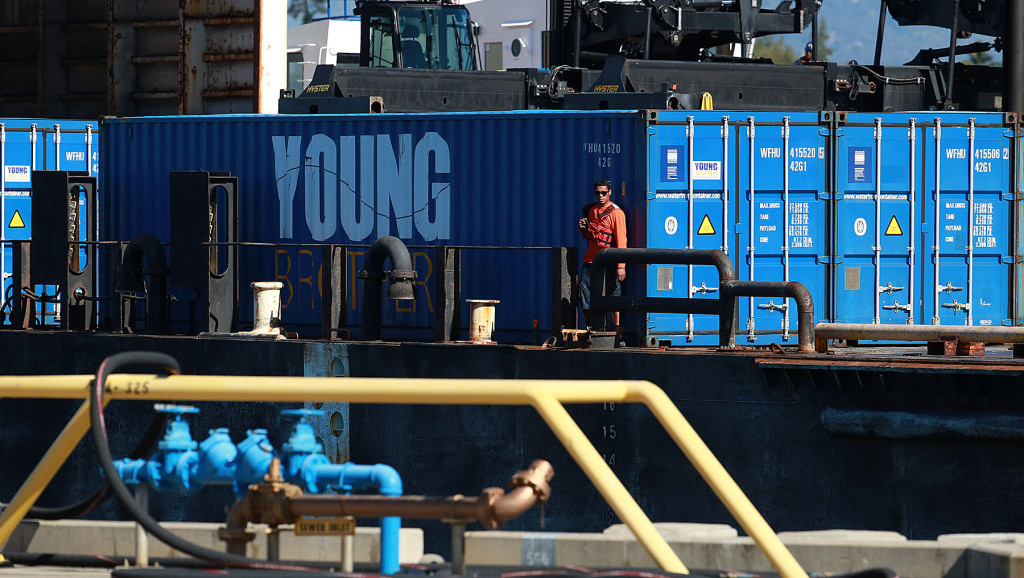
The public watchdog says two conditions should be applied to the temporary increase: a pre-approval for any dividend payments from Young Brothers to its parent company, Saltchuk Resources; and an investigation into the companies’ relationship to ensure their dealings are in the public’s interest. Saltchuk Resources acquired Young Brothers in 1999.
Since then, the Consumer Advocate said, Young Brothers’ managerial and financial decisions have “strongly implied that Saltchuk has not treated Young Brothers like a public utility and vital service for the state of Hawaiʻi, but rather purely like a financial asset from which resources can be extracted in good times, but for which no support is maintained during hard times.”
Young Brothers has largely rejected the advocate’s claims and conditions, calling them unlawful and outside the commission’s regulatory scope.
Neither Saltchuk or Young Brothers executives were available for an interview. But Nakagawa of Young Brothers said in an email that the current financial strains “threaten our current and future viability.”
The business last year lost $23 million on its interisland routes. Since its last rate increase in 2020, Young Brothers has invested $120 million into its fleet and infrastructure, Nakagawa said, money the company says will not be recouped if the state doesn’t approve a rate increase.
Saltchuk’s involvement with Young Brothers has never been investigated by the state, but Young Brothers was audited following its request to impose a 47% rate increase during the pandemic.
Young Brothers blamed the pandemic for its financial woes at the time, though the 217-page audit found the company failed to account for rising labor costs.

“We keep coming into this recurring situation where, over the years, Young Brothers comes in urgently needing some sort of rate increase request. They get the rate increase and then they’re back again,” Angelo said. “We want to know what is going on. Where in the operations and management side of the company can we see improvements so that customers are not facing these ongoing and recurring large rate increases?”
Young Brothers has also asked the commission to consider implementing a system that will see its annual rates increase automatically based on inflation, by up to 5% annually.
The utilities commission has two more public hearings on the proposed permanent rate increase, one on Lānaʻi and one on Molokaʻi.
The commission is expected to make a decision on the temporary rate increase by June. A final decision on the permanent rate increase is expected in August.
“Hawai‘i Grown” is funded in part by grants from the Stupski Foundation, Ulupono Fund at the Hawai‘i Community Foundation and the Frost Family Foundation.

