Maui Council Funds Affordable Housing, New Program To Help Working Poor
Council members at first wanted to trim the budget. Instead they added programs to help residents struggling to make ends meet.
When Maui County Mayor Richard Bissen outlined his proposed budget for the upcoming fiscal year, some council members argued that the county had to find ways to reduce spending.
Nearly two months later, the latest version of the budget is actually larger. To counteract a potential economic downturn and expected reductions in federal funding, the council set aside more money for affordable housing projects and funded a new program to help the working poor.
Residents are contending not only with inflation and tariffs on imported goods, but with a housing shortage worsened by the 2023 wildfires, the council’s budget, finance and economic development committee wrote in a report. More residents have had to rely on social services.
“Now, more than ever, Maui County’s vulnerable are at risk,” the council committee wrote. “Some organizations have already lost Federal funding, while others face the imminent loss of such support.”

Council Chair Alice Lee said the council reconsidered its stance on the budget after hearing from department heads and the community.
The council’s latest spending plan calls for revenues and expenditures of about $1.56 billion, which is about $46 million more than the mayor’s proposal.
“We’re all disappointed that the budget has to be so high, but under the circumstances, we didn’t have too many choices,” Lee said. “We all made our sacrifices where necessary, and gave up some of our priorities to make this happen.”
United Way Gets Money To Help Working Poor
About $12 million of the spending increase will go to Maui United Way’s new ALICE initiative, which is meant to provide relief for people who are “Asset Limited, Income Constrained and Employed.” A significant portion of the funding would go toward the program’s Kamaʻāina Credit program, which will help households pay for rent, gas, health care, groceries and other essentials.
The mayor’s budget didn’t include anything for that program; it was added based on the recommendation of council member Gabe Johnson.
Council members said they supported funding the initiative, in part, because they worried about potential federal funding cuts to programs that benefit low-income residents.
Jason Economou, Maui United Way’s president and chief executive officer, said the organization has seen the effects of funding cuts to other local nonprofits, some of which get money from the organization. And more cuts could be on the way.
“When nonprofits face uncertainty and they don’t have funds that they’re accustomed to from government entities, we are among some of the first people they come to for assistance,” Economou said. “So we saw an uptick in these requests for funding pretty much immediately after the inauguration, because that’s when some federal funding started drying up.”
Maui United Way also expected to administer a grant from the Federal Emergency Management Agency for its emergency food and shelter program. But “that funding has been held up by the federal government, and it’s unlikely they’re going to release it,” Economou said.
County Tackles Housing, Animal Shelter Overcrowding
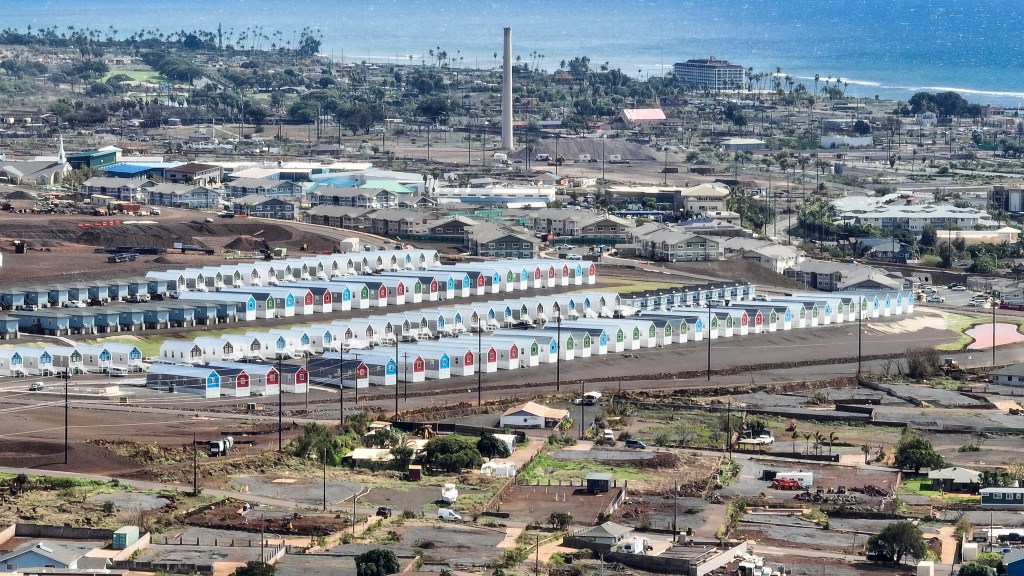
The council dedicated more money for affordable housing, adding to the $43.5 million in Bissen’s proposal. They allocated $25 million for the LīPOA Apartments rental housing project in Kīhei.
The council found that money by transferring $13.9 million from its general fund into the affordable housing fund and by reducing the county’s contribution to another affordable housing development. Rather than lend $12.4 million to the developer of the 120-unit Kaiāulu o Nāpili project in Lahaina, the county will give the company $2 million, according to the budget committee’s report.
Housing “has a direct impact on our economy and employment,” Lee said. “If we want to attract people to fill the jobs that we have vacant, they need housing.”
Lesley Milner, the county’s budget director, said the mayor supports the council’s decision to prioritize certain housing projects and worked to find money to do so.
“These efforts reflect the administration’s responsiveness and shared commitment to advancing critical housing solutions,” she said.
The council also decided to do something about overcrowding at the Maui Humane Society’s animal shelter in central Maui.
The organization’s animal sheltering program will get about $2.4 million, up from about $2 million. The council put $1.4 million into the county’s spay and neuter and animal enforcement programs, up from $1.2 million.
Council Wants To Raise Taxes On Second Homes
To offset the additional expenses, the council’s budget carries over $17 million that went unspent during the current fiscal year, funds fewer vacant positions and suggests ways to increase revenue.
Among them: Raise taxes on some non-owner-occupied properties valued over $3 million.
County spokesperson Laksmi Abraham said the administration is reviewing the council’s adjustments to real property tax rates to “ensure they uphold fiscal responsibility and equity.”
Johnson said he thinks the county could increase taxes even more. “We are a wealthy county with a low property tax rate. … So we should raise property taxes on the wealthy to help those people” who are having trouble making ends meet.
The council will hold a public hearing on the proposed budget and consider additional amendments on June 3. The deadline to approve a final version is June 10.
Correction: This article originally misstated which affordable housing projects received additional funding through the council and the amount of the increase.
Civil Beat’s coverage of Maui County is supported in part by a grant from the Nuestro Futuro Foundation.
“Hawaiʻi’s Changing Economy” is supported by a grant from the Hawaiʻi Community Foundation as part of its work to build equity for all through the CHANGE Framework.