

State Efforts To Shore Up HECO Gain Traction On Wall Street
HECO’s parent company got a boost to its credit rating after significant moves during the last legislative session to shore up the utility’s finances.
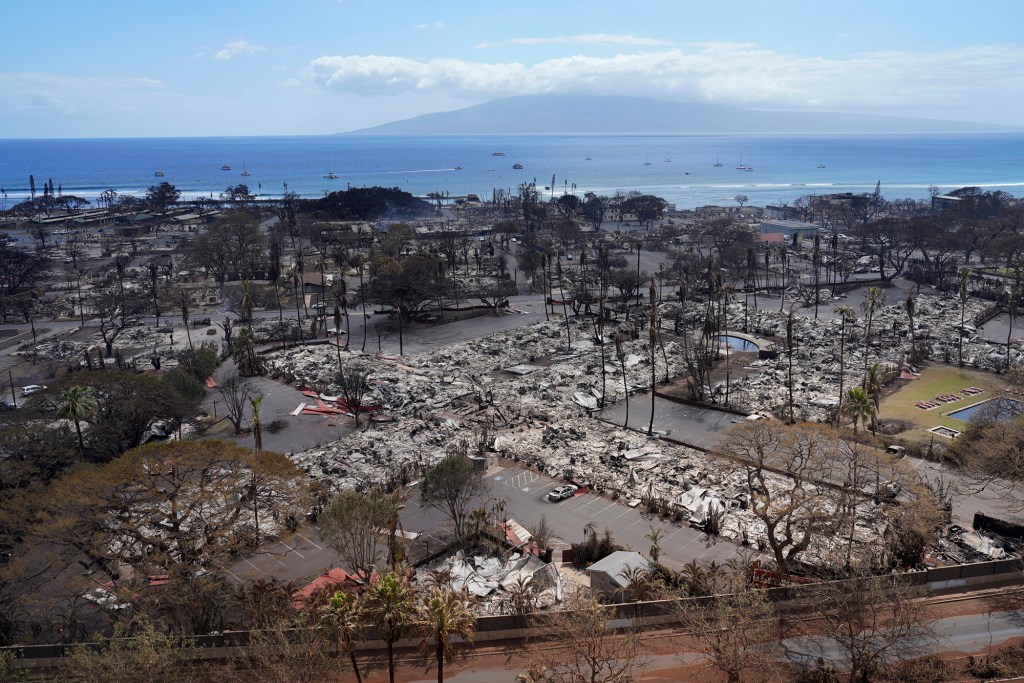
Wall Street rewarded Hawaiian Electric Industries’ efforts to strengthen its financial profile by restoring the company to the edge of investment-grade creditworthiness for the first time since shortly after the August 2023 wildfire that killed 102 people and destroyed much of Lahaina.
Credit rating agencies slashed the utility company’s credit rating to junk bond status shortly after the fires, which federal and Maui County investigators determined was started by a downed Hawaiian Electric Co. power line.
HEI’s bad credit rating is bad for customers because it means the company must pay higher interest rates to borrow money, and those expenses get passed to customers.

This week Moody’s Ratings analyst Toby Shea took a step toward shoring up that rating by bumping the company’s credit rating up a notch. Shea’s upgrade report reads like a scoresheet of HEI’s wins before Hawaiʻi’s political institutions against a backdrop of support from Gov. Josh Green.
Moody’s upgrade of HEI is small: to Ba3, the highest, non-investment grade, from B1, a lower junk bond tier indicating a higher-than-average risk of default. But it shows financial markets are noting the traction the company has gotten with the state’s political institutions, as well as its healthy cash flow and the $1.1 billion in cash the company had on hand early this year.
“We didn’t go from the cellar to the penthouse.”
Jim Kelly, spokesperson for Hawaiian Electric Industries
Jim Kelly, HEI’s vice president for government and community relations and corporate communications, acknowledged the upgrade was a small step. Moody’s, Kelly noted, is just one of three main rating firms, along with Fitch and S&P Global Ratings. And the other two still haven’t upgraded HEI’s rating.
Still, Kelly said Moody’s move shows progress.
“We didn’t go from the cellar to the penthouse; we’re up a couple of stairs,” he said. But he added, “It’s an important step, it’s forward momentum.”
Shea noted the progress HEI and its utility subsidiary have made to settle wildfire claims, which will cost the company just under $2 billion. Massive unknown exposure for the fires has dogged the company for almost two years.
“Since that event, with a high degree of involvement and cooperation of state and local stakeholders, most notably the efforts of Governor Josh Green, HEI and HECO have made substantial progress in resolving the claims filed by wildfire victims,” Shea wrote on Wednesday.
Shea also cited a recent win before the Hawaiʻi Supreme Court, which prevents insurance companies from pursuing reimbursements from HECO and other alleged wrongdoers for claims paid to fire victims.
Lawmakers also did their part.
“In April, Hawaii legislators appropriated $807 million toward the State of Hawaii’s portion of the settlement agreement, removing another potential barrier,” Shea noted. Moody’s expects the settlement to be wrapped up in early 2026.
Finally, there was another win for HEI when lawmakers last session passed a bill intended to cap HEI and HECO’s liability in the event of future wildfires, subject to approval by regulators and Green.
“We believe that a cap will ultimately be implemented, which could have meaningful credit positive implications,” Shea wrote.
Company Lacks Plan To Cover $1.99 Billion Settlement
How HEI will raise the $1.99 billion for its share of the settlement still isn’t clear. Shea noted that HEI and HECO have the cash to cover the first of four $479 million installments.
And the rest of the money?
“We’ve been consistently saying we have first payment funded, and we’re working on the plan for the additional three payments,” Kelly said.
If HEI needs to borrow money to cover those payments, Moody’s upgrade alone probably won’t mean much in terms of lowering interest expenses for the company — and customers, Kelly said.
“It probably isn’t going to affect what our credit standing is if we had to go out today and borrow money,” Kelly said. “The other agencies are going to have to, at some point, weigh in as well, and I think that’s going to have more of an impact. But this is the first one out of the gate, and it’s an important step.”
And what will Wall Street want to see before taking more steps toward investment-grade status?
“HEI’s positive outlook reflects the potential that ratings could be upgraded once the pending settlement is finalized, there is further progress on implementing protections to limit the financial risk of future wildfires,” Shea wrote, “and there is additional clarity on the company’s plans for financing future settlement installments.”

