

Will Hawaiʻi’s Supreme Court Curb Governor’s Power To Suspend Laws?
One justice compared Josh Green’s “maximalist” use of emergency proclamations to President Donald Trump’s controversial use of executive orders.
Gov. Josh Green has issued more than 90 emergency proclamations during less than three years in office. Now the Hawaii Supreme Court may soon define the scope of the governor’s power to issue such executive orders and suspend laws with the stroke of a pen.
The ability of citizens to challenge statewide emergency orders in court is also under review.
The emergency proclamation at issue relates to housing development, and whether Hawaiʻi’s decades-old housing shortage represents the sort of disaster that triggers Green’s ability to declare a state of emergency and suspend laws in response.
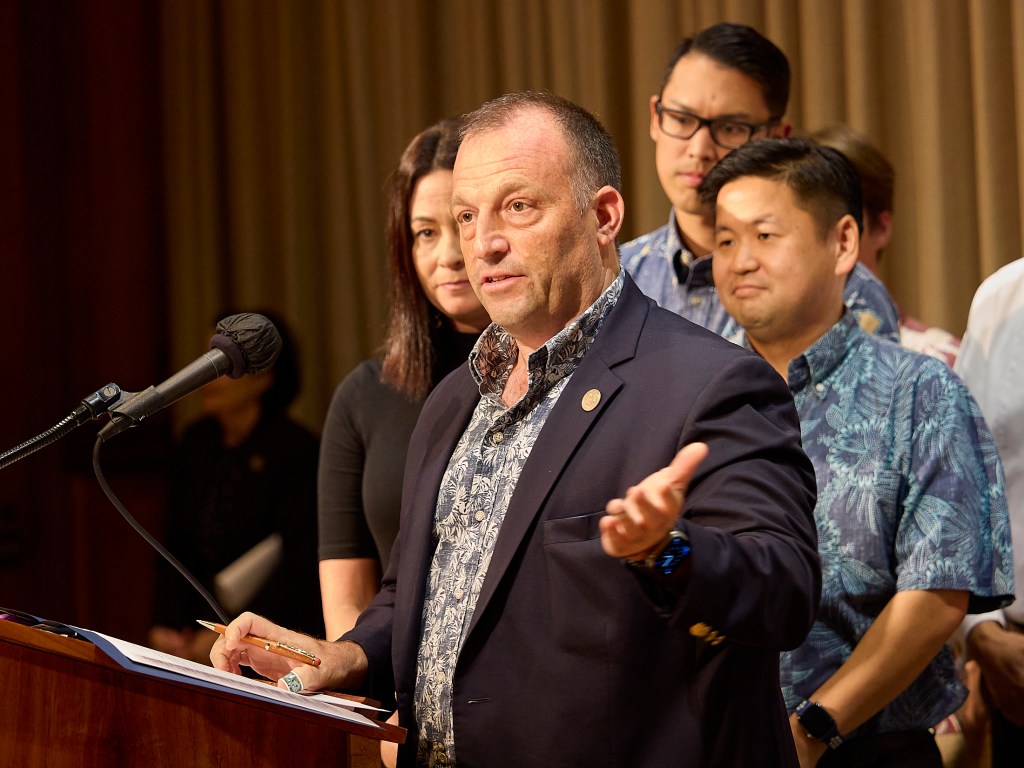
Green’s administration said the state’s emergency management law gives the governor broad power to decide what constitutes an emergency and when the emergency ends. But a group of Maui residents said that interpretation goes too far and a housing shortage going back nearly a century isn’t the sort of acute emergency envisioned by the emergency powers law.
The case, which was argued before the Supreme Court earlier this month, involves questions about the role of the Legislature to set policy by passing laws and when governors can suspend those laws to achieve policy goals.
David Henkin, a lawyer with Earthjustice who has filed a brief with the Supreme Court on behalf of Native Hawaiian and civil rights groups, likened Green’s use of emergency proclamations to President Donald Trump’s widespread use of executive orders to suspend laws.
“It’s a scary world,” Henkin said, “when the governor, like the president, is saying, ‘I am the law.’”
Green’s office declined to comment, citing the ongoing litigation.
Green’s Predecessor Also Issued Controversial Orders
Green has issued emergency proclamations related to weather systems, red-flag fire conditions, condominium insurance and telecommunications systems on Hawaiian homelands. He’s issued 21 emergency proclamations relating to the 2023 Lahaina wildfires, 20 relating to axis deer on Maui, 16 relating to homelessness, six relating to school bus services and 12 related to Uncle Billy’s Hilo Bay Hotel, an abandoned, state-owned property that’s become a safety hazard.
To be sure, Green is hardly the only governor to issue high-profile, and at times controversial, emergency orders. The orders automatically expire after 60 days but can be renewed indefinitely for additional 60-day periods.
Green’s predecessor, former Gov. David Ige, issued or renewed dozens of emergency proclamations during his two terms in office. Those included proclamations relating to homelessness and the Covid-19 pandemic, which drew considerable ire from the public and Hawaiʻi’s powerful tourism industry.
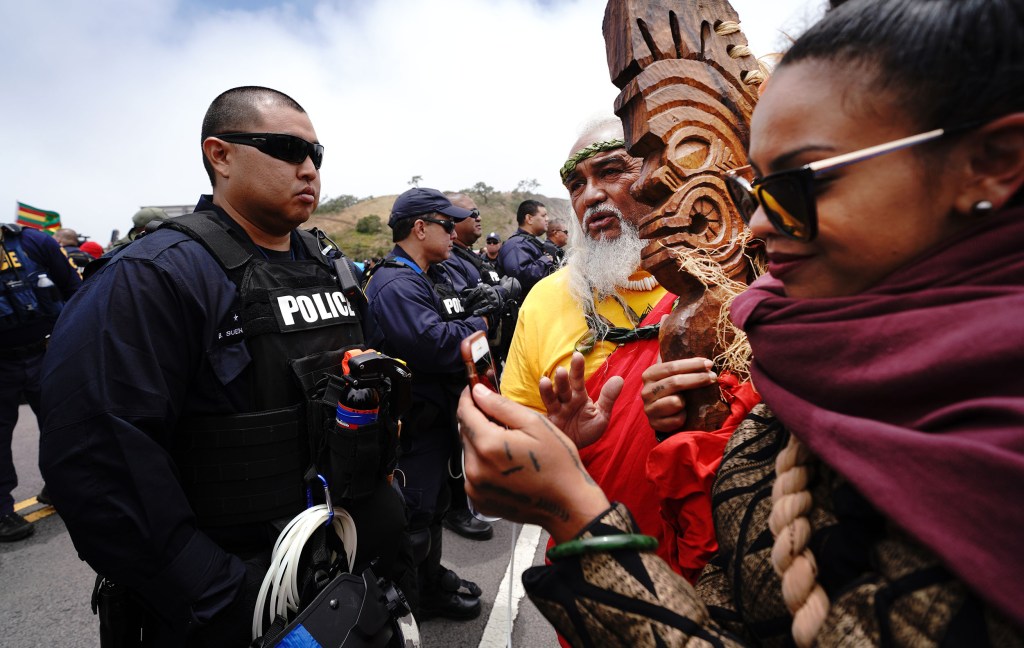
Another controversial emergency proclamation related to protests over the building of an observatory on the summit of Mauna Kea. The order enabled Ige to mobilize the Hawaiʻi National Guard to help clear a road to the summit following a tense standoff between protesters and Big Island police officers that led to nearly three dozen protesters being arrested.
In an interview, Ige said he issued the emergency proclamations only as a last resort after conferring with other stakeholders.
“Clearly the governor issuing an emergency proclamation really, in my opinion, should be reserved for, you know, crisis or emergencies,” Ige told Civil Beat. “It shouldn’t be utilized lightly. And during my term as governor, I really took that responsibility very seriously, and wanted to make sure that we weren’t abusing the authority.”
His proclamation on homelessness, for instance, followed increases in the number of unsheltered homeless people in the state and reports that ballooning makeshift camps, particularly one in Kakaʻako, were becoming dangerous.
Ige said he worked with island mayors and civil rights groups to make sure people removed from the street would have access and transportation to nearby shelters. He let the order expire after a year, as numbers dropped and the counties demonstrated they were moving people into temporary and permanent homes, he said.
Ige’s March 2020 emergency proclamation on Covid-19 effectively shut down the state’s tourism industry by placing a two-week quarantine on anyone flying into the state, including residents. He renewed variations of the order for two years until March 2022.
“He has had a very different approach to it.”
Former Gov. David Ige, on Gov. Josh Green’s use of his use of emergency proclamations
Despite his professed hesitance to issue emergency proclamations, Ige acknowledged he issued or renewed “more than 40” emergency proclamations over eight years, dealing with things like approaching hurricanes, extreme flooding and volcanic eruptions. He argued governors need broad latitude to define what amounts to an emergency.
“I think you know, part of it is that, as you had mentioned, it’s impossible to predict the future,” he said.
At the same time, Ige said, Green’s use of emergency orders — which at more than 90 new orders and renewals in less than three years — marks a more expansive use of emergency powers than what Ige says he adopted.
“He has had a very different approach to it,” Ige said.
Determining When Emergency Powers Are Justified
The controversy before the Hawaiʻi Supreme Court involves Green’s emergency proclamation on affordable housing. Green announced the first proclamation on housing in July 2023, focusing at that time on increasing home construction of all kinds, not just affordable housing.
The order cited numerous problems to justify invoking powers normally used to address natural disasters. Green boiled it down: Hawaiʻi didn’t “have enough houses for our people. It’s really that simple,” he said during a news conference.
Citing a shortage of first responders, teachers and health care workers to serve communities, Green said, “If it’s not a crisis, if it’s not an emergency, I don’t know what is.”
His order suspended or modified much of the state and county legal codes regulating construction and land use and protecting the environment and cultural resources, including Native Hawaiian burial sites. A working group of appointees not subject to the state’s open meetings law would oversee approvals of projects following streamlined rules under Green’s radically new regime.
In June 2023, Green told the Honolulu Star-Advertiser’s “Spotlight Hawaiʻi” program that the state of emergency would last a year.
The announcement drew immediate backlash from environmental, civil rights and Native Hawaiian groups. Henkin sued on behalf of the Sierra Club, the American Civil Liberties Union, Nā ‘Ohana O Lele Housing Committee, E Ola Kākou Hawaii and Kū’ikeokalani Kamakea-ʻŌhelo, a member of the Hawaii Land Use Commission.
Henkin’s clients dropped the suit after Green issued a new order significantly narrowing the laws it had suspended. The new order focused on “affordable” housing, not just any housing, and scaled back the working group’s role in certifying such projects for development.
Still, a group of individual Maui residents persisted in a separate suit, represented by Maui lawyer Lance Collins. After Maui Circuit Court Judge Peter Cahill dismissed their suit, the Maui residents appealed to the Supreme Court, which heard oral arguments on May 15.
Justice: ‘What Limits, If Any, Would There Be?’
Much of the arguments centered on what constitutes an emergency allowing a governor to invoke emergency powers.
The statute defines an emergency as “any occurrence, or imminent threat thereof, which results or may likely result in substantial injury or harm to the population or substantial damage to or loss of property or substantial damage to or loss of the environment.”
Collins focused much of his argument on that definition, saying a longstanding social problem, no matter how serious, doesn’t represent an “occurrence” anticipated by the law. It’s the Legislature’s role to address those kinds of problems, he said.
Likewise, he said, the Legislature can’t simply give the governor free rein to suspend laws in the name of addressing any problem the governor decides to call an emergency. Such broad delegation of power would violate the Hawaiʻi Constitution, Collins said.
“The power to declare an emergency is at its core a legislative power,” Collins said. The state constitution allows the Legislature to delegate that power, Collins said, “but only in particular cases subject to clear limits.”
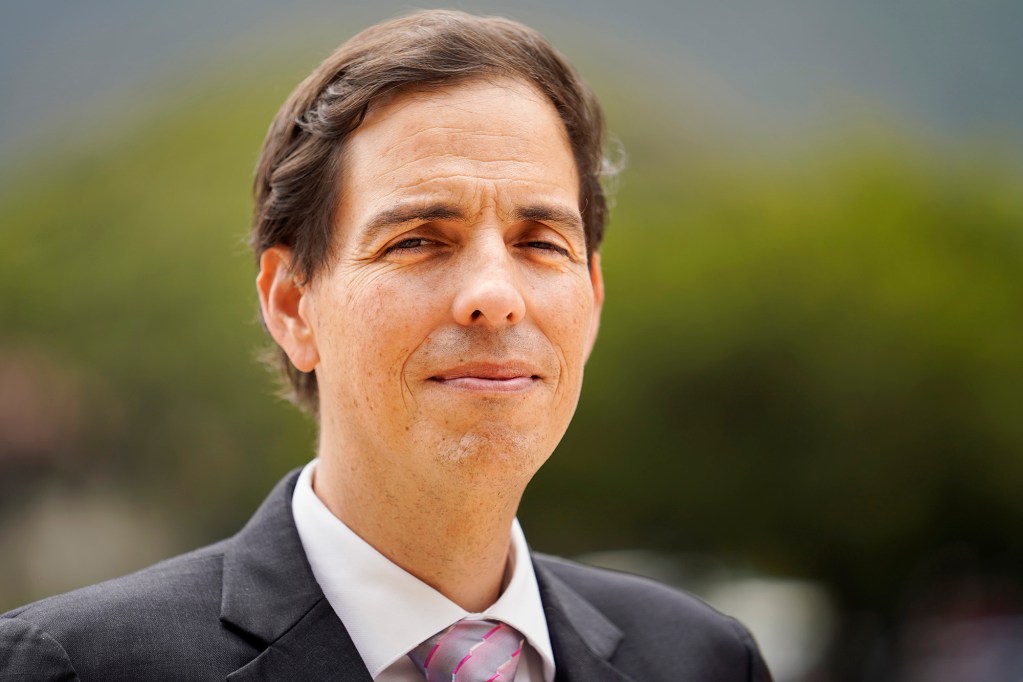
Arguing for Green, Deputy Attorney General Ewan Rayner said the emergency management statute gives the governor exceptionally wide power to define an emergency and suspend laws to address it.
At one point, Justice Sabrina McKenna drilled down on that assertion, asking, “What limits, if any, would there be for any executive to exercise executive power to issue emergency proclamations, for whatever ill or whatever problems society may have, and suspend all laws?”
Rayner said the governor can issue emergency proclamations for “whatever situation or set of circumstances the governor identifies as an emergency,” although he added, for example, that the governor could not violate the U.S. Constitution or federal law.
Pressed on when an emergency would end, Rayner said, “If the court is to accept the idea, which admittedly is a necessary part of our argument, that there doesn’t necessarily have to be one single identifying event for the emergency to start, then the same has to be applied to the end of the emergency.”
“You’re taking this position at the federal level … that there’s executive overreach. Yet here at home, you’re almost taking this maximalist approach to the authority of the executive branch.”
Hawaiʻi Supreme Court Justice Todd Eddins to Deputy Attorney General Ewan Rayner
It wasn’t lost on at least one justice that Green’s use of expansive executive power in Hawaiʻi is similar to Trump’s approach in Washington, which Hawaiʻi Attorney General Anne Lopez has joined in lawsuits to stop.
“You’re taking this position at the federal level, on these federal challenges, that there’s executive overreach,” Justice Todd Eddins said. “Yet here at home, you’re almost taking this maximalist approach to the authority of the executive branch.”
Rayner explained that the state’s challenges have not involved Trump’s use of emergency powers and instead have focused on alleged violations of the U.S. Constitution and federal laws.
Despite these explorations on the limits of the Hawaiʻi governor’s emergency powers, it’s possible that the justices will avoid taking a stand on that issue. Much of Rayner’s argument focused on the issue of standing, essentially whether Collins’ clients had the right to challenge Green’s proclamation in court.
The justices could toss the plaintiffs’ case without getting to the substantive question.
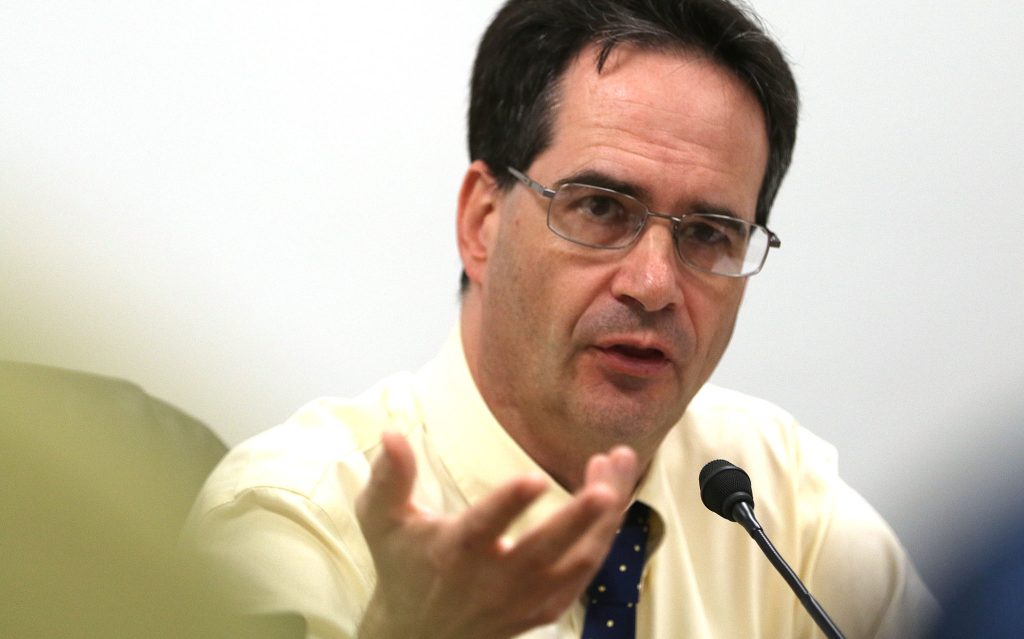
It’s also unclear whether lawmakers have an interest in reining in the governor’s powers. Last session, Sen. Karl Rhoads, chairman of Hawaiʻi Senate Judiciary Committee, introduced a bill limiting a governor’s powers to suspend laws under emergency proclamations — specifically saying the governor couldn’t suspend the state’s public records law.
In an interview, Rhoads made clear that he introduced the bill not in response to Green, but Ige, who at one point had used emergency powers to suspend deadlines set in the state’s Uniform Information Practices Act. This allowed the government to effectively withhold documents sought under public records requests during the height of the pandemic.
The bill, which gave the Legislature the power to end a state of emergency with a simple two-thirds vote, made it through the House and Senate but died at the end of the session.
Rhoads agreed the emergency powers statute is intended to give governors broad power.
“What is going too far?” Rhoads said. “I mean, from a strictly legal point of view, we’ll find out what the Supreme Court says.”

