Kauaʻi Cops Are Using Virtual Reality To Boost Their Firearms Training
With real-time simulations and a high-tech shooting range, the Kauaʻi Police Department hopes to quadruple weapons drills.
For Kauaʻi cops, getting in firearms practice has meant navigating a winding, unpaved access road to a remote, often muddy shooting range — an ordeal that, weather permitting, can take all day.
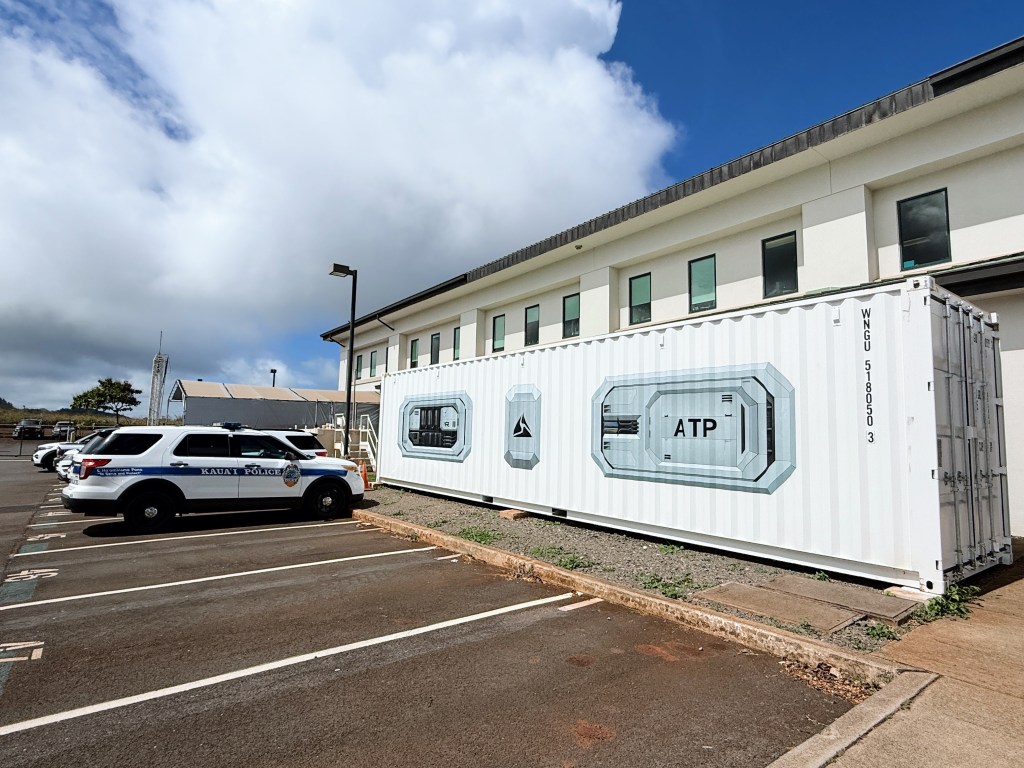
Now a new solution powered by virtual reality is emerging: the Kauaʻi Police Department later this year plans to launch a small-footprint weapons training option right out the back door of KPD headquarters in Līhuʻe.
The goal is to quadruple officers’ annual training time, according to Lt. Aaron Lester, a firearms training supervisor. Most KPD officers currently participate in just a few hours of hands-on firearms drills once a year.
“It’s a game-changer for us,” Lester said. “We just don’t get the opportunity to train that often.”
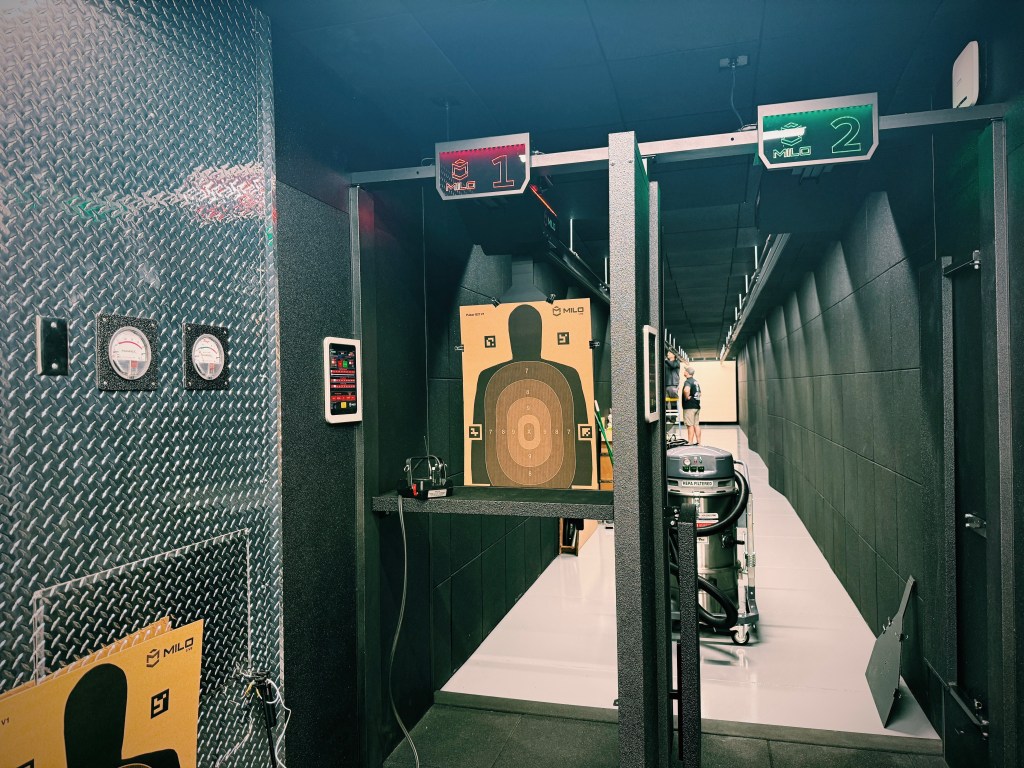
The new virtual reality and live-fire training complex has two components: a $2 million modular live-fire shooting range unveiled earlier this month and a compact, portable Taser and handgun training container powered by virtual reality that the department acquired in April.
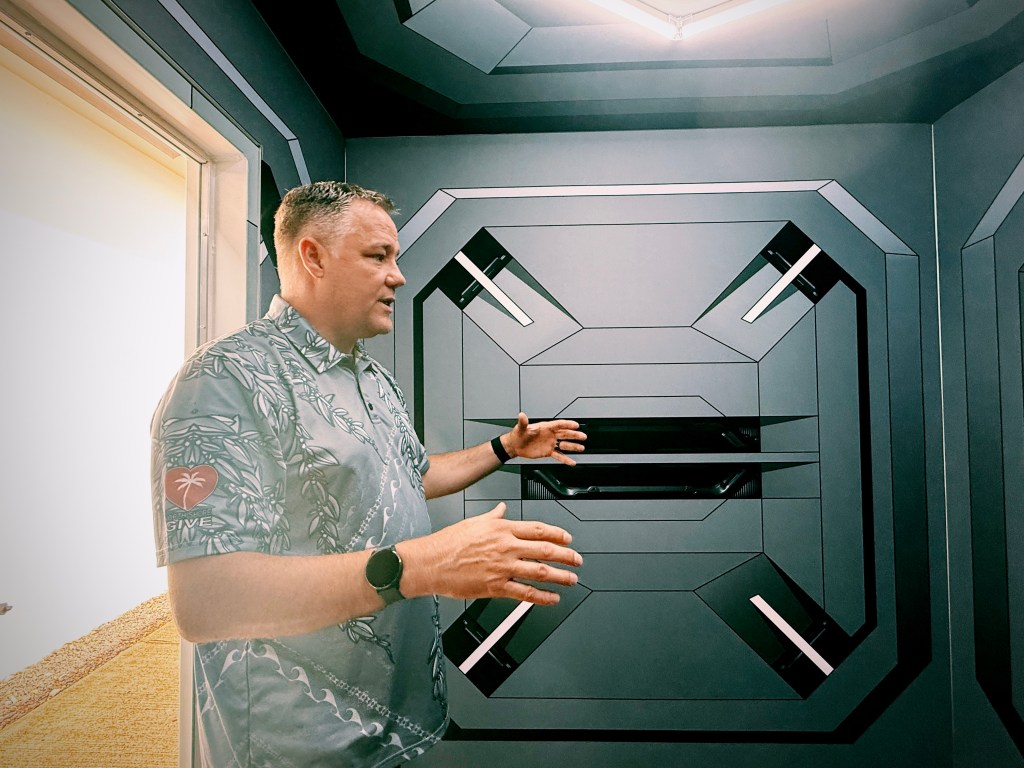
Combined, these technologies introduce realistic, immersive exercises that go beyond traditional shooting practice. Built into a series of shipping containers, the training complex makes weapons drills more accessible, unlocking the potential for micro-learning sessions that last only 20 minutes.
The precarious future of Kauaʻi’s police firing range, where the island’s cops have received weapons training since 1983, became apparent two years ago, leading the county to examine new options.
At the time, the Kauaʻi Police Department’s lease agreement to access the private Kipu-Maluhia Firing Range was due for renewal and the county couldn’t get ahold of the landowner, which, it turns out, wasn’t even aware that KPD had been using the parcel it purchased from Grove Farm in 2013 for firearms practice, according to then-Police Chief Todd Raybuck.
The county eventually renewed the lease on a month-by-month basis, but Raybuck said he fretted that the deal offered no long-term security. And there were no clear alternatives. Kauaʻi has no public shooting range, something government leaders have long decried as a safety problem for every gun owner. Efforts to establish one have been thwarted by strict environmental rules focused on preventing lead contamination from bullets.
KPD spokeswoman Tiana Victorino said officers are on track to start training with the new technology by the end of the year. The department is in the process of finalizing new training policies and protocols.
KPD officers still train at the outdoor shooting range but the access problems extend beyond the department’s shaky lease agreement. The unpaved access road becomes impassible when it’s muddy or not maintained. Fire practice is called off in the rain, which comes down frequently and furiously on Kauaʻi. The island is home to one of the wettest spots on earth, receiving 400 to 600 inches of rain a year.
Goal: Boost Weapons Training By 300%
Kauaʻi police officers rarely fire their guns in the line of duty during their careers. None of the department’s 135 officers pulled the trigger in 2024.
The island’s cops are required to be tested in the use of their weapons at least once a year. The annual certification process includes eight hours of Taser training and 12 hours of firearms training, including classroom instruction and hands-on exercises, according to KPD.
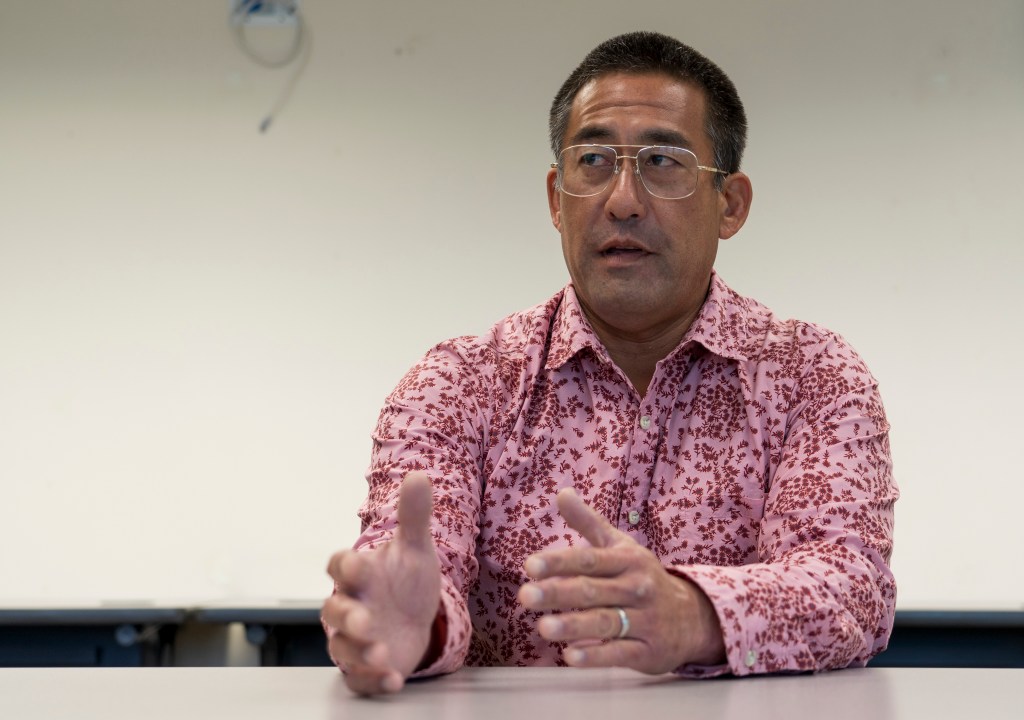
Dustin DeRollo, a spokesman for the State of Hawaiʻi Organization of Police Officers, raised concerns about the lack of firearms training officers receive in Hawaiʻi.
“When it comes to training it’s not about who has the coolest toys, it’s about how often are our officers being exposed to real life scenarios, how much instruction they’re receiving and their ability to repeat those drills over and over,” DeRollo said. “You need repetition, you need muscle memory because these are perishable skills. There needs to be public recognition that this isn’t happening and it’s not just KPD, it’s a problem statewide.”
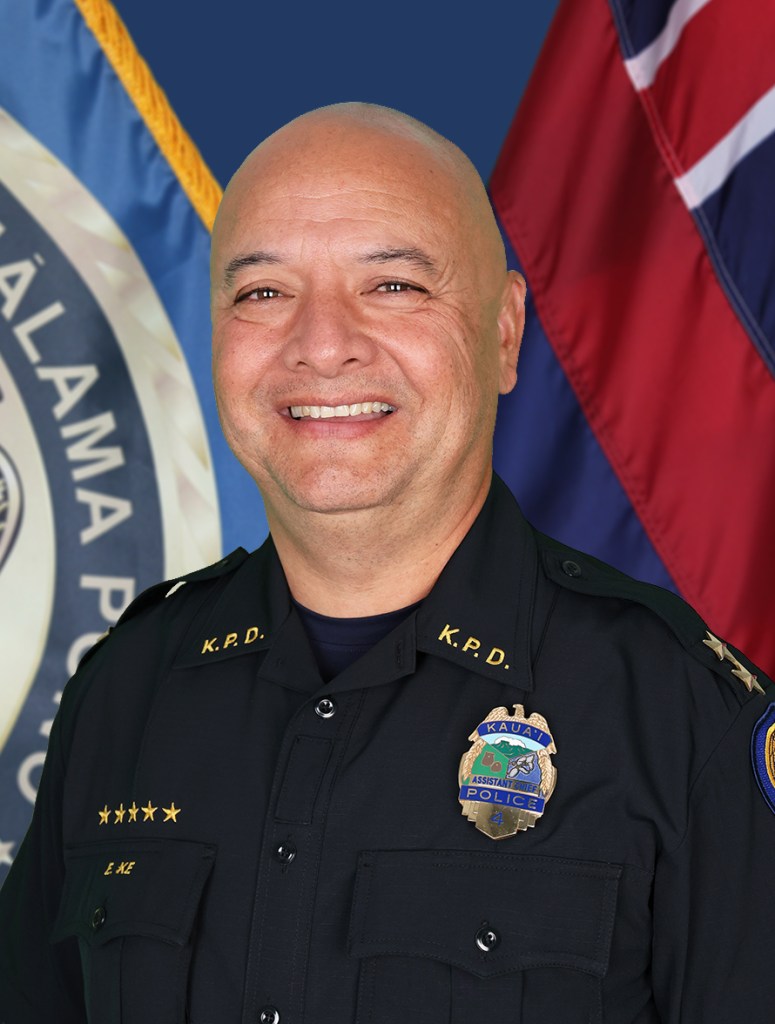
Interim Police Chief Elliott Kalani Ke, who took over the department last week when former chief Todd Raybuck retired, declined to be interviewed for this story. But in a prepared statement he points to the new training complex as a means of boosting police officer confidence and competence. More practice equals better results when an officer fires their weapon.
“These technologies focus on critical skills like decision-making, communication and de-escalation, which are essential for responding safely and effectively in complex situations,” Ke said in the statement. “Ultimately, this training is about saving lives, protecting our community and ensuring every officer can come home safely at the end of their shift.”
Raybuck, who spoke to Civil Beat shortly before he stepped down, said he views the new training tools as a solution to the department’s longstanding morale problem. A 2024 workplace Gallup survey found that 49% of employees are unhappy at the department.
‘I Don’t Think Any Of This Is Bells And Whistles’
Last month Kauaʻi Mayor Derek Kawakami stepped into an Axon Training Pod to try out some of the immersive, virtual reality-based training scenarios.
One of the storylines put him at the front door of a residence during a domestic violence episode. The door opens to reveal a middle-aged woman dressing herself on her way out of the apartment. In the background, the suspect jumps up from the couch and out onto the balcony — it happens fast enough that it could easily be missed. Soon after, the suspect bursts into the living room to shoot the woman. It’s up to the person wearing the headset to shoot the suspect before he kills the victim.
“I don’t think any of this is bells and whistles,” Mayor Derek Kawakami said. “You cannot compare it to going to a shooting range. It’s more like going hunting and having to track an animal and make sure you know what’s in front of the target and behind the target and all of the stress levels involved in that.”
In another scenario, the mayor was transported to the scene of an active school shooting. The sound of gunfire rings out, sending a mob of students and faculty running for safety. Amid the chaos, Kawakami was tasked with identifying the shooter.
The experience, Kawakami said, made his heart race.
He said he’d like to see police chiefs, police commissioners, mayors and county council members across Hawaiʻi make the trip to Kauai to experience the value of the new training technology. The mayor said he also wants KPD to offer training opportunities to other armed law enforcement agencies on Kauaʻi, such as state conservation enforcement officers.
“Many people will say, ‘This will never happen to Kauaʻi. Why are we putting our officers in these types of scenarios?’” Kawakami said. “Look, I think we can’t take their job lightly. We really don’t know when these types of situations could happen, but we’re obviously not going to wait for a tragedy to happen before we start making investments in these types of training facilities.”