The Search Is On For New Kauaʻi Police Chief
Todd Raybuck’s tenure was clouded by controversy, but the outgoing police chief says he is leaving the Kauaʻi Police Department in better shape than when he arrived in 2019.
Kauaʻi Police Chief Todd Raybuck leaves behind a department struggling with sinking morale and a high rate of officer vacancies as he turns in his badge and retires Thursday.
The state police union, which has been critical of Raybuck’s tenure, is urging the Kauaʻi Police Commission to hire a “team builder” as his successor.
The county’s police commission started recruiting candidates for the job of Kauaʻi’s top cop in late May. Last week, the seven-member body responsible for appointing the next chief launched an online survey to collect public feedback on desired traits for the department’s next leader.
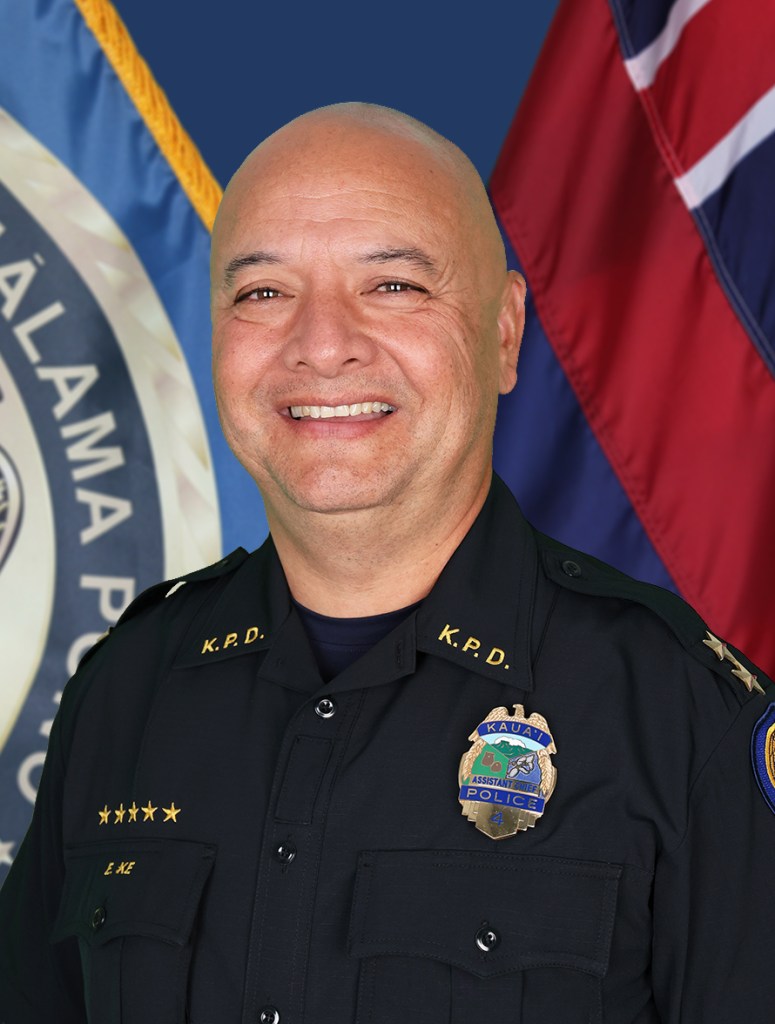
Elliott Kalani Ke will move up from his assistant chief position to serve as interim chief. Ke started his law enforcement career at KPD in 1999 and has worked as a patrol officer, traffic safety officer, drug abuse resistance education officer and vice officer in the Investigative Services Bureau.
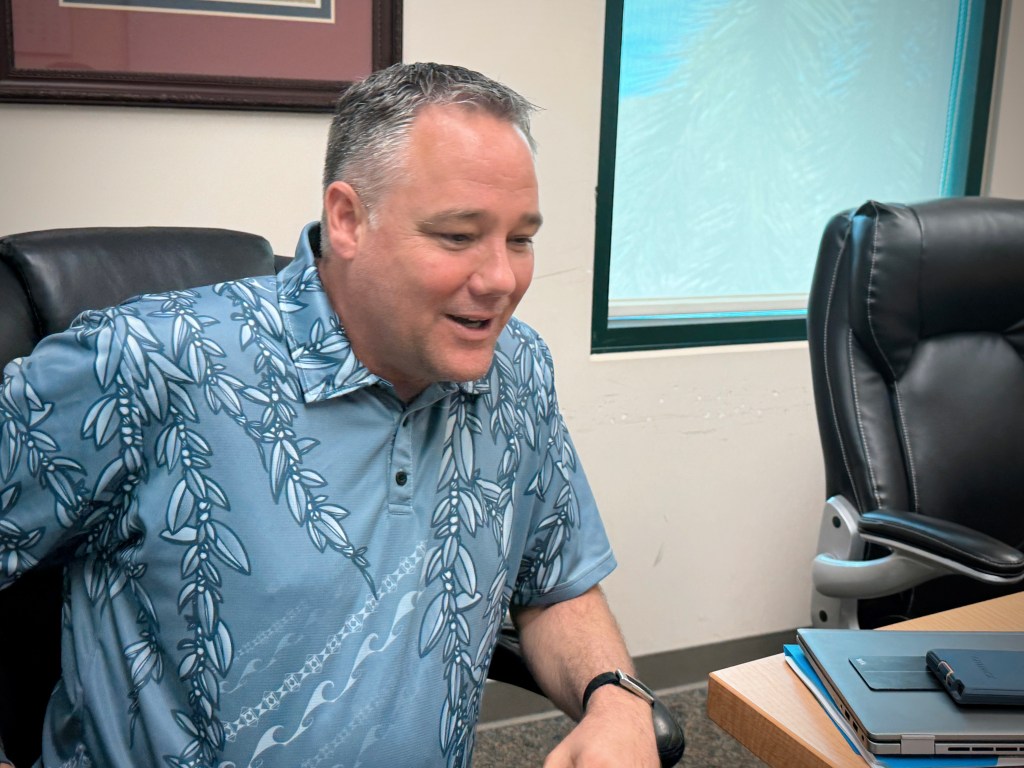
Raybuck, who has held the position for six years, is leaving the island upon retirement. In a wide-ranging interview on the eve of his last day on the job, he acknowledged that he made mistakes as the department’s leader but said he left KPD better than he found it.
He also may have helped his successor get a raise. The county job listing for the chief position lists a $164,192 salary, which could soon see a 14% increase.
Both the salary and police commissions recently embraced a recommendation from Raybuck to bump the pay for Kauaʻi’s top cop to $180,000. Police chiefs in Honolulu, Hawaiʻi and Maui counties earn a base salary of $239,000, $196,000 and $183,889, respectively.
Currently, KPD’s deputy chief and assistant chief take home higher pay than the chief, according to Raybuck.
‘I Made Mistakes’
Raybuck pointed to accomplishments including the implementation of organizational changes to slash overtime pay, the adoption of cutting-edge virtual reality training technology and improvement in community engagement.
“I haven’t been perfect in my tenure, I made mistakes,” Raybuck told Civil Beat. “I thought I had the right answer, and it wasn’t. But the union, my critics, everybody wants to pin a couple of mistakes that I’ve made and portray that as my legacy for this police department.”
Raybuck moved to Kauai from Las Vegas in April 2019 to assume the role of the island’s top cop, quickly earning high marks from his officers and the public. But his shining reputation was tarnished by a police commission investigation that found he made racist comments about Japanese people and created a hostile work environment for employees. It was the beginning of a series of controversies that widened the cracks in his public image.
The State of Hawaii Organization of Police Officers called on Raybuck to resign. But local leadership, including Mayor Derek Kawakami, voiced support for the chief, citing his good record of performance.
Raybuck was suspended without pay for five days in April 2021 for his comments, which were recorded by a police officer and submitted as evidence to the police commission. He later apologized in a statement posted on YouTube.
Raybuck would soon face other problems, however.
A scathing SHOPO survey in 2022 found more than half of the 113 officers surveyed said the department does not care about them personally. Low morale was cited by 58% of employees as a top reason why they’re considering leaving KPD.
A 2024 workplace Gallup survey found that 49% of employees aren’t just unhappy at the department — they’re resentful that their needs aren’t being met and are acting out their unhappiness. All told, 136 department members participated in the survey, or roughly 70% of the force.
In November, the police commission suspended Raybuck without pay for three days after he left his department-issued Glock unsecured in a police station bathroom stall in March 2024.
A Mixed Legacy
Raybuck, who previously served for nearly 27 years with the Las Vegas Metropolitan Police Department, cited personal attacks and negative media coverage as the driving force behind his decision to step down.
In a November 2024 letter to staff he announced he would retire from law enforcement this year to spend more time with his family and concentrate on his health and wellness. It wasn’t until two weeks ago that he set Thursday as his retirement date.
In the interview, Raybuck criticized the SHOPO union for making personal attacks on police chiefs statewide and not offering viable solutions to problems. He stressed the need for a unified leadership team to address department morale issues and improve community trust. And he expressed confidence in the leadership team he built and its commitment to the department’s future.
“My passion was to do everything I could, in my power, as best as I could, within my abilities, to make this police department better than when I received it,” he said. “I’m proud of what we’ve accomplished. It wasn’t easy. It wasn’t without pain. Every attack on me landed on my family harder.”
Among his accomplishments, he emphasized efforts to develop a leadership team of sergeants and lieutenants and a department-wide restructuring aimed at improving efficiency and officer accountability. Raybuck negotiated with the police union to implement 12-hour shifts to reduce overtime amid a longstanding shortage of manpower. He boosted community engagement through avid social media use and introduced the Coffee with a Cop and Touch-a-Truck events.
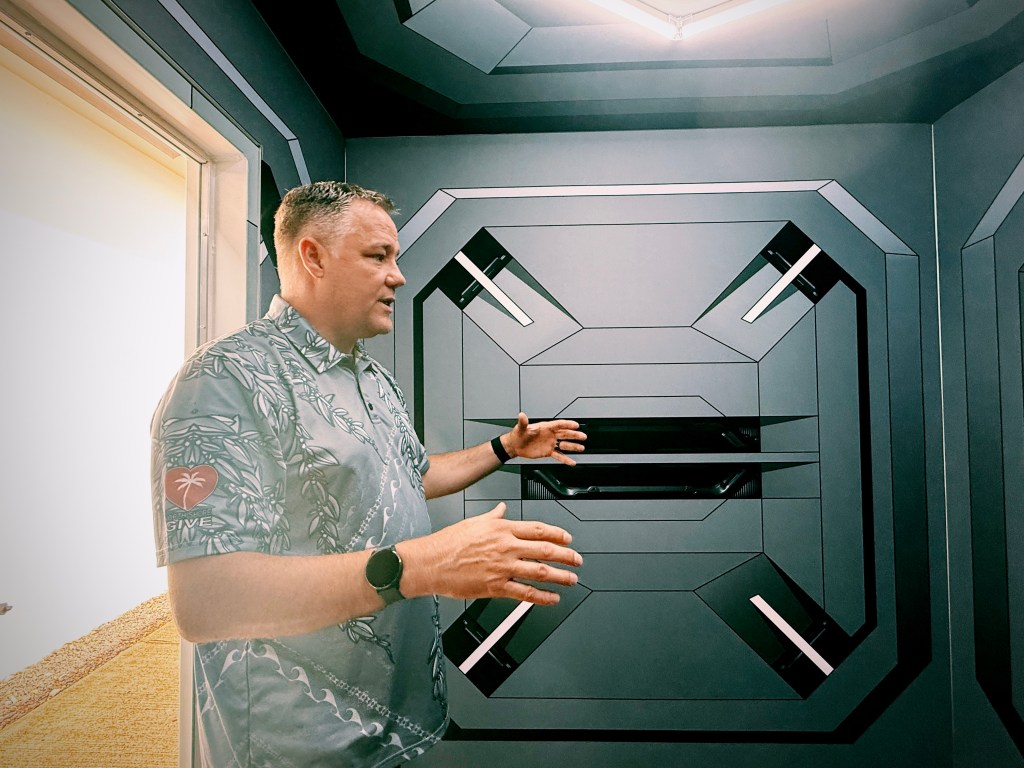
In April KPD became the first police department in the nation to own a $300,000 Axon Training Pod, a compact and portable Taser and handgun training container powered by virtual reality. Last week the department adopted a $2 million modular live-fire shooting range with virtual reality capability.
Combined, these features form the department’s new virtual reality and live-fire training complex in the parking lot of KPD headquarters in Līhuʻe, affording officers more frequent opportunities for target practice. The goal is to quadruple officers’ annual training time.
High Hopes For The Next Chief
Raybuck said the morale problem already existed when he took over.
“I inherited an organization that had the old police mentality that everything is the chief’s responsibility. If something’s wrong, it’s the chief’s fault,” Raybuck said. “But I’m just one person.”
“The most important leaders in this organization are my sergeants and lieutenants,” he said. “It’s my responsibility to give them the tools and the opportunity to do what they need to do for their job, but I need them to be leaders, too, and take an active role and responsibility in addressing my officers’ needs and doing what it is to improve their morale.”
The Kauaʻi Police Department has a $41.5 million annual budget and 236 full-time staff, including 135 sworn officers. Another 30 officer positions are unfilled, creating an 18% officer vacancy rate. Staff recruitment and retention difficulties have long plagued the department.
A familiar face has emerged as an applicant. Howard Leslie, a retired commander for the Los Angeles Police Department, resigned in April from his post as chairman of the Kauaʻi Police Commission to bid for the chief’s position. The deadline to apply is July 7.
SHOPO spokesman Dustin DeRollo said Kauaʻi union members want their next leader to be a good communicator and a good listener. They also want a boss who’s fair and equal in administering both praise and discipline.
“For Kauaʻi, it’s the morale issue overall that needs fixing and that is not going to happen overnight,” DeRollo said. “But whoever that new person is that comes in, their ability to inspire hope is going to make or break things over the next couple of years. This is a department that, in addition to low morale, is dealing with a staffing crisis. So Kauai really needs that leader that’s going to be a team builder.”
The recruitment process that led to Raybuck’s hiring took about six months. The police commission has chosen to conduct the hiring process internally without help from outside consultants or recruiters.