

Hawaiʻi State Workers Must Answer For Taking Girl From Her Mother
The 9th U.S. Circuit Court of Appeals ruled Friday that the workers were not protected by the principle of qualified immunity in the 2019 incident.
State workers are not immune from liability in a civil lawsuit that alleges they staged a “grab and go” operation to transfer a girl from her mother on the Big Island to a biological father she barely knew on Kauaʻi, the 9th U.S. Circuit Court of Appeals ruled Friday.
The state argued that the Department of Human Services workers had no reason to believe that their actions were unconstitutional and so should be protected by the principle of “qualified immunity.” That’s the idea that public officials cannot be held liable for official actions unless they violate clearly established rights that they ought to have known about.
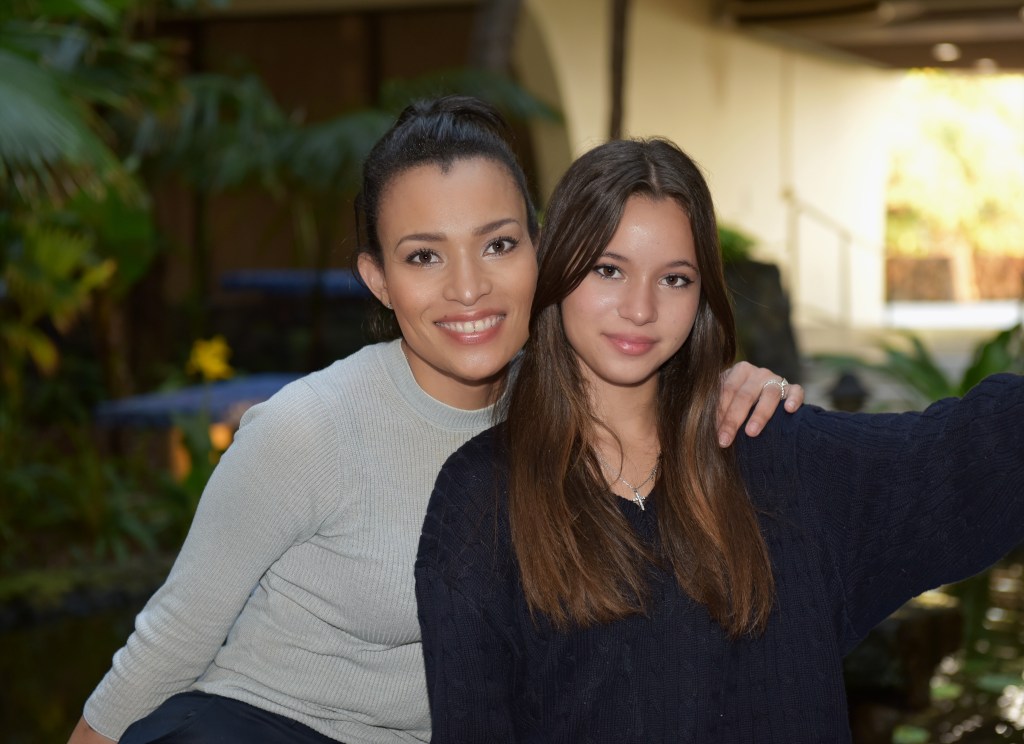
But the three judges of the 9th Circuit did not agree. A jury could find that the DHS workers violated Hannah David’s constitutional rights by removing her daughter even though there was no imminent danger of serious bodily injury, the judges ruled.
“We have articulated a ‘discrete constitutional right’ that ‘parents will not be separated from their children without due process of law except in emergencies,'” the judges wrote.
Child Welfare Services, a part of DHS, takes children from their parents to protect them from abuse or neglect, often placing them in foster care.
But “Hawaii v. Parental Rights,” a 2022 Civil Beat investigation, found that CWS almost never sought court orders before the removals, despite 9th Circuit decisions and the practice in most other states. The court order requirement gives judges a chance to weigh the state’s arguments for the drastic action of removing a child against the parents’ constitutional rights.
The Hannah David case began five days before Christmas in 2019, when David had a chance encounter with the biological father of her daughter Bella at a Kauaʻi shopping mall where her daughter was modeling. David had full custody of her daughter, and a no-contact order against the father.
The next day, angry about the encounter, she confronted the father at the Kauaʻi fire station where he worked. She shoved and berated him with Bella nearby, and was eventually arrested.
The father, with the help of a domestic violence coordinator at the Kauaʻi Police Department, obtained a temporary restraining order barring David from having contact with Bella’s biological father and, more importantly, with the girl herself. But the judge was unaware that David had full legal custody of Bella.
The restraining order led in turn to the “grab and go” operation in which Bella was removed from her fifth grade classroom by CWS and police and handed over to the biological father she barely knew for a flight back to Kauaʻi. David did not find out about it until the plane had taken off.
It took David about three weeks to get her back. She later filed the lawsuit.

The 9th Circuit did not rule on the merits of the case. The unpublished opinion just found that, depending on the facts introduced at trial, a fact-finder could conclude that the girl “was not in imminent danger of serious bodily injury” when the state took her without a court order.
The circuit court affirmed an earlier decision by U.S. District Judge Michael Seabright, and the case will now return to Seabright’s court.
“The incident was not a basis for removing the child,” said Eric Seitz, David’s attorney. “They could have gone to a judge.”
Both DHS and the office of Hawaiʻi Attorney General Anne Lopez declined comment, citing the ongoing litigation.
It’s unknown whether CWS continues to remove most children without court orders. A law enacted in 2024, which went into effect July 1 of this year, requires CWS to seek a judge’s approval unless the removal is necessary to protect the child from serious harm likely to occur before it can get a court order.
Marilyn Yamamoto, a longtime advocate for parental rights in Hawaiʻi, said she was mostly pleased with the new law but is skeptical that CWS will follow it.
“It could be a long time before we find out if they’re cheating,” she said.

