Simeon Rojas has an ʻulu tree he’s been eager to plant on his farm. He just doesn’t know if he’ll have the land long enough to see it grow.
Rojas grows mushrooms and lettuce and raises Chinese catfish on a few acres leased from Kamehameha Schools in Kamilonui Valley, a small stretch of farms and plant nurseries tucked above the vast suburban sprawl of Hawaiʻi Kai.
Along with a few plots near Kaiser High School, the dozen or so farms in Kamilonui are the only agricultural land that farmers were able to save from the rapid residential development of the area more than half a century ago.
Now, the future of the last undeveloped valley in East Honolulu is once again uncertain. When 50-year leases held by many of the farmers ended in June, Kamehameha Schools offered only one-year extensions, at least for now. Just nine farms signed on.
ʻUlu is a canoe crop that is climate resilient and grows well in Hawaiʻi. But Rojas’ tree is sitting in a pot on his farm. He thought maybe he’d put it in the ground for the next farmer, “but what happens if they turn them into one housing?” he said. “That ‘ulu is gonna be gone.”
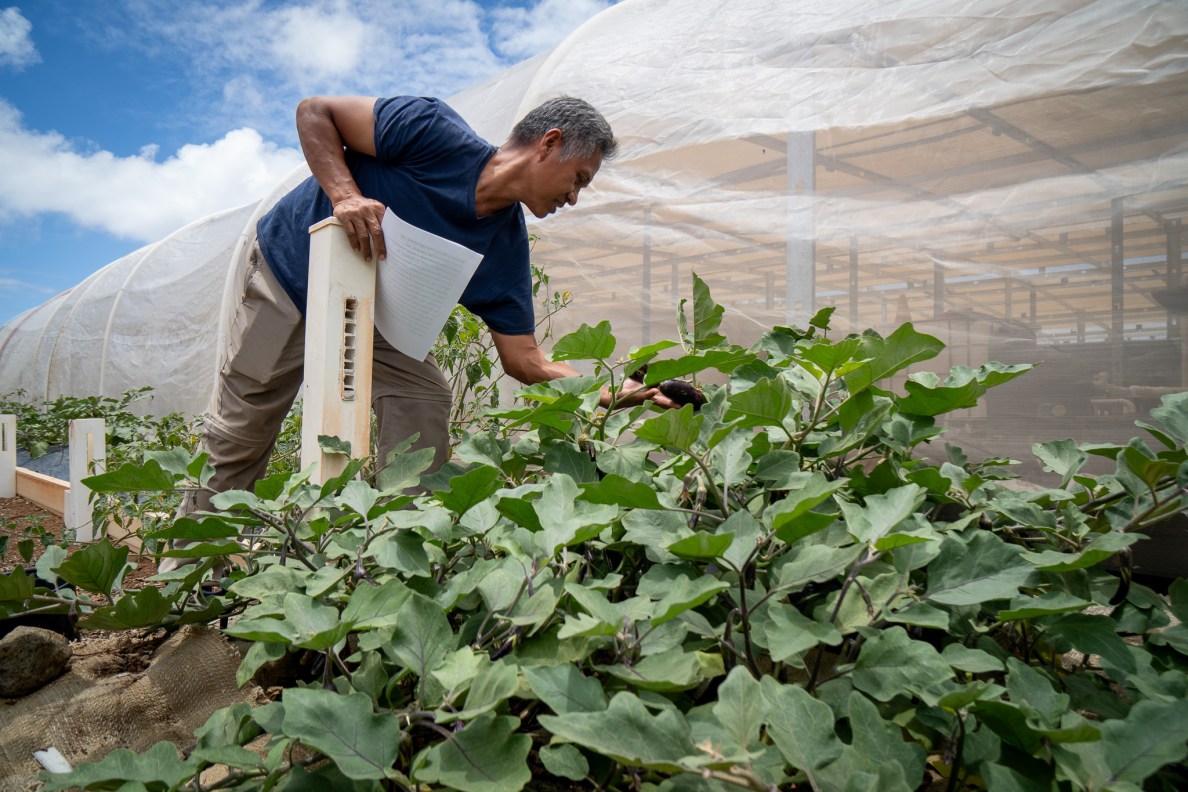
Kamehameha Schools declined interview requests for this story. In a written statement, a spokesperson said there aren’t any current plans to seek a change to the area’s agricultural zoning. But the institution has been vague at best about what it will do with the land. School representatives said in October 2023 that the school would make its plans for the area public by March 2024. More than a year later, farmers are still waiting.
The void of information has stoked fears that Kamehameha Schools may be eying the valley for development. Others are angry that the school is leaving farmers hanging, even as it — and the state as a whole — is pushing to increase local food production.
“You can’t keep holding them in limbo,” Phil Estermann told school representatives at a 2024 neighborhood board meeting where numerous residents — some of them Kamehameha alumni — spent more than an hour pleading for more definitive answers. “If you want to eat local, you have to grow local.”
Al Keaka Hiona Medeiros, who described himself as a Native Hawaiian farmer one paycheck away from being displaced from Hawaiʻi, said it sounded like the school was going to do what it has always done: “sell land to make a profit.”
“If it’s not going to go back to ag land, give it back to the kanaka,” Medeiros said. “Give it back to Hawaiians. Let us live on the land.”
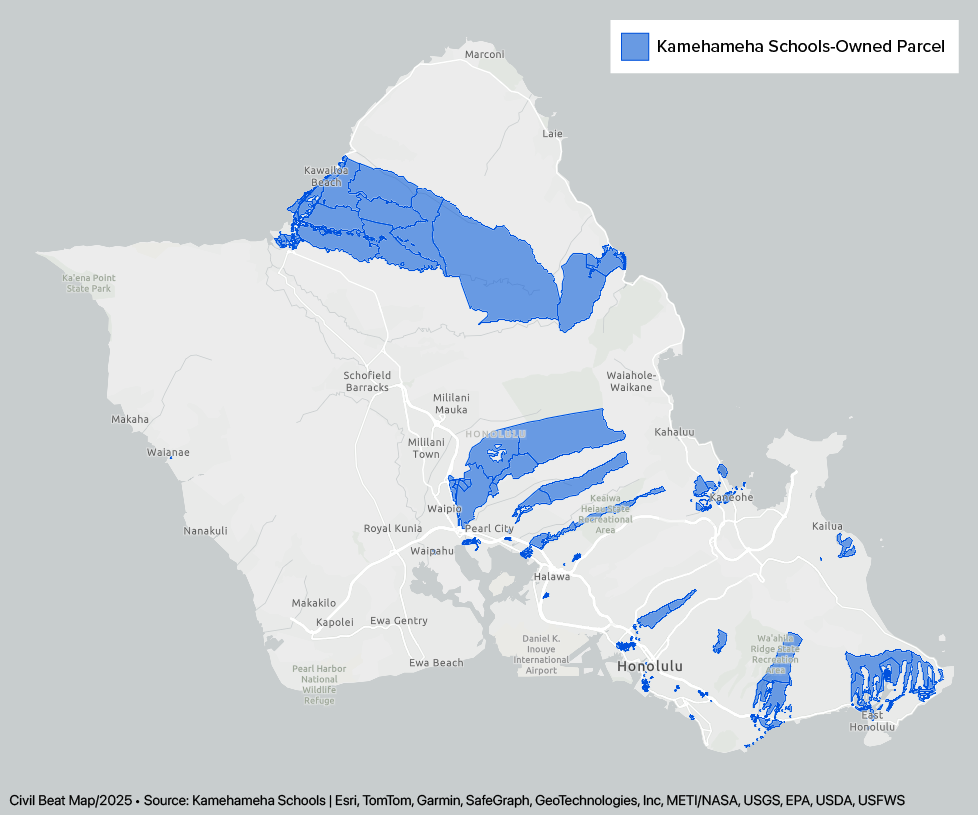
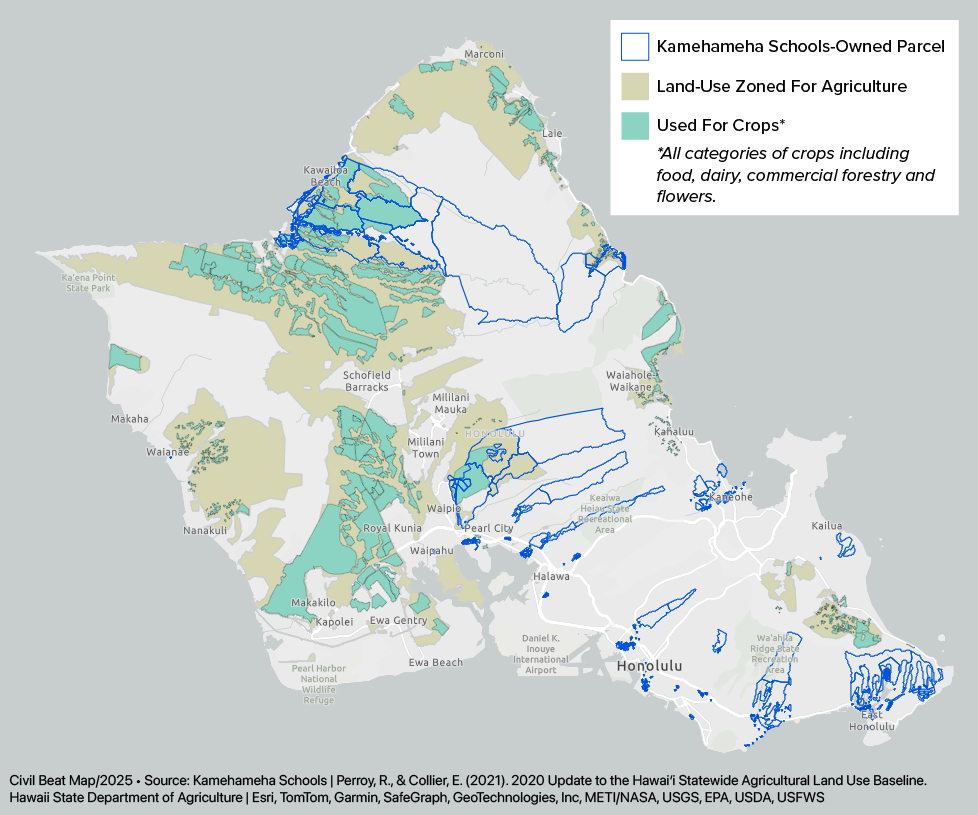

The institution’s complicated legacy in the area only adds to the distrust. Just a few generations ago, Hawaiʻi Kai was one of the most important food production centers on Oʻahu. Then in the 1960s, Kamehameha Schools all but wiped out agriculture in East Honolulu. The school evicted hundreds of families and farmers, leaving them with nowhere to go, and erected homes they couldn’t afford.
At the time, lawmakers and farmers warned the institution that it would be attacking the heart of food production in Hawaiʻi. They said the displacement of so many farmers would mean an increase in the price of local food and a dangerous reliance on imports.
One pig farmer, Albert C Derego, told the Star Bulletin in 1960 that he had just made it over the hump into profitability when Kamehameha Schools began evicting farmers.
“You can’t fight progress. This is a wonderful place for residential development, and people have to have some place to live,” Derego said, voicing a sentiment echoed by farmers today. “But they also have to eat. And that is my concern.”
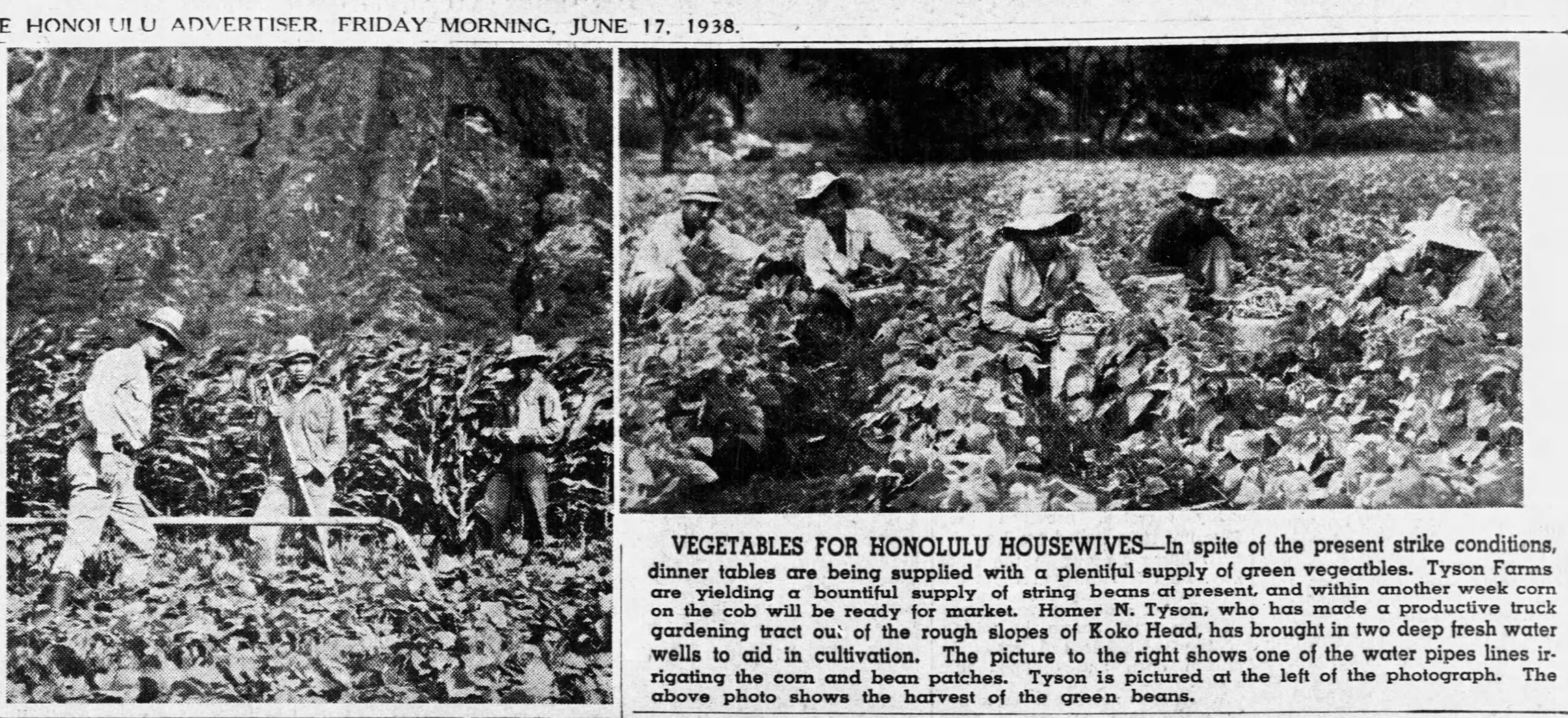
Hawaiʻi Kai was once referred to as the country. It also bore a different name: Maunalua.


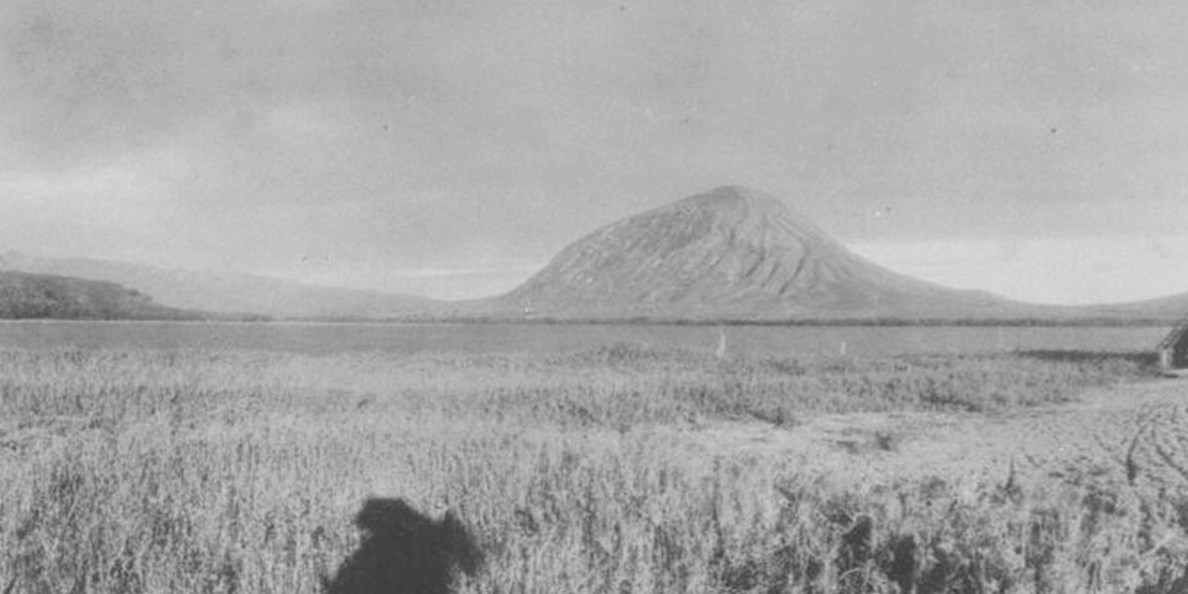
What is now a private marina was a 500-acre fish pond teeming with mullet. Farms surrounded Koko Head to Sandy’s Beach and stretched into six valleys. Kamehameha Schools owned it all.
Nearly 7,000 acres from Kaʻalākei Valley to Makapuʻu were given to Queen Kamāmalu during the Great Mahele, a 19th-century land division that created private property in Hawaiʻi.
After passing hands among various Kamehameha family members, Maunalua was given to Bernice Pauahi Bishop. When she died, the trustees of her estate were charged with creating Kamehameha Schools and stewarding her lands to support its educational mission.
Kamehameha Schools, formerly known as the Bishop Estate, is the largest private landowner in Hawaiʻi and has an endowment worth $15.2 billion. Nearly a third comes from real estate. The funds are primarily used to serve its 5,300 Native Hawaiian students and support its community programs.

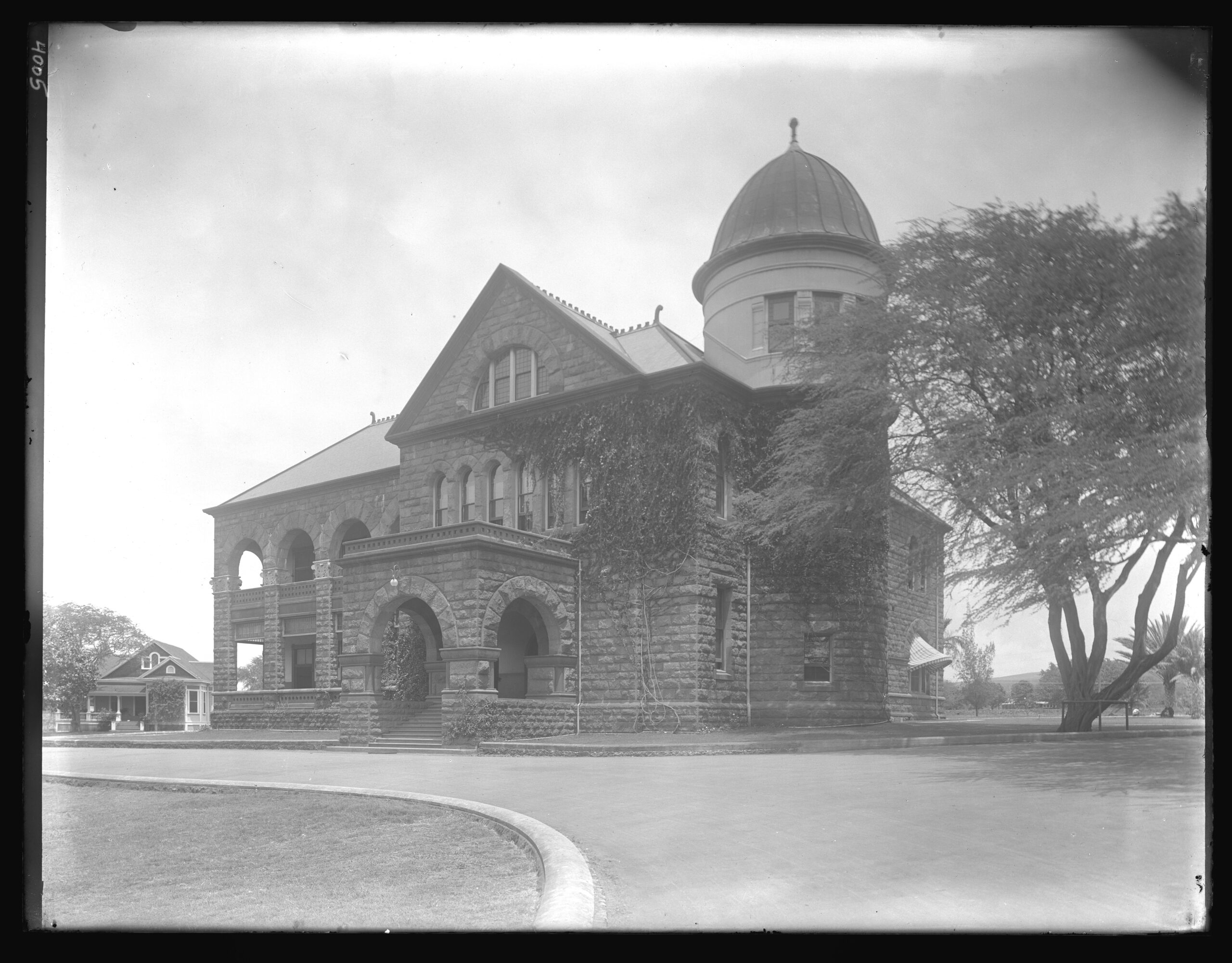

Maunalua was once famed for its ʻuala. Whaling ships would load up on the Hawaiian sweet potato for their journeys. The land there was leased to various ranchers and farmers throughout the late 19th and early 20th centuries.
Historical reports describe rice paddies, honey and vegetable farms, coconut groves and other agricultural endeavors on thousands of acres surrounding the pond.
By 1959, four farming associations represented hundreds of Hawaiian, Portuguese, Filipino and Chinese families homesteading and commercial farming. Farmers grew various vegetables, flowers and raised pigs. The pond was leased by fishermen who sold the mullet to local markets.
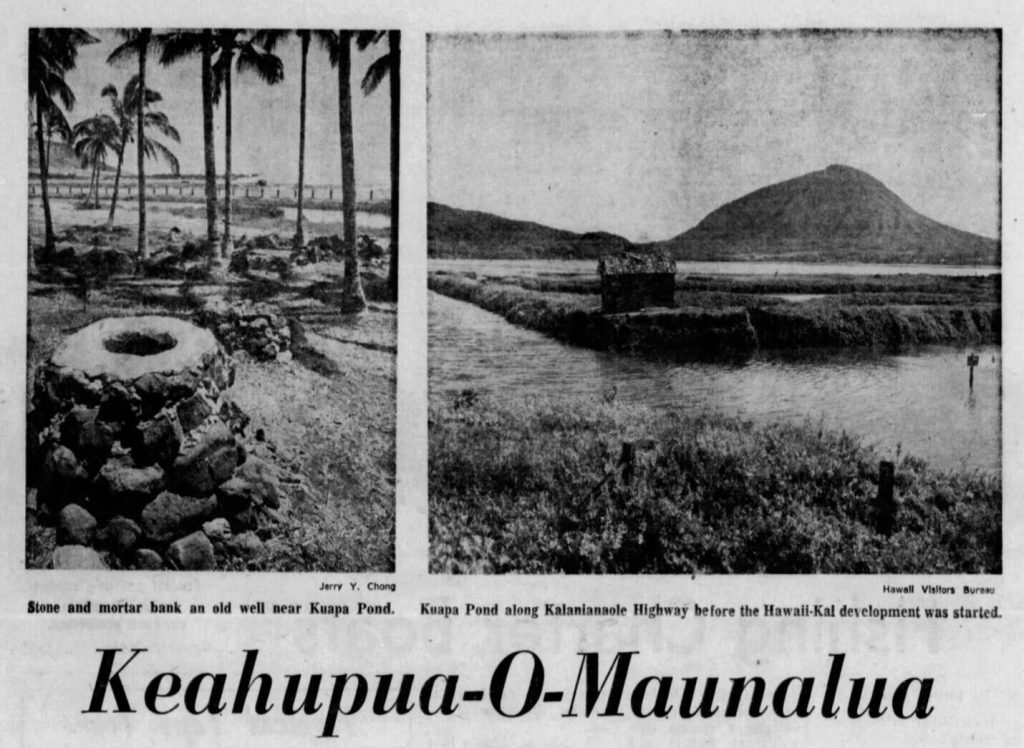
Land-rich but cash-poor, Kamehameha Schools had been looking to accomplish a large planned development in Maunalua for years. The trustees for the institution got their wish when industrialist Henry J. Kaiser took a tour of Portlock, a waterfront neighborhood at the base of Koko Head.
Farmers’ leases were up. Kaiser had the money, liked the area and wanted a challenge. So the school leased him 6,000 acres.
In 1959, Kaiser and Kamehameha Schools announced plans to transform the fishpond and farmland into a water-oriented development with low-density resorts, golf courses and homes for those in the medium to luxury income bracket.
‘Disastrous Consequences’
As Kaiser faced meetings filled with hundreds of worried farmers, he promised to develop two agriculture parks to relocate them. A nearly 90-acre park in Kamilonui and 30 acres in Lunalilo near where Kaiser High School is now.
The stakes were high not just for farmers, but the entire island. In a congressional hearing on funding for farmers, then-U.S. Rep. Spark Matsunaga pointed out the displaced farmers had supplied much of the fresh vegetable needs of the civilian and military population on Oʻahu.
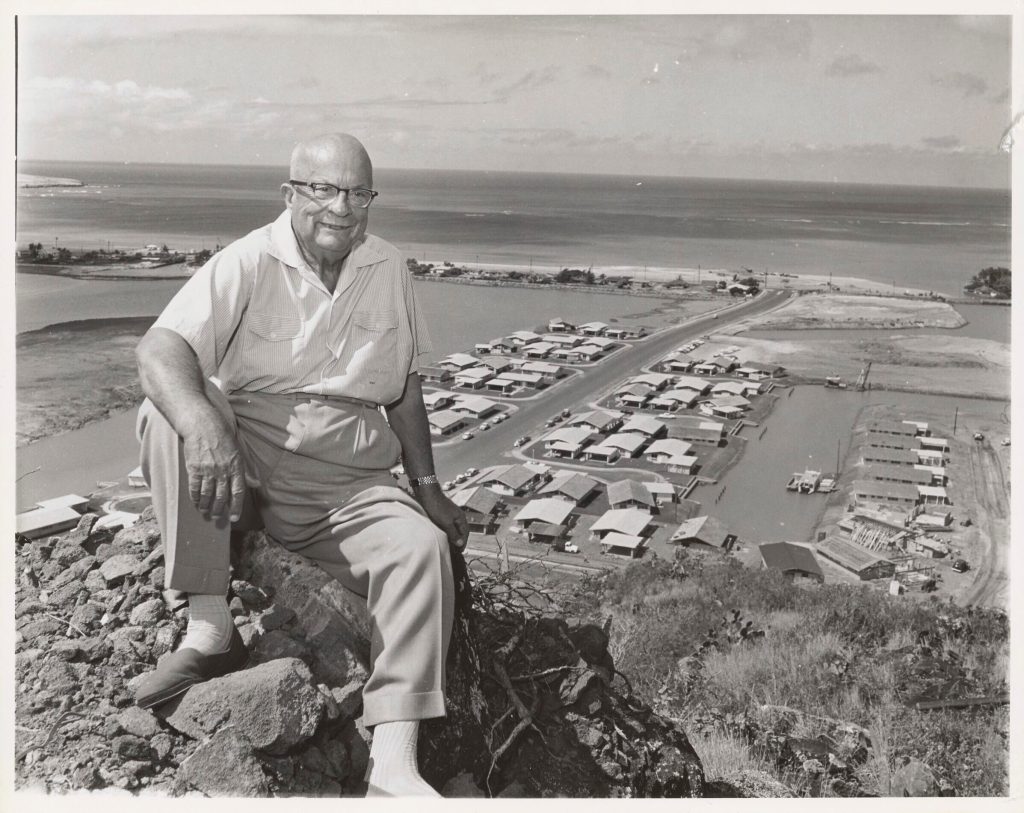
Because of Hawaiʻi’s isolation, the state needed to keep up food production “to avoid the disastrous consequences” that could occur if shipments from the West Coast were disrupted in an emergency, Matsunaga warned.
But as Maunalua farmers faced eviction, Kaiser pulled out of his promise to develop the ag land. The farm plots were set aside by Kamehameha, but Kaiser no longer wanted to pay to make them farmable. Kamilonui was filled with thorny kiawe trees and boulders. The cost to improve it would force farmers to give it up, they said.
Farmers who had been awarded plots in Kamilonui negotiated with the school and Kaiser for two years. All they got was a promise to clear the land and provide water and wood. But farmers needed more than that.
The now-defunct federal Farmers Housing Administration was in charge of providing loans for agricultural endeavors. But farmers had to be an owner or prospective owner of land to be eligible. Hawaiʻi’s unique land-tenure system meant the state had virtually no farmland available for purchase, a 1966 House Agriculture Committee report said.
Farm ownership is still difficult to come by. Just 32% of farmed acreage in Hawaiʻi is owner-operated, according to the 2022 USDA census. Kamehameha Schools alone owns 181,000 acres of agricultural land.
Today, farmers can receive loans if they rent their plots. But getting a loan while holding a short-term lease is difficult. Grants also tend to require terms longer than the one year Kamehameha recently gave Kamilonui farmers.
Farmers Have Always Needed More Certainty
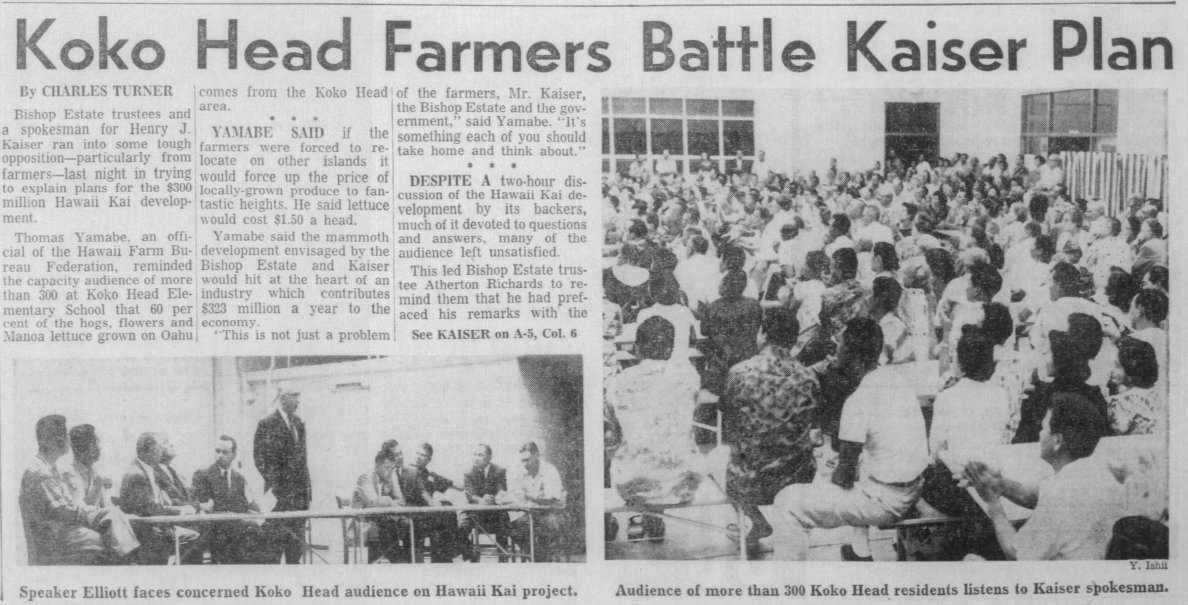
Worried about their future, Maunalua farmers in the ‘60s also wanted a timeline of when they would have to move. Crop planning took a year, they told the developers at the time.
But Kamehameha and Kaiser said they couldn’t tell farmers when they would need to leave. How soon the valleys could be cleared for construction depended on economics, they said. Farmers and residents were placed on month-to-month leases as Kaiser developed Maunalua section by section. Most had just 30-day notices to vacate when their land was chosen for construction. Some had even less.
Those who could afford to move, did. Others watched for a decade as cookie cutter homes popped up around them. Some stayed past their eviction dates. To prevent delay, the school requested a bulldozer be brought in on standby to knock homes down as soon as residents’ leases were up.
One family was still raising cattle and horses on 114 acres of leased land that is now the Hawaiʻi Kai Golf Course when Kaiser and Kamehameha’s bulldozer came to knock down their home in August 1961. The Dias family lost several horses when their fence was torn down.
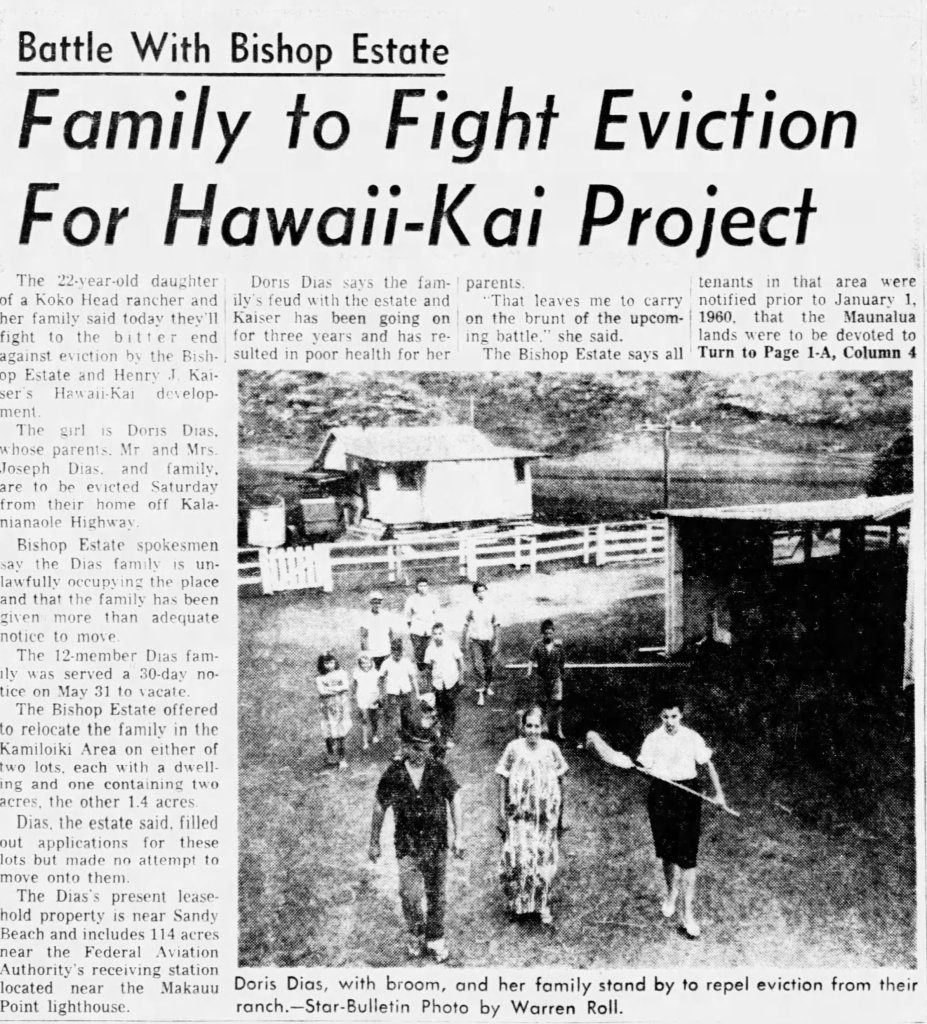
Kamehameha Schools offered the family a few acres in the neighboring valley Kamiloʻiki. But the plot wasn’t big enough and didn’t have enough grass for grazing, the family told the Star-Bulletin. Other farmers were also offered spots in Kamiloʻiki and Kalama Valley. But those would be developed in a few years too.
Lawmakers called for the school to find suitable plots to relocate growers, but most were evicted with nowhere to go. Many changed careers.
Kalama Valley was the last to be developed. It was largely populated by Native Hawaiian farmers, homesteaders and blue-collar workers.
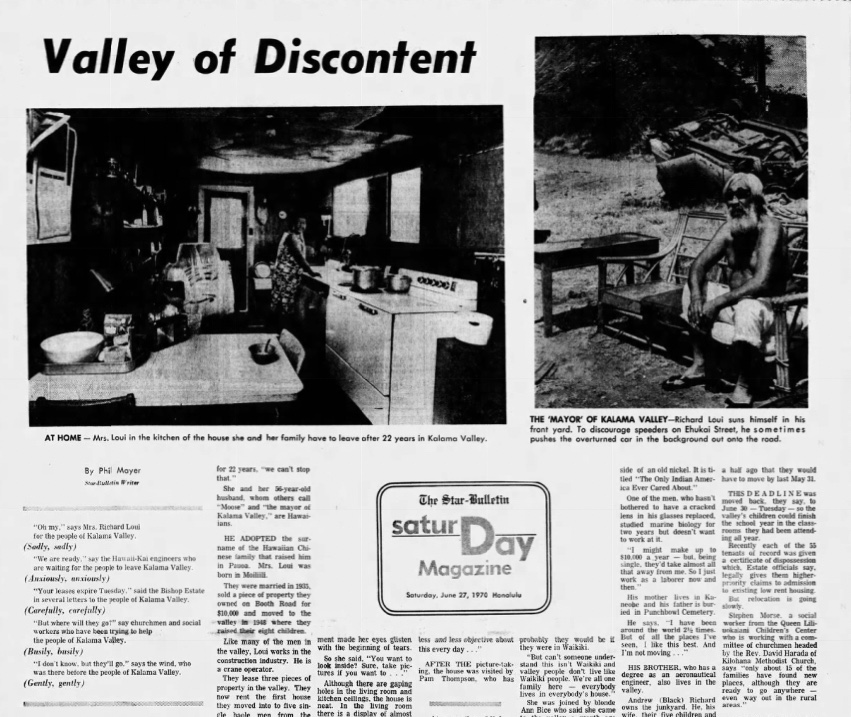
“When they are gone … the valley is to be filled with homes that no one who lives there now will have enough money to rent or buy,” a Star-Bulletin article said.
At the time, school trustee Richard Lyman Jr. said the homes being developed would generate more income than farms. Asked if the school had any responsibility beyond making money, Lyman said, “there’s only one: to maintain and operate a school.”
As development and evictions continued, public opposition toward Kaiser and the school grew. A full-page article on valley residents in 1970 sparked protests that helped ignite the Hawaiian Renaissance and a series of land struggles in the 1970s.
“It changed a lot of people’s opinion of Bishop Estate,” said Neal Milner, a former political science professor at the University of Hawaiʻi who has written about Kalama Valley and Kamehameha Schools, including as a Civil Beat columnist.
The school has changed in many ways since Maunalua was first developed, Milner said. But its lack of transparency is still an issue that’s likely to garner pressure from community members.
Several of the school’s recent real estate projects have garnered significant pushback. Critics say the school’s plan to develop a resort in Keauhou Bay on Hawaiʻi island calls into question how the institution manages its land and whether the school’s commercial enterprises align with the intent of Pauahi’s will.
In a neighborhood board discussion on the fate of the Hawaiʻi Kai farms in November 2024, Marissa Harman, director of planning and development at Kamehameha Schools, said land transactions and leases were private and asked the audience to respect that.
Residents and lawmakers disagree. A resolution introduced this year but not acted on urged the school to prioritize transparency and to limit disruption of how its assets in Hawaiʻi Kai are used. The Hawaiʻi Kai Neighborhood Board, meanwhile, has kept a monthly spot on its agenda for community input on the topic since June 2022.
“Any representative of Kamehameha Schools or any trustee who says, ‘we don’t have to be transparent,’ is living in an alternative universe,” Milner said.
The assumption becomes, he said, the school “is hiding things.”
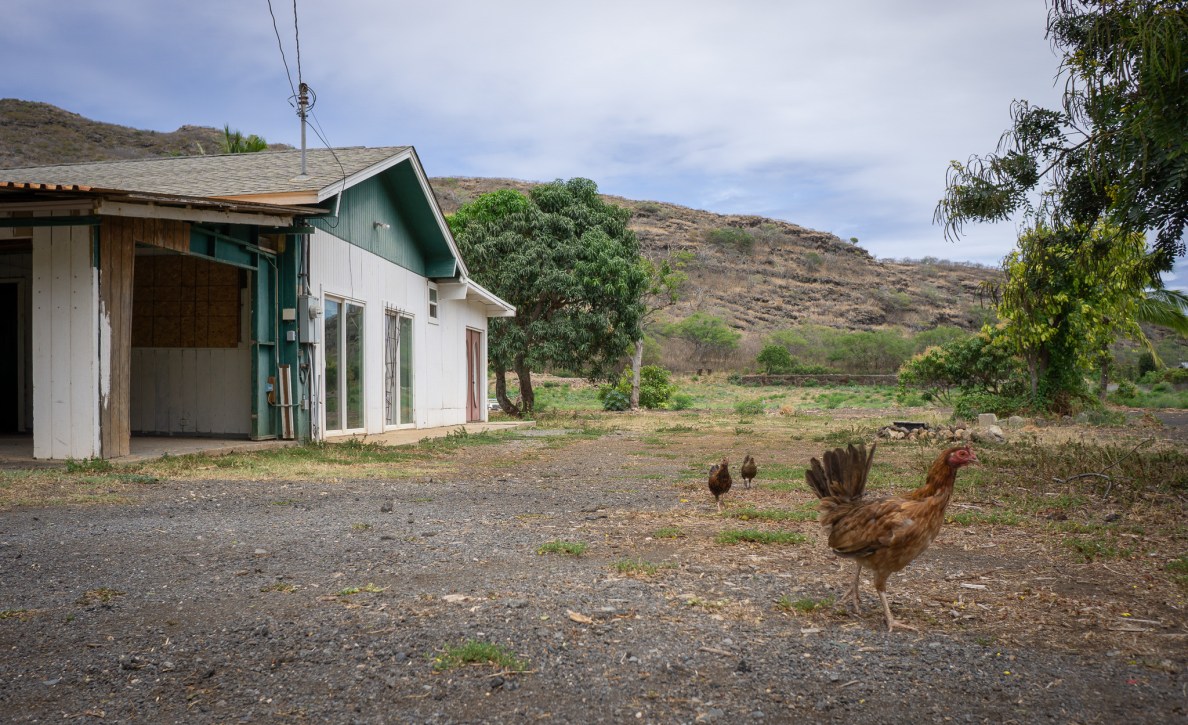
The drive to Kamilonui Valley quickly shifts from suburban houses to a country road. California grass and invasive koa haole shrubs overtake empty lots and wild chickens roam through condemned plantation homes.
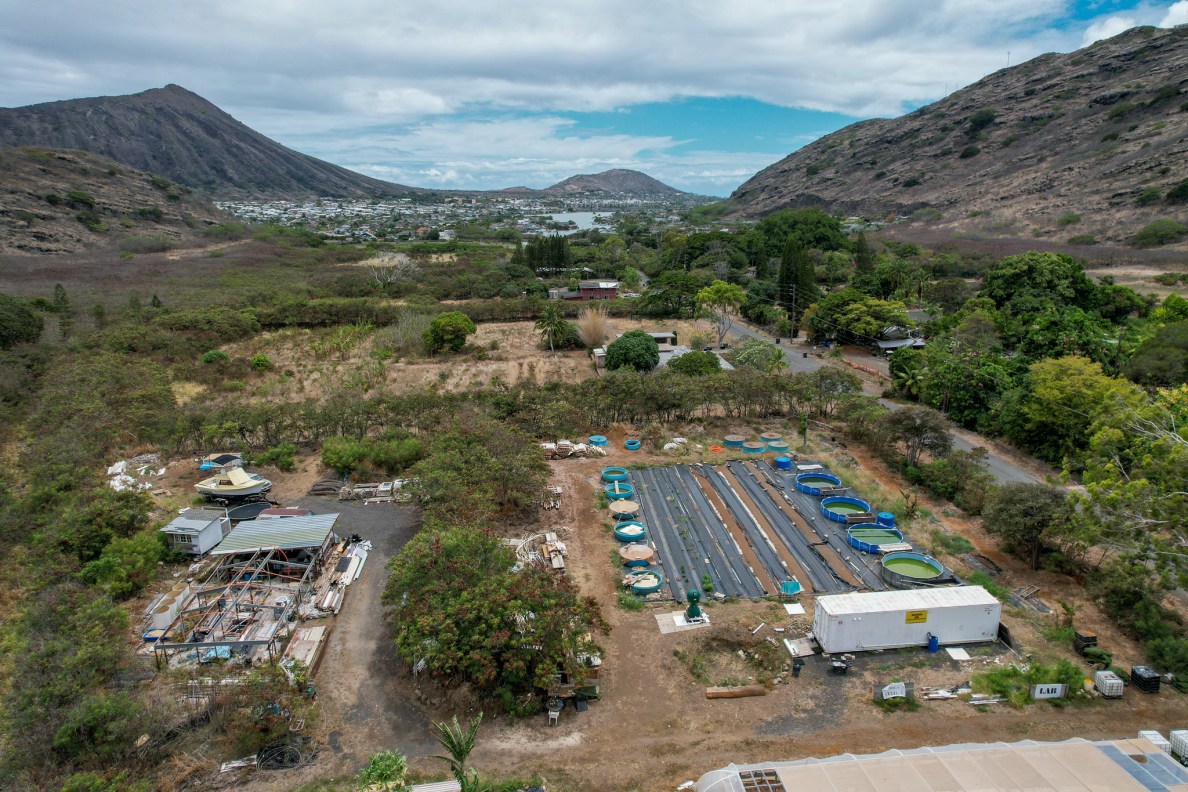
In the back of the valley where Rojas’ farm is, the sprawl is only visible through gaps in trees. It’s hot, but the Iraq War veteran enjoys the wind that he said comes from every direction.
His greenhouses are made from recycled construction materials, his ponds are above-ground plastic pools. He wants everything to be portable in case this is his last harvest. In the meantime, he’s still experimenting with melons, which he thinks could be grown year-round here.
Rojas has his eyes on the half of his lot filled with koa haole or “foreign koa.” He’d like to plant his ʻulu tree there and leave it for his kids and grandchildren, who he hopes will be able to take over the farm when he retires. His granddaughter is Native Hawaiian, and he wants her to work the land like her ancestors before her. Now that dream is in question.

The uncertainty has also upended plans for his neighbors. Elizabeth Reilly has spent over a decade on her farm, Aloha ʻĀina O Kamilo Nui, restoring the area, producing food and educating the community on the importance of the valley.
Reilly got plans drawn up to expand her plot in the back of the valley. But she also has a plan B in case she needs to leave come next June.
Crystal Kua, a spokesperson for Kamehameha Schools, would not say whether Kamilonui farmers will get an extension on their one-year contracts.
“With leases now expired, we are working closely with each tenant to support their individual situations,” she said in an emailed statement.
Leases on the school’s agricultural land off Lunalilo Home Road expire in 2034. The school has said its plan for Hawaiʻi Kai — whatever that plan is — wouldn’t include those plots.
Rojas remains hopeful the estate will honor the area’s agricultural zoning. At the very least, he hopes they’ll relocate him to a plot elsewhere, he said. But that would mean spending money and time to get a new farm running. He’s already put in thousands to improve the land in Kamilonui.
Rojas said he believes he survived his deployment in Iraq so he could come back to farm and do his part to feed his community. He comes from a family of farmers and fishermen. He wants to honor that, he said, and Kamehameha Schools, too.
He hopes the school will maintain the farm’s agricultural zoning and see him as an instrument for its efforts to advance local food production.
“I would do anything,” he said, “to farm.”
Correction: An earlier version of this story incorrectly described action on a resolution in the Legislature.
“Hawai‘i Grown” is funded in part by grants from the Stupski Foundation, Ulupono Fund at the Hawai‘i Community Foundation and the Frost Family Foundation. “Hawaiʻi’s Changing Economy” is supported by a grant from the Hawaiʻi Community Foundation as part of its work to build equity for all through the CHANGE Framework.