

Hawaiʻi Expands Effort To Keep Women Out Of Jail
Addressing the underlying trauma and substance abuse issues that many non-violent women offenders struggle with can put them on a better path — and save taxpayer money too.
When the Honolulu Women’s Court is in session, First Circuit District Court Judge Trish Morikawa’s courtroom feels like a family reunion.
On a recent Wednesday, a baby cooed in its mother’s arms as she sat in one of the back pews. Another participant’s 3-year-old grandchild, clad in a Mickey Mouse T-shirt and shorts, excitedly ran up to the court clerk to snag a piece of candy from a Ziploc bag.
Morikawa spent about five minutes checking in with each woman on the docket. Leaving behind the rigid formality of a typical court proceeding, she talked to each participant as if they were a friend.
“I’m going to miss your birthday?” Morikawa exclaimed when she realized the participant’s next court hearing was scheduled for Sept. 3, the day after the woman’s birthday.
Women’s Court launched in 2023 as a pilot to help rehabilitate women offenders living with addiction and trauma. Early results have been promising enough for the program to become a permanent fixture on Oʻahu. It’s also expanding to the Big Island next month.

Research shows that court programs focusing on drug treatment for nonviolent offenders are effective at keeping women from committing future crimes.
The first women’s drug treatment court opened in Kalamazoo, Michigan, in 1992, according to the National Drug Court Resource Center. According to a 2024 annual report on the program, 13% of graduates had a new conviction within three years of admission, compared with 44% of offenders who did not go through a drug court program.
Hawaiʻi Judiciary spokesperson Brooks Baehr said the courts here will check in with graduates every three months for the first year after graduation and then annually after that to see if they have any new court cases.
Women in the program spend up to two years or more receiving substance abuse treatment, taking parenting classes, finding consistent employment or enrolling in educational training — and staying sober.
It’s too soon to know how successful the court will be in keeping women out of the criminal justice system in the long term, but proponents say it’s already having a positive impact on women’s lives.
At the graduation ceremony this spring, participants spoke of how the program helped them regain custody of their children or find stable housing after years of living on the streets, said state Rep. Linda Ichiyama. Those stories were enough to let her know the program is working, she said.
“It is helping to break the intergenerational cycle of trauma,” said Ichiyama, one of the introducers of a bill that passed this year that included continuing the Oʻahu Women’s Court and expanding to Hawaiʻi island.
The Big Island Women’s Court pilot will start in the Third Circuit District Court in Kona next month with 14 women currently in the district’s drug court program, said Judge Wendy DeWeese, who will oversee the court. The women will continue the substance abuse treatment they were getting through drug court, but will also receive more mental health support tailored to women who have experienced abuse and trauma.
“My sincere hope is that if this program can be successful,” DeWeese said, “if the idea of personalized, supportive, evidence-based treatment of offenders in our community can be successful, that it will be a wake-up call to people to say, ‘Why are we just doing this with women?’”
Diverting Women From Prison
Veronica Hanawahine was among the first six women to complete the pilot program on Oʻahu.
Three years ago, Hanawahine was living in a tent at Lualualei Beach Park in Waiʻanae, trapped in a cycle of alcohol and drug abuse.
One day in July 2022, fueled by meth and a deep sense of hopelessness, she climbed to the top of Māʻili Pillbox in the Waiʻanae Range. Intending to end her life, she jumped off the top of the pink concrete structure that marks the end of the hike.
She lost consciousness, and by the time she woke up, it was dark.
“That was when I started reflecting on my life,” she said outside the First Circuit Court in Honolulu earlier this month, “and if that’s the kind of life that I wanted.”
Hanawahine was arrested a few weeks later on a probation violation stemming from a 2018 assault charge. She was facing a year in jail, but that’s when she instead became one of the first people to join the Women’s Court pilot.

Judge Morikawa and her probation officer in Women’s Court were more understanding and empathetic than other court officials she’d dealt with, said Hanawahine, now 43. That helped motivate her to follow the terms of her probation and stick with the program.
The program is designed to help women living with addiction who have a history of trauma, Morikawa said. Hanawahine, who was abused as a child before becoming addicted to meth and alcohol and arrested for assault at 37, was a good fit.
For Hanawahine, it was the abuse she suffered in foster care that had caused her to grow up angry with the world. She was raped as a young child and beaten in multiple foster homes, she said. One foster parent would send her to school with long pants and shirts to hide the bruises and marks on her body.
In Women’s Court, participants undergo a mental health assessment with the state Department of Health. Depending on the results, Morikawa said the women are then partnered with case managers who help them find the appropriate care.
Keeping women out of jail is cheaper than housing them at a correctional facility, she said.
The state Judiciary has budgeted $705,416 a year for Oʻahu Women’s Court. The goal is to admit 20 women each year and there currently are 30 participants. The Legislature appropriated nearly $515,000 for the first year of the pilot on the Big Island.
By comparison, it costs $253 per day on average, or about $92,000 per year, to house one inmate.
Because some women face five or 10 years of incarceration, the savings to taxpayers from keeping them out of jail or prison can be significant.
“I think we’re a bargain,” Morikawa said.
How It Will Work On The Big Island
The 14 women selected for the Hawaiʻi island pilot are all on probation for non-violent felony drug or property crimes. Most have reoffended while on probation.
The court is hiring a full-time drug court supervisor to help oversee the program, said Grayson Hashida, drug court coordinator for the Third Circuit. The court will also contract with a peer specialist who is a drug court graduate themselves, a women’s health professional, and a cultural practitioner to run activities and provide mental health services centered around Native Hawaiian practices. Twelve of the 14 participants identify as Native Hawaiian, Hashida said.

Like the Oʻahu program, participants will start with inpatient substance abuse treatment before moving into transitional sober housing and eventually moving out on their own and getting a job. They’ll also receive ongoing mental health counseling.
The supportive atmosphere of Women’s Court is what made the biggest difference for Hanawahine.
The mother of three was first arrested in 2018 for an assault on Christmas Day. She said she got into a fight with a woman who was threatening one of her children. Hanawahine said she was holding a folding knife in her hand and didn’t realize it was open when she raised her hand to try to block the woman’s advances. The knife slashed the woman’s forehead, and Hanawahine drove away from the scene.
A criminal complaint filed by prosecutors at the time said Hanawahine intentionally caused harm to the victim using a dangerous instrument. She pleaded guilty in November 2019 and was sentenced to four years’ probation.
During her probation, she had three bench warrants issued and was arrested twice for violations like failing to check in with her probation officer and skipping drug assessments. She said she was frustrated by probation officers who would call her when they knew she was working or couldn’t understand when a delay in her long bus commute from Waiʻanae made her late for a drug test.
When she was arrested for violating probation the second time in 2022, the court revoked her probation and sent her to jail. She was accepted into the Women’s Court program on Feb. 22, 2023, and released from the Oʻahu Community Correctional Center to the Sand Island Treatment Center several weeks later.
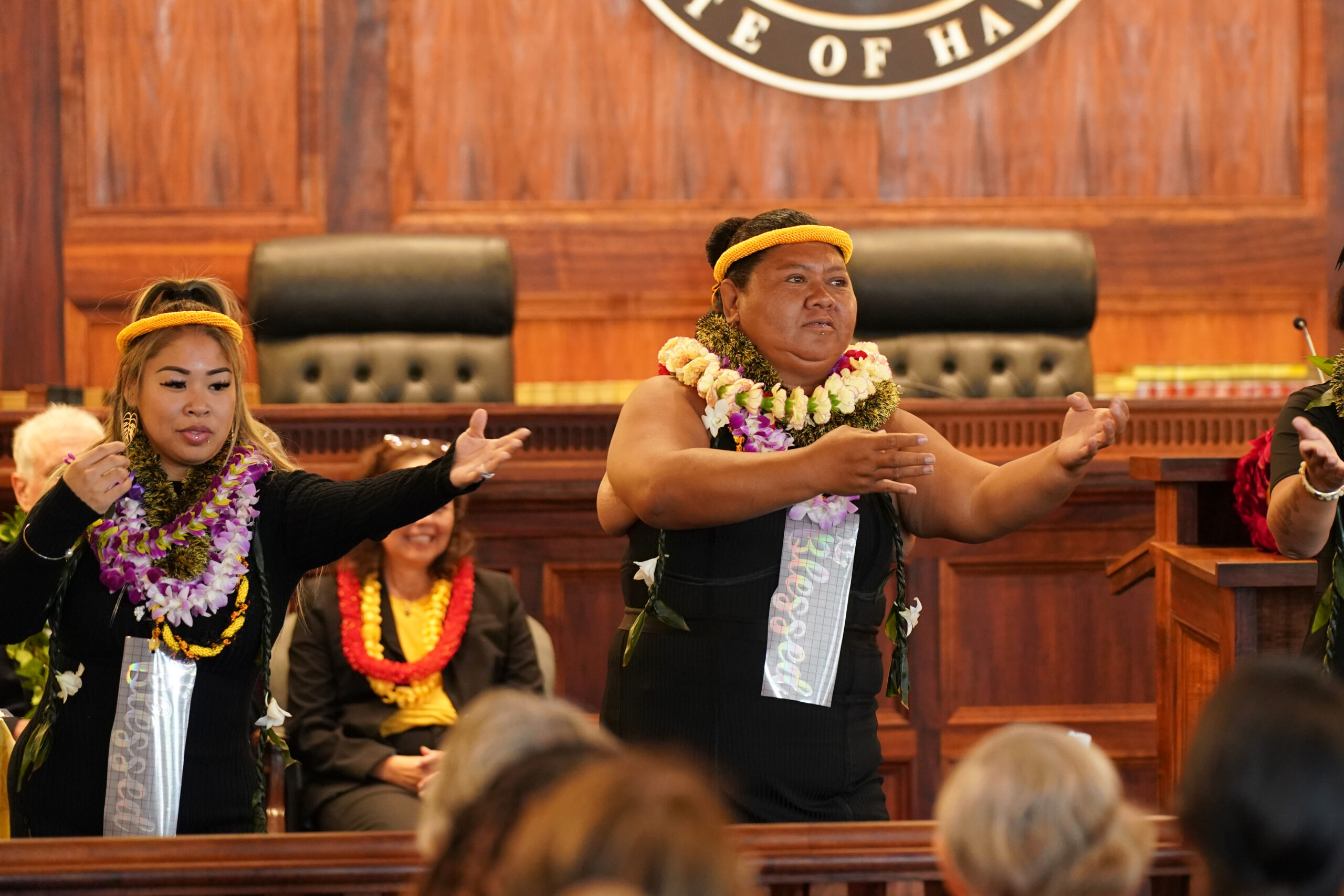
Her therapist at Sand Island helped her confront her past traumas, she said, and learn to forgive herself while striving to do better.
About a year after starting treatment, Hanawahine’s three children — who were 23, 22 and 16 at the time — came to visit her at Sand Island. It was the first time she’d seen them in over two years.
“We all cried,” she said. “It was just tears of joy to see each other.”
Hanawahine has been out of jail for a little over two years and was discharged from probation on June 26. She now lives with her brother and his family in their home in Kapolei and has a housekeeping job at the Hawaiʻi Convention Center.
Earlier this month, she was once again sleeping in a tent. But this time it was because she was on a camping trip in Makapuʻu with her two sons.
“It’s so funny because I was living on a beach in my addiction and today I’m camping on the beach,” she said. “It’s true freedom.”
Civil Beat’s reporting on women’s and girls’ issues is funded in part by the Frost Family Foundation.

