Report: Hawaiʻi’s False Killer Whales Trending Toward Extinction
A new report finds that efforts to protect the dolphins are not working. Experts blame both fishing vessels and NOAA.
Thirteen years ago, the Main Hawaiian Islands’ dwindling population of false killer whales was officially declared endangered, a move intended to help their numbers recover after years of getting hooked and tangled in nets, mostly set by nearshore commercial fishers.
But instead of rebounding, a new report finds, the vulnerable group has only continued to shrink at a troubling pace.
The report, published Thursday in the journal Endangered Species Research, estimates that the unique population of false killer whales inhabiting the waters around the main islands has shrunk from about 184 individuals in 2012, when it was listed under the Endangered Species Act, to 139 members in 2022.
That’s an average population loss of 3.5% a year at a time when federal and state fisheries managers were supposed to be taking meaningful steps to better protect the mammals and boost their numbers.
“There’s been no specific changes to the way the fisheries are managed,” said Robin Baird, a biologist with the nonprofit Cascadia Research Collective, who helped lead the new study. “There’s been a lot of talk but no action.”
Baird and Kealoha Pisciotta, a Hawaiʻi island-based cultural practitioner, both expressed frustration this week with the National Oceanic and Atmospheric Administration’s regional Pacific Islands office. They urged it to step up with protections against hookings and entanglements.
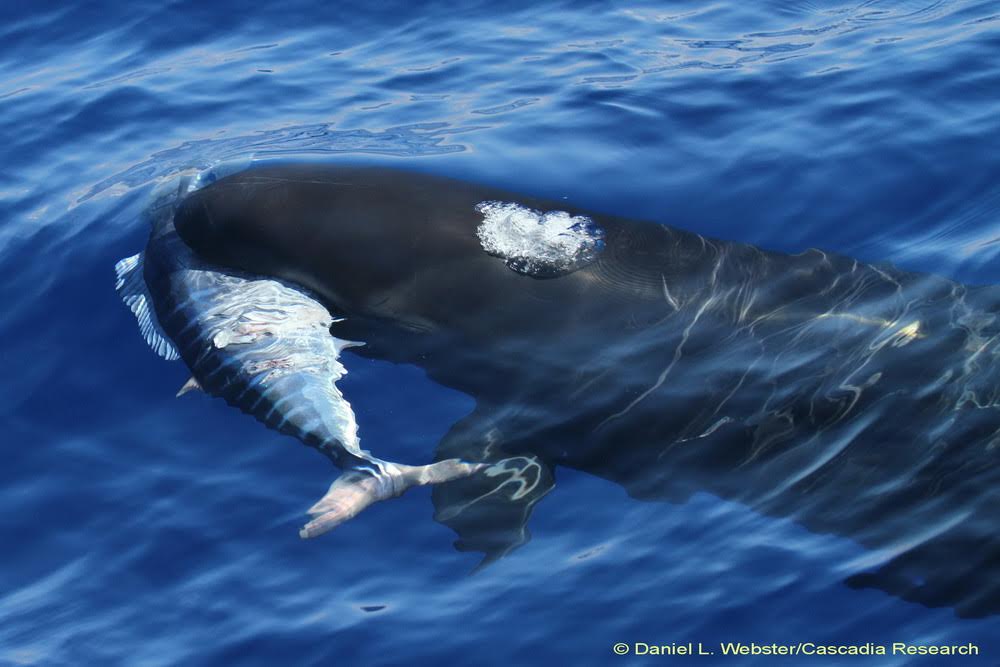
False killer whales are actually dolphins that resemble orcas that prey on the same large tuna species prized by fishing boats. The population that hugs the Main Hawaiian Islands thrived there, researchers believe, for thousands of years.
Their decline in Hawaiian waters, likely due to run-ins with those fishing boats, is especially worrisome for a marine mammal species that’s slow to reproduce. Baird said female false killer whales don’t start birthing calves until they reach about 10 years old, then only have a new calf once every six or seven years.
Now, Baird said, the local group is trending toward going extinct unless state and federal fishing managers take meaningful action. It probably won’t happen in his lifetime, said Baird, who’s 61. But it might happen, he said, in his 8-year-old son Bryson’s lifetime.
‘They Came Before Us’
There are actually two other groups of false killer whales that live or visit Hawaiian waters. One inhabits the waters around the Northwestern Hawaiian islands, and another pelagic group migrates between the islands and the deep ocean.
Only the population that hugs the Main Hawaiian Islands chain is listed as endangered. In fact, according to Baird, itʻs the world’s only endangered population of false killer whales.
False killer whales and other marine animals are important in Hawaiian culture, Pisciotta said, largely because they serve as ‘aumakua, or ancestral spirits, to many local families.
“They came before us” in the Hawaiian creation chant, the Kumulipo, said Pisciotta, who co-founded the grassroots marine protection group Kai Palaoa and sometimes responds to whale and dolphin beach strandings.
In that chant, “they helped bring us into being,” Pisciotta said of whales and dolphins. Dolphins, she added, are seen across the islands as messengers.
Researchers have previously released reports estimating numbers of the Main Hawaiian Islands false killer whales, but Thursday’s report is the first to actually examine the trends in those numbers, Baird said, since the group was listed as endangered.
It was completed with satellite tagging data, he said, along with data from annual surveys and photographs taken on the water.
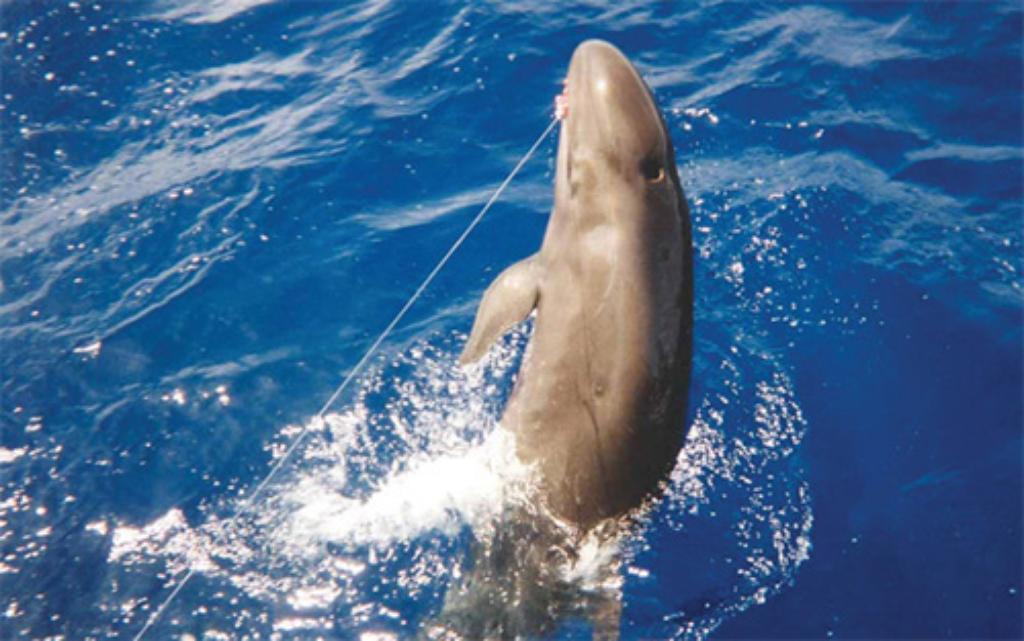
Researchers and federal officials alike believe the biggest threats to the Main Hawaiian Islands’ false killer whales are likely the commercial fishing vessels that operate in the same waters tens of miles offshore.
The biggest hot spots for clashes between those boats’ fishing gear and the false killer whales, according to a separate 2021 Cascadia study, are in the waters just north of Molokaʻi and the northwest Kohala tip of the Big Island.
But those nearshore commercial fishing vessels, unlike the more heavily scrutinized Hawaiʻi longline fleet that fishes in distant waters, lack observers to report those encounters where the false animals get hooked, tangled, maimed or killed.
Instead, evidence of the incidents has been chronicled over the years in photos that Baird and other researchers have taken of the false killer whales that survived with maimed fins and gashes across their mouths and bodies.
NOAA fishery officials, meanwhile, have estimated that to recover the Main Hawaiian Islands group needs to grow to at least 406 individuals.
That estimate comes from a 2021 recovery plan. Beyond issuing such plans, Baird said, NOAA has taken no meaningful actions to address threats caused by commercial fishing.
NOAA representatives this week did not directly respond to Baird’s assertions. Instead, they said via email that NOAA fisheries will release information related to the study after it’s published on Thursday.
Baird, during a lecture earlier this week at the Hatfield Science Center in Oregon, said that he thought fishery officials had avoided taking action since 2012 to avoid any potential political blowback as well as the ire of the local fishing industry.
“It’s a politically unpopular thing to do,” Baird said, “and would require a lot of willingness to piss off people which a lot of people on the management side haven’t been willing to do.”
During the past three years, he added, research surveys have failed to identify any new individual members of the Main Hawaiian Islands’ false killer whale population.
Pisciotta also pressed NOAA’s fishery officials to finally put protective measures in place.
“Nobody’s against fishing,” she said. “We’re just against not doing it thoughtfully, you know?”
Read the false killer whale abundance report here:
Civil Beat’s coverage of climate change and the environment is supported by The Healy Foundation, the Marisla Fund of the Hawai‘i Community Foundation and the Frost Family Foundation.