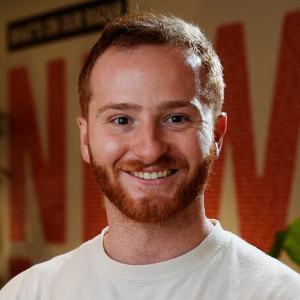
This Former Police Chief Could Be The Next Honolulu Police Commissioner
Christopher Magnus talks with Civil Beat about his policing experience and how he would approach a position on the commission.
The Honolulu City Council is considering whether to approve a veteran former police chief as the latest addition to the city’s police oversight board.
After watching a lackluster performance by Mayor Rick Blangiardi’s previous Honolulu Police Commission nominee at a City Council hearing in May, Christopher Magnus, who retired to Honolulu in 2023, reached out to the mayor with policing advice. Blangiardi was impressed and nominated him to the commission instead.
“I had three prior attempts to try to put somebody with police experience (on),” Blangiardi said last week. “Unable to do so. And then along comes a guy like Chris, and it just sort of jumps off the paper.”

If approved by the full City Council, Magnus will join the seven-person volunteer commission as it is searching for a new police chief. Beleaguered former chief Joe Logan retired last month, roughly two years before the end of his five-year term. Logan later said he was forced out by Blangiardi, and has sued the city for $780,000.
A former chief himself in three different cities, Magnus has some thoughts about what qualities Honolulu’s next chief should have. Intellectual humility and good communication skills are his top priorities.
Magnus didn’t come from a police family and says he was suspicious of police as a civically active teenager in the 1970s. But his civic service led him to interact with officers, and he became a police dispatcher as a college student in Lansing, Michigan, before climbing through the ranks as a police officer for the next 12 years.
He first became a police chief in Fargo, North Dakota, before moving to the top police job in Richmond, California, and later in Tucson, Arizona. In 2021, he was selected as the top official at the U.S. Customs and Border Patrol under President Joe Biden, but resigned after 11 months under political pressure amid a rise in border crossings.
Civil Beat sat down with Magnus to talk more about his views on Honolulu police and joining the commission. Some of his ideas include better training for commissioners, more follow-up on officer discipline and meeting in a more approachable space for community members who might feel uncomfortable entering a police station.
Council members will have the chance to grill Magnus at an upcoming Public Safety Committee meeting Thursday afternoon. If they vote to advance him, the final step for approval would be a full council vote that can come as soon as September.
This interview has been edited for length and clarity.
How did the police oversight boards in those different municipalities interact with you as chief?
In Lansing, I was often sent to meetings as sort of a department liaison, and my job was primarily to provide them with information and to help the chief sort of make sure that they were fed only what the department wanted them to hear and to paint the best possible picture. Sometimes it worked, sometimes it didn’t, depending on who got appointed to the commission.
In Fargo, there was no police commission, but there were lots of people in different group efforts that were very interested in what was happening in the police. Plus, they had a local media that you wouldn’t believe: There were four local TV stations that competed with each other for local news — in a place where there was little local news — and they had a daily newspaper that was connected to a radio station.
Crime and policing was the main subject on these talk radio stations, from like 9 to 11 every day. And they really went after me brutally.
What was Richmond like and Tucson like in terms of oversight boards?
Richmond was a more aggressive oversight board, with a lot more questions and demanding a lot more information, and also had a lot more feedback. Although they didn’t have direct involvement with complaints. They had one complaint investigator who really mostly selected complaints from within the department that he thought deserved a closer look, or potentially were not going to be handled as well as maybe they should be.

And he brought them back to the board to look at and then the department had to engage with the board about it, and the board could send it back for more information, or ask for an investigation to be done. That kind of thing. It’s a type of oversight a lot of places have. NACOLE (National Association for Civilian Oversight of Law Enforcement) deals with that type of setup frequently.
I had sometimes a good relationship, and sometimes not, depending on who was on there, who had been appointed, what they saw their jobs as being.
How do you see Honolulu’s board comparing to the other boards that you’ve interacted with?
Well, I see a significant difference in that they hire and can potentially fire the chief.
That’s not the case with the others?
That’s very rare across the country. That’s not common.
What do you think about it? Is it good, or bad, or more complicated than a simple value judgment of good or bad?
It’s more complicated than a simple value judgment. If it’s done right, it can be a good thing. If the process has community involvement. If you have capable people helping — like the right kind of selection firm — helping with the process. If it involves input from the department. I mean, it can work, for sure.
But if it’s just a small group of people trying to make decisions on their own without that kind of input, I think that’s very difficult. It would probably make it hard to make the best choices.
And how is the Tucson oversight board? Is that pretty aggressive?
No. In Tucson, I set up a board because I felt like we needed more people to look critically at what the department was doing.
They didn’t have one before?
No.
Was there a specific incident that made you think there should be more oversight?
The incident was lack of community engagement around public safety stuff. I thought the department needed to be given more attention. Tucson is a very working class community, it’s very diverse, very large.
A lot of that population just didn’t have time. There were language barriers. They were working two or three jobs. The police? Like, whatever.
And then a lot of some of the wealthier population was like, “We don’t need any reform. We’re just fine the way things are.” And so I needed a more diverse group of people looking at the police department through — critical isn’t quite the right word, but through a more inclusive perspective.
I’m curious about with these oversight boards if you take any inspiration from how they handle things.
For sure. I think one of the biggest is that, yeah, it’s great to get commission members from diverse backgrounds. And I think in fact, the more diversity you have on a commission, the better — not in a tokenistic way, but this is where elected officials have to play a role in seeking out that diversity.
But then people need to be really educated about policing so they know what they’re dealing with. I like the idea that people go to a citizens police academy. That’s great. That gives them certainly some of the technicals.

I think it’s good for commission members to attend, because I do think you should see a lot of things about how a department is run, and it’s good to see that from the perspective of the police department. Nothing wrong with that.
In general, that gives you one part of the picture. Not the entire part of the picture.
OK, meaning you can go to a police academy but don’t expect that that’s all of the training or all of the background knowledge that would make you the best commissioner possible.
Right. Especially if you’re going to have a role dealing with citizen complaints or looking at department performance or making recommendations for how things should be explored that might be different than the status quo. You’re not going to get that through a police academy.
I’ll give another example. A lot of places, community policing means they set up Coffee With A Cop. OK, I love that. That’s great. But I want to say that most of the time — who’s available at 9 or 10 in the morning or whatever? That’s limiting. Most of the time, it tends to be people that already basically like the police, but they want more attention in their neighborhood about something. It’s sort of a predictable group of people from any given area that show up. It’s not typically people that are uncomfortable with the police.
In Tucson, there was a civil service board that dealt with disciplinary matters. They were the appeal board for cops that would appeal their discipline, and they could also have involvement in some other types of things. Very nice people. Council members each got a term at appointing somebody. Nice people. They often understood very little about policing and about even a process, or discipline, or department rules.
So it was phenomenally frustrating to me — and there’s a version of this in cities all over the country — where a chief wants to do the right thing by holding officers appropriately responsible when they do bad things, when they violate important policies, use of force, sexual harassment.
This appeal board, the civil service board, they would often overreach. And because they didn’t really understand about policing and the discipline process and department rules and stuff, if the attorney or the representative for the officer got up there and said:
“Look at this officer. He’s gotten or she’s gotten awards. And they were even selected to be a training officer. They’ve done all these good things. Oh, and they’re young, too. They’re at the start of their career. Now, this was just a mistake. An error in judgment. Do you want to be responsible for destroying this person’s career?”
And of course, the officer’s sitting there in a suit and tie, beaming at them. And the commission let them off and would reinstate them.
Whereas if they had more understanding of police department expectations, you think it might have gone differently?
Yes. And this drove me insane. I talked to reporters, and I said, “You don’t cover this at all. Do you understand how important this is? Why don’t you come to a few of these meetings and see for yourself what’s going on?” And so they did, and then they started covering it.
And finally the city got this commission the training they needed to at least understand what they were dealing with. And sometimes you win. Sometimes you lose. That’s going to be true no matter what — but at least you want an informed group of people who are doing this.
Have you watched some of the Police Commission hearings here?
I have.
What are your thoughts on how they go?
Well, first of all, I would like to see more meetings out in the community. I don’t understand that. I can appreciate that, maybe as a matter of convenience, it just sort of started that way. But I don’t think it gives the public or anybody else the impression of independence.
And if people want to speak in front of the commission, I think it’s a little intimidating to have to go through getting into a police building. And not everything is in Honolulu. This police department covers much larger ground than that.
I want to be respectful of my potential colleagues here, and so I’m not coming in saying “I’m going to do this!” I’m just saying this is something that might be worth exploring.

I think if I’m on a police commission, I want to have the maximum credibility with the people that I’m responsible to represent in matters regarding the police department. I think we can be a resource to groups like the City Council and the mayor in terms of feedback that we’re hearing and concerns, and I think the Police Commission can be a really good conduit in terms of providing information. Even sharing information about best practices or other things with the department.
I get it, we’re not the chief. We shouldn’t be. We’re not the decision-maker. But we should be in a position where there that relationship is a two-way street.
I also think we need to explore — again, in terms of this sort of communication full circle — to make sure that when a complaint comes through the commission, that if the commission makes a finding, it goes to the police department.
I have been trying to do my due diligence. But one of the things I’ve heard is that the commission doesn’t always hear how the police department dealt with that finding.
And there could be legitimate reasons. I know as a chief, there were times where the commission felt one way about something, and I felt differently.
It helps when you have people with policing experience — and, I think police leadership experience is especially important because we can say, “OK, well, there are some ways we should actually look to see if this is really happening.”
Police officers really appreciate that too, because there are things the department says that they’re doing and they would like to see that the department is actually doing that. Like, if the department sets up a strategic plan that says, “Here’s what we’re doing around officer wellness,” and it turns out that there’s really not a whole lot that’s being done. I don’t think it’s a bad thing if a commissioner were to say, “Can we learn a little bit more about what you’re actually doing on this issue?” And maybe, “We want to talk to an officer about how this is going.” I just think more information sharing — communication — leads to better accountability and follow through.
I talked to the mayor a couple days ago and he mentioned that you actually reached out to him first. You were, like, “I’ve got this big binder, and I want to help out in whatever way I can.” What was the timing context of that? Was it before Chief Logan was out?
Oh yeah.
I had heard that this guy who had been the previous nominee had had difficulties in front of council. I wasn’t really clear if that was the end of the line for him, or if he was coming back, or if this was just sort of a bad day. So I didn’t know that there was even an opening. That was not really foremost in my mind.
I get it. I’m new. I’m some haole who hasn’t lived here that long. I get it. But I have 40 years of policing experience, over 20 as a chief. And I really care about policing. And as a resident here, I feel like this is a good way to be able to contribute as a member of the community. I know the department is in transition.
In transition meaning looking for a new chief?
It seemed like there were a lot of things going on in terms of there’d been a survey of officers, and there were concerns about recruiting, and concerns that have been expressed about the chief. Not that that’s unusual. And also issues on the Westside, you have violence.
I thought, “OK, are there ways that I could help with this?”
Violence reduction, community policing, recruitment: three areas that I had a lot of ideas around. I thought maybe these were things we could do an assessment on, there could be more information sharing about best practices.
When I worked with the policing project in Washington, D.C., for a while, one of the things that we developed was called SAJE, and it’s Sound, Accountable, Just and Effective policing, and it’s a hundred metrics that a police department can be measured against — pretty basic yes or no questions — and then evaluated by folks who are part of the policing project.
I’m not saying this is necessarily something that has to be done here, but it’s an example of something like, maybe a new chief coming in — maybe the chief that’s still there — wants to see how they’re doing in these areas. These are basically considered best practice things in policing, and they’re not just pulled out of somebody’s ass. These have been thoughtfully developed.
I was fairly surprised when I got contacted, like, “Want to come in and meet the mayor?”

Mayor and his chief of staff were there. We had a really good conversation. The mayor was pretty clear that he was hoping to have a police commission that could be more effective in dealing with issues, like a police (chief) search — which, by that time, sounded like there was going be a search underway.
He’s talking a lot about the commission, and the chief’s position, and the need to have somebody from law enforcement more involved. At one point, he said something to the effect of, “Are you interested in being on the commission?”
And I said, “Well, maybe. I need to feel confident that I could make a difference. That the commission is going to have a role that’s actually significant here. I don’t know enough about that, and I don’t want to be part of something if I can’t feel confident that we’re going to have the opportunity to have influence over some fairly important things.”
What kind of example would that be of realizing that you have no authority? Would it be realizing you don’t have the power to hire or fire a chief, or that you don’t have the power to do disciplinary kind of investigations?
I think a police commission in most places has an opportunity to bring forward ideas and things from the community that are important, or that are considered best practices, that they would like the department leadership to consider. Like to be a resource. And to feel like you’re actually heard in doing those things.
I always found it helpful in the places that I’ve worked, where the police commission got a lot of feedback from community members that often would not come to Coffee With A Cop. And I think the commission could be a good conduit for the department for things like that.
And you see potential for this commission to be similar?
Yes, I do. And let me just be really clear: If I’m selected, I’m not coming into this job with the idea that, first of all, I’ve already figured out everything that the commission does. I’ve already formed opinions about all of it. My goal always is to exercise intellectual humility.
I’m grateful for any tools and opportunities I’ve gotten along the way in my career. I hope I’ve learned something from all of these places and experiences. But I am always aware that you come into a new environment, and even as a chief, even after a couple of years, I still always felt like there were new things that I could learn. And sometimes it might be from somebody in the community that had never even considered engaging with the police. Sometimes it could be an officer that never thought they could talk to a police chief. Sometimes it could be an organization — in several places, for example, the ACLU.
Do you have any specific people or groups you’re thinking of off the top of your head?
I’d have to explore that.
I think there are a lot of perspectives out there. The more the better. I think people on the commission — I am so impressed with the degree of time that they devote to this, their level of commitment, and how seriously they take this work.
I think they’re on it because they really care. That’s terrific. So after talking to the mayor and thinking about it, I thought I’d like to contribute to this process.
If you were to be confirmed to the commission, you’d definitely have a part in picking the next chief. We talked to the police union recently about what they want in a chief. They would like to see a champion for their people, somebody who’s familiar with Honolulu. How do you see that sort of calculation: of somebody who’s really knowledgeable about the department and the area, versus somebody who’s more of an outsider and disruptor?
What do cops want the most? Change. What are they most unhappy about when they get it? Change.
I’m not here, certainly in any capacity, to advocate for somebody from the inside or somebody from the outside. I’m just saying sometimes a perspective that’s different from what currently is the dominant view within the department, among the leadership people, can be really beneficial for the department and for the rank and file.
And so this kind of change-maker could even come from the inside, but just not within the upper brass. Or something like that.
I’ve come into some departments where there were people in upper levels who said, “Oh my God, I’ve been waiting for somebody like you to come along, because I have these ideas and these ideas and these ideas, and I could never get the time of day.” So they’re getting some really good people.
What kind of qualities are you thinking of, priority wise, for whoever the next chief would be?
I think this idea of intellectual humility — a term that I really love — is important because I think we need people that are always willing to learn and are taking in information from a lot of different places. Not just from within the department, not just from elected officials, not just based on, maybe, pressure that comes through something from the media, not just based on advocacy groups. It’s a big job. Somebody who has a track record and the capacity to be engaged with all of those constituencies.

I think also somebody who has good communication skills, because one of the things that I heard everywhere I work is there’s no communication. We don’t hear anything.
We meaning rank and file.
Yes. And whatever we have to say, obviously, never gets to the chief.
I think there are things you can do that make a workplace better for most people. Finding creative ways to communicate, bringing in diverse groups of people to talk about issues on a regular basis, not just relying on the same echo chamber to tell you about what’s going on.
Chiefs are at 30,000 feet. They miss out. And the people sometimes that are at 20,000 feet, they’re terrific. But that doesn’t mean they’re necessarily all that good about pushing things up. Plus they have their own agendas. I’m not really saying that to be critical, I’m just saying that’s how it is. So a chief’s got to figure out how to dive down and engage.
I don’t know if you’ve paid attention much to the Big Island, but their police department has a cooperation agreement with an agency in the Department of Homeland Security. If Honolulu were to do something like that, how as a commissioner would you think about that and ask questions about that?
I’m not trying to sidestep with the answer, but the police commission does not make that decision. The chief does, hopefully, in collaboration with mayor, council, and commission as well, I would hope.
I think in hiring a chief, I would like to hire somebody who is cognizant of how important it is to listen to what the priorities are of the community. That includes the electeds, residents, to see what’s important to them. How do they feel about some of these issues? And then to make decisions based on that, not based on pressure from the federal government.
I go back to Sir Robert Peel, with the whole the police are the community and the community are the police.
I think this is an area that city government and police need to be looking at and saying, “Is this something that we want the police involved in?” I will make the observation that, for a department that’s understaffed, do you really want them taking on federal government roles and responsibilities?
In my experience in Tucson, where we had a predominantly Mexican population, and a lot of the people had family members who were undocumented, I didn’t want any of those people to feel like they couldn’t report a crime or wouldn’t be a witness to something.
I saw that in your New York Times opinion piece.
So again, I think it comes down to finding a chief who cares about community-engaged policing, constitutional policing. I don’t know if what they decided made sense on the Big Island, or how that decision was made. But I think having a chief here that is really cognizant of the many issues that need to be considered before choosing to engage in anything like that is extremely important.
I have a lot of views on it myself. That’s no secret. You’ve seen that. And as a chief, I’ve had a lot of strong views on that. But I’m just, again, being respectful of what I know of the commission’s role, and it’s not to make policy at the department. I don’t think there’s anything wrong with bringing information forward, trying to be a conduit for information.
Again, I want to be super respectful of the fact that this would be a body that I’m new to. This is an island that I’m new to. This is a multicultural place where I have lots of learning to do. It’s a criminal justice system and a police department that my familiarity with is limited. So I’m going to try to be aware of those things.