


News That Matters Support us
News That Matters Support us
Rising temperatures have Hawaiʻi residents searching for solutions in a state where nearly half of us don’t have A/C.
As Hawaiʻi enters one of the hottest months of the year, a Civil Beat survey offers a glimpse of how residents cope with heat in their daily lives.
Throughout the islands, those who can afford it are upgrading their homes with air conditioning and solar technology, while others rely on libraries and take shelter on air-conditioned public buses and Skyline trains during the most sweltering hours of the day. Some seek the relief of a cold shower and fans, as others take refuge in the mountains or sneak into neighbors’ backyards to cool off in swimming pools.
In many responses, residents lives seemed to shrink during the hottest months as they were confined to the house or the single room with air conditioning.
Overall, the island state needs more sustainable and equitable solutions, the resident survey helps show, to make the community more resilient. While state officials have increased their efforts to understand the impacts of heat and communicate the dangers to the public, some residents are frustrated at what they feel has been a slow response to a growing heat crisis.
“I mean, do we always have to wait until it’s a crisis to do something?” survey respondent Paul Arinaga told Civil Beat in a followup interview. “Does somebody have to die for us to do something?”
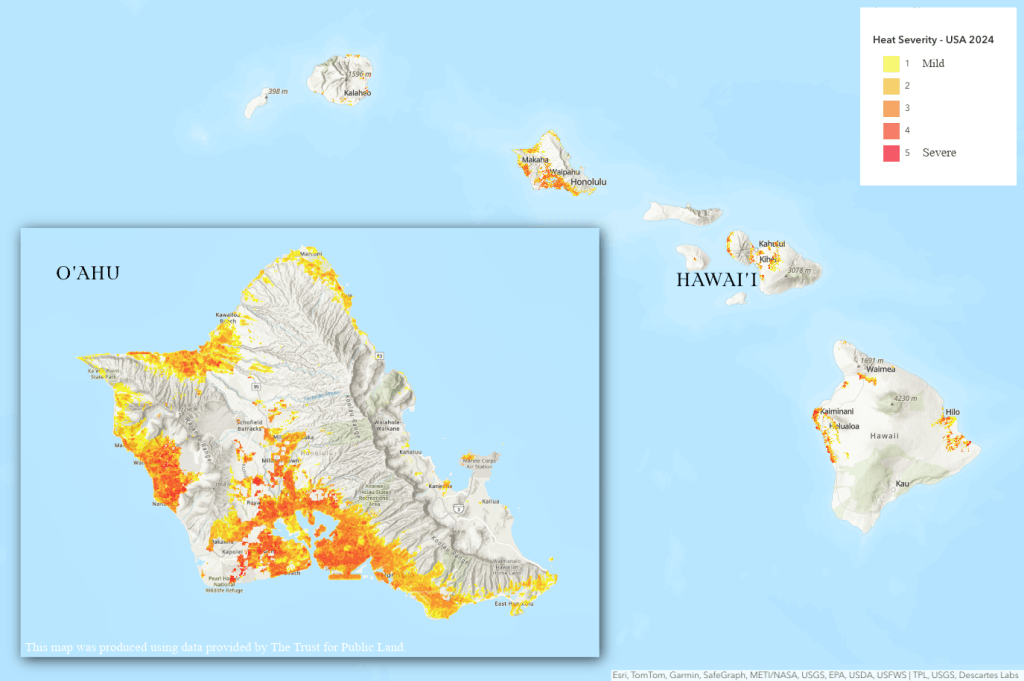
Hawaiʻi’s unique microclimates — where temperature, terrain and urban design can dramatically change within just a few miles — play a huge role in how locals experience rising temperatures.
Of 147 people who responded to the survey, 113 said it has been noticeably hotter in recent years. Eighteen of them said they were unsure.
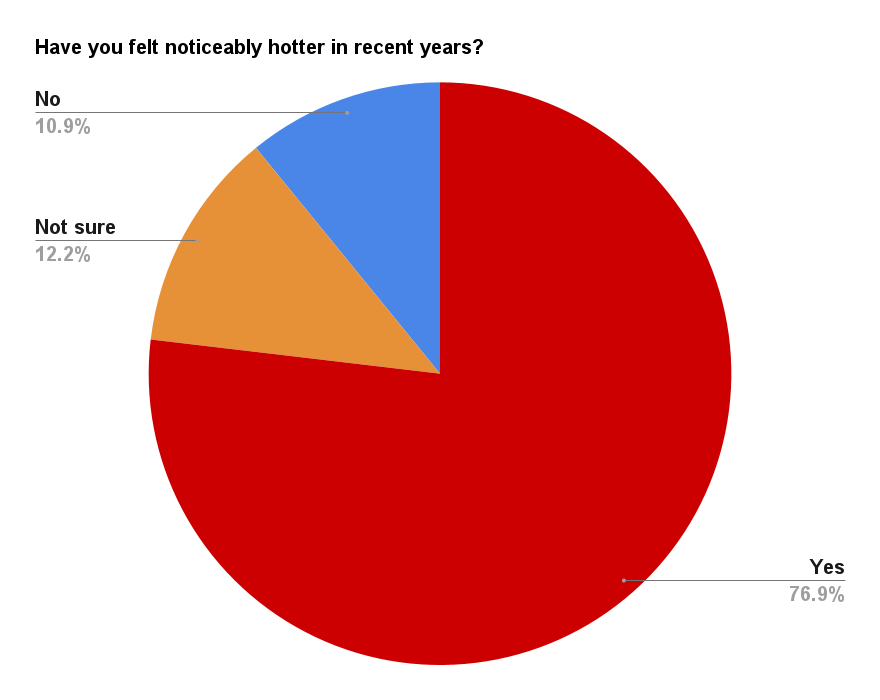
Meanwhile, 46% of survey participants said they do not have functioning A/C in their home. That’s consistent with the Haas School of Business Energy Institute’s findings that Hawaiʻi is the third least airconditioned state in the country.
Participants cited a number of reasons for the absence of A/C in their homes, including the state’s record-high energy costs and aging infrastructure, as well as electrical systems that don’t have capacity to support such systems. For kūpuna on fixed income, the added financial burden can make it inaccessible. Others pointed to simply not needing one until recently.
Older Hawaiʻi buildings, with their louver windows, were designed to take advantage of the trade winds for natural ventilation and passive cooling. Fewer modern homes followed that traditional design.
That’s led to some homes retaining more heat than others. Survey participant Allison Matrecito said the Hawaiʻi Kai condo she shares with her husband became so hot in the summer of 2024 that they opted to camp in their Tesla in the condo parking lot for a week just to get some relief.
“We hardly get a breeze with the way our building is designed,” Matrecito said. “It’s usually much cooler outside than inside.”
Average temperatures across Hawaiʻi have risen by about 2 degrees Fahrenheit since the 1950s, and Honolulu has seen a larger increase — 2.6 degrees — during that time. That difference partly reflects all the concrete and asphalt that pave the urban scape, plus the Koʻolau and Waiʻanae mountain ranges that block wind from reaching the city.
The lack of severe, triple-digit heatwaves here can make Hawaiʻi’s heat dangers appear deceptively benign compared to the extreme heat events seen on the continent like those in Arizona where more than 400 people have died this summer due to heat-related complications in Maricopa County alone.
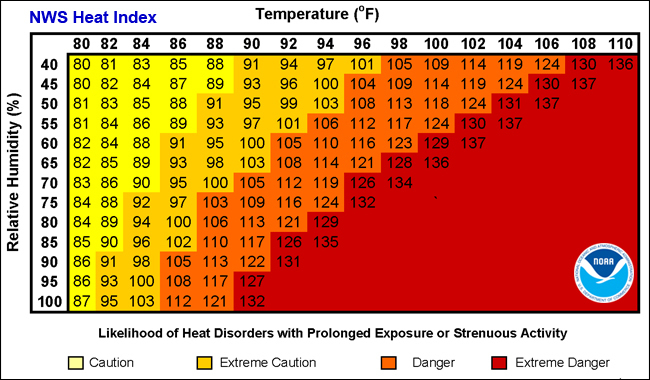
The local danger, however, lies in the humidity. Moisture in the air makes it harder for the body to regulate temperature, and researchers say that can potentially cause heat-related illnesses at lower temperatures than in drier climates.
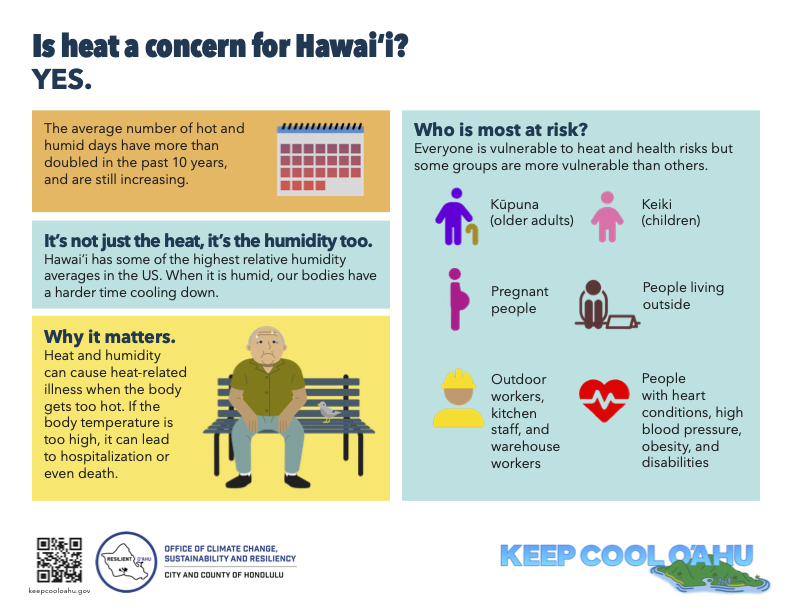
Some people are more at risk than others, including keiki, kūpuna, pregnant women and those with chronic illnesses. Certain medications can also make individuals more susceptible to heat.
As the daytime temperatures have risen, so have those at night. Increasing nighttime temperatures can disrupt sleep and impact the body’s ability to recover, leading to long-term health effects for residents who lack A/C at home.
Increased A/C usage by those who have it is not an ideal solution to beat the growing heat given Hawaiʻi’s soaring energy costs, the highest in the nation.
Other solutions are not without faults either. Taking more showers puts a higher burden on the state’s strained water systems and TheBus is increasing in price again, making it less accessible to vulnerable communities.
“A/C really isn’t the solution in the long run,” Arinaga said. “It’s more of a bandaid solution.”
Participants responded from all of the main Hawaiian islands except Molokaʻi. The majority of the respondents were 65 or older — and many of them expressed concerns about their increasing vulnerability.
But the threats of heat, Department of Health officials say, should be taken seriously by everyone. Particularly athletes and those active outdoors said Diane Felton, a state toxicologist. Not a week passes without a Honolulu Fire Department rescue of a hiker that mentions dehydration.
“Heat illness in Hawaii is an interesting animal,” Felton said. “More and more research is showing that it’s really a combination of factors that increase the risk for heat-related illness.”
Where you live on the islands also plays a big role. Someone in Waiʻanae, on Oʻahu’s arid leeward side, will endure higher temperatures for longer than someone who lives in Heʻeia, on the lush, rainier windward side. Similarly, someone living in Volcano on the Big Island, which is much cooler due to its higher elevation, will have a very different experience than someone in Kailua-Kona in the rain shadow of the mountain, which is much dryer.
Residents from all over the islands reported their lives becoming smaller in some capacity during the hottest months. For some this meant staying inside their home for extended periods of time. For others it meant being confined to the single room in their home with a window A/C unit, or even their car. One respondent noted bad it was for someone of their age to be so sedentary to avoid the heat.
Some who had chosen to install A/C systems despite the cost noted that they had to choose between comfort and the ability to go out an do things.
Most of the respondents — 104 — lived on Oʻahu, the most urbanized Hawaiian island. For developed areas like Honolulu, the skyscrapers, stadiums and roadways work with the protection of the mountains to trap heat in the city and drive up the area’s heat index.
Some 57 participants from across the state cited the importance of trees and green spaces to keeping the islands cool.
Paved surfaces hold heat long after the sun goes down. Green surfaces, meanwhile, help to better cool cities — so their decline in urban areas such as Honolulu make things even hotter.
Arinaga, who responded to the survey, is an Oʻahu resident who runs a nonprofit that focuses on agroforestry and encourages residents to grow food plants in their backyards. He said that trees and greenery should be prioritized over ornamental grass lawns that do little to retain moisture and “in the summer, excuse my French, but they look like shit.”
Parks and community gardens help dramatically cool surrounding areas with the evaporation of water stored in their plants and soil, not unlike when people sweat. Houses close to the ocean also experience similar cooling benefits from evaporated ocean water.
Most survey participants said there weren’t enough free options for staying cool in the state aside from beaches, libraries or the mall.
Arinaga and others also expressed doubt that Hawaiʻi could address its rising heat challenges through A/C alone. A handful of respondents further expressed concerns that shopping centers and public buildings throughout the state are pumping out excessive air conditioning.
Some homeowners choose to retrofit their homes and make them resilient to heat without relying on air conditioning. Those like respondent Mary Metcalf of Kailua-Kona add better insulation, cooling vents to their attic and sun shades to the outside of their house.
However, Metcalf noted that finding guidance on how to do that retrofit was not as easy as she thought it would be when she started the process in 2015. Navigating it was complicated even with her engineering background, leaving her to worry about others figuring it out on their own.
While there are guides created by the U.S. Department of Energy, the Hawaiʻi Electric Company and the Hawaiʻi Department of Business and Economic Development, the information can be pretty buried on the internet. Additionally, rebates and tax credits for energy efficiency retrofits can be hard to find.
Local funding available for Hawaiʻi homeowners looking to make their homes less susceptible to the heat is limited. This year, the Hawaiʻi Office of Community Service is eligible to receive almost $400,000 to support projects across the state that can help bolster homes against the impacts of climate change. However, homeowners must make under $35,980 for an individual and $73,960 per year for a family of four to qualify.
The slider below overlays the map for heat severity on the island of Oʻahu with census data showing what percent of the population live under the poverty line. Drag the slider across to compare.
Meanwhile Honolulu’s Office of Climate Change, Sustainability and Resilience has created a Keep Cool Oʻahu page with heat-related resources for the public.
This year, lawmakers passed a resolution to explore whether it is feasible to create cooling centers throughout the state. If that makes it past the research phase, it would take years to come online.
Arinaga said that he sometimes wishes for an even higher spike in the costs of energy if only to “force innovations for better solutions.”
Civil Beat’s coverage of climate change and the environment is supported by The Healy Foundation, the Marisla Fund of the Hawai‘i Community Foundation and the Frost Family Foundation and its reporting on economic inequality is supported by the Hawaiʻi Community Foundation as part of its work to build equity for all through the CHANGE Framework; and by the Cooke Foundation.
 Sign up for our FREE morning newsletter and face each day more informed.
