

DOE Aims To Avoid School Closures Through Redistricting
Redistricting plans could take effect as early as fall 2026, according to a recent memo shared with the Board of Education.
Amid significant drops in school enrollment, the Hawaiʻi Department of Education is considering redistricting as a solution to more equally distribute students across its 258 campuses.
Earlier this year, the department announced plans to study closing and consolidating small elementary schools that may struggle to provide high-quality education or upkeep their facilities. The study was supposed to be completed within a year, with the Board of Education voting on which schools to close by spring 2026.
But the department has changed its course and plans to consider redistricting schools instead of pursuing campus closures. Over the summer, principals and other school leaders urged the department to consider alternatives for filling unused campus space instead of studying consolidation, according to a recent memo from DOE Deputy Superintendent Tammi Oyadomari-Chun.
“As a result of the feedback received, the Department will be revising its approach to addressing shifts in enrollment and adjusting the timeline accordingly,” Oyadomari-Chun said in the memo.
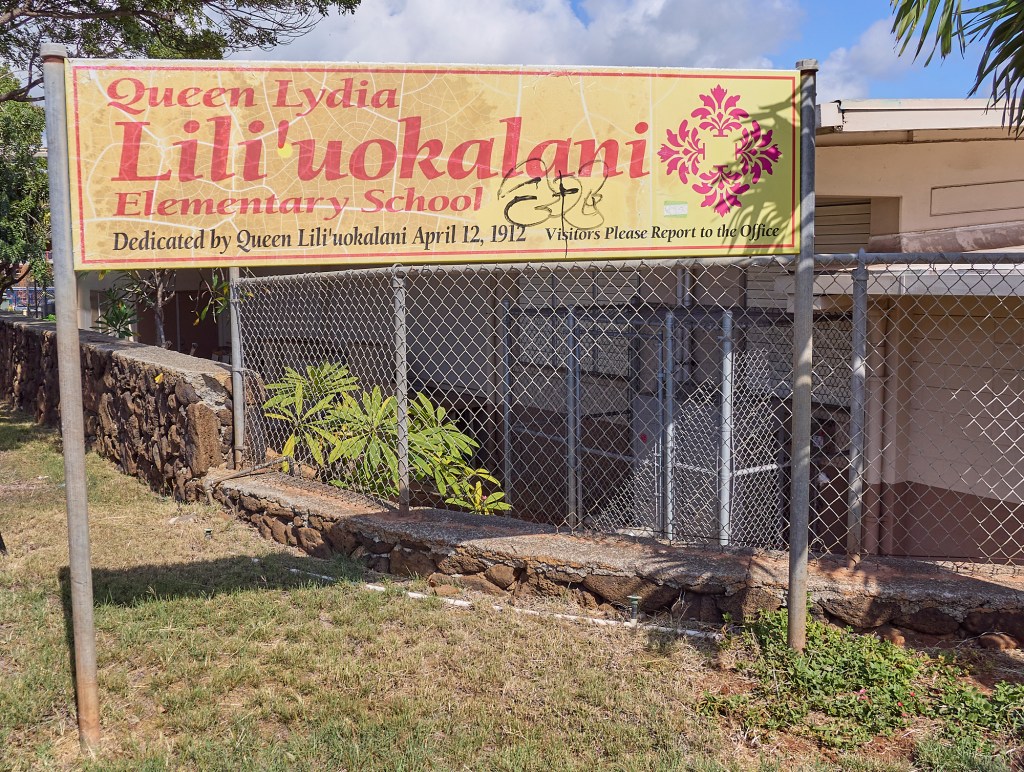
The department hasn’t closed a school since 2011, when it shut down Queen Liliʻuokalani Elementary in Kaimukī amid strong community pushback.
The department will present its revised plan to the board on Thursday, and school redistricting may take place as early as fall 2026. The department still plans to study the consolidation of schools but will set aside time for public input and won’t make any decisions until spring 2028, according to Oyadomari-Chun’s memo.
This fall, the department enrolled roughly 150,000 students in grades kindergarten through 12, compared to more than 170,000 a decade ago. Schools have seen a steady decline in student enrollment since 2014, partially due to families moving out of state and Hawaiʻi’s low birthrate, according to a previous DOE presentation.
A 2017 study of DOE campuses found that more than 60 schools were underutilized, while others were stretched beyond maximum capacity. Redistricting could serve as a possible solution for distributing students more equally across the state, the study said, although it wouldn’t work for every community.
“Put simply, Hawaii has enough school capacity, just not in the right places,” the study said.
DOE projects that nearly all areas of the state — which is governed by a single school district subdivided into what are known as complex areas — will experience declining enrollment by the end of the decade.
Some drops will be more severe than others. The complex area encompassing Lānaʻi, Molokaʻi, Hāna and West Maui, is expected to see a 25% drop in enrollment by the end of the decade, according to recent DOE estimates. On Oʻahu, urban Honolulu schools in the Kaimukī-McKinley-Roosevelt complex are projected to see an 11% decrease.
On the other end of the spectrum, some schools that have historically faced overcrowding are expecting to continue struggling with capacity problems, even with redistricting initiatives in place.
This August, the department introduced a redistricting plan to reduce overcrowding at ʻEwa Elementary by moving roughly 140 students to the nearby Barbers Point and Kapolei elementary schools. The Kapolei and ʻEwa communities are expected to see an influx of young families in the coming years as developers complete thousands of new housing units, although the construction of new schools has lagged behind the creation of homes.
The district is already home to the largest school in the state, Campbell High School, which enrolled more than 2,880 students this year.
Overcrowding can impact educational quality, and redistricting isn’t always a long-term solution, said Rep. Julie Reyes Oda, who represents parts of ʻEwa Beach. More schools may reach their maximum capacity as more families move into the area, she said, and it’s not realistic to introduce redistricting plans that will bus students from Kapolei to urban Honolulu.
“I don’t think people want their kids driving through traffic for hours,” Reyes Oda said.
Central Maui has faced a similar problem with increasing enrollment and limited classroom space, with the department redistricting seven schools this year to address overcrowding. The region has seen a growing student population in response to new housing developments as well as an influx of families moving from West Maui since the 2023 wildfires, said School Facilities Authority director Riki Fujitani.
The authority is currently in the process of planning and building a new school in Central Maui that aims to accommodate around 1,100 students in grades kindergarten through eight starting in 2030, Fujitani said.
As with ʻEwa and Kapolei, redistricting can serve as a short-term solution for Central Maui, but there’s a limited number of nearby schools that could take students from overcrowded campuses.
Other schools aren’t good candidates for redistricting because of their isolated locations, even though they serve small numbers of students. For example, Maunaloa Elementary on Molokaʻi enrolled fewer than 70 students this year, but the closest elementary school is 17 miles away.
Because school funding is based on student enrollment, small campuses sometimes struggle to make ends meet, especially when they enroll fewer than 250 kids. In recent years, the department has given small and remote schools an additional $250,000 to supplement their budgets.
While the department should weigh the financial responsibility of keeping small schools open, it’s one of several factors to consider, said Wes Lo, who serves on the Board of Education. It’s also important to hear community feedback on the plans, he said, and evaluate the quality of schools and the feasibility of transporting students to other campuses.
It also makes sense to consider redistricting as an option before taking more drastic steps to close campuses, Lo said, especially because people have deep connections to their neighborhood schools.
“People are used to what they have,” Lo said. “Change is hard.”
Civil Beat’s education reporting is supported by a grant from Chamberlin Family Philanthropy.

