

Hawaiʻi DOE Starts Year With Unprecedented School Meal Shortages
The cafeteria managers’ union is concerned the shortages will discourage students from purchasing meals and lead to possible cuts to school lunch staff.
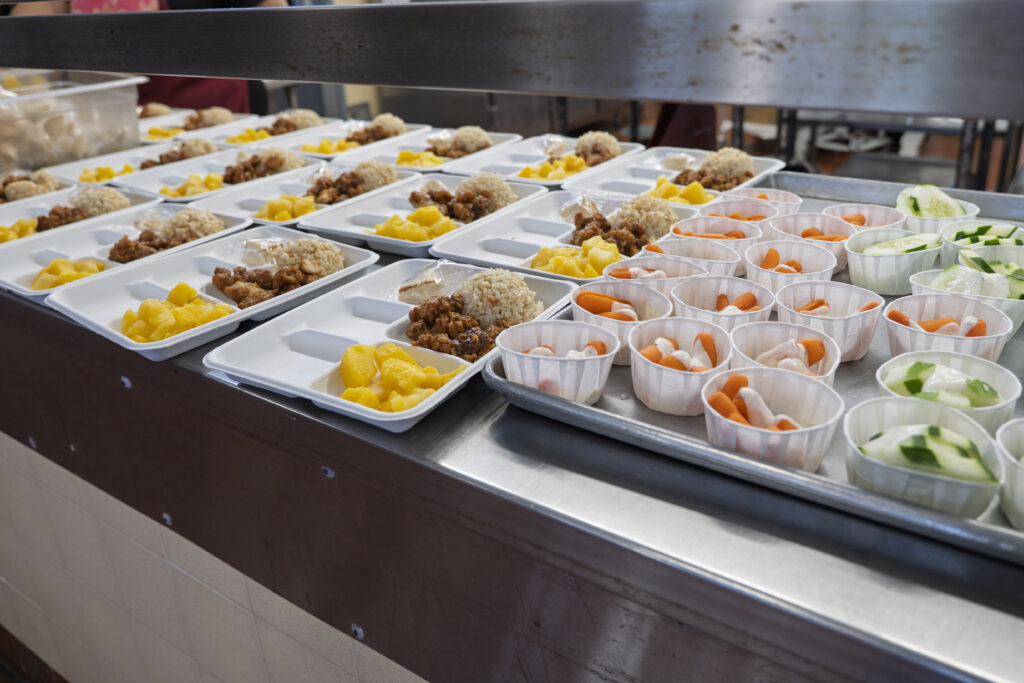
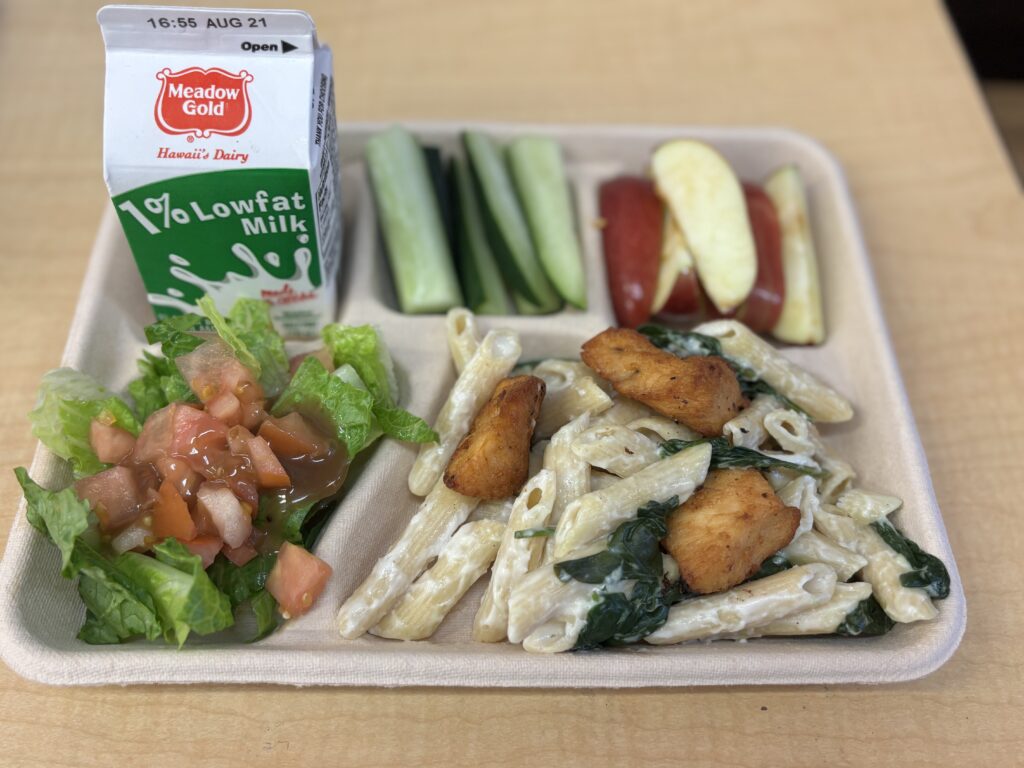
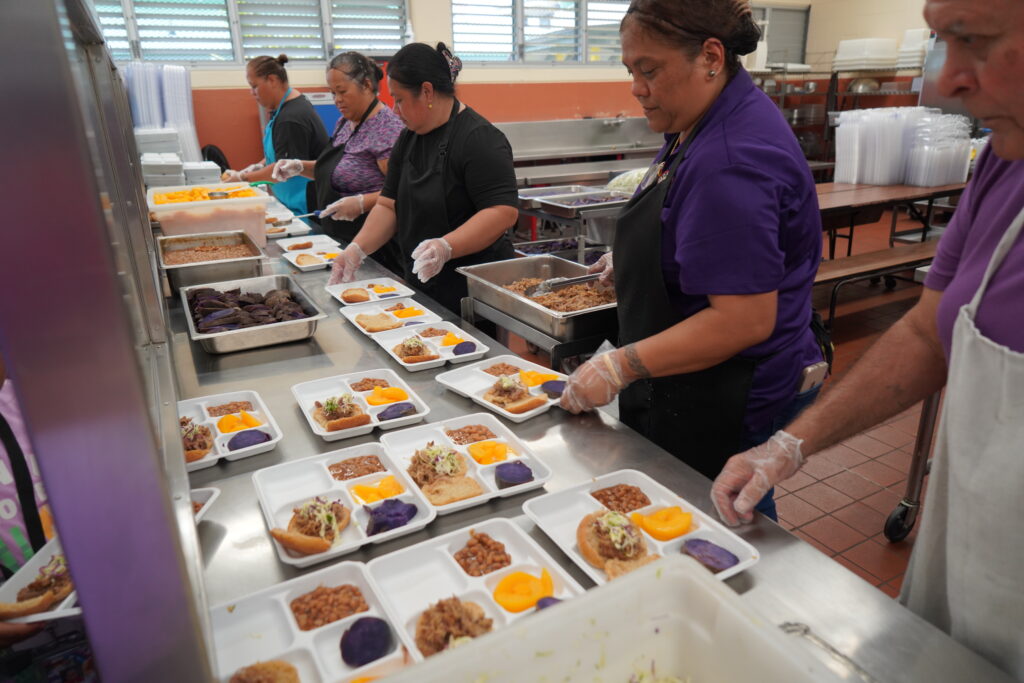
The Hawaiʻi Department of Education unveiled an expansive new menu for school meals last month, with items like Korean beef bowls and banana bread meant to support local farmers and get kids excited about lunch. The only problem: schools don’t have the ingredients they need for the dishes.
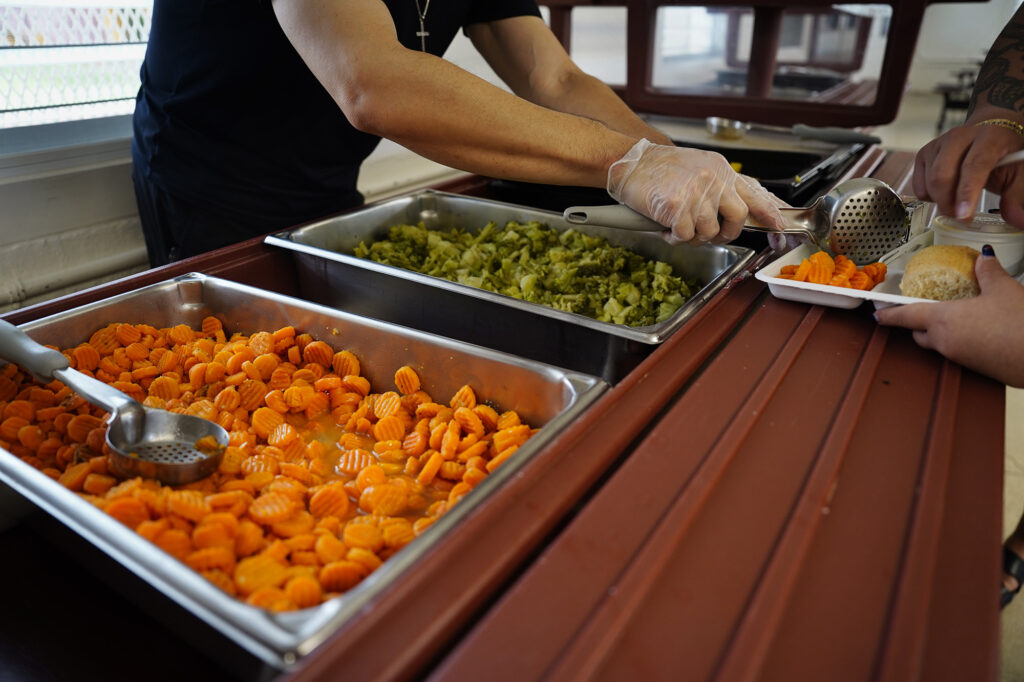
Roughly 50 items have been in short supply during the first month of school, according to an email DOE dietitian Lindsay Nakamura sent to cafeteria managers in August. Cafeteria workers are being told to swap ingredients like taro and ʻulu chunks with potatoes or cut certain ingredients, like cheese, from their recipes entirely.
The shortages, which include popular prepackaged entrees like blueberry pancakes and orange chicken, are most severe for Oʻahu and Maui schools.
Some products are now back in stock, while others will be in short supply until later this month. But the disruption has been significant enough for the cafeteria managers’ union to raise concerns that schools may have to reduce their cafeteria staff because fewer students are ordering meals.
“We have been informed that the current food shortages are unprecedented in severity,” Toni Rust, Maui division chief of the Hawaiʻi Government Employees Association, said in a letter to the department last month. The union represents school food services managers, who are responsible for ordering ingredients for their cafeterias and overseeing meal production.
The education department decides how many cafeteria staff work at each school based on the number of meals they serve at the start of the year. But food shortages can lead to unpopular meal substitutions and fewer students purchasing lunches, Rust said in her letter.
The union and education department won’t say how many schools are affected by the food shortage. Y. Hata & Co., Hawaiʻi’s primary vendor for school meals, said the problem largely stems from DOE’s inaccurate estimates of how much food schools would need this year.
When DOE expanded its menu, it significantly underestimated how many items schools would need, said Bob Piccinino, executive director at Y. Hata. As a result, the company was unable to fill the unexpectedly high volume of orders schools placed at the start of the year.
Former cafeteria managers and the union also said DOE took too long to select meal vendors this year, which didn’t give schools and contractors enough time to order ingredients over the summer.
The department declined interview requests for the story but said in an emailed statement that it’s working with Y. Hata to resolve the shortages as quickly as possible. In a press release sent just days after the union sent its letter expressing concern over the shortages, DOE said it was able to expand its menu thanks to extensive planning and new food contracts this year.
“Taking a new item from idea to students’ trays can take months to perfect and planning typically begins at least a year in advance,” the department said.
The department has previously come under fire for being unable to provide concrete data about why it costs $9 a plate to produce school lunches, along with a general lack of transparency around how it runs its meals program.
What Happened?
DOE serves over 100,000 meals a day, purchasing thousands of pounds of flour, pasta and other ingredients each year.
The massive effort to coordinate meals statewide starts with a menu planning committee, which determines school meal options months before they’re served in public school cafeterias. Using these menus, the department can estimate how much food it will need for the upcoming year and invite vendors to bid on an extensive list of ingredients and prepared foods used in school meals.
Cafeteria managers then use DOE’s pre-approved menu options and vendors to order food for their schools. The planning and procurement process should start in late fall so cafeteria managers have enough time to place their food orders by May for the upcoming school year, HGEA said in its recent letter to the department. That timeline fell apart this year.
DOE didn’t publish a request for bids until early 2025 and didn’t award the contract to Y. Hata until May. Another company then protested the award and delayed the procurement process by another month, meaning Y. Hata couldn’t start working on the contract and ordering food for schools until June, Piccinino said.
Cafeteria managers are typically 10-month employees who don’t work through the summer. Because of the delays, cafeteria managers didn’t have an approved vendor list in time to place their food orders before their work year ended.
Supply problems emerged in August, when Y. Hata started receiving orders from schools that it couldn’t accommodate, Piccinino said. At the start of the year, he said, the company typically orders double the amount of ingredients DOE projects it will need for a month, since cafeteria managers are refilling their storerooms after summer break and need extra food.
But even with the extra stock, Y. Hata wasn’t able to meet schools’ requests, Piccinino said. In its request for bids earlier this year, DOE had significantly underestimated how much food cafeterias would need for certain menu items.
Historically, cafeteria managers have made their own estimates about how much food their schools will need for the upcoming year to inform DOE’s requests to vendors, said Marlow DeRego, who previously worked in school food services for 27 years and now serves as treasurer of the Hawaiʻi School Nutrition Association. But managers now have little say in the food projections DOE provides to vendors, she said.
“I cannot believe it,” DeRego said about the shortages. “This is the worst.”

This spring, DOE estimated schools would need around 155,000 servings of blueberry pancakes for the 2025-26 academic year. But the estimate would only cover roughly six days of breakfast statewide, and campuses like Mililani Mauka Elementary already planned to serve the pancakes twice in the first two months of school.
As of Aug. 18, Piccinino said, Y. Hata had ramped up its food supply for DOE schools and had nearly all the items cafeterias needed. In a few cases, he said, manufacturers are still in the process of increasing their food production to meet schools’ demand.
Y. Hata informs schools when they’re facing product shortages, so cafeteria managers have the time to purchase alternative ingredients from a set list of products offered to the DOE, Piccinino said. The prices for the items stay the same, even if schools are purchasing more than expected.
Going Regional
Even as the food shortages improve, schools remain concerned about cafeteria staffing this year, Rust said in her August letter to DOE.
“Substitutions reduce student interest in school meals, resulting in declining participation and potential staffing impacts,” she said in the letter.
Lance Kamisugi, who served as a longtime DOE cafeteria manager before he retired in 2022, said it’s difficult for schools to regain cafeteria positions once staff have been let go for the year. Even if the number of students eating school meals rebounds later in the year, he said, campuses aren’t guaranteed to get more positions back.
Layoffs involving unionized cafeteria staff require the approval of the Board of Education as well as a 90-day written notice to employees losing their jobs. In 2022, DOE employed roughly 750 cooks, bakers and cafeteria helpers across the state.
Rep. Amy Perruso said the start-of-year food shortages illustrate a larger need for change. Instead of relying on a single company to provide school food across the state, she thinks the DOE should work with multiple vendors and local farmers who can provide island-specific produce and ingredients.
“Having the kind of highly centralized procurement process that we have, when a singular vendor is struggling, it affects much of our system,” Perruso said.
Just 6% of the food served in schools last spring was grown or produced locally, according to a recent DOE presentation to the Board of Education. The department faces a legislative mandate to spend 30% of its meal budget on local foods by the end of the decade.

To increase spending on local foods, the department plans to build a $30 million mega-kitchen on Oʻahu, which would produce meals in Whitmore Village before transporting pre-packaged food to nearby schools. The kitchen is set to open in 2027 and will eventually produce up to 60,000 meals a day, with the department already looking to expand the model to other sites statewide, according to a DOE memo from June.
While centralized kitchens are supposed to reduce schools’ reliance on scratch cooking and skilled cafeteria work, there have been few conversations about how the model will impact staffing levels. In a recent letter to Superintendent Keith Hayashi, HGEA said the department must consult with the union about how the centralized kitchen will change cafeteria managers’ jobs.
“Decisions of this magnitude cannot be made unilaterally,” Rust said in an Aug. 21 letter. “To date, consultation or negotiations on this matter has not occurred despite public statements, Board of Education presentations, and website postings describing the scope and timeline of the project.”
The department did not respond to questions about what cafeteria workers’ jobs will look like moving forward.
Civil Beat’s education reporting is supported by a grant from Chamberlin Family Philanthropy, and “Hawai‘i Grown” is funded in part by grants from the Stupski Foundation, Ulupono Fund at the Hawai‘i Community Foundation and the Frost Family Foundation.

