

Hawaiʻi Will Soon Be Home To The World’s Biggest Land-Based Seaweed Farm
Ag tech company Symbrosia is scaling up production of its feed supplements for more environmentally friendly livestock production.
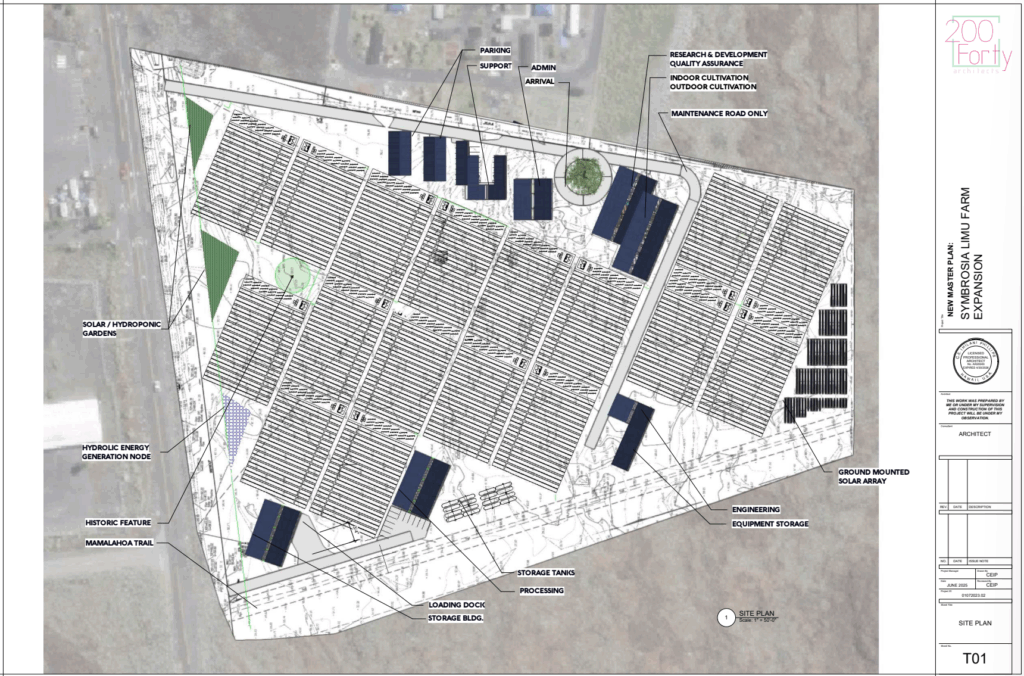
A Big Island aquaculture company is greatly expanding its seaweed farm in Kona to supercharge production of algae-based supplements that reduce planet-warming cow burps.
Symbrosia’s plans for a 30-fold increase to cover 15 acres, announced Wednesday, would make it the world’s largest land-based seaweed farm.
The agricultural tech company has researched and developed seaweed solutions to livestock-related environmental issues since 2019, focusing on using limu kohu — an algae native to Hawaiʻi — to cut down on cattle belches while boosting productivity and growth.
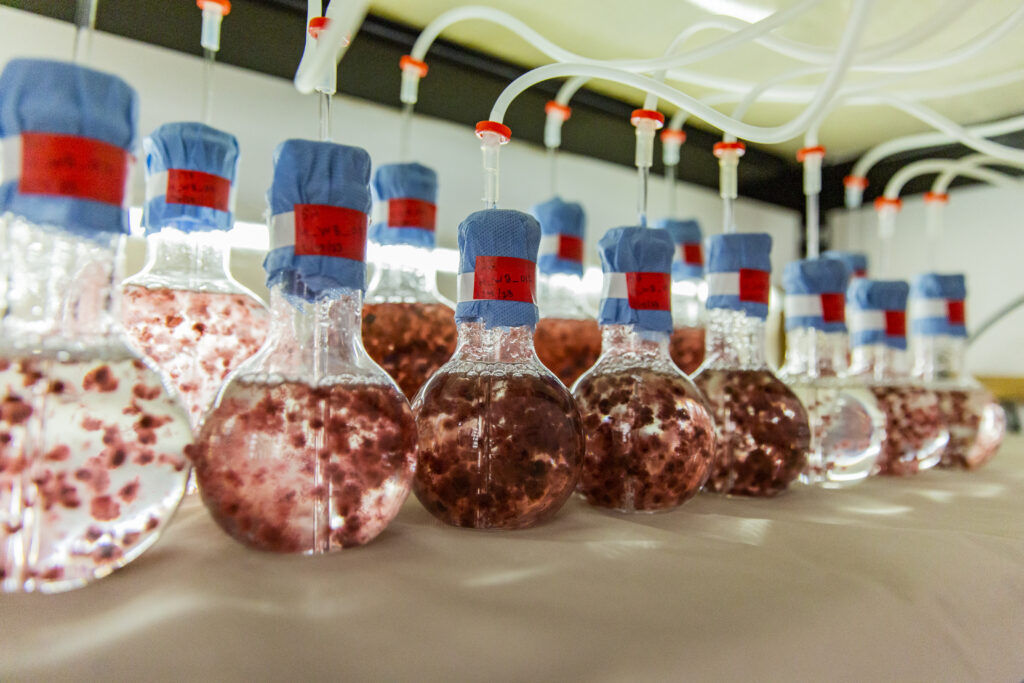
New deals with several leading livestock producers in the U.S. and Europe will power Symbrosia’s ability to increase its production to supply 1.4 million cattle annually with its feed supplement, fueled by a first-of-its-kind seaweed refinery to help isolate certain compounds from the limu.
The company’s announcement represents a boon for Hawai‘i’s fast-growing aquaculture industry. The sector has ballooned in recent years, as global markets look to farmed fish and ocean-based solutions to climate change and declining fish stocks.
Advocates have said the state needs to invest more in the industry, especially as global market forecasts show the industry has enormous room for growth, but concerns have been raised about water quality and maintenance issues at the Hawaiʻi Ocean Science and Technology Park where Symbrosia is based.
“Demand is real and it’s growing rapidly” for Symbrosia’s algae livestock supplements, CEO Alexia Akbay said.
Globally, consumers, retailers and regulations are demanding more climate-friendly practices from the livestock industry, internationally recognized as a key contributor to greenhouse gas emissions and global warming.
Central to the plan is Symbrosia’s biorefinery model, which includes modular algae hatcheries and a complex set of systems to allow the company to extract compounds from the limu.
Those compounds are used in the company’s SeaGraze supplement, which is fed to cattle and other livestock, but could also be used for other products in food, health and cosmetic markets.
In Hawaiʻi, algae is already among the most valuable agricultural commodities, worth more than $45 million in 2023 — about half the entire aquaculture industry’s value.
The algae operation isolates bromoform, among other compounds, from limu kohu. The compounds suppress beef cattle’s methane emissions by up 83.6%, according to an unreviewed research paper from Symbrosia.
Trials of the supplement have been done on cattle at Parker Ranch and in the Pacific Northwest.
It is currently one of few products on the market ready to scale up production, according to Akbay.
Symbrosia anticipates its new facility, slated for completion in 2027, will create at least 40 jobs. The company also plans to expand into Latin America by 2030, according to a press release, as demand for algae continues to rise.
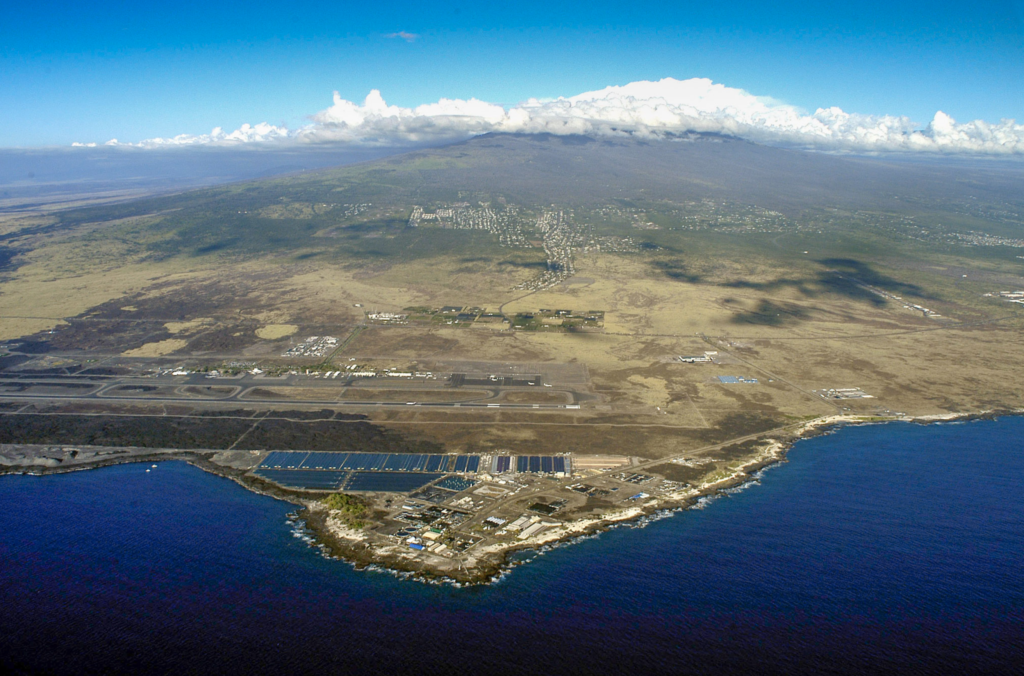
Symbrosia leases about half an acre of land at the Kona ocean science park, which is run by the Natural Energy Laboratory of Hawai‘i Authority, a state agency. The park hosts an array of operations raising algae, fish and shellfish. Among the tenants are Blue Ocean Mariculture, which raises Hawaiian Kanpachi in offshore pens, and Cyanotech, which produces algae-based spirulina products.
Some of those businesses have been at the park for more than 25 years, which the authority’s executive director, Riley Saito, hopes Symbrosia will do too under its new lease contract.
“It makes a big difference, making the campus more sustainable. It’s like if you had a shopping center and Target said ‘Can I have a site?’ Then Walmart comes in and says, ‘Can I be on the other end of the block?’ With a bunch of fast food joints in between,” Saito said.
Clearing The Pipes
The Hawai‘i Ocean Science and Technology Park has faced troubles in recent years, as some of its tenants have complained about increased death rates among their juvenile fish and shellfish.
They are now showing signs of recovery, but the cause of the deaths remains a mystery to park officials.
The water quality became a lightning rod for businesses who said the decline in quality constituted a breach of their tenancy agreements. Water is a key draw at the HOST Park, because it pulls water from the ocean at depths of 80, 2,000 and 3,000 feet below the surface, allowing tenants to rear unique species in captivity.
One such business, Keahole Point Hatcheries, threatened legal action against the state in May for failing to prevent the decline in water quality and address it in a timely manner, which a court filing says resulted in lost revenue. The hatchery also alleges the state natural resources agency failed to hold the state energy laboratory accountable for soiling state waters.
The filing raised concerns among aquaculture advocates about the future of the park and the industry in Hawaiʻi, which has helped drive success and innovation industry-wide since the 500-acre park’s creation in 1986.
The state laboratory last year asked aquaculture researcher and entrepreneur Jim Wyban to diagnose the park’s problems. Wyban said one issue was that the park failed to sufficiently clean and flush its pipelines over its almost 40-year history.
Higher water flow rates in the park’s pipelines, increased to accommodate new tenant business Captura, may have created more pressure and flushed sediment from the pipes, contributing to a drop in larval mortality.
Officials have subsequently flushed sections of the pipeline a handful of times in recent months, which officials believe might have helped water quality issues. Flushing and another cleaning method, called pigging, have rarely been done on the pipeline network in recent decades. Wyban said pigging, akin to running a pipe cleaner through the lines, was last done in 1997.
“A lot of junk came out when they did it,” he said. “So there should be more done.”
The park’s 10-mile pipeline network may require more than just flushing with high-pressure waters because the lines have inconsistent diameters, kinks and corners. Saito has proposed a novel cleaning method, called “ice pigging,” in which the system will be flushed with ice and salt. Saito says that process could begin in November on portions of the pipeline network as a test case.
Mortality rates in tenants’ fish and shellfish have dropped in the meantime.
“We don’t know what’s still in there,” Saito said. “We do know that our tenants have had better results – whether it’s tied to that or not, we don’t know.”
CORRECTION: A previous version of this story misstated the suspected source of water contamination at HOST Park.
“Hawai‘i Grown” is funded in part by grants from the Stupski Foundation, Ulupono Fund at the Hawai‘i Community Foundation and the Frost Family Foundation. Civil Beat’s coverage of environmental issues on Hawaiʻi island is supported in part by a grant from the Dorrance Family Foundation. Civil Beat’s coverage of climate change and the environment is supported by The Healy Foundation, the Marisla Fund of the Hawai‘i Community Foundation and the Frost Family Foundation.

