

Look Who’s Talking — Or Not — At Hawaiʻi’s Legislature
For some lawmakers, quietly is the most effective way to legislate. Others feel the public should hear exactly where they stand.
At first, Sam Kong politely declined to comment on the fact that Civil Beat identified him as the least talkative of all 76 members of the Hawaiʻi Legislature during the 2025 session. Then he called the reporter back.
“I was thinking about what you said, because it includes committee hearings and everything, right?” he asked.
Affirmative, the reporter responded.
Kong did not take issue with the analysis which was done through Civil Beat’s new Digital Democracy platform. The site uses artificial intelligence and other tools to transcribe all legislative committee hearings and floor sessions and, in this case, count the words spoken by each lawmaker.
Kong acknowledged that he doesn’t say much during hearings and floor discussion and rarely even speaks up in caucus, either, when Democrats meet behind closed doors.
Rather, he explained, his approach to legislating is to use “the power of the office,” as he put it, to speak with testifiers on bills before and after hearings “so I can have a conversation with them. That way I understand fully what’s happening in the committee hearing.”
Explore detailed legislator profiles, voting records and what happens in hearings on Digital Democracy.
All told, Kong spoke just 1,300 words last session — about enough to fill three Taylor Swift songs.
It is also far fewer than the number of words spoken by Kong’s House colleague, David Tarnas, who is the most loquacious legislator at 173,639 words. That works out to more than four times the total of all the lyrics to Beatles songs, including “Hey Jude.”
An analysis of who chatted the most and least during the 2025 session shows it is committee chairs who do the most talking. They include Tarnas, chair of the House Judiciary and Hawaiian Affairs Committee, and Karl Rhoads, who chairs the Senate Judiciary Committee.
That makes sense. Like the judiciary committees, the Senate Ways and Means Committee (chaired by Donovan Dela Cruz) and the House Finance Committee (chaired by Kyle Yamashita during the 2025 session) are considered the most important committees and they hear the greatest number of bills. They also make the Top 10 Most Talkative list.
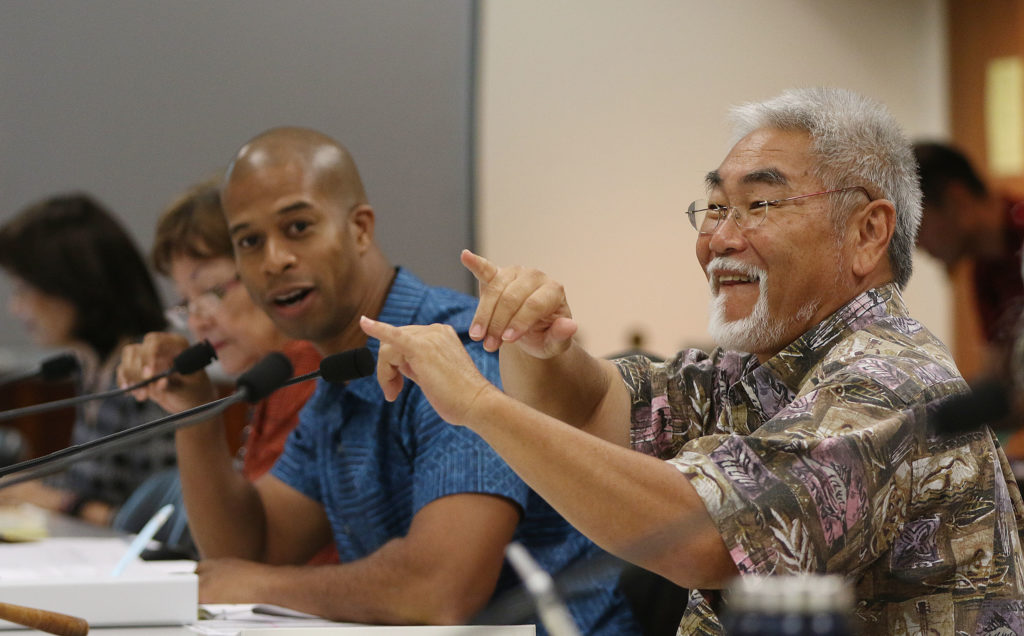
Tarnas said he was not at all surprised by his ranking. He also said it exemplifies how he approaches his responsibility as a chair.
“I speak a lot at the JHA Committee hearings to make sure everyone who is watching and listening understands what is going on,” he said. “When I defer a bill, I explain why. When I propose amendments to the bill, I read aloud the language in detail.”
Tarnas also does not usually use acronyms, something common at the nomenclature-heavy Legislature that often forces the public and reporters to search Google or the Capitol’s legislative glossary.

Civil Beat journalists are focusing on transparency, accountability and ethics in government and other institutions. Help us by sending ideas and anecdotes to sunshine@civilbeat.org.
Lorraine Inouye, who chairs the Senate Water and Land Committee, said she feels it is her responsibility to speak out on issues she cares about. She mentioned her support of gun control laws and her opposition to legalizing recreational marijuana as two such issues considered in the past session.
“And I think, personally, my constituents — and I think, generally speaking, the general population — feels that we should take stands. They want to know where we are,” she said. “I think it gives an idea, particularly with the district and its constituents, where you stand. We should debate issues.”
Inouye, who with more than 80,000 words spoken is fourth on the list, said she respected Kong’s reticence to speak out but said she did not agree with it.
“He should share his point of view publicly,” she said. “We’re elected by people, by voters. To me, if I have a favorite council person or a governor and he doesn’t talk and he doesn’t give his point of view, I’ll be disappointed.”
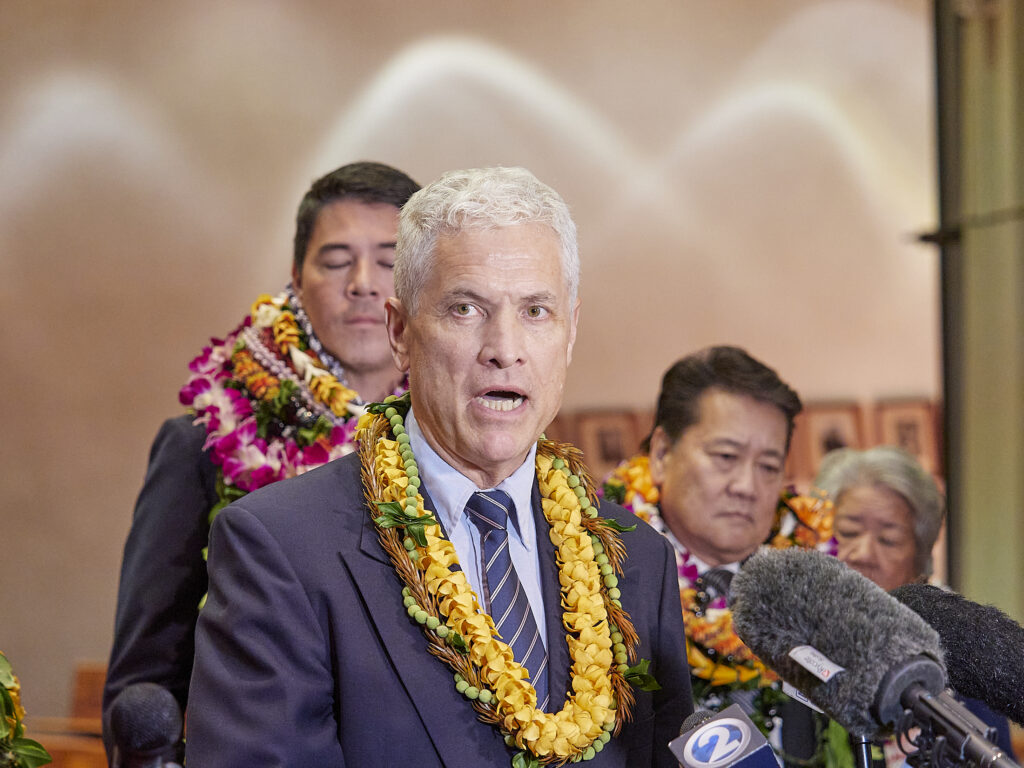
It is also possible to speak too much, especially about issues a lawmaker is not familiar with or a policy expert on. Inouye says that it can end up backfiring if a lawmaker comes across as grandstanding.
Like Kong, Rep. Sean Quinlan, the House majority leader, prefers to speak with supporters and opponents of legislation prior to or after a hearing. He ranked in the Bottom 10 with 3,400 words spoken during the session.
“I don’t like being performative as much as possible, right?” he said. “If I know all the information, and if it’s going to be a longer discussion, especially, or a more complex discussion, I’ll just call them to my office after or have a meeting on the floor.”
Quinlan is the fourth-least expansive when it comes to speaking in committee and on the floor but he is among the most conversational in other forums. He conducts his own due diligence on bills, including calling departments and agencies. And as majority leader, he said he also prefers to rely on the expertise of committee chairs.
“I can’t be the expert in education and housing and health and consumer protection, right?” he said. “I have my areas where I probably know more than most people, but I don’t have the time to micromanage all of these different aspects of our operations. We meet with the chairs regularly, we give them some guidance, and we provide them with support.”
Hawaiʻi Legislators In This Story
Learn more about lawmakers mentioned in this story. Visit Digital Democracy
Other factors that influence who speaks least and most: Freshmen legislators are often the quietest, as they learn the issues and protocols. They include Reps. Shirley Ann Templo (5,089 words) and Mike Lee (5,482 words).
Absences are a factor, too. Rep. Elle Cochran (5,043 words) ranks low in spoken words because, while typically not shy about expressing her views, she missed much of the 2025 session due to a family illness.
Finally, some lawmakers are just not the chatty type. That includes Kong, who said he feels it is his job to listen to what his constituents tell him — something he does at neighborhood boards, town halls and the like.
“I take the lead from them,” he said. “The key is the vote, right?”
Thomas Gerrity, the engineering manager for Digital Democracy, contributed to this report.
Check out the complete list of legislators and the number of words they spoke during the 2025 session. (Note: Rep. Joe Gedeon did not participate in the 2025 session.):
We need your help to improve Digital Democracy in time for the 2026 session. Please check it out and drop us a note at digitaldemocracy@civilbeat.org with anything we need to fix and interesting ideas for us to look into.


