Maui Balances Compassion With Fire Safety In Homeless Encampment Sweeps
County leaders say they are prioritizing the community as a whole but critics feel it’s scapegoating.
Holomua Road bisects miles of dry, overgrown cattle pasture just east of downtown Pāʻia. Parched trees with twisted limbs line the way and form a sort of tunnel that feels separate from the outside world.
For years, a homeless population has called this spot home, parking their cars, pitching tents and building unofficial shelters out of various scrap materials along the road’s shoulder.
Area residents have long complained about the encampment’s presence, arguing it is a fire hazard that puts the entire community at risk. A brushfire on Holomua Road could quickly spread west and wreak havoc on Pāʻia, a former plantation town known for its narrow streets, quaint small businesses and old wooden buildings.
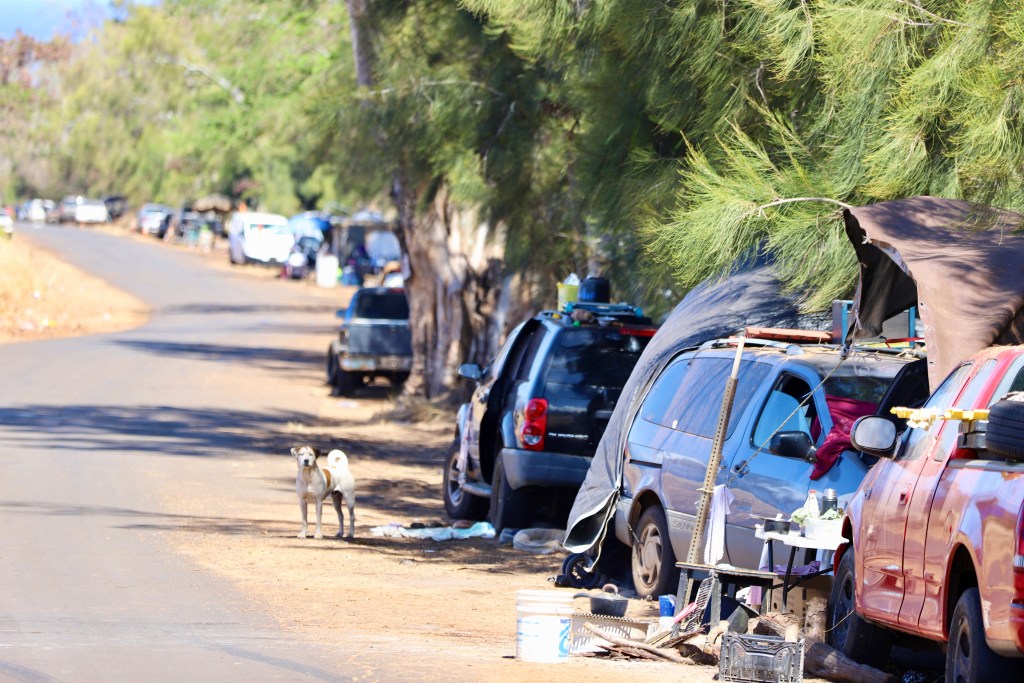
Debates like this have played out in various pockets of Maui for years, but they have taken on a new tone since the 2023 wildfires that devastated Lahaina and parts of Upcountry. Over the last two years, local government officials have cited fire risk as a primary reason for clearing encampments in West and Central Maui.
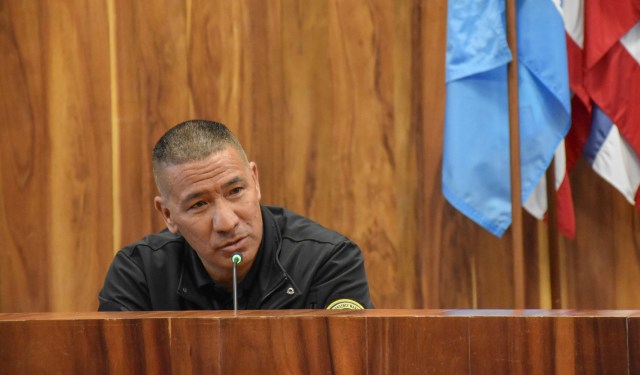
The county has been trying to balance its efforts to address these fire safety concerns with the need to be more compassionate in how it sweeps homeless encampments following a 2023 Hawai‘i Supreme Court decision that found the county violated individual rights when it forcibly cleared a Kahului encampment in 2021. It’s an ongoing process, Maui Emergency Management Agency Administrator Amos Lonokailua-Hewett said.
“I care about the people that are unsheltered,” he said, explaining that he has family members who lost homes in the 2023 fires and are homeless. “I can also say that nobody in this community has the right to burn down the land and destroy communities, whether they’re unsheltered or anybody else.”
The county has in recent years made numerous changes to how it clears encampments, but homeless advocates said improvement has been minimal and the county is exaggerating the fire risks posed by homeless communities to justify more sweeps.
“The county loves to weaponize the Lahaina fire even though it wasn’t started by an encampment,” said Native Hawaiian housing advocate Mōʻī Kawaʻakoa, noting that the deadly blaze was started by downed Hawaiian Electric power lines. “They are fear-mongering the community.”
There were 19 fires reported on Holomua Road between Jan. 1 and June 12 of this year, and there were 13 fires reported in the area near 1300 Maui Lani Parkway in Kahului, the location of another encampment, Maui Fire Chief Brad Ventura said. There have been 12 wildfires over the last two years in Ukumehame, according to MEMA.
Heightened Fears

The local community’s fears related to wildfires have risen steadily in the years since the sugar industry giant Pioneer Mill Co. shut down, leaving its abundant plantation land fallow, Lonokailua-Hewett said.
He was well aware of the hazardous fields surrounding virtually every community on the island even before joining the agency. “The community has been screaming about it for a long time,” he said.
Wildfire risk reduction was the main reason the county cited in August when it cleared a homeless encampment on a 36.6-acre parcel near mile marker 13.5 on Honoapiʻilani Highway in Ukumehame. The action followed a series of controversial sweeps, including on Amala Place near Kanahā Beach Park in July, one near Kahului Harbor last year and another at Wahikuli Wayside Park in Lahaina shortly after the fire in 2023.
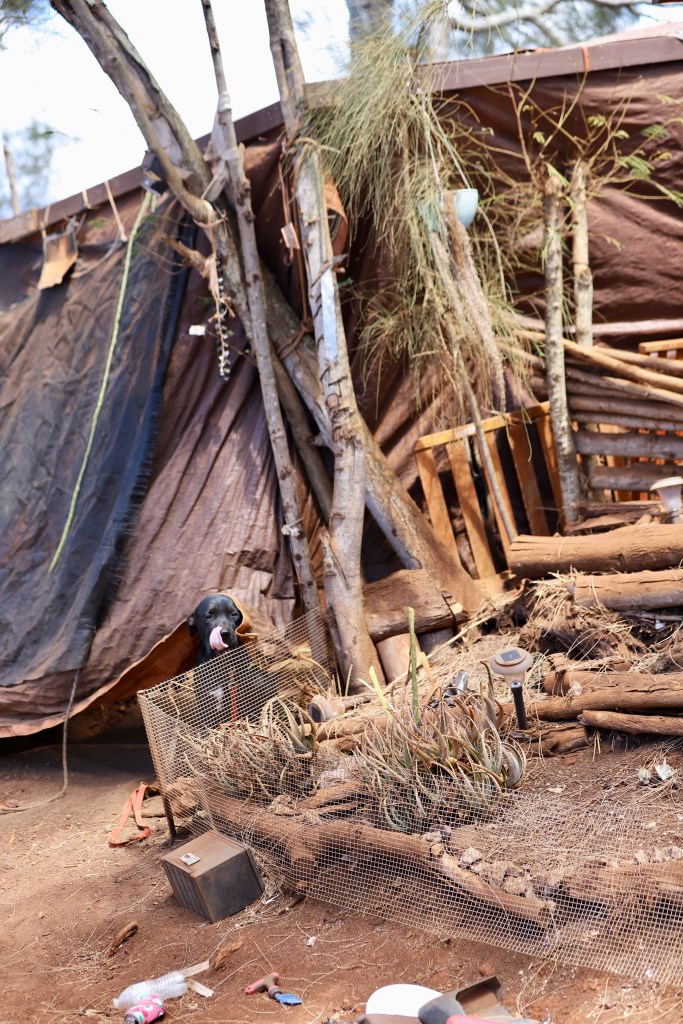
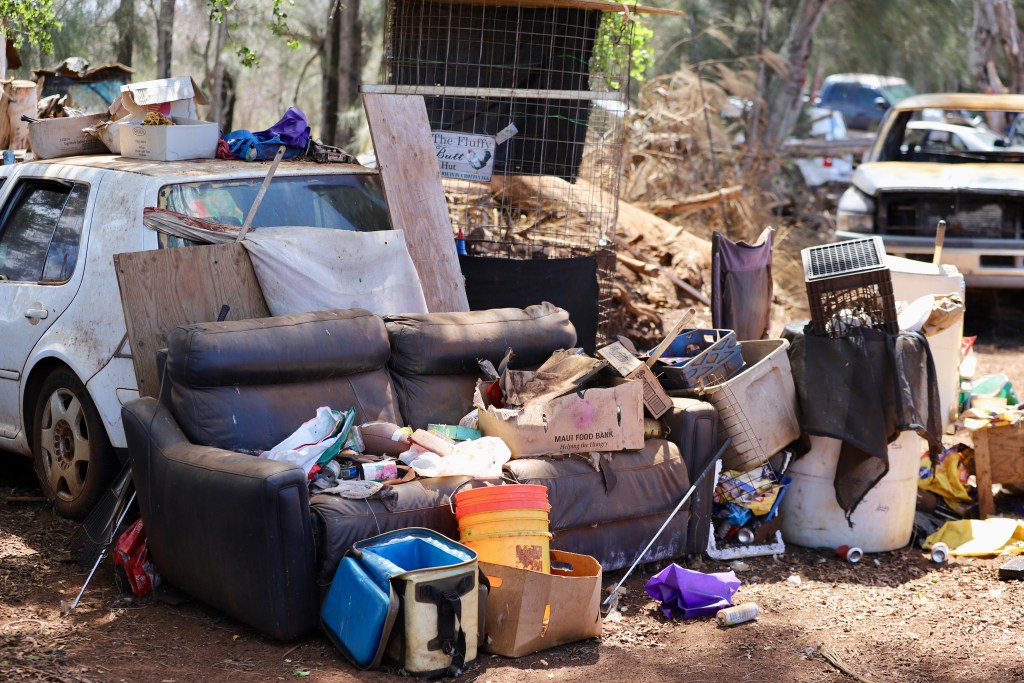
County contractors used heavy machinery to clear brush and mulch vegetation at Ukumehame, and they removed flammable fuels, including 50-gallon drums and large tanks with unknown substances, 160 abandoned vehicles and several car batteries, according to a statement from MEMA.
Kawaʻakoa, who leads the nonprofit Holomua Outreach, said the homeless people in Ukumehame, on Holomua Road and across the island are often blamed for the actions of others. It’s common for people to abandon unwanted or stolen vehicles and all sorts of hazardous waste in encampments, she said.
The county could significantly reduce the fire hazards associated with encampments by providing garbage cans, Kawaʻakoa said, as well as conducting regular trash pickup and removing abandoned vehicles.
On Holomua Road, she said encampment residents take part in community clean-ups, and the Maui Department of Public Works picks garbage up from a designated spot once a month.
Number One Job Is Safety
Noah Jackson, an executive assistant from the Maui Department of Management, acknowledged that sometimes homeless encampment residents “get swept up in things outside of their control.”
“So many of these people are amazing, and they all have such different stories,” he said. “One of the tricky things is sometimes specific locations draw — even though it’s maybe not the individuals living there — other illicit activity.”
The fire risk associated with encampments has existed for years, but after the fires, MEMA was able to hire additional staff members and increase its ability to address safety concerns, said county spokeswoman Laksmi Abraham. Starting Oct. 1, the agency will have 25 staff members, up from nine in 2023, according to Lonokailua-Hewett.
On Monday, Mayor Richard Bissen said the site of the Ukumehame encampment was in significantly better shape since it had been cleared. The county offered to connect encampment residents with a variety of alternative shelter options and social services, although he noted that officials could not force anyone to accept help who did not want it.
“Our No. 1 job is the safety of the entire community,” he said. “It’s very difficult to try to please every person in every situation.”
As difficult as it is to ask encampment residents to leave these areas, Abraham said the county has a responsibility to protect the community from fires, including the homeless population.
“We’re very much aware that every time a homeless individual has to pick up and move, it triggers different layers of anxiety, trauma, fear,” she said. “We’re fully aware of how hard this situation is, but the bottom line and the guiding factor for us is that we have a bigger obligation to the community as a whole to ensure that our community is safe.”
The county recently has made numerous changes intended to make its approach to homelessness more compassionate, including ensuring surge bedding is available at shelters before conducting sweeps or before anticipated emergencies like tsunamis, updating its contract with the shelter organization Ka Hale A Ke Ola, increasing the amount of notice given to encampment residents, working with shelters to accommodate individuals with pets or multi-member households and offering to store homeless people’s items for extended periods of time, according to Jackson.
“We believe that we’re doing far more than has ever been done in this county,” he said. “It’s a very robust process and we’re going above and beyond any other county or municipality that we know of in terms of giving them notice, working with them individually and separating out what we can store for them.”
The county recently selected a vendor to help implement its safe parking pilot program to provide parking and services for people living in their vehicles. It is in the process of finalizing a contract, according to a statement from Jessica Crouse, deputy director of the Department of Human Concerns.
Kaponoʻai Molitau, Maui Director of ʻŌiwi Resources, said his department was also getting more involved in identifying areas where the land is not being cared for properly and determining how the county interacts with those living in those areas.
“The landscape doesn’t have a voice for itself. It cannot cry and say, ‘Hey, take care of your mess,'” he said, adding that he encouraged county officials and all other Maui residents to think more often about the Hawaiian concepts of mālama ʻāina and aloha ʻāina.
Abraham said the county’s procedures are constantly evolving. “Every time we do this, we learn and we tweak a little bit about the way that we approach these things,” she said.
However, Kawaʻakoa said the only noticeable improvement has been that the county makes more of an effort to reach out to nonprofit organizations like hers.
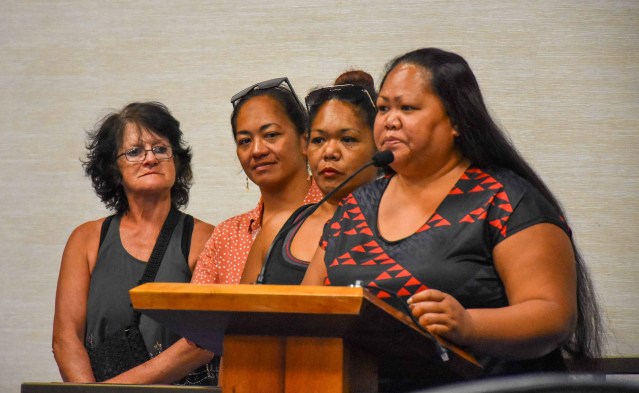
Earlier this month, a Maui County Council subcommittee took up a bill that would provide clear instructions for how the county should conduct sweeps. If passed, the legislation would require it to give more notice to homeless individuals before clearing encampments, store their personal belongings and ensure shelter space is available before sweeps.
Kawaʻakoa spent Friday morning driving up and down Holomua Road in her white pick-up truck, distributing fresh water to the people and pets living in the encampment. Occasionally, she took a few extra minutes to check on the status of someone’s efforts to access government aid, ask if they needed to do any laundry or give them a ride to the tent pitched down the street which offered food, drinks and other essentials.
She has been visiting the community for years, and she said that most of the people living there would never intentionally put their neighbors at risk by starting a fire.
“We are working on programs to address fire prevention on our end,” Kawaʻakoa said, “and nowhere in those programs is it removing the homeless community from the place.”
Civil Beat’s coverage of Maui County is supported in part by a grant from the Nuestro Futuro Foundation. Civil Beat’s reporting on economic inequality is supported by the Hawaiʻi Community Foundation as part of its work to build equity for all through the CHANGE Framework; and by the Cooke Foundation.