Pay-To-Play: Hawaiʻi CEO Pressured Staff To Make Political Gifts
Court documents in an ongoing felony case reveal new details about how employees were reimbursed for making campaign donations.
Real estate developer Timothy Lee pressured employees to donate to political campaigns in 2020 and padded a payment to a contractor to reimburse him for campaign donations, according to testimony before an Oʻahu grand jury.
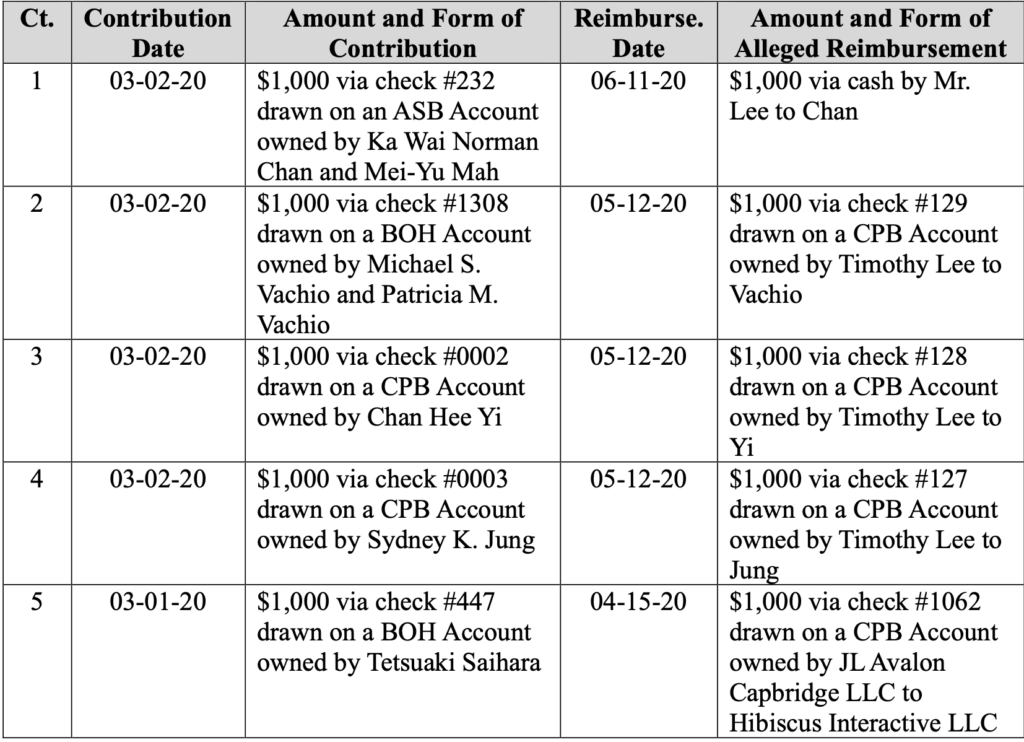
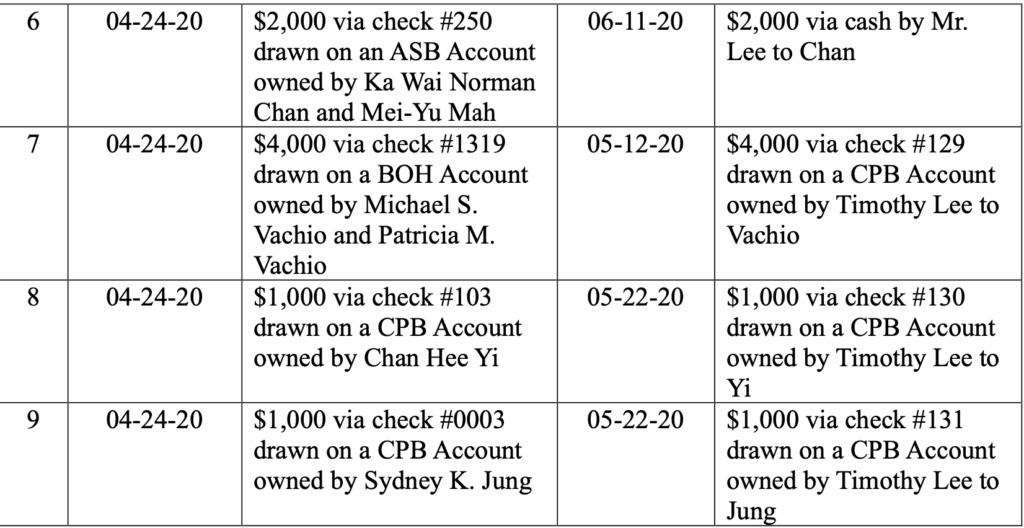
The JL Capital CEO is facing nine felony counts of false name contributions — instances where named donors are not the source of funds to political campaigns. Prosecutors say he reimbursed employees for donations they made to the mayoral campaigns of Kym Pine and Keith Amemiya in March and April 2020.
Lee has pleaded not guilty, and his lawyers are asking for the case against him to be dismissed. They argue the facts in this case don’t amount to crimes under the false names law, and say prosecutors failed to show that there was an agreement to reimburse any of the employees’ donations.
The motion to dismiss, which goes before a judge on Wednesday, included 150 pages of grand jury testimony with new details about how payments flowed to employees after they donated to mayoral campaigns.
It has become exceedingly rare in recent decades for a Hawaiʻi campaign finance violation to result in criminal charges. Prosecutors have only filed criminal charges in one other case in recent years. On Sept. 3, Teri Ann Otani, a former secretary for engineering firm Mitsunaga & Associates who was previously acquitted of federal corruption charges, was charged with four counts of false name donations related to contributions made in 2020 to Colleen Hanabusa, who was also running for Honolulu mayor. Otani has pleaded not guilty.
In Lee’s case, evidence presented to the grand jury in February shows that employees who donated to Amemiya and Pine’s campaigns were given checks from Lee’s personal bank account, including some in the exact amount as their donations. Other checks exceeded the donation amounts.
Prosecutors categorized those payments as reimbursements. Most of the employees told investigators that they couldn’t recall being told that they would be reimbursed for their donations.
Prosecutors believe Amemiya’s campaign received $5,000 in donations tied to Lee while Pine’s received $8,000. The maximum contribution from an individual source for the Honolulu mayor’s race is $4,000.
An Envelope Of Cash And A ‘Padded’ Invoice
Ka Wai Norman Chan, JL Capital’s former chief financial officer, testified to the grand jury that he overheard Lee and JL Capital Vice President Michael Vachio strategizing about donations to influence certain individuals in the City and County of Honolulu.
Chan recounted that on his second day at work in March 2020, one of Lee’s assistants went around the office asking for checks to political campaigns. Chan said he took out his checkbook and wrote a $1,000 donation to Amemiya in an attempt to fit in.
“You felt like though in order to be a part of the team, it was a requirement to make a contribution,” Deputy Attorney General Thomas Michener asked.
“Yes,” Chan said.
“To show loyalty?”
“Yes.”
“And you were concerned about Lee’s control over your financial future?”
“Yes.”

Michener asked Chan why that day at work stood out to him.
“Because up to then, everything was straightforward. They were a great team to work with,” Chan said. “And I thought on the second day to put — put the team and myself in — in a particular gray area where he had financial leverage over the team was just concerning.”
According to emails obtained as part of the investigation, Lee’s assistant in June 2020 asked Chan for cleared check images of the donations to Amemiya and Pine’s campaign, indicating that they were cashed. Chan testified that he sent the images. Days later, Lee called Chan into his office and offered him an envelope with $100 bills in it totaling $3,000 — equal to the amount of money he donated to the two campaigns, according to Chan’s testimony.
Chan was fired days later; he had been having issues at work in the preceding months, according to prosecutors and defense attorneys. When Chan emailed Lee saying he wanted to repay the $3,000, Lee said he didn’t know what payment Chan was referring to and that the company did not make cash payments. Emails also showed that Lee later sent his conversation with Chan to JL Capital’s human resources representative at Altres explaining that what Chan was saying was not true.
A contractor for JL Capital was also asked to make a campaign donation, according to the grand jury transcripts.
Ted Saihara, who owned a marketing company that did social media for JL Capital, said that he was reimbursed for donations to Amemiya. In March 2020, Saihara sent Lee an invoice for $1,500 for his services the month prior.
“It’s really 500 but added the 1,000 for Amemiya,” Saihara wrote.
Michener asked him about that email and the invoice.
“But you added $1,000 to the contribution to Amemiya?” Michener asked
“That’s what it says on the email, yes.”
“An extra $1,000?”
“Yes.”
“So the invoice is padded?”
“Yes.”
“The reason you padded the invoice was to disguise the reimbursement; is that correct?”
“Yes.”
He testified to the grand jury that the donation was Lee’s idea and that he went through with it to maintain a good business relationship with Lee. Saihara later agreed to speak to state investigators in December 2024. Before the interview, he asked if he could talk to his dad.
“What advice did he give you?” Michener asked
“Be honest,” Saihara said.
Later, Michener asked Saihara how he felt about the contribution and reimbursement.
“I don’t feel good about it at all,” he said.
Emails Show Lee Communicated With Candidates
In late April 2020, Lee wrote to Amemiya seemingly out of the blue to tell him that “We made a small $5,000 donation to Motiv8,” a foundation launched by quarterback Marcus Mariota. That donation appears unrelated to the campaign, but at the time Amemiya was leading a project to provide meals to students that was partially funded by the Mariota foundation.
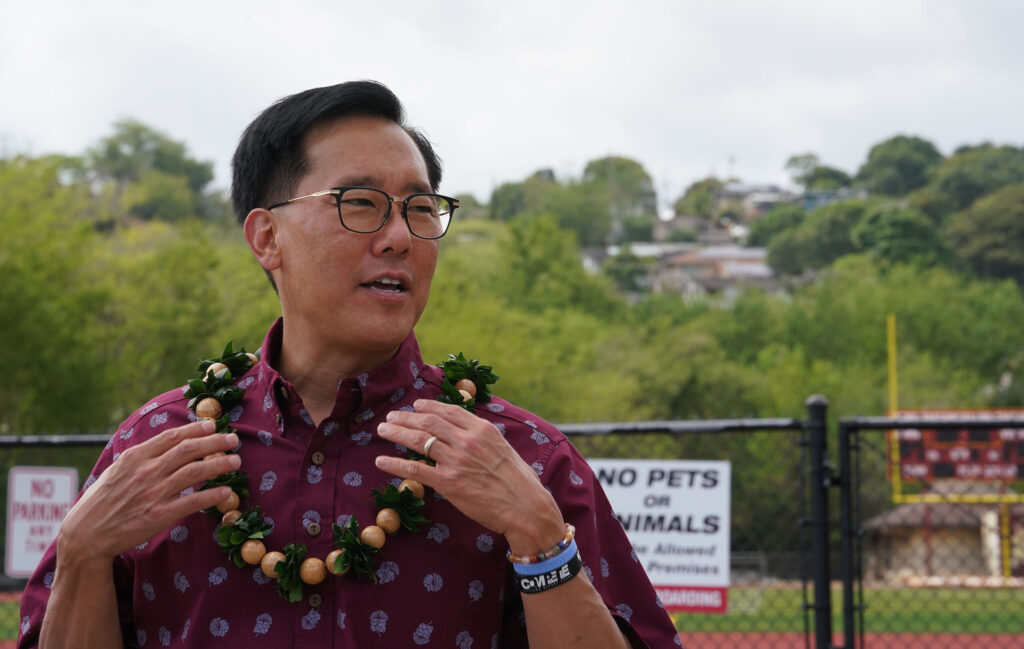
After Amemiya thanked him for that donation, Lee wrote back: “Stay healthy. We need you as mayor.”
That same day, Pine’s campaign — Amemiya’s opponent in the race — cashed $8,000 worth of checks from JL Capital employees. Lee at one point had also planned to hold a fundraiser for Pine at the MW Restaurant but canceled the reservation.
Before her campaign cashed the donations, Pine, then a City Council member, had emailed Lee under the subject line “These Your Donors?” asking for the titles of employees who made donations — a reporting requirement for individual donations of $1,000 or more. Lee responded with the names of those employees and their positions with JL Capital.
In June 2020, Lee emailed Pine about a bill pending before the City Council involving condominium parking. Michener indicated that Lee opposed the measure, although from the grand jury transcripts, it’s not clear which bill that was.
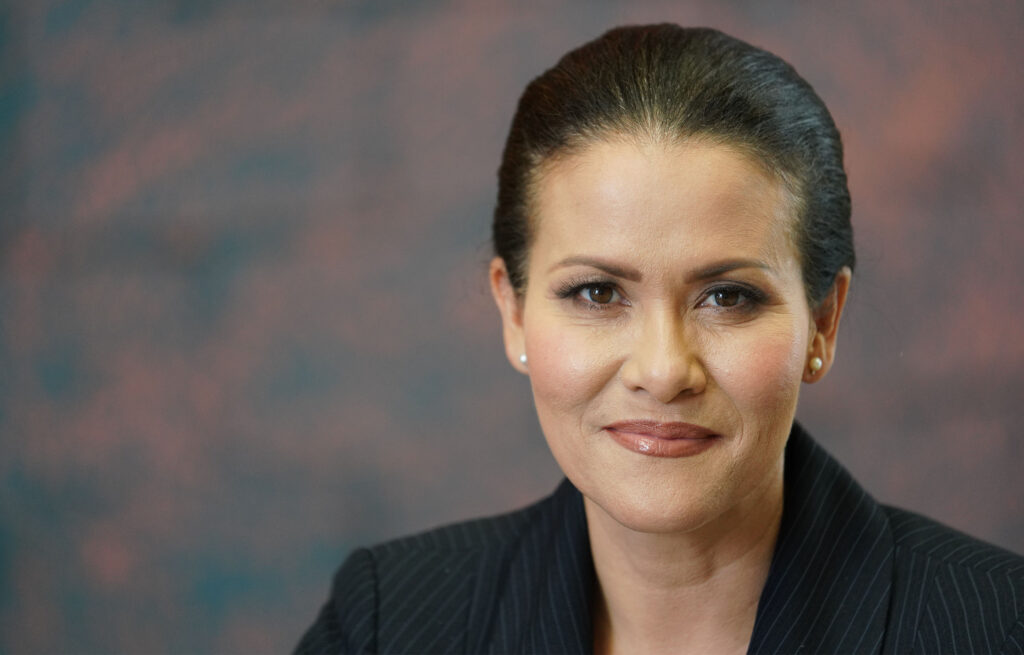
The council had at least eight bills mentioning parking pending during that period. Only one, Bill 2, had provisions on parking in condo buildings. The bill ultimately passed the council in December 2020 on a unanimous vote with Pine among those voting in favor.
In an interview, Pine said she couldn’t recall Lee’s messages from more than five years ago and didn’t know what parking bill was being referenced during the grand jury proceedings. She said she hasn’t been contacted by investigators in this case and that she isn’t swayed by contributions to her campaign.
“An email is not going to influence me. A donation is not going to influence me,” she said.
Neither Pine nor Amemiya’s campaigns were targets of the state’s investigation.
Lee’s Lawyers Want Case Dismissed
Lee’s trial was set to start earlier this month, but was delayed pending the outcome of a motion to dismiss the case that his lawyers filed in August.
The crux of their argument is that there’s nothing illegal in this case because the donations came from the employees. They also paint the alleged reimbursements as being unrelated.
The lawyers argue that the law banning false name contributions only applies to two circumstances: when someone uses their money and donates under another person’s name; or if someone takes another person’s money to donate under their own name.
“Mr. Lee’s alleged ‘reimbursements’ were not contributions to candidates or candidate committees,” the attorneys wrote. They continued, “Mr. Lee did not make any contributions; he did not make a contribution in someone else’s name, nor did any person make a contribution of his or her own money in Mr. Lee’s name.”
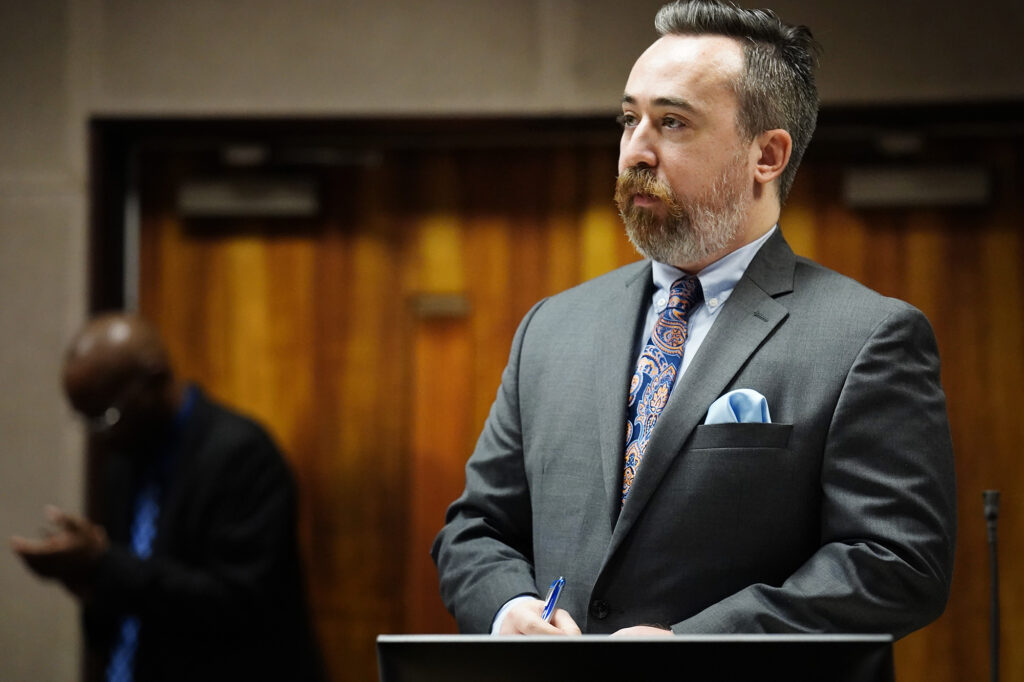
Michener, the deputy attorney general, replied in a memo filed Friday, saying there are lots of ways to make a contribution and that the law isn’t as narrow as the defense’s interpretation:
“One could themself put a check into the hand of a candidate. They could hand cash to a trusted friend with instructions to give it to a candidate and say, ‘Tell them it’s from me.’ They might hand cash to a trusted friend with instructions to give it to a candidate and say, ‘Tell them it’s from you.’ They might even tell an employee to give money to a candidate and say, ‘I’ll pay you back next week.’”
Who really owned the donation money in cases like these is for a jury to decide, Michener wrote.