

Aquarium Fishing Could Return To Hawaiʻi Under Proposed New Rules
The land board and DLNR staff have clashed for years over whether to let the practice continue. That might be changing.
The state’s powerful land board could pave the way Friday for the massively contentious aquarium-fish harvests in Hawaiʻi to resume on behalf of local commercial fishers and the pet trade after a nearly decade-long pause.
That same board tried to ban aquarium harvesting nearly two years ago on behalf of some conservationists and community groups, only to have the state Attorney General’s Office tell board members behind closed doors they didn’t have that authority.
The Board of Land and Natural Resources on Friday will take up new aquarium-fishing rules proposed by the state’s Division of Aquatic Resources and decide whether to hold public hearings on them.
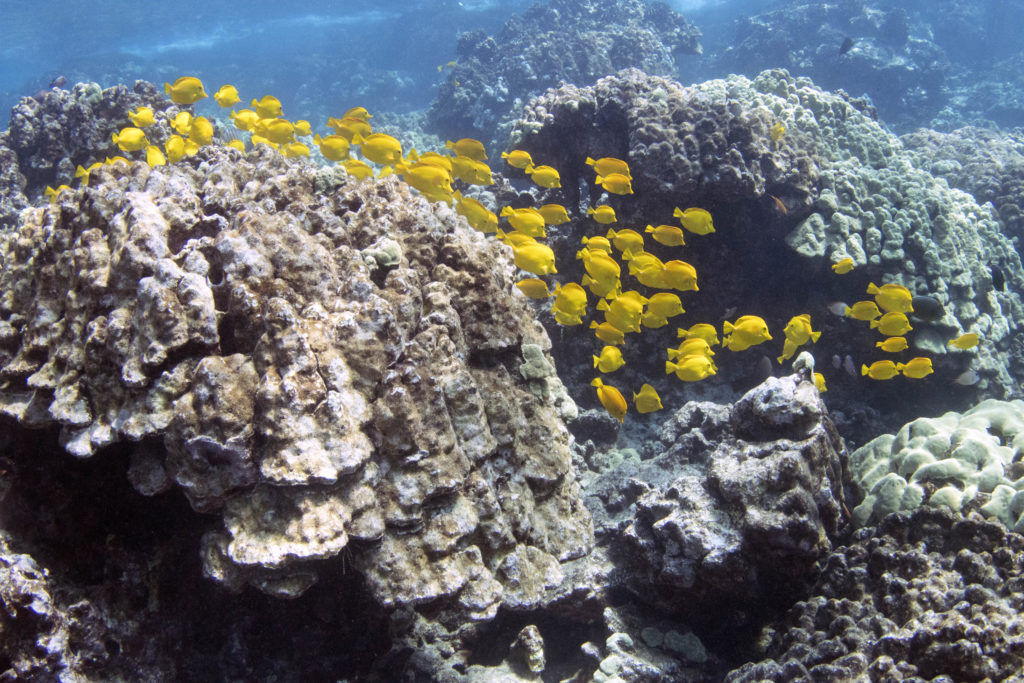
Those new DAR rules would allow as many as seven permitted aquarium fishers plus two boat operators each to harvest nearly a quarter-million prized yellow tang, kole tang and six other native species each year from the nearshore waters off West Hawaiʻi island.
DAR’s proposed catch quotas largely resemble the figures used in an environmental review done by the pet industry nearly four years ago.
Both quotas, for instance, call for allowing a catch of up to 200,000 yellow tang and 5,872 orangespine unicornfish. The DAR quotas did, however, reduce the quotas on other species.
Still, the similarities have irked some conservationists who say DAR leaders are working too closely with the pet trade’s interests and not sufficiently involving West Hawaiʻi community members in crafting the proposed rules.
They fear the public hearing process will simply be a formality to get those rules passed.
West Hawaiʻi cultural practitioner Mike Nakachi said DAR first told him and other conservationists about the proposals two weeks ago. Typically, he said, “communities go years through a process to create rules.” But with the proposed aquarium rules, he added, that didn’t happen.
Patti Jette, a spokesperson for the Department of Land and Natural Resources, which includes DAR, said the substance of DAR’s proposed rules is essentially the same as what its staff presented in an August 2024 board meeting.
Meanwhile, aquarium fishers through their attorneys and in legal complaints have expressed their own exasperation at what they see as foot-dragging by the land board and attempts by its members to essentially ban aquarium fish collections by refusing to take up new rules — at least until now.
It’s the latest in a decades-long saga over a unique fishing practice that has pitted local conservationists such as Nakachi and community groups, who aim to stop aquarium fishing along the islands’ degraded reef ecosystems, against commercial fishers and key state fisheries officials who say the practice is sustainable.
A Lengthy Tug-Of-War
DAR in recent years has consistently recommended that the board advance aquarium-fish collection in Hawaiʻi. Last year, the division’s staff concluded there was little risk that aquarium fishing would cause those prized species’ numbers to decline any more than they already have.
The board has so far pushed back against recommendations benefiting aquarium fishing and sided with those looking to stop the practice. That includes 80-year-old Miloliʻi resident Willy Kaupiko, who said he’s seen a dramatic drop in the amount of reef fish there since the 1950s.
“There was ʻōpelu, diving fish — you know what I mean? You never run out,” Kaupiko recalled earlier this week. “But comparing from that time to now, it has changed a lot.”
Meanwhile, the fate of Hawaiʻi aquarium fishing continues to play out in the courts. Most recently, a group dubbed the Hawaiʻi Island Aquarium Fishers Association sued in November to get the land board and DAR to start issuing commercial licenses for aquarium harvesting.
Those fishers are entitled to resume aquarium harvesting, their Los Angeles-based attorney Geoff Davis argued, because they fulfilled in 2021 the environmental review requirements laid out in an earlier court decision.
Further, Davis said in letters sent to the board and DAR before filing suit, the aquarium fishers are being unfairly singled out among other fishers in having to complete those expensive reviews.
It remains to be seen whether the board’s recent pushback against DAR will continue on Friday.
Civil Beat’s coverage of environmental issues on Hawaiʻi island is supported in part by a grant from the Dorrance Family Foundation.

