

Back To The Streets Of Honolulu: One Woman’s Cycle Of Homelessness
A Big Island woman found professional help but a permanent housing solution remains elusive.
At the end of 17 days of forced psychiatric treatment, Kuuipo Surls-Kane climbed into a taxi waiting outside a Kailua hospital and told the driver to drop her off at the same Sand Island homeless encampment that her family, a psychiatrist and several social workers had tried so hard to pry her away from.
In many ways Surls-Kane was back where she started, still nursing a broken jaw from a Big Island assault in early August. The process has left her family members frustrated, but her circumstances have measurably improved.
Every other day, a social worker on a team dedicated to Surls-Kane’s case meets with her to assess her mental condition and continue the slow, intensive work of coaxing her toward better circumstances. Surls-Kane is polite at these park bench meetings but she says very little. One social worker ordered Surls-Kane a flip phone, delicately building trust.
If Surls-Kane’s condition deteriorates, her case managers can evaluate whether to use legal maneuvers to force her back into hospital care. Meanwhile, outreach workers try to persuade her to accept an EBT card, a sandwich, a powerful injectable medicine that suppresses symptoms of psychosis for weeks. This careful, hands-on work hinges on the philosophy that, over time, even a small acceptance of help can be leveraged to solve a person’s more serious problems.

Not all homeless people want a home. Surls-Kane, a 33-year-old Hilo woman with a history of trauma, drug addiction and severe, untreated mental illness, is one of those people.
Allured by the prospect of a hot shower and a good meal, she put herself on a path toward picking up the pieces of her fractured life when she followed a social worker out of a Sand Island homeless camp in late August and drove with her to a psychiatric crisis clinic that specializes in working with the city’s toughest homeless cases.
The state-run Behavioral Health Crisis Center in Iwilei offers connections to housing and mental health programs. But after a nap, Surls-Kane tried to walk out. Staff who understood she was doing poorly — experiencing delusions and coming down from illicit street drugs — sent her to Adventist Health Castle, where she received psychiatric treatment, without her consent, for 72 hours.
What happened next illustrates how the tedious work of nudging the state’s most vulnerable and volatile people toward better choices is so often a cycle of progress and backsliding. The city’s system of care navigates a difficult balance between protecting a person’s civil right to refuse treatment, a moral obligation to help people living on society’s fringes and public safety.
“I just felt like they put her back in the same situation that they literally helped her from.” — Kylee Ramirez, Surls-Kane’s 24-year-old niece
A physician at the Kailua hospital who evaluated Surls-Kane’s state of mind after the 72-hour legal limit for involuntary emergency psychiatric care determined that she could not be safely discharged. So hospital staff filled out a certificate for involuntary psychiatric examination and treatment, often called an MH6, and sent it off to the Hawaiʻi Attorney General’s Office. A court hearing was scheduled at which a judge would decide whether Surls-Kane met the criteria for court-ordered mental health treatment. The process can take weeks and sometimes drags on for months.
Meanwhile, Surls-Kane remained hospitalized. She went to group therapy and received a long-lasting injection that combats the symptoms of psychosis. Staff enrolled her in the state Medicaid program that delivers care to adults with the most severe and complex mental health needs. A new team of social workers took on her case.
In a therapeutic setting, reality came surging back. Surls-Kane called her 24-year-old niece Kylee Ramirez daily, chatting about the meals she’d eaten and the puzzles she played.
During those calls, Ramirez noticed that her aunt’s calm and gentle personality seemed restored, but she sometimes slipped into delusional thinking.
Surls-Kane told her niece that she remembered the early August assault at a county park in Hilo that landed her on a medical flight to The Queen’s Medical Center in Honolulu. The aircraft that flew her there, she recounted, had only one wing — a figment from an unstable mind.
In a different set of phone calls, Ramirez worked with hospital staff and a social worker to aid the effort to secure court-ordered psychiatric treatment for her aunt.
Then, in early September, a doctor canceled the court hearing essential to that process and instead deemed Surls-Kane well enough to discharge. Ramirez, who had been preparing to testify at the hearing, was thrown off guard.
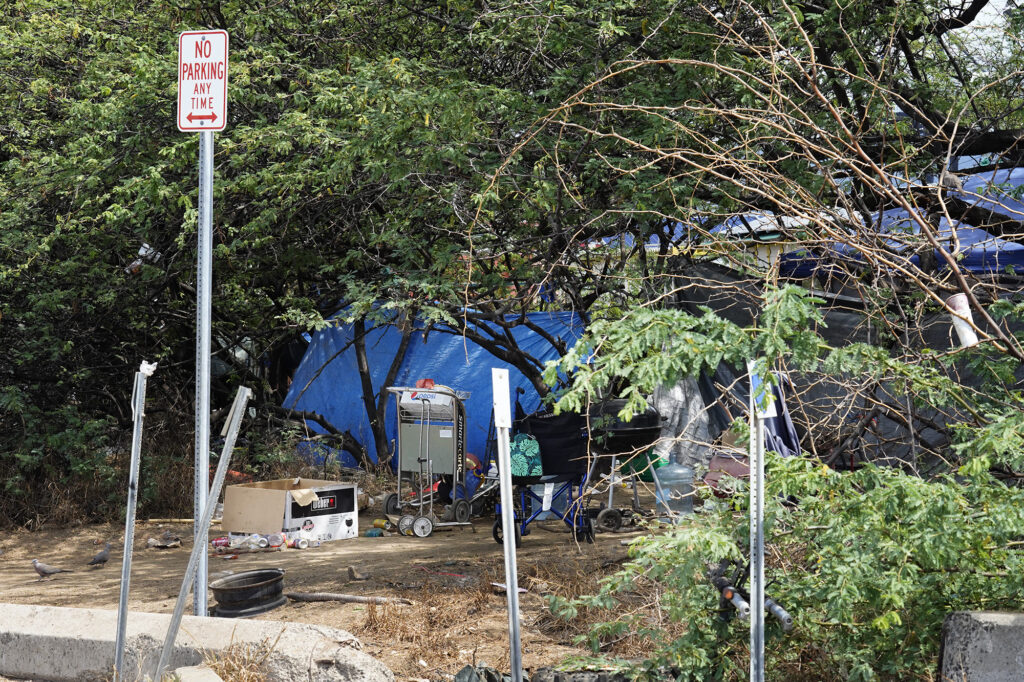
On Sept. 12, hospital staff organized a taxi to take Surls-Kane to her chosen destination: the Sand Island homeless camp where she had been living ever since she refused treatment at Queen’s hospital for a broken jaw and head trauma resulting from the Hilo park assault.
Helen Linton, a hospital spokesperson, did not respond to questions or a request for an interview with hospital staff.
Ramirez, Surls-Kane’s closest relative and mental health advocate, said she had no say in the turnaround in the trajectory of her aunt’s care.
“I just felt like they put her back in the same situation that they literally helped her from,” Ramirez said. “Just because she’s doing good in the hospital doesn’t mean she’s going to do good on the outside.”
For patients and their families, the cost of every backslide is a loss of trust in the state’s mental health system. The cost to taxpayers is enormous. But Dr. Chad Koyanagi, who oversees the delivery of behavioral health services to Hawai‘i residents on Medicaid for the state Department of Health, said Surls-Kane’s case is an example of the system working.
“Returning to the streets is not ideal but it’s her comfort zone,” Koyanagi said. “When someone is not a danger to themselves anymore you have to at least consider when they are telling you that they will follow up with outpatient care and they will consider a housing program in the future. It’s so important to allow people to express their preferences, provided that there’s no immediate safety concerns.”
‘Many Eyes Looking After Her’
Laws written decades ago to protect mentally ill people from a disturbing history of abuse in American psychiatric institutions now make it difficult to force people into treatment. And many people who battle debilitating mental illness lack the insight to know they need help. Over time, public outrage over coercive practices in mental institutions has given way to frustration over the sheer visibility and stubborn persistence of the nation’s homeless crisis.
Surls-Kane’s case comes at a tense moment in the national debate about how to manage chronic homelessness and severe mental illness. President Donald Trump issued a directive in July that incentivizes cities and states to use law enforcement to remove homeless people from the street and seeks to make it easier to put them into psychiatric hospitals, addiction rehabilitation centers and other institutional settings.
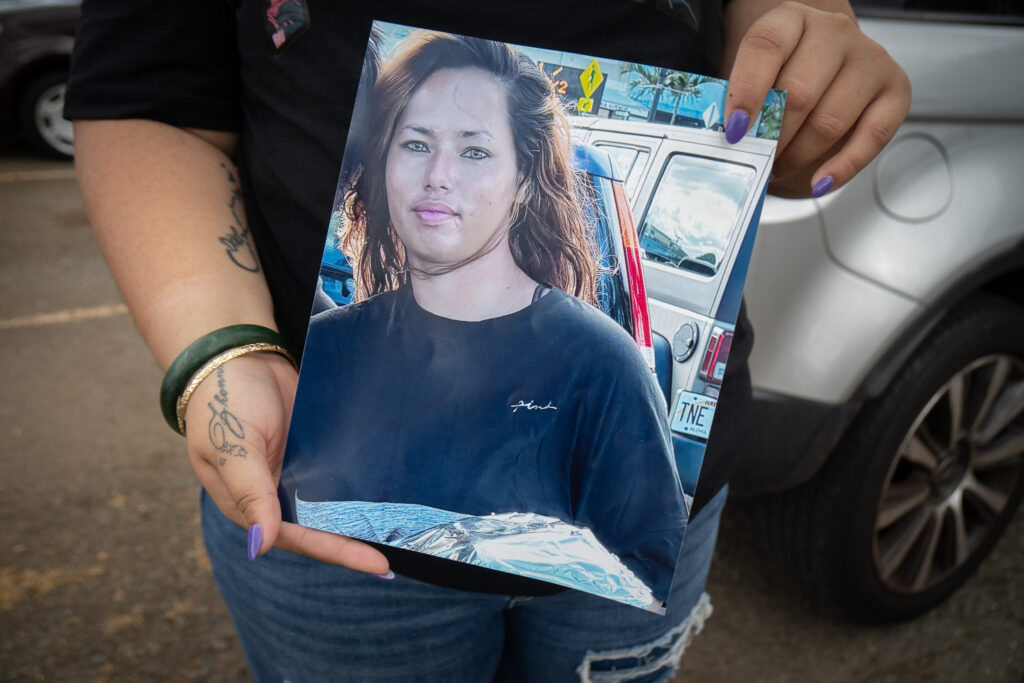
In Hawaiʻi, roughly 90% of hospital patients with a pending MH6 order for court-mandated treatment will improve enough to be discharged before the process is complete, Koyanagi said. Yet the unlikelihood of a patient obtaining court-ordered treatment this way, he said, is often left unexplained, adding to the already toiling plight of families of people with severe mental illness.
Although in many ways Surls-Kane’s return to Sand Island has put her back in the mix of predatory men and drugs, Koyanagi argues that she is in a markedly better position.
Outside of her intensive case management team, Surls-Kane is now aware of other resources available to help her find housing or fix her broken jaw or fly back to the Big Island, when she’s ready to accept it.
A state conservation officer who has inserted himself as an intermediary between Surls-Kane and her niece sends text message updates and video clips of his interactions with Surls-Kane to Ramirez. After recreational campers complained about Surls-Kane sleeping under a wooden train engine in a state playground, the officer for the Hawaiʻi Department of Land and Natural Resources tracked Ramirez down on Facebook and committed to help the effort to tease her out of the park.
“Before everyone got involved, she just had a niece on a different island having heartache over where she was and what she was doing and no helpers per se whose job it is to assist her,” Koyanagi said. “Now that all these things have transpired, she has many, many eyes looking after her.”
Civil Beat’s reporting on economic inequality is supported by the Hawaiʻi Community Foundation as part of its work to build equity for all through the CHANGE Framework; and by the Cooke Foundation.

