Hawaiʻi’s Child Welfare Reform Efforts Bump Up Against Budget Fears
Gov. Josh Green has imposed spending restrictions on state departments, which means new money to help fix problems at CWS will be scarce next year.
Ryan Yamane has a long list of what the state Child Welfare Services system needs to better serve Hawaiʻi’s families and kids.
That list includes more community resources, including therapists and drug treatment and mental health programs, says Yamane, who oversees CWS as the director of the Department of Human Services. It needs more robust nonprofit organizations to provide services to foster kids and their families.
It requires new workers ready to take on some of the most difficult jobs in the state. CWS continues to have vacancy rates that run as high as 35% to 40% for some jobs.
And it could use new resources to help keep at-risk families intact as they struggle with stresses such as Hawaiʻi’s high cost of living, he said. If the department can help families navigate those challenges, it will mean fewer children end up in foster care.
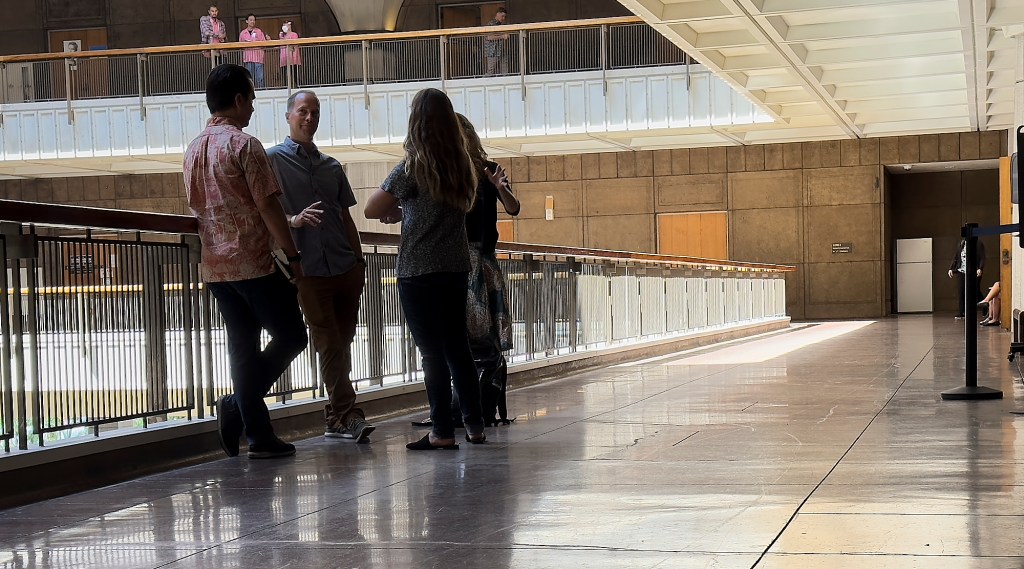
Hawaiʻi has been under significant pressure to improve the CWS system in recent years, especially since the disappearance of 10-year-old Ariel Sellers in 2021 and the deaths of other children who had been involved with CWS.
But dealing with all of the needs Yamane describes will be costly, and state funding for new programs will be in short supply in the years ahead.
Government agencies across the state including DHS are anxiously watching the dramatic upheavals in the federal government this year, including the government shutdown and the fiscal impact of President Trump’s One Big Beautiful Bill Act.
It is unclear where that leaves the years-long effort to reform CWS.
Gov. Josh Green issued a directive on Oct. 15 warning of “economic instability and anticipated loss of federal funds” over the next several years. Green pledged in that memo to continue federally funded programs that “provide essential services to the public,” but doing so will be expensive.
The Green administration has already told state departments to refrain from spending 10% of “discretionary” operating funding in their existing budgets. That 10% restriction does not apply to non-discretionary spending such as salaries, benefits and debt service.
The administration also added a requirement that any new spending of more than $200,000 authorized in the state budget must get the governor’s approval.
For his part, Yamane said in a recent interview he is not requesting a big budget increase for CWS. “We are working internally to assess what our priorities would be and what resources would be, so I don’t have a specific ask right now,” he said.
But critics say they will continue to advocate for change at CWS and urge lawmakers to establish new programs to support the child welfare branch anyway.
Laurie Tochiki, co-chair, of a CWS reform effort called the Mālama ʻOhana Working Group, worries the progress CWS has made so far isn’t enough.
“What’s happened is that the department — maybe rightfully — is saying they need to go internally to fix things on their own, privately,” she said. “But unless they let the voices of the community in, I’m very concerned that the solutions will not be the effective solutions we need.”
Fixes That Don’t Cost Too Much
Yamane, who has been DHS director for the past year, described a series of internal initiatives he has pursued in recent months to try to strengthen CWS.
One was to ensure the department responded properly to a highly critical audit of CWS by the Office of the Hawaiʻi Auditor last year.
The 82-page audit scrutinized a common practice known as “child-specific” foster placements, in which children are placed with people such as relatives, friends of the family, a child’s teacher or neighbor.
State law and the department’s administrative rules require that foster households be licensed by DHS or given a provisional certificate while they are undergoing training and background checks. But the audit found that often didn’t happen.
Of 103 child-specific foster homes sampled by the auditor, more than three dozen were found to have neither certificates nor licenses, according to the report.
Elladine Olevao, the acting administrator of the social services division of DHS, said in an interview that the department now scrutinizes cases involving children placed for 60 to 90 days with families that still have not been licensed.
In those cases, “we’re looking at whether the child should remain there … What can we do to expedite? How can we streamline?” she said. She said the number of foster children in that situation was about 100 at the time of the audit, but is now “well under 50.”
The department also launched Kākoʻo Program on April 1 that dispatches teams of CWS staffers to visit foster homes and make wellness checks in addition to the required monthly visits by social workers. Olevao said about 90 children per month are visited under that program.
Yamane said the department is also working with the non-profit Catholic Charities to begin providing pre-adoption training for families that adopt children out of the CWS system, starting with a pilot program underway in Kapolei.
Yamane said the staff has also been updating and improving internal protocols, position descriptions and flow charts, and rewriting CWS policies and procedures.
Central to the overall improvement effort is training, including using deputy attorneys general to train CWS workers on the legalities of the state Child Protective Act and overhauling the CWS training office, he said. “We are looking at ways of improving not only the onboarding of new staff, but supporting existing staffs and supervisors in training.”
Seemingly Limited Progress
The department’s response to public concerns has been frustrating to some would-be reformers.
The Mālama ʻOhana Working Group last year released a detailed report on problems with CWS from the perspective of families and children in the system, but the state has been slow to embrace its proposals.
Tochiki said basic themes that emerged from the year-long Mālama ʻOhana effort were the importance of accountability, transparency and “bringing the voices of the community and those with lived experience to the table. And those things still need to be done.”
Bills introduced in the 2025 legislative session called on the state ombudsman to more effectively address complaints about CWS, and for the creation of a new oversight commission for the agency. Both proposals failed.
Tochiki still favors increased oversight of CWS, arguing that “we shouldn’t have to wait for a baby to die before we get some accountability.”
CWS cases are confidential by law, but “I think that some of the lack of transparency and kind of hiding, frankly, behind confidentiality — I’m not sure sometimes who we’re protecting,” she said.
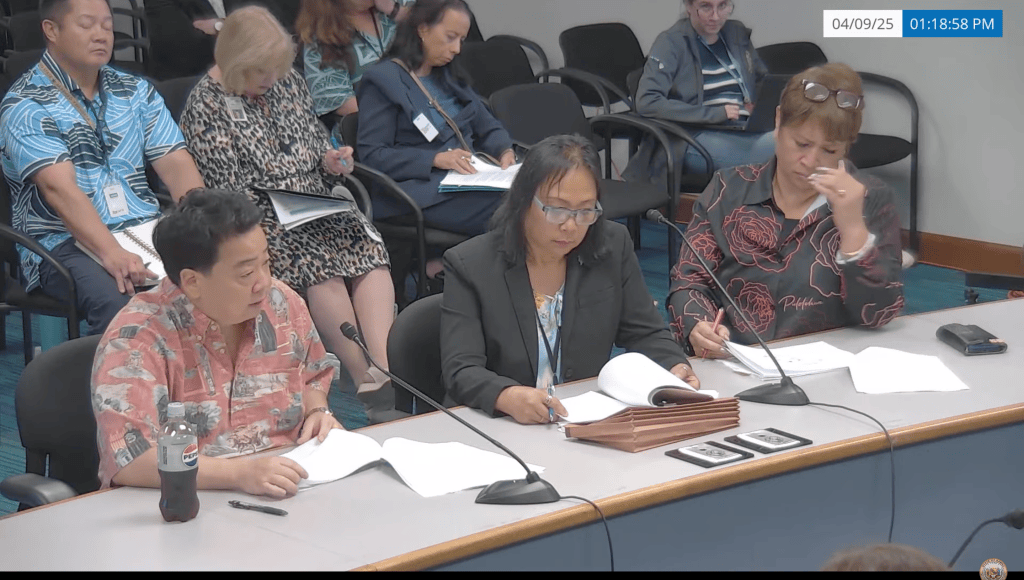
Senate Health and Human Services Chair Joy San Buenaventura considered a bill late last session to create a CWS oversight commission, but said she wants to give Yamane more time to make changes.
“To me oversight is like a hammer, and Ryan just got in,” San Buenaventura said. “I want to see what his programs come up with first before we do the oversight commission.”
San Buenaventura said she hopes to tap into more federal funds for CWS through the federal Family First Prevention Services Act of 2018 to help support at-risk families.
Family First, passed by Congress during President Trump’s first term, aims to reduce the number of children in foster care by providing services and benefits to at-risk families rather than removing the children.
The Mālama ʻOhana Working Group strongly supported that approach locally, and San Buenaventura said funding for Family First does not appear to be threatened by federal budget cuts — at least not yet.
“What we need to do is probably expand it so we are embracing it,” she said.
Plans For New Programs Deferred
Other bills that got a close look from lawmakers last session included one to create a formal program to provide trauma-informed care for children in the CWS system.
House Bill 1079 would have required the resilience office to implement a system of trauma-informed assessments, training and care to help children in the system. Trauma-informed care is used to help staff recognize the impacts of trauma in individuals and families and respond appropriately.
Another measure was Senate Bill 952, which would have launched a new pilot program to provide extra support services for 50 families to try to keep children in their homes instead of placing them in foster homes.
Both measures were introduced by the governor’s Office of Wellness and Resilience, and both stalled in the final days of the 2025 session. Those measures are technically still alive, but lawmakers rarely reconsider bills from a previous session.
Tia Hartsock, executive director of OWR, said her office won’t be re-introducing those measures next year. “That federal landscape really took priority, and the shutdown now that we’re experiencing, it’s a big concern,” she said.
However, she said OWR is creating a trauma-informed care training academy for state workers that initially will include about two dozen staff from CWS and DHS. The training will include how to build resilience in families, she said.
San Buenaventura said she supports that kind of training and plans to seek funding. That was also a recommendation of the Mālama ʻOhana Working Group.
Yamane said he is focusing on tasks such as recruiting and training additional CWS staff, and helping the nonprofit organizations that serve Hawaiʻi children to increase their capacity.
That has been a serious problem. Nonprofits that have worked with CWS say they’ve had a hard time getting insurance coverage.
The nonprofits themselves are worried they may lose funding, and in some cases they have been unable to hire staff to provide the kinds of services DHS needs.
Two years ago, the non-profit Partners in Development and the state ended a contract for services that included recruiting foster families. That important task has been handled in-house ever since.
“There was no vendor at the time willing to take over that contract two years ago,” Yamane said. “We would like to work with a partner or partner agency or community nonprofit to do that. However, we’ve been working in stages, because our nonprofits and our partners also are struggling with finding resources or staffs.”
Yamane said the department may issue a new request for proposals to hire a contractor. In the meantime, the department has been relying heavily on relatives of at-risk children to provide kinship care.
“Making sure that the safety net is there for our kids is a priority,” Yamane said. “So when you ask about funding right now, no cutbacks in funding is a win.”