

Honolulu Permit Director Blames Delays In New System On Growing Pains
New technology has not yet been able to “accelerate everything” as the mayor promised, but the permitting director is urging people to keep the faith.
A technological overhaul at Honolulu’s building permit department – which Honolulu Mayor Rick Blangiardi had promised would help speed up permitting times by September – has, so far, been doing the opposite, newly released city data shows.
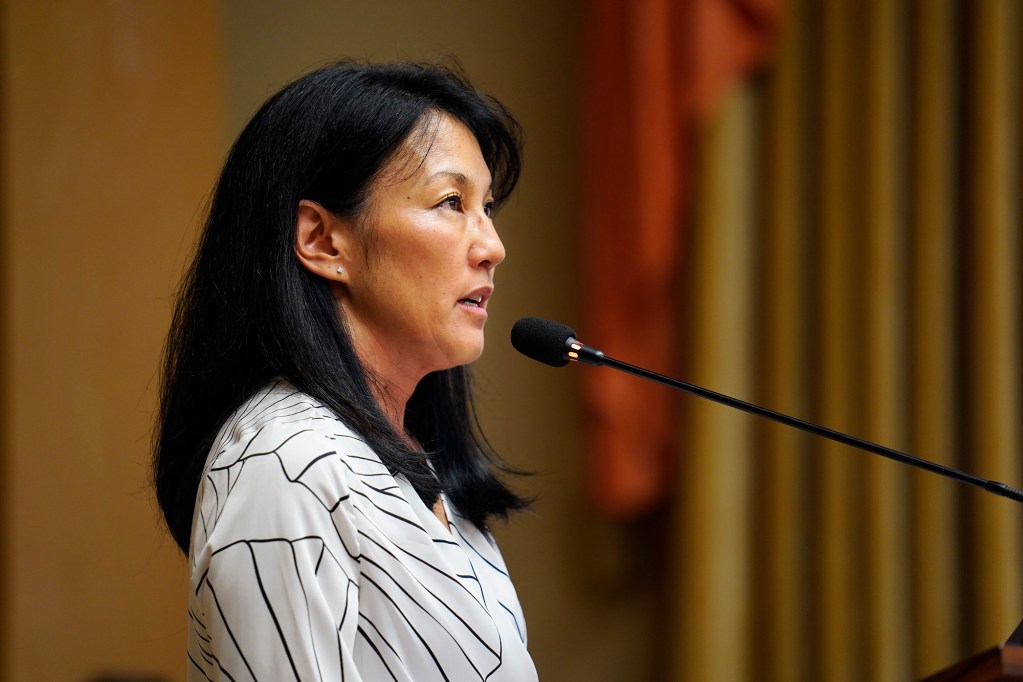
But Dawn Takeuchi Apuna, the director of the Honolulu Department of Planning and Permitting, chalked it up to growing pains and urged the community to trust that it will work out.
In the first two months of new software called HNL Build, only 809 building permits have been approved, and that includes projects that first applied under the old system. Even fewer – just 428 – were created and approved within HNL Build, according to data DPP shared with Civil Beat.
During the same time period last year, the city approved 2,463 – three times as many.
“What the computer guys sold is not delivering,” building designer Randy Trager told Civil Beat.
In an interview and in emails with Civil Beat though, Takeuchi Apuna said it’s too soon to make those kinds of judgments about the new system, called HNL Build. She compared the system to a cake still in the oven.
“You can’t pull it out of the oven and compare or judge it until it’s finished baking,” she said, which in this case, won’t be until the city’s contractor ends a period of hyper-assistance.
Point Of No Return
The earliest days of the transition were spent registering hundreds of new users into the system, which she said was a necessary first step before permits could be submitted. That time shouldn’t be counted in HNL Build’s performance metrics, she said.
“The system works, permits and inspections are processing through,” she said. “We are simply removing bugs, refining processes, and ensuring usability and familiarity through training, which takes practice.”
The previous system, POSSE, was in use since the late 1990s, and despite its faults, people had become accustomed to it. But DPP is not going back, Takeuchi Apuna said.
“Change is really hard,” she said. “In the end, it’s meant to make everyone’s lives a lot easier. So I think there’s going to be people that complain about these things, but we understand, and we’ll do our best to make it something that works for them.”
Meanwhile, the introduction of an artificial intelligence program called CivCheck, which the mayor said would start “accelerate everything” by September, has been pushed off another month or two.
“Electronically, you’re going to know everything is solid before it gets to a human review,” the mayor said at a Civil Beat event in June.
A small group of frequent applicants is currently using it in a pilot process, the director said. Once it is established among the general public for residential projects, commercial projects could also go through that system.
‘Stings In The Beginning’
Under HNL Build, staff and applicants alike have been struggling to adapt.
Staff are now tracking some information manually in documents and spreadsheets outside of HNL Build, either because the system lacks the mechanism to do the task, or if it does, employees are unaware of it.
“They might not understand how to do it,” Takeuchi Apuna said.

And Takeuchi Apuna has heard that some actions in HNL Build are not properly tracked and logged – that a staff member could make a change to an application without leaving their digital fingerprints on it. Following a bribery scandal that sent five former DPP workers to prison, Takeuchi Apuna said it would be very concerning if the new system was open to quiet manipulation.
“We need to make sure all that is correctly done,” she said. “So whatever staff is saying, that’s not the intention. We agree. Those are important features of the system.”
Department spokesman Davis Pitner said in a follow-up email that the system has safeguards and an ability to audit, but that there is a “balance to be struck between enforcing tighter controls within HNL Build and allowing staff the flexibility they need to effectively do their work.”
“If you too tightly restrict workflows, it can prevent or drastically slow work processes, that affect service output,” he said. ” Ultimately, personnel must be accountable via ethics and role expectations that they do what is proper.”
Applicants are having issues, too.
They’ve complained that information from POSSE isn’t yet visible in the new system. Data migration is a work in progress, the director said.
A number of individuals who submitted plans under the old system had to completely start over in HNL Build. The director said the city had advised people to hold off on submitting new plans into the old system right ahead of the transition, but perhaps not everyone got the message.
Certain applicants who used to be able to get an automatic permit online for small jobs – called a quick permit – were instead put into the queue for a full review in HNL Build. Takeuchi Apuna said this experience was limited to certain groups, like those in coastal areas, and the city is pursuing a workaround for those projects.
Some are frustrated that HNL Build requires much more information on the front end than POSSE did. But Takeuchi Apuna said that’s a good thing. Better to address potential issues upfront, she said, than interrupt the flow of the review later.
“It stings in the beginning because people don’t want to change,” the director said. “But at the same time, it’s better for them in the overall process because now it’s going to go smoother.”

In the meantime, DPP said it has training guides on its website for applicants and continues to work with its contractor, Speridian, on fixing problems.
‘It Takes A While’
The department is seeing signs that permit approvals are building momentum. The number of total permits issued per week – which includes automatic permits for small jobs – has been trending up.
Trager had already been warning clients that getting a single family home construction approved could take up to 14 months. With even more uncertainty under HNL Build, he’s telling anyone applying for a permit today that they probably won’t build until 2027.
Trager said he supports Takeuchi Apuna’s efforts to improve a system that was already, as locals might say, hammajang, or all messed up.
“I think it’s going to eventually work,” he said. “It’s just every time we do an upgrade or revision in software, it takes a while to get things moving. But in the meantime the marketplace suffers because times expand.”

