What Toxic Legacy Did This Abandoned Sugar Mill Leave Behind?
The owner of the land tied to a former sugar mill wants to develop housing on the site but must make sure hazardous plantation-era remnants are cleared.
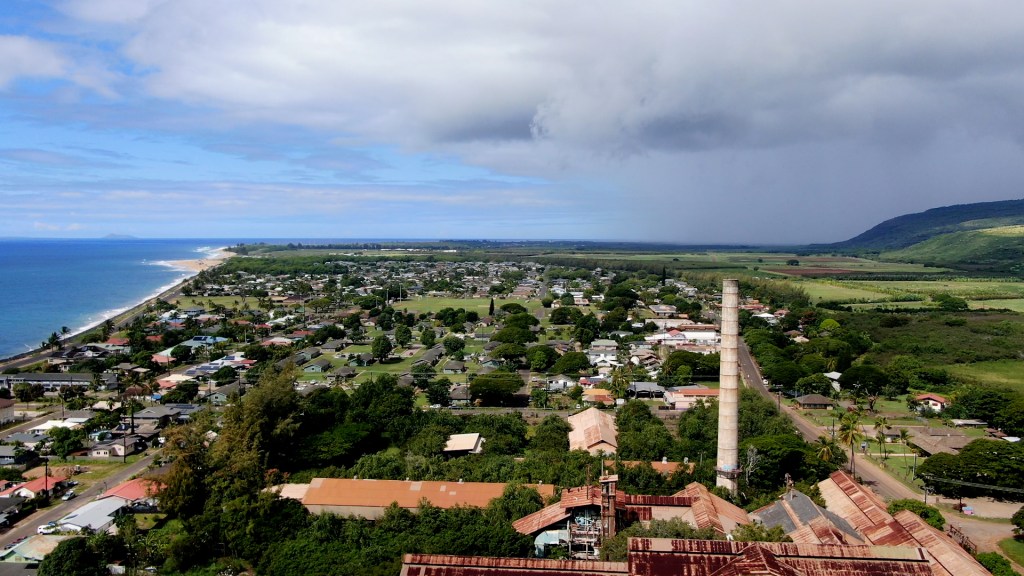
On Kauaʻi, the old Kekaha sugar mill, vacant for decades, is surrounded on three sides by homes.
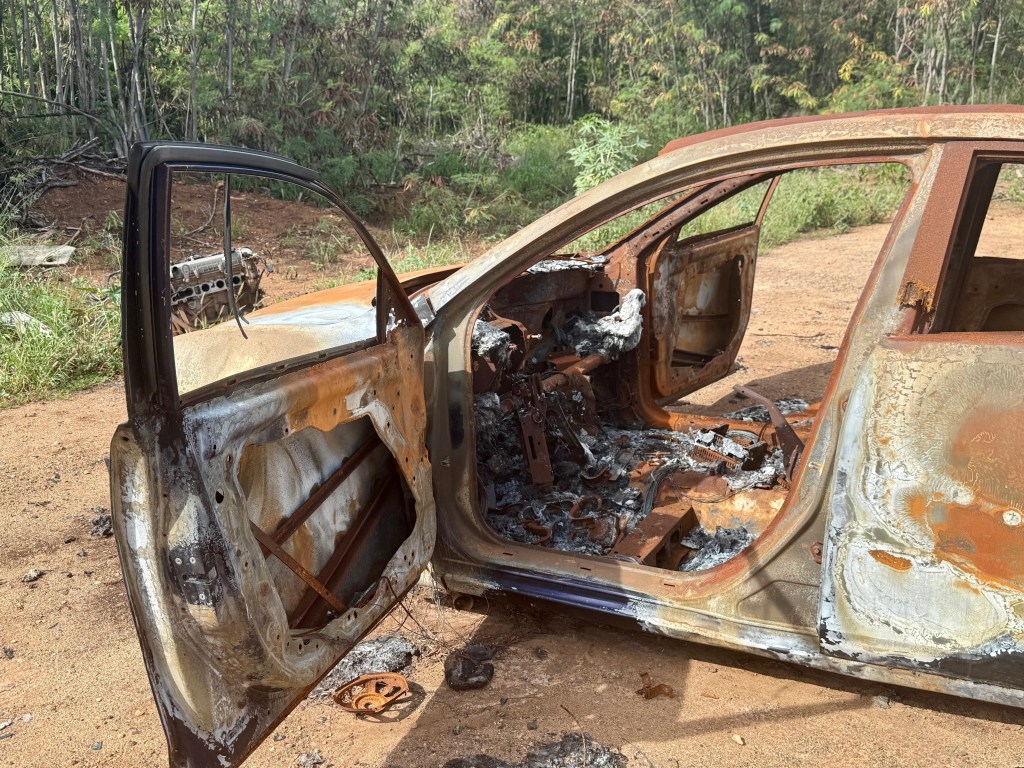
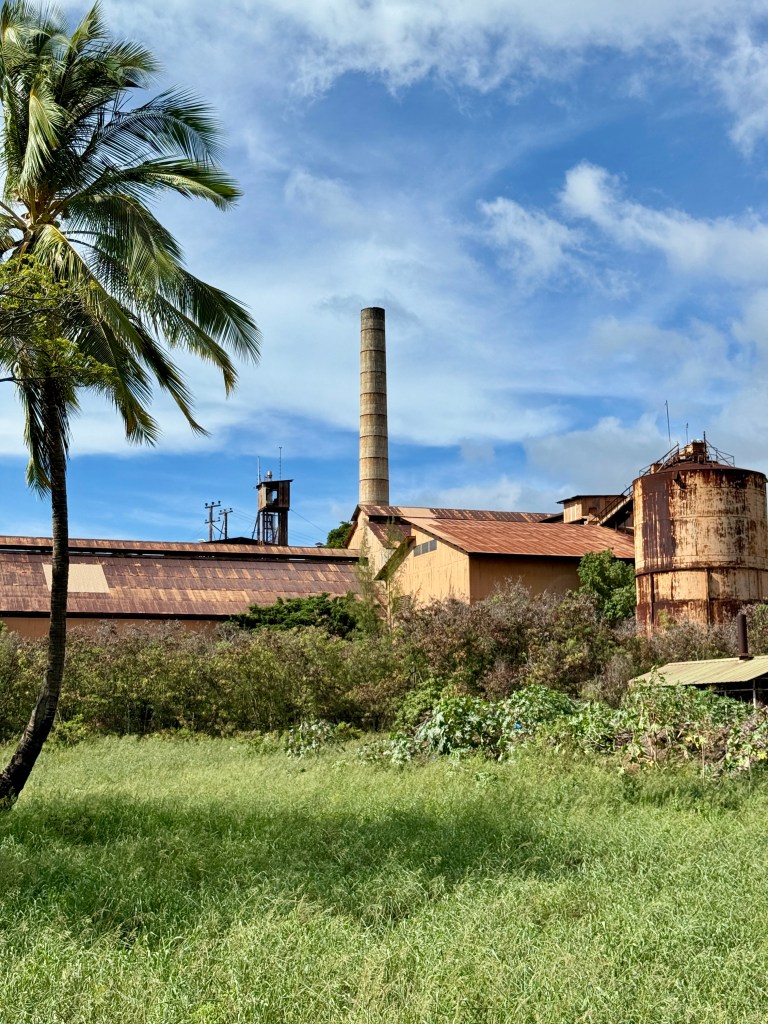
The smoke stack, a landmark for hunters in the mountains and fishermen at sea, remains a point of pride for the rural community. But the 20-acre property has been all but abandoned for 25 years, long enough that some residents whose land borders the mill have extended their backyard gardens past the overgrown boundary. Others have used the old mill lot as an illegal dumping ground for broken appliances and burned-out vehicles.
“It’s just sitting there rotting,” Kekaha resident Bruce Pleas said. “It would be nice if someone did something with it. It’s in the middle of the neighborhood. But since the mill went down, I always said, and I still am convinced, it was utterly polluted.”
Aloun Farms, a Central Oʻahu-based vegetable producer that has been expanding on Kauaʻi, wants to do something with it. In 2023, it purchased 10 acres from the owner of the old Kekaha mill, Kekaha MS LLC, for nearly $2 million, with plans to build roughly two dozen single-family homes and two dozen two- or three- story apartments.
The only way to make the plan a reality, Aloun Farms President and General Manager Alec Sou said, is to identify and then deal with whatever toxins may be lingering in the dirt from the plantation days.
Toxic Legacy
After the 2000 demise of the Kekaha Sugar Co., this once-vibrant industrial town on Kauaʻi’s westernmost coast has struggled to redefine itself. Looking to the future means examining the past and, in many cases, digging in the dirt.
Hundreds of thousands of dollars in federal grant money were recently made available to nearly a dozen Kekaha property owners with potentially contaminated properties, either due to the defunct sugar business or other industrial hazards. Aloun Farms was the only one to take up the offer, which is intended to identify toxins in the soil but does not include money for cleanup.
The family farm company owns the 10 acre eastern portion of the old mill property, which includes the site of the old seed dipping tank but not the mill itself. When Aloun executives learned about the unclaimed grant money for an environmental assessment, they agreed to participate in the Kauaʻi County Office of Economic Development’s Kekaha Road Brownfields Program.
This spring, a county contractor collected hundreds of soil samples from the property and tested them for hazardous materials. Preliminary results, received in August, turned up mixed results.
A ditch that cuts through the property tested positive for toxins at concentrations that exceed what health regulators consider safe and pose a potential risk to the environment or public health. The rest of the lot, including a section that’s the focus of a planned farm worker housing development, tested positive for lead, possibly from lead paint, but at levels below what regulators consider dangerous.
The Hawaiʻi Department of Health is reviewing the findings to determine whether additional soil tests or cleanup is required to move forward with Aloun Farm’s development plans.
“It’s a roll of the dice,” Sou said. “On one hand, if it’s all clear you can sleep well, but when you do it, the more you dig, there’s always potential to find something and, yes, the clean up is astronomical — especially if we have to ship out any dirt.”
$300,000 And No Takers
Kauaʻi won a $300,000 grant from the U.S. Environmental Protection Agency in 2021 to study properties thought to be contaminated with hazardous chemicals — so-called brownfield sites. The focus of the environmental assessment was a 1.3-mile stretch of Kekaha Road between Amakihi and Pueo roads, a neighborhood peppered with abandoned properties.
The county identified 10 potential brownfield sites — a charter school, a corner store that never reopened after Hurricane ʻIniki in 1992. Most of the properties are vacant.
Project leaders mailed letters to the property owners asking if they would be willing to grant site access to allow environmental consultants to collect soil samples. The county received no responses.
The reluctance, according to county project leader Ana Española, was tied to the limitations of the project funding. The money was enough to cover the cost of an environmental assessment, but the county hasn’t secured any cleanup funding. If soil testing turned up contamination, would the property owners be forced to clean it up?
The county has no power to force toxic soil remediation, according to Española.
It took two years for the county to find a willing property owner. Aloun Farms saw potential in the vacant land.
“The sugar mill has always been the heart of every farming community through the turn of the century with the plantation era and Kekaha has been a sleeper for two, three decades now since sugar ended,” Sou said. “There’s not a lot going on yet. That community, what I saw looking at it, and looking at the whole west side of Kauaʻi, is that it could really feed the whole state.”
For all the region’s potential, Sou said there’s a shortage of housing to support the region’s growing number of agricultural workers. Aloun Farms rents a dozen homes for its employees. Most are two and three-bedroom homes in Kaumakani Village, a historic plantation camp for sugar company workers owned by Gay & Robinson. One of the houses is in a residential neighborhood. Sou said he’s also considering buying houses for employees.
The Aloun Farms-owned eastern half of the former Kekaha Sugar Mill property, also known as Sugar Mill Lot B, includes the site of the mill’s former seed dipping tank, where sugarcane was dipped in a solution of toxic fungicide and hot water before planting to prevent crop loss.
Sugar Mill Lot A, the 10.7-acre neighboring lot owned by Kekaha MS LLC, includes the old mill facility and smokestack.

Until the 1960s, the Aloun Farms-owned Lot B also hosted plantation camp housing and former employees used to plant gardens there. The buildings were removed, with some relocated to the 43-acre Waimea Plantation Cottages resort. A backyard mango tree remains.
Before a contractor could bore into the earth to determine what contaminants might be present, Aloun Farms had to clear brush and invasive grasses as tall as a refrigerator, as well as nearly two dozen illegally dumped vehicles. Then, in April and May, hundreds of soil samples were collected and shipped to a certified testing lab in California.
“Before we can breathe new life into a portion of the old mill site, we need to understand what’s in the soil,” Nalani Brun, director of the Kauaʻi Office of Economic Development, said in a recent statement. “Sampling gives us that clarity — it helps us identify and address any harmful substances early on, ensure the right cleanup methods are used, and plan for a future that is safe for our Kekaha community.”
‘Is There Going To Be Any Risk?’
Preliminary results turned up low levels of lead contamination on the eastern portion of the property where the planned housing development would be built. These results do not exceed screening levels established by state health regulators. Further testing of this area may still be needed.
“If a child is out here and swallows soil, is there going to be any risk?” Española said. “That’s what we need to be sure about.”
Tests of sediment in the former mill ditch that runs west between the old seed dipping tank and the mill on Lot A detected lead, petroleum dioxins and furans above state screening levels.
The findings do not pose an immediate public health risk, Española said, but a review underway by state health officials is expected to determine whether further testing or cleanup may be required.
Aloun Farms would have to pay for additional soil sampling, Española said. It already has had to pay project costs as they have exceeded the $300,000 grant award.
It’s unclear who owns the ditch, however. Española said it’s either part of Lot A or Lot B, or it’s owned by the state.
A Dec. 11 public meeting is planned for the county, environmental consultants and Aloun Farms representatives to discuss soil test results.
Over the years, Española, county project director since 2022, said she has learned about residents’ desires for the improvement of brownfield sites littering their community. The mill, she said, is the property that most Kekaha residents agree they would like to see transformed first.
Resident-generated ideas for the site include housing for local families, a farmers market, artist stalls, a hardware store or a community pool. Adapting the property to these kinds of uses is expected to be a costly endeavor, however.
“If you want to revitalize the community,” Española said, “this is the heart of it.”
Civil Beat’s reporting on Kauaʻi is supported in part by a grant from the G. N. Wilcox Trust. Its coverage of climate change and the environment is supported by The Healy Foundation, the Marisla Fund of the Hawai‘i Community Foundation and the Frost Family Foundation.