Fix It! Popular Downtown Honolulu Street Crossing Needs To Be More Visible
Scores of similar sketchy crosswalks have been removed, but this one connects city landmarks in a bustling downtown corridor.
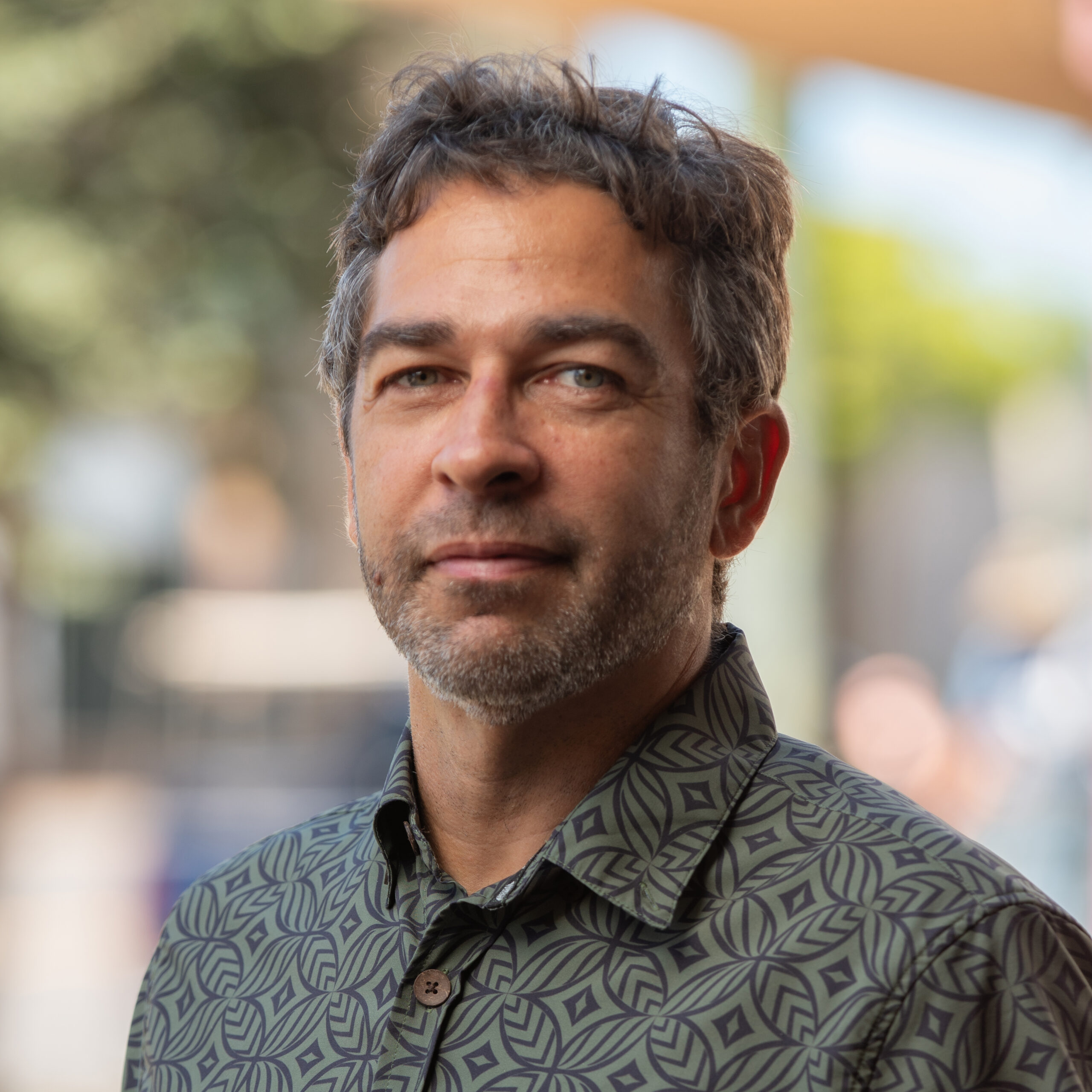
In the past two months, Honolulu architect Joshua Briggs said he has almost been hit three times by cars and even a city bus, all while crossing King Street’s striped crosswalk between ʻIolani Palace and the King Kamehameha statue.
He’s also watched vehicles nearly strike tourists and local residents there as they try to cross the four lanes of busy traffic and bicycle lanes that separate those two prominent downtown Honolulu landmarks.
“I always feel like a chicken crossing the road,” said Briggs, who makes the trek during the week to get lunch.

He wants to ensure visitors are able to safely get between the places they want to go, as well as the people who work there.
“It’s a fairly busy crosswalk,” he added.
At dozens of similar risky crosswalks across Oʻahu, city transportation officials have opted in recent years to remove the painted stripes to discourage people from crossing rather than invest in expensive safety upgrades.
However, the pedestrian stripes at this popular King and Mililani Street crossing have stayed put, along with what Briggs sees as dangerous design flaws.
Usually, he said, the near misses occur when one car yields to a pedestrian but the vehicles in the next lane over don’t see that person crossing until the last second and slam on their brakes.
Some of the crossing’s main problems are caused by poor visibility. It’s hard for drivers to see pedestrians waiting to cross, Briggs said, because they’re obscured by trees on both sides of King Street. Drivers often miss the signs ahead of the crossing warning to watch for pedestrians, he added, because they’re cluttered among light posts and other signs.

Briggs recommended that in the short term the city paint lines that make it clearer where cars should stop for pedestrians. Currently, the crossing only has the pedestrian stripes. The city should install flashing lights, as well, he said, to warn drivers there’s a crossing there.
In the longer term, Briggs said, the city should install a raised crosswalk at a more visible location about 40 feet to the west. Such raised crosswalks help calm traffic and make conditions safer for pedestrians.
Briggs called on the city to better time the downtown traffic signals on King Street just west of the palace, at Bishop, Alakea and Richards streets, so that the lights don’t turn green in a sequence that allows vehicles to accelerate and reach the pedestrian crossing at full speed.
Travis Ota, a spokesperson for the Honolulu Department of Transportation Services, said the city and the state Department of Transportation plan to eventually install a raised crosswalk there.
Ota said construction will happen when the current repaving work along King Street is done. The state DOT website currently says the project is “in progress” and the construction start date is “TBD.”
Once it does happen, he said, it typically takes only a few days to complete.
There’s currently no cost estimate, Ota said, but raised crosswalks installed across two lanes of traffic have cost the state transportation department an average of $45,000.
Who Is Responsible?
Honolulu Department of Transportation Services’ Traffic Engineering Division: (808) 768-8321. The Hawaiʻi Department of Transportation also has an online form to file a request for raised crosswalks and other traffic upgrades.

Got A Tip For Fix It!?
Please tell us where the problem is, as specifically as possible. A cellphone photo would be helpful. Here are ways to get in touch:
You can submit in minutes using this form.
You can send us an email at news@civilbeat.org. Put “Fix It” in the subject line so it doesn’t get lost.
You can send a letter to the newsroom at PO Box 10857, Honolulu, HI 96816.
We won’t use your name without your permission but, if we pursue your fix, we will get back to you with what we find