

Kauaʻi’s Next Top Cop Says He’s A Relationship-Builder
San Diego Deputy Chief Rudy Tai’s conditional appointment as Kauaʻi police chief marks a turning point for a department with a documented morale problem.
Kauaʻi’s next police chief is a veteran cop from Oʻahu who spent the last 35 years with the San Diego Police Department.
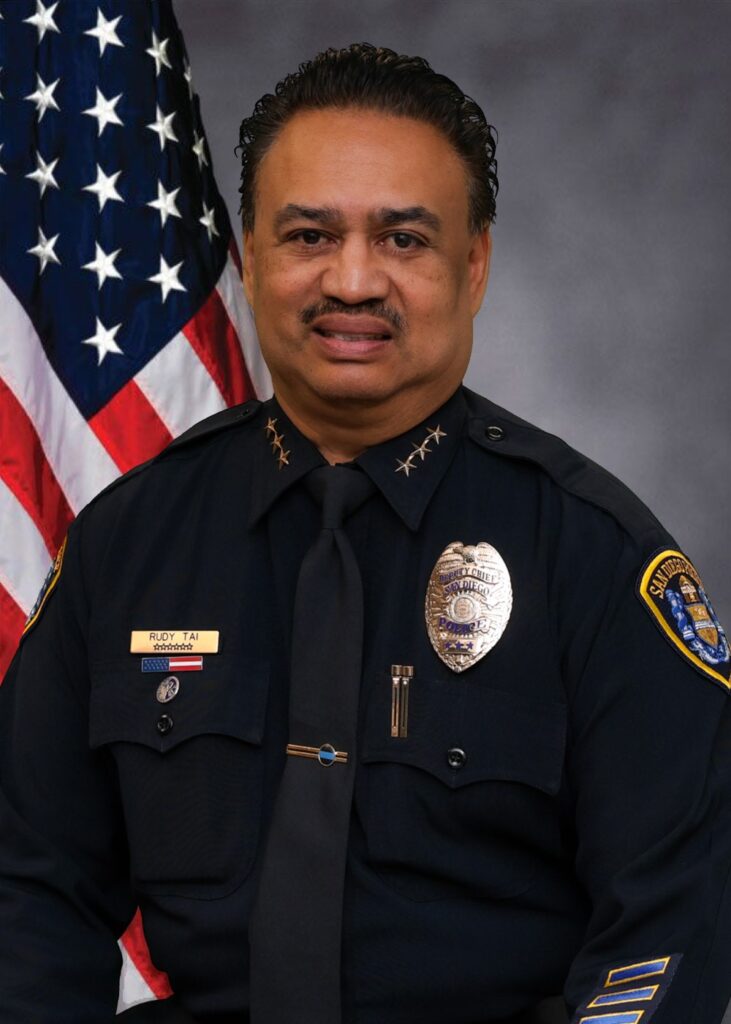
The Kauaʻi Police Commission on Friday voted to appoint San Diego Deputy Chief Rudy Tai to the chief position after a half-year search for a new leader to guide the department out of a well-publicized rut of morale issues. It is a conditional job offer, pending background checks.
“After many years working on the mainland, I am grateful for the opportunity to return home to Hawaiʻi,” Tai said in a prepared statement. “Since I was young my goal has always been to learn as much as I could and one day bring that knowledge back to serve my community.”
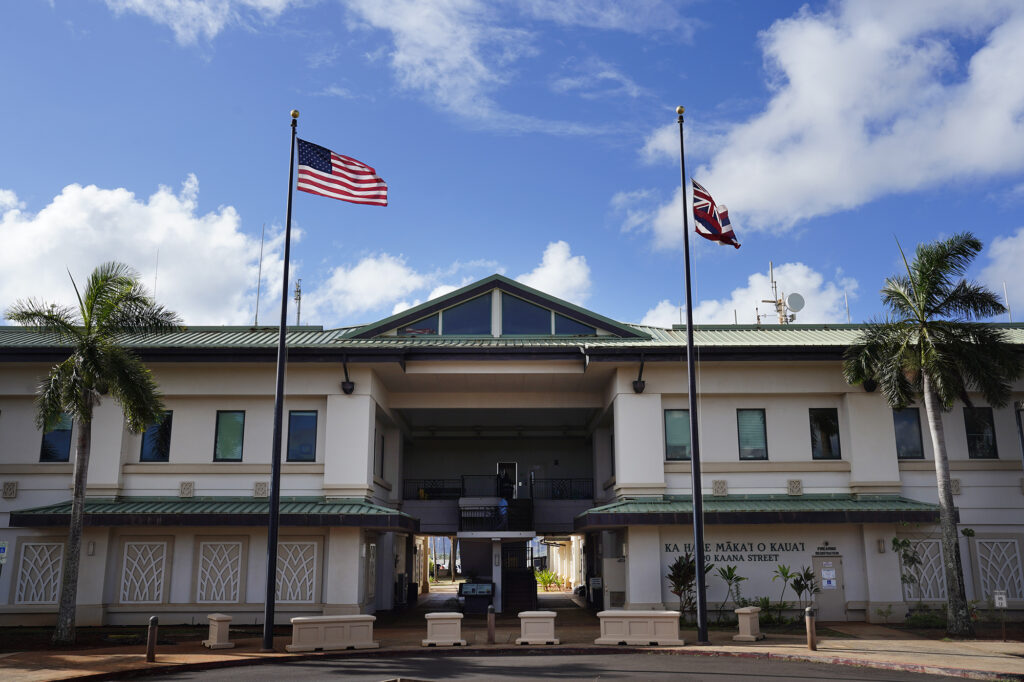
The decision caps months of speculation and uncertainty about the future of KPD amid the department’s struggles to address widespread employee dissatisfaction and recruit and retain staff. The department has an 18% officer vacancy rate.
A police union survey in 2022 found more than half of the 113 officers surveyed said the department does not care about them personally. A 2024 workplace Gallup survey found that 49% of employees aren’t just unhappy at the department — they’re resentful that their needs aren’t being met.
Mayor Derek Kawakami said Tai’s conditional hiring is an important milestone for Kauaʻi police officers, who “deserve the very best” leader.
“They deserve a leader who not only understands the challenges of modern policing,” he said, “but who has the vision and ability to guide the department into the future.”
Jonathan Frye, vice president of the State of Hawaii Organization of Police Officers, said Tai’s pending appointment is a step toward building a stronger and healthier KPD.
“He has quite the task ahead of him,” Frye said. “There’s a lot that he’s going to have to try to overcome after what happened under Todd Raybuck and the wounds that are there are still going to need healing. I think he’s up to the challenge and he’s going to do the best he can to do right by KPD.”
Former chief Raybuck retired in June after a six-year tenure clouded by controversy, including allegations he made racist comments about Japanese people and created a hostile work environment for employees. He was also disciplined for leaving his gun in a police station bathroom stall.
The department has since been run by Elliott Kalani Ke, who moved up from assistant chief to serve as interim chief. Ke did not apply for the chief position. In a statement Tuesday he pledged his support for Tai and a smooth transition of power.
All told, 42 people applied for the chief position, which carries a $181,800 salary.
Tai is the San Diego Police Department’s second-highest-ranking member. He currently runs daily operations and serves as a volunteer community liaison between the department and the city’s Asian and Pacific Islander community. He has been a San Diego cop since 1990.
The San Diego Police Department is about 10 times the size of KPD, which has a $41.5 million annual budget and 236 full-time staff members, including 135 sworn officers. Another 30 officer positions are unfilled.
Tai, who was born on Oʻahu and graduated from Pearl City High School, moved to San Diego for college and, after graduating, became a police officer there. It’s always been his dream, he wrote in his job application, to return to Hawaiʻi.
Last week SHOPO President Nicholas Schlapak raised concerns about Tai’s judgment as a supervisor, pointing to his failure to hold accountable a subordinate officer who in the 1990s was allegedly involved in a sexual misconduct incident involving a mentally disabled woman, according to a 2014 news story in the nonprofit news outlet Voice of San Diego. Tai gave the officer a verbal warning, according to the story, and did not document the incident.
In an interview last week, Schlapak said Tai’s lighthandedness in dealing with the incident could have allowed the officer’s misconduct to continue. The cop, former San Diego Officer Anthony Arevalos, was convicted of sexual assault in 2011. A 2015 investigation by the U.S. Department of Justice found the department had systematically failed to discipline and hold its officers accountable.
Union representatives, who also raised concerns about other candidates, said it was unclear whether the Kauaʻi Police Commission knew about Tai’s background before advancing him to the short list of finalists.
Tai did not respond to requests for an interview made through the Kauaʻi and San Diego police departments and a Kauaʻi County spokesperson.
“He’s a good candidate. We’re not trying to second-guess his qualifications,” Frye told Civil Beat. “I think it’s just kind of overshadowed by the fact that the police commission’s process wasn’t as open and transparent as it could have been and there are still questions about whether the candidates were even asked to defend or explain about these things that could be concerning.”
Tai brings to KPD more than three decades of law enforcement experience, including stints as captain, assistant chief, deputy chief and acting police chief. He describes himself as an approachable leader with years of experience developing trust and partnerships with residents, elected officials, religious leaders, labor groups and local businesses.
A chief’s crucial role is to “inform every employee in the department that they are a valuable member and play a key role,” he wrote in his application.

