

Kamehameha Schools Trustee Finalists Are Walking Into A Challenging Future
Three men are seeking to lead one of the country’s largest charitable trusts.
Kamehameha Schools has come to a crossroads for its vast land holdings and the businesses that stand on them, for its mission to educate Native Hawaiians — and for its ability to continue doing so that is now being challenged in federal court.
Come early 2026, one of three men will join four other trustees on the most powerful nonprofit board in the state to guide the school down its path into the 2030s and beyond. The three finalists vying for the vacant seat are startup entrepreneur Olin Lagon, hotelier Keith Vieira and finance executive Eric Yeaman.
“The next trustee is walking into some particularly challenging times for the institution,” Julian Ako, a former Kamehameha Kapālama High School principal, told Civil Beat.

One challenge is a legal one: An anti-affirmative action group wants to open the school, founded specifically to educate Hawaiians, to non-Hawaiians. Each of the candidates consider it the greatest existential threat facing the school right now.
Yeaman called the admission’s policy, which gives preference to Native Hawaiian students, the “Holy Grail,” adding “You have to defend it at all costs.” Of the lawsuit, Vieira said, “You never give up. You fight ‘til the end.”
Lagon went a step further, referencing a long-held perception that Kamehameha does not admit students with disabilities. He said that if Kamehameha is arguing that its admissions policy serves a remedial purpose for Hawaiians, then the school should create programs that specifically serve special needs students.
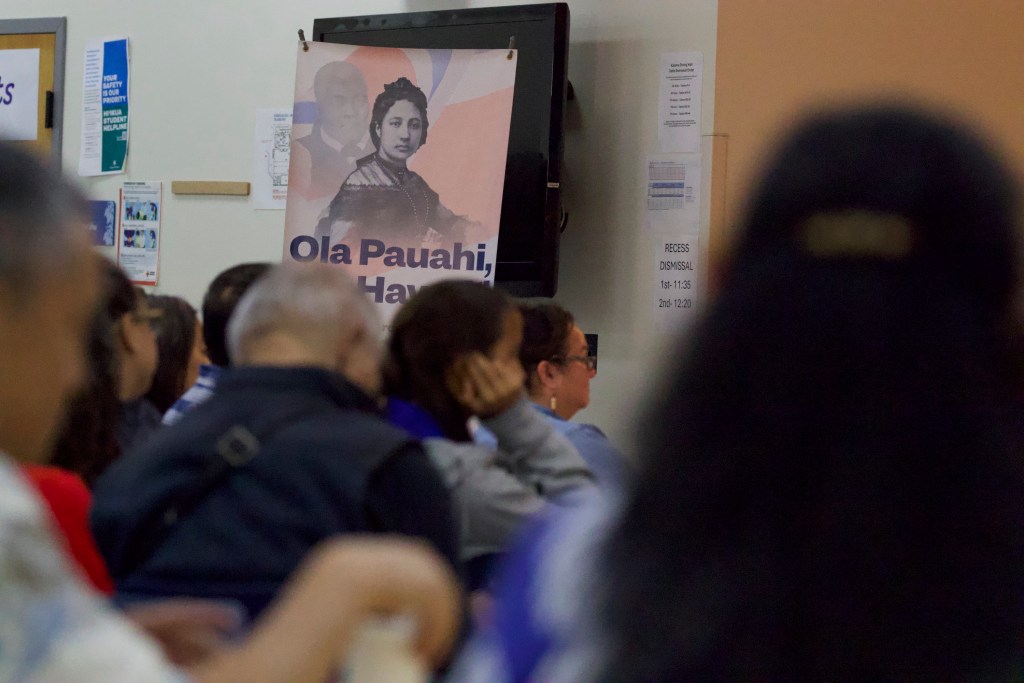
“Her will isn’t just ‘Take the top kids’…where are the special-ed kids?” he said, referring to Bernice Pauahi Bishop’s will, which created the school.
As the state’s largest private landowner, Kamehameha also faces questions over the future of more than 300,000 acres of land it owns across the islands. A court-appointed special master recently suggested offloading some of those lands that may leave it open to lawsuits, as happened in Lahaina.
The inferno that destroyed the town and killed more than 100 people spread across unkempt trust land and put the school on the hook for more than $800 million to settle claims.

There is also the question of how to best guide the charitable trust, now valued at $15 billion, to serve Kamehameha’s beneficiaries and students.
“Kamehameha is not your typical nonprofit organization,” said Jacob Aki, a KS graduate who is active in Hawaiian political circles. He noted the numerous commercial and real estate interests Kamehameha holds and said the ideal candidate will be someone who can navigate those issues along with the controversies facing the school.
Each of the candidates is promoting different priorities: Vieira wants to see the school’s financial assets grow to expand the school’s reach; Lagon hopes to reach the most underserved within the Native Hawaiian community; while Yeaman plans to use his experience managing complex organizations to help guide Kamehameha through these next few, turbulent years.
In that sense, of the three candidates, Yeaman is most like Robert Nobriga, whose term as a trustee ended in June. Nobriga also came from a background in finance and is president of the Tradewind Group investment firm.
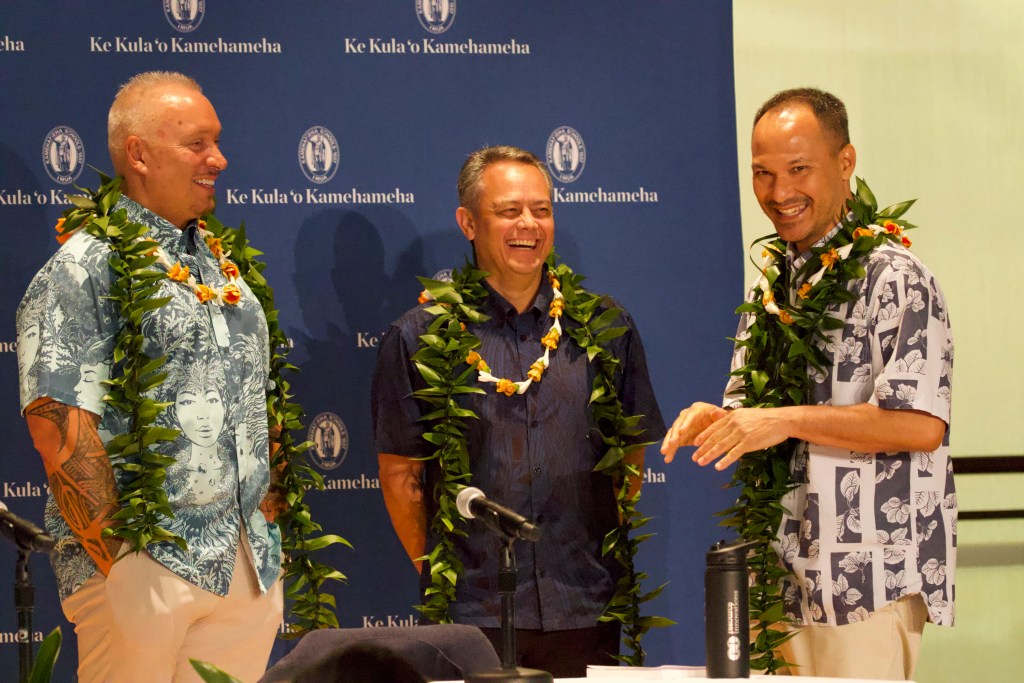
Vieira believes the board needs someone like him with experience developing students into leaders while Lagon argues that the board needs a technologist like himself to better understand the threats and uses of artificial intelligence, which he said if left unchecked would be like “Captain Cook 2.0.”
The three candidates appeared in a public forum Thursday night at Kamehameha’s Kapālama campus to take questions from an audience and event moderator Neil Hannahs, a former land assets director for the school. A recording of the event is available here. Next comes a public comment period, through 4 p.m. on Dec. 31. People can weigh-in on the candidates online or by email or mail to the Inkinen executive search firm.
The decision about who becomes the next trustee will be made by First Circuit Judge Jeannette Castagnetti early next year.
Humble Beginnings, Kamehameha Connections
Yeaman, who was raised by a single mother in Hōnaunau on the Big Island, recalled getting on a plane for the first time when he was 10 years old headed for Kamehameha’s Ho’omāka’ika’i summer program on Oʻahu. The weeklong program has mentored generations of students in cultural values and practices.
“It really taught me who I really was as a Hawaiian,” Yeaman said.
He’d return to the school years later as an auditor on a team tasked with digging into the school’s finances and practices during the “Broken Trust” era, which was marked by financial mismanagement and self-dealing by the trustees at the time.

The audits from that period led to the current management structure of the school, changes to its investment policy to support its educational mission and the reestablishment of the internal audit office as a check and balance on the trustees and administration.
Yeaman also had a brief stint as Kamehameha’s chief finance officer before moving on to executive roles with the Hawaiian Electric Company and Hawaiian Telcom. He was president of First Hawaiian Bank when it became publicly traded in 2016 and since 2020 has been the board chairman of Alexander & Baldwin, which recently announced its intention to go private in early 2026.
Vieira told a story of his father being excited to get an invitation to a cocktail party with Big Island bigwigs, legislators and plantation owners. He never forgot the look on his father’s face when he saw him in a dinner jacket covered by an apron: He had been included not as a guest but as a busboy.
“He was saying ‘We’re not them. They have a different life. We’re not them,’” Vieira said. “We’ve got to outwork ‘em. We’ve got to outperform ‘em.”
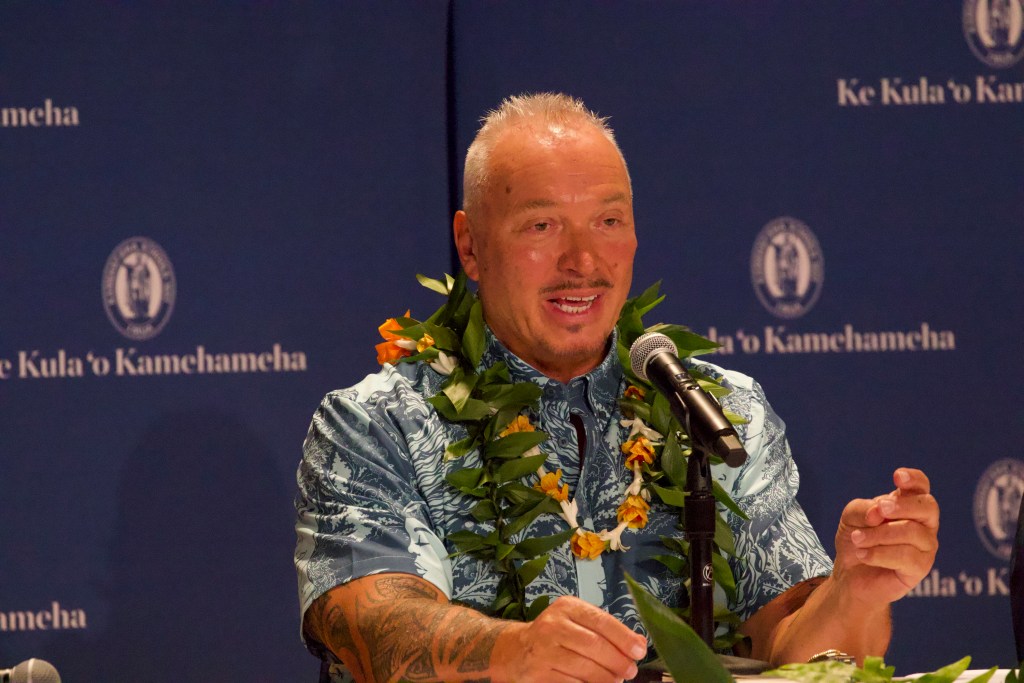
He started out as a janitor making $1.60 an hour and was a bouncer at nightclubs during college. He later worked part time as a bouncer and in sales for the Sheraton Waikīkī. He worked his way up to become a vice president for the Hawaiʻi operations of Starwood Hotel & Resorts, Sheraton’s parent company at the time.
Vieira is one of the original board members for the Hawaiʻi Tourism Authority, founded in the late 1990s, and is now a tourism industry consultant. He is also an instructor at the Shidler College of Business at the University of Hawaiʻi Mānoa where he teaches classes on personal branding to prepare students for job interviews.
Lagon grew up on Oʻahu, first in Pālolo housing before “upgrading,” as he put it, to Kūhiō Park Terrace. To illustrate the rough conditions kids face in public housing, he told of a time when he was playing with chalk on a sidewalk when he was stabbed in the back of the head by another child.

He caught a break at 19, when he won a fellowship sponsored by Kamehameha that paid for his college education, freeing him up from working full time while attending school. He used that opportunity to study abroad, taking classes in accounting to prepare for life in the corporate world.
But he changed career paths after coming to see corporate profits as extractive of the working class. Instead, for the last 30 years, he’s launched various startups “to show the world what kanaka can invent.”
He is the co-founder of the Purple Maiʻa foundation, which trains people for careers in tech fields, and also co-founded Shifted Energy, a company that helps deliver clean energy solutions to low-income residents. He is now the company’s chief technology officer.
How They Would Change The School
Vieira called for building additional campuses to accommodate more students. Kamehameha’s enrollment stands at about 7,300 students across three campuses. Admission is highly competitive; the school estimates that 17 students compete for one seat at the Kapālama campus.
More than 80,000 Native Hawaiian students attend public schools across the state. Vieira said Kamehameha should reach more of them, particularly those in West Oʻahu. He wants to push Kamehameha to greatly increase its investment portfolio over the next decade to fund those additional campuses.
Vieira supported the sale of the land under the Royal Hawaiian Resort and estimated that the $510 million in revenue it brought could grow to more than $17 billion if invested wisely.
Lagon cited reports that found more than half of Native Hawaiian and Pacific Islander households are part of the ALICE population — an acronym for asset-limited, income-constrained employed. He said that Kamehameha should make use of the money it already has to create better learning environments for low-income communities and to alleviate hardships.
“That’s who we’re educating, but how are they going to come ready to learn,” he said.
He also wants the school to teach future business leaders a simple lesson: “No hog cheese,” he said, quoting a Pidgin idiom meaning “don’t be greedy.”
Asked by Hannahs how he would contribute to change at the school, Yeaman quoted heavily from the school’s current strategic plan, which emphasizes Hawaiian cultural-based education.
Split On Lands
While he supported the land sale in Waikīkī, Vieira said it was a mistake for Kamehameha to demolish a resort property in Keauhou. Kamehameha later turned it into a cultural and educational center.
Vieira would rather have seen the hotel that was once there used as a training ground for future Hawaiian leaders in the hospitality industry.
He also said Kamehameha should develop more partnerships on its real estate. He pointed to the redevelopment of the Paradise Cove lūʻau site in Ko Olina led by the Kobayashi Group. The Ko Olina resorts have also partnered with the Hawaiian Council for cultural programming at a separate lūʻau and cultural stewardship of the West Oʻahu resort area as a whole.
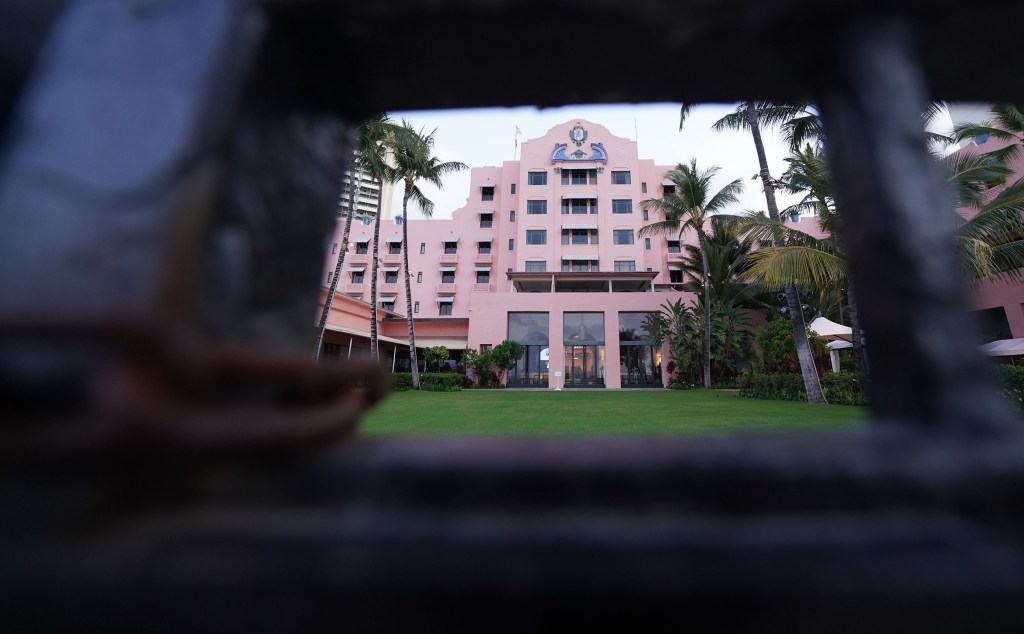
Yeaman said he wouldn’t second-guess the trustees on their decision to sell land under the Royal Hawaiian or demolish the resort at Keauhou. But he was surprised by the Royal Hawaiian sale, saying it ran contrary to longstanding policy over land use, even if the finances work out in the end.
In decisions over land, he’d like to seek a balance between the financial and commercial value of certain parcels while balancing the cultural aspect of other properties in the estate’s portfolio by not only looking at financial value from a sale but also at the cultural value a piece of land may hold. That was a sentiment all the candidates echoed.
“At the same time, land carries real responsibilities, real risks, and trustees have to approach the ʻāina with discipline,” he said.
Lagon demurred on a question regarding the Keauhou property — he said he didn’t want to opine on a subject with which he wasn’t familiar — but later said he generally supports efforts to revitalize cultural sites.
On land policy, he said that Kamehameha should do more to use its lands to support housing development and possibly as sites for medical facilities.
CORRECTION: This story has been updated to correct the partnership behind the redevelopment of the Paradise Cove lūʻau and the partnership between Ko Olina and the Hawaiian Council as well as the expected transition of Alexander & Baldwin to a private company.

