Recent Government Salary Hikes At The Top Leave Many Public Workers Behind
The latest update to Civil Beat’s Public Salary Database reflects major public-sector wage increases across Hawaiʻi — but not for everyone.
Hawaiʻi state and local governments invested in executives and senior managers with a recent round of hefty raises that did not extend to a majority of the public-sector workforce, the latest update to Civil Beat’s Public Employee Salary database shows.
Raises for many top bosses on July 1 — and other increases approved or in the works — are among the largest jumps for government workers since the database was launched in 2011, ranging from 15% at the state level to more than 50% at the county level for a select group of appointed and elected officials.
Boosts for most rank-and-file workers, meanwhile, hovered near the rate of inflation, estimated by the state at 3% this year in Honolulu. More than half the government workforce — 50,000 out of 94,000 employees — received increases of between about 2% and 4% this year following union negotiations.
As a result, the median salary for the top 100 highest-paid public employees is now four times that of the rest of the public workforce, an analysis of the new database found.

Civil Beat’s data comes directly from 19 state and county governments following public information requests submitted at least every other year since 2011. The timing of the request follows the state’s biennial budget cycle, although many agencies adjust salaries at various points during the two years.
The database includes hourly workers such as casual summer lifeguards employed by counties and ranges up to state directors, the judiciary and the governor, whose remuneration can be searched in many ways — by name, job title, agency, etc. A guide linked here offers some tips.
Total public payroll reflected in it reaches above $4.8 billion and counting, with much of Maui and some smaller agencies still to come.
As is common across the nation, the Top 10 earners list is dominated by health care CEO’s, senior physicians and top sports coaches. Hawaiʻi’s highest-paid government worker is Matthew Olnes, an oncologist and hematologist based in Hilo for the statewide health system, followed by two University of Hawaiʻi employees, UH’s new president, Wendy Hensel, and its head football coach, Timothy Chang. At the local level, the top salary is pulled down by Honolulu’s medical examiner, Masahiko Kobayashi.
Large wage gaps with other earners appear in agencies such as the Honolulu Authority for Rapid Transportation where the director, Lori Kahikina, makes $336,000 per year –– more than four times the $84,828 median salary for other HART employees. The lowest-paid salaried employee at HART is an office assistant who makes just over $50,500.
Other similar gaps between those at the top and everyone else all are at the state level — in agencies overseeing prisons, health and finance — and at the Office of Hawaiian Affairs, where Ryan Lee, who handles investments, makes $330,000, more than three and a half times what the average OHA worker earns.
Those disparities are not going to disappear anytime soon. Since the last update of the database, salary commissions for the state, Maui County and Honolulu, all have approved raises for elected and appointed officials that lock in large step increases for years.
New salaries for Gov. Josh Green and other state executives will rise between 35% to 48% over six years, for instance, starting with a 15% bump effective July 1. The governor’s salary is now $217,908, which will increase to $275,304 by July 1, 2030. Still to come are 32% increases over time for Hawaiʻi state legislators, which are scheduled to begin to kick into gear on Jan. 1, 2027.
County Salaries Outpace State
Despite some high salaries at the top of the state, generally it’s more lucrative to work for local government, with county workers earning on average $20,000 more than their state counterparts in similar roles.
The median salary of just over $71,800 across all state jobs is surpassed by the median in every county for which Civil Beat obtained complete or nearly complete data. Honolulu jobs, on average, pay the most.
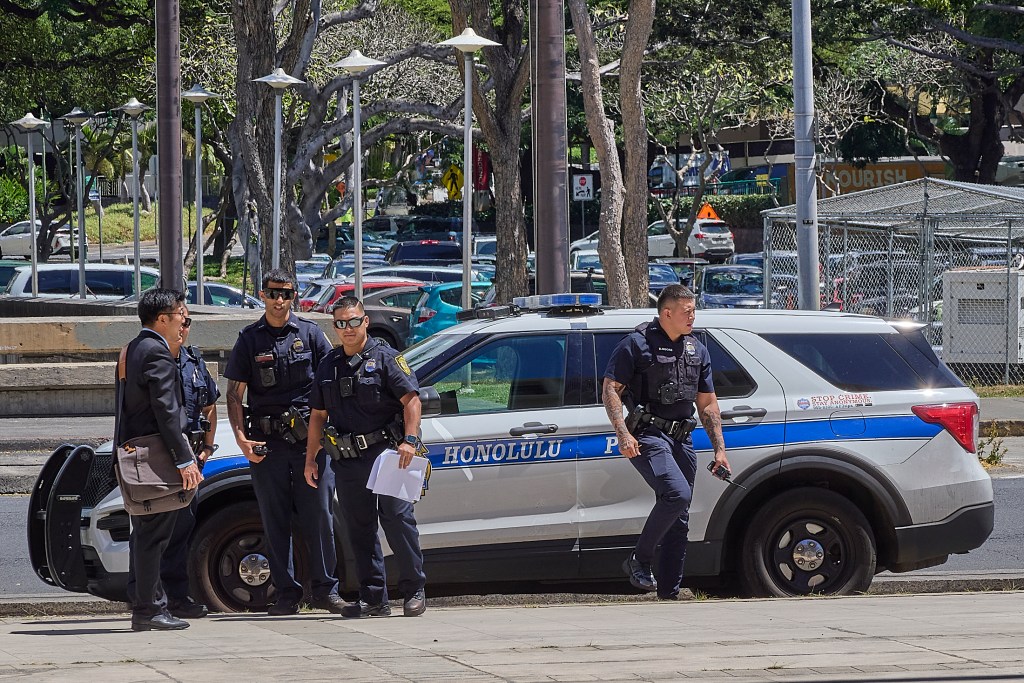
Detectives and officers at the state Department of Law Enforcement, for example, make about $22,000 less than those in similar jobs at county police departments, director Mike Lambert told lawmakers earlier this month.
Lambert’s salary heading up the state’s lead enforcement bureau is $179,436, about $5,000 a year less than he would make today if he were back in his old job as a major with the Honolulu Police Department, according to the data supplied by government agencies. That gap will widen with the recently approved 27% pay raise most county police officers across the islands will receive over the next four years, a change not yet reflected in the data provided to Civil Beat. The first 5% increase will be retroactive to July 1.
Lambert told legislators the gap between state and county pay makes it harder to hire. Of the roughly 60 investigator positions at DLE, almost half are vacant.
“The fact is that our pay is egregiously lower than the counties,” Lambert said. “It’s nearly impossible for me to keep a straight face at a recruitment event when the table next to me says $79,000, and then when they come over to us it’s $55,000, and it’s just like, ‘Oh, let me just go back and go to that other booth.'”
Geographic disparities also play out in some high-level job categories after several Maui officials jumped to the top of the state’s public salary pyramid on July 1.
While Maui County’s Department of Personnel Services has not yet provided the full list of employee salaries requested by Civil Beat on July 7, the new levels documented in the county’s salary commission materials are included in the database. Other Maui salaries will be added as they become available.
“It’s nearly impossible for me to keep a straight face at a recruitment event when the table next to me says $79,000, and then when they come over to us it’s $55,000, and it’s just like, ‘Oh, let me just go back and go to that other booth.'”
Mike Lambert, director of the state Department of Law Enforcement
State and county salary commissions have justified the larger raises in leadership roles as necessary to ensure government can attract top talent, and secure adequate staffing for key functions such as law enforcement.
State salary data shows that even with recent increases, Hawaiʻi managers still earn about 12% less on average than their mainland counterparts, according to DBEDT’s September employment and wages report.
“We just don’t pay enough,” Maui County Chairperson Alice Lee said in April, when the council approved increases for directors, deputies and elected officials, including Lee and other council members.
Other Counties Eyeing Maui Raises
The most recent update of Civil Beat’s public salaries database reflects the salaries of 14% of Hawaii’s non-military labor force, including civilian Department of Defense personnel, and includes the major wage increases for many senior public employees that took effect on July 1.
At the state level those include the 15% raises this year not just for the governor, but for the lieutenant governor and 45 government directors and deputy directors. Judiciary increases include 10% bumps for the chief and associate judges of the state Supreme Court and the Intermediate Court of Appeals, and lower increases for other judiciary.
But the latest salary information provided by the government also shows dramatic increases in executive-level salaries in some counties range widely, some of them outpacing the state.
Honolulu employees, including council members who got a controversial 64% salary increase in 2023, received 4% increases as of July 1. That includes Honolulu Mayor Rick Blangiardi who will now pull down $217,392.
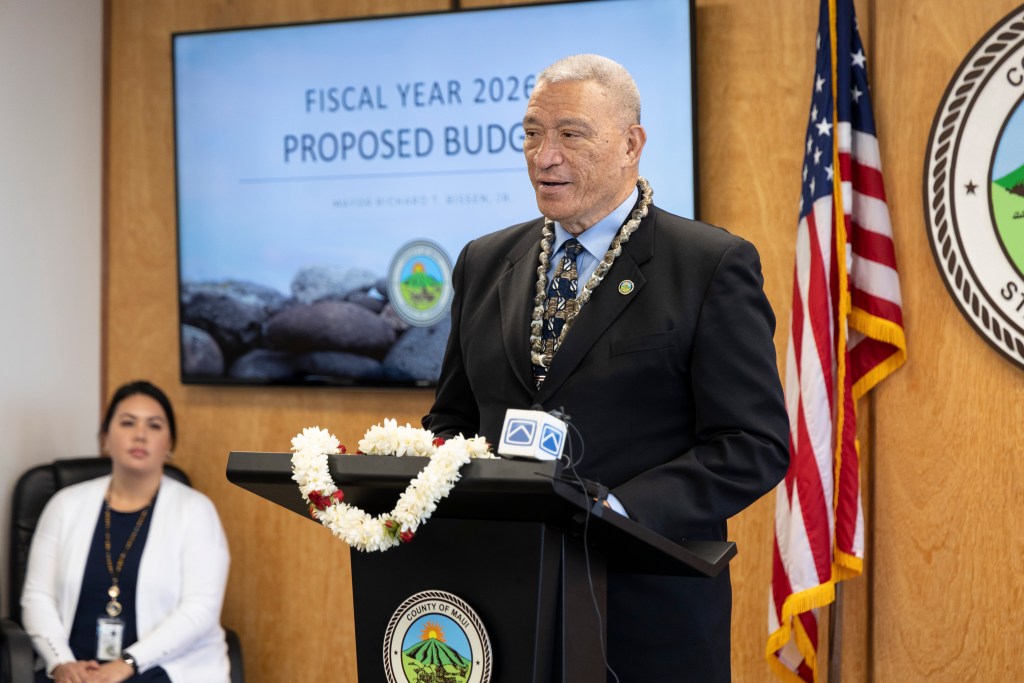
Blangiardi’s salary was eclipsed this year by that of Maui Mayor Richard Bissen, which jumped by more than half — from $159,578 to $245,000. Bissen also will earn more than the governor from now through 2028, according to current schedules for both positions.
Maui’s managing director, who oversees the county’s strategic planning and manages its budgets — Josiah Nishita — makes nearly as much as Bissen: $240,000 after a 40% raise. The 33% raise for his deputy director, Erin Wade, hiked her salary to $216,000. Those increases came after the Maui Salary Commission rescinded its initial recommendation in March to increase those salaries by up to 89%.
The top attorney for Maui County also received a significant raise that now puts him at the head of Hawaiʻi’s pay scale for the job.
As of July 1, Maui’s prosecuting attorney Andrew Martin earns just slightly less than the mayor, $239,043. That’s 10% more than the state’s attorney general, Anne Lopez. It’s also more than Martin’s counterparts at the county level: Honolulu’s prosecuting attorney, Steve Alm, earns $214,272: the Big Island’s Kelden Waltjen earns $197,004 and Kauaʻi’s Rebecca Like earns $164,208.
Maui County may have set a new bar for others. Members of the County of Kauaʻi Salary Commission recommended this month that the county launch a compensation study similar to the one that resulted in the executive increases on Maui. The Big Island’s salary commission is scheduled to vote Dec. 22 on a 15% salary increase for the county’s top officials that would run through July 2028.
Upgraded salaries in the education sector also show a wide gap between the senior executives and most of their staff.
UH President Wendy Hensel was hired in October last year on an initial three-year contract that provides an annual salary of $675,000 plus a $7,000-per-month housing allowance. Her predecessor David Lassner’s annual salary at the time of his retirement was $409,704.
Teaching faculty at UH began seeing a negotiated 3.5% salary increase in their paychecks starting July 1 and the database shows an average salary for professors at all levels and other research staff at about $77,500. That figure does not include graduate assistant salaries which will be added soon to the database.
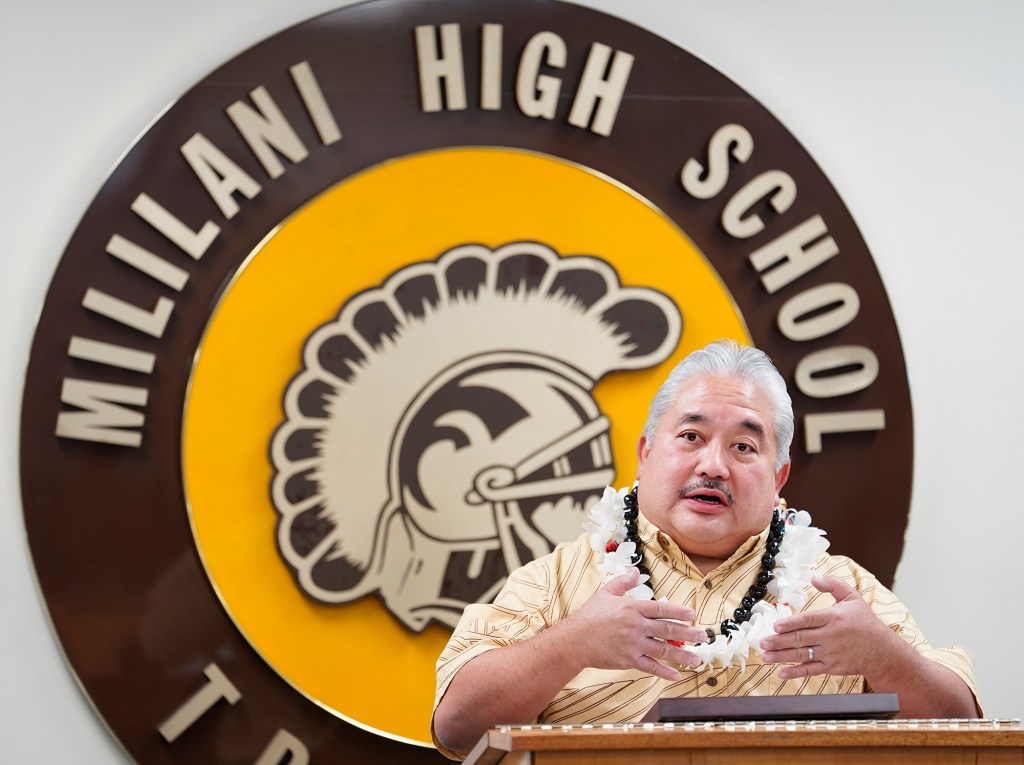
Last month, the state’s schools superintendent, Keith Hayashi, received an 18% raise to $294,674. He will also qualify for subsequent 5% to 8% annual raises based on performance, taking him as high as $400,900 by the end of the decade. The Department of Education’s 24 school superintendents — who a recent salary survey found made 20% less than their mainland counterparts — received raises that averaged 10%.
Those raises came four months after the district’s teachers saw a small step increase, equivalent to a 3% salary bump. Teachers in a newly created seniority tier got 4.5% this round. An additional 3.5% increase on the first day of the 2026-2027 school year will be applied to all employees except supervisors, according to the DOE’s salary schedule.
A district salary study last month estimated the average teacher salary at just over $78,000. The department struggles to find enough teachers to fill every classroom but has dramatically reduced its vacancy rate by hiring unlicensed teachers on an emergency basis. Those teachers are paid just over $50,000 a year.
Search the salaries of public employees.
Note: For FY2024-26, identifying information for these UH Graduate Assistant positions has been redacted. By way of explanation, UH said that the university had reviewed its obligations under the Family Educational Rights and Privacy Act and determined that the students’ information could not be disclosed. The position and salary information is included to ensure the database is as complete as possible for comparison with previous years.
Corrections, questions or comments?
A database of nearly 100,000 entries will contain errors, especially when it’s compiled from 19 agencies that provided the information in different formats. We continue to spot-check and maintain the database after launch, but also try to quickly respond to errors spotted by readers. Email us at public-salaries@civilbeat.org with your correction requests, questions and comments.