

Volunteers Oversee Hawaiʻi Charter Schools. The State Has Little Say Over Them
Volunteer boards oversee the academics and finances of Hawaiʻi charter schools. But the state has limited influence over who serves on those boards or how they hold schools accountable.

This is the second of three stories examining the 30-year history of Hawai‘i’s charter school movement and the future of public education amid shrinking enrollment and growing demand for school choice.
Read the first story: Hawaiʻi Charter Schools Promised A New Model. Did They Succeed?
Up next: A look at charter schools’ rapid growth — and how the shrinking DOE could offer a solution.
The opening of DreamHouse ʻEwa Beach’s high school campus last November marked a significant milestone for the six-year-old charter school, which was teaching freshman students in a renovated fitness studio not long ago.
The $26 million building included two floors of open learning spaces to encourage student collaboration and provide teachers the flexibility to hold school-wide meetings. The permanent campus gave high-schoolers a new sense of ownership, said Interim Head of School Katrina Abes, and allowed teachers to personalize their classrooms with posters and decorations for the first time.
But just as the school was opening for celebratory public tours, DreamHouse’s governing board came to a startling realization: the school wasn’t on track to pay off the new building, which it had financed through municipal bonds. Student enrollment was falling short of projections, meaning the school was receiving fewer state funds than anticipated.
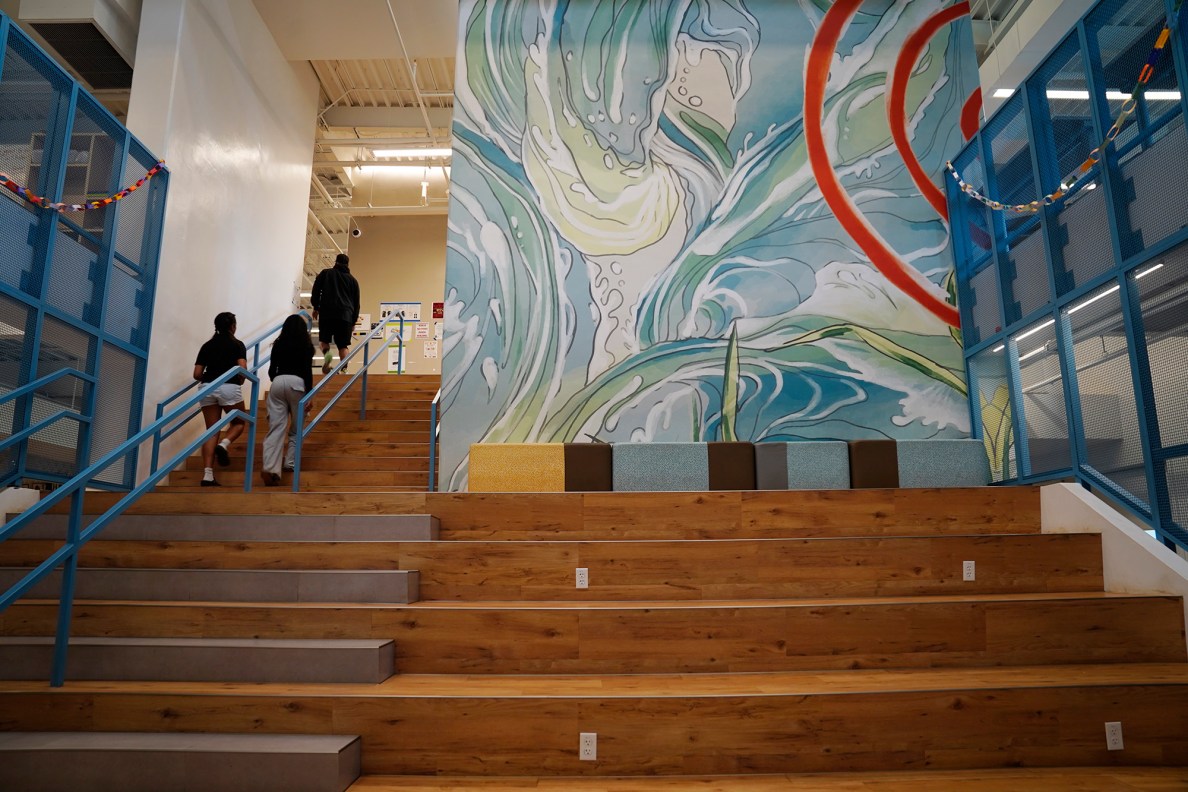
“We recognized at that point the school had no plan,” said Richard Seder, vice chair of DreamHouse’s governing board. “It was at that point that the board in unison stepped forward and said, ‘We need to save the school.’”
The State Public Charter School Commission is tasked with approving new charter schools and then holding the schools accountable for how they spend state funds and educate students. But with limited staff responsible for tracking 40 schools across the state, the day-to-day oversight of charters falls on governing boards — volunteer bodies whose members range from educational policy experts to interested parents.
Charter school advocates compare the demands of serving on a governing board to running a nonprofit or small business. The boards are responsible for hiring school directors and entering into contracts with the charter commission — multi-year agreements that establish the academic and financial requirements schools must meet to remain open.
There is no mandated training for governing boards, and the state has few requirements for how boards operate, leaving the commission with limited power to intervene when members aren’t doing their jobs. The commission has shut down three charter schools in the past decade, and in each instance, a lack of oversight from governing boards contributed to the schools’ failures.
“Broadly speaking,” said Tom Hutton, former director of Hawaiʻi’s charter school commission and the current executive director of the California Charter Authorizing Professionals, “behind every charter school failure there lurks a governance failure somewhere.”
Who’s On A Board?
Despite their important role, governing boards have few membership requirements.
State law specifies that school employees, relatives and vendors can make up only a third of a governing board and encourages boards to select members with backgrounds in financial and academic management, fundraising and nonprofit governance. But it’s silent on the number of members a board needs to have, the minimum qualifications for serving on a board or term limits.
Boards widely vary in size, having as few as five members or as many as a dozen. Some reserve seats specifically for community members, parents and school staff, while others open membership to anyone interested.
It’s hard to dictate the composition of governing boards when they’re made up entirely of volunteers, said Catherine Payne, who formerly served on the state charter school commission and the state education board. In small and rural communities, it can be difficult to find people with the expertise and time needed to oversee a charter school.
In some cases, a limited membership pool and a lack of training requirements can result in boards that don’t fully understand their oversight responsibilities, said Aumoana Kanakaole-Lato, who served as a board chair of the now-defunct Kamalani Academy.
“Sometimes your board knows nothing about running a charter,” she said.

Kanakaole-Lato has spent more than two decades working in charter schools and serving on their boards. But keeping Kamalani open was a unique challenge because of its ongoing turmoil, requiring her to take time off from her job and fly from the Big Island to Oʻahu to temporarily run the school after the principal abruptly quit in fall 2023.
The commission scrutinizes the makeup of governing boards during the application process to open a new school and has denied proposals in part over a lack of experience on proposed governing boards.
But once a school opens, the commission has limited power to regulate how its board selects members and operate. The commission makes sure boards follow basic rules like hosting regular meetings and posting minutes online, and failing to comply with these requirements could point to larger problems with a board’s ability to hold school leaders accountable, said commission director Ed Noh.
In extreme cases, the commission has stepped in to dissolve governing boards and appoint new members when schools are having such serious financial or academic challenges that they’re at risk of closure. But reconstituting a governing board is usually a last resort, Payne said, since it means reducing a school’s autonomy by bringing in outsiders to oversee it.
The commission has reconstituted governing boards at least five times in the last 11 years with mixed results. In some cases, the new boards have succeeded in keeping campuses open, revamping school policies and hiring new leaders who were able to improve student achievement and get budgets back on track. Other times, the school’s problems were too large for the board to solve by the time the commission intervened.
That was the case for Kamalani Academy, which opened as an arts-focused charter school in Wahiawā in 2017. It was founded by a parent who had little experience in public education but wanted a more personalized learning experience for her children.
Within the first few years, problems started to emerge. Kamalani came under fire from the commission for running an unauthorized online learning program during the pandemic, failing to keep proper student records and being unable to produce governing board minutes for the second half of 2020.
The commission issued multiple warnings and correction plans to Kamalani’s governing board before voting to close the school in 2023. But Kamalani appealed the decision and received a two-year contract to remain open, with the condition that the commission dissolve and re-establish its governing board.

A reconstituted board has a matter of months, not years, to turn around a school, Kanakaole-Lato said, adding that she spent 40 to 60 hours a week on Kamalani governing board duties in addition to her full-time job. But even after members spent hours puzzling over undeposited checks, missing financial documents and demands from an uncooperative landlord, there were some key problems the governing board couldn’t solve.
By the time Kamalani permanently closed in June, every original member of the reconstituted board — except Kanakole-Lato — had resigned. The final board had no vice chair, treasurer or secretary, and the remaining member spots were filled by parents with limited experience overseeing a charter school.
Kanakaole-Lato said the commission should have intervened earlier when Kamalani’s original board failed to consistently post its meeting agendas or explain its decision-making processes in its minutes. The lack of transparency and proper record keeping made it nearly impossible for the reconstituted board to understand why the school entered into contracts and leases that led to its financial downfall, she said.
Last year, Kamalani was spending more than half of its state funding on rent and was locked into a contract with a financial management company that prevented the school from accessing some of its own records.
“If somebody had stepped in in year two or three of Kamalani,” Kanakole-Lato said, “a lot of the heartache could have been avoided.”
Accountability Versus Autonomy
The charter school commission has been grappling with some of the same questions around school accountability and when the state should intervene with governing boards for more than a decade.
In 2015, the commission faced strong public backlash after it closed Hālau Lokahi, which focused on Hawaiian culture and was the first charter school to be shuttered by the state. The school was unable to make payroll at one point, and the State Ethics Commission later fined its director thousands of dollars for using school funds for personal expenses.
Even with these financial challenges, the governing board wasn’t asking hard questions about its budget or having the right conversations with school leaders, Hutton said. At one point, the son and daughter of the school’s director played a prominent role on Hālau Lokahi’s governing board, although they were later removed at the recommendation of the state auditor.
The commission reconstituted Hālau Lokahi’s board in 2014, but the change in leadership wasn’t enough to keep the school from closing a year later.

Following Hālau Lokahi’s closure, the commission provided more training to governing boards, Payne said, and backed state legislation that established more regulations around the record-keeping and minutes boards needed to post from meetings.
“That was one of the things that spurred us on,” Payne said. “How can we help governing boards be more effective?”
Kanakaole-Lato said governing boards could still use more commission oversight or professional development to ensure members understand their responsibilities. Oftentimes, she said, new boards are starting from scratch with their policies and don’t foresee some of the regulations they’ll need to have in place once the school year starts.
The commission also needs more regulations around the day-to-day operations of boards, she said. Right now, she said, the commission doesn’t have the power to intervene when boards are making poor decisions— like when Kamalani’s board wasn’t clearly documenting its actions — if schools aren’t violating specific provisions of their contracts.
But the charter commission has a delicate balance to weigh. It’s possible to establish more regulations around what academic data or financial reports governing boards should review to ensure their schools’ success, Hutton said. But adding too many provisions to a contract could overwhelm schools, he said.
“What you don’t want is every problem that an authorizer identifies ends up with four pages in the contract on it, and that never gets reduced,” Hutton said. “That’s the danger, and that’s partly why charter schools were formed, to get away from that.”
Charter school principals and advocates have historically argued that the commission stifles schools’ autonomy by overburdening them with reporting requirements and unclear expectations. Hutton, who was the first director of the commission in 2013, resigned from the job three years later amid growing pushback and animosity from the schools he oversaw.

Questions of accountability and school autonomy are key concerns for state leaders and governing boards entering 2026, when nearly a third of the schools are up for contract renewal. The high-stakes renewal process determines whether schools will remain open and what the terms of their contracts will be for the next five years.
Already, some advocates have argued that the commission developed the new contracts without adequately consulting schools, resulting in requirements that set unclear academic standards for students and prevent governing boards from developing their own solutions to problems.
When governing boards aren’t involved in the contract negotiation process, there’s the risk that their members won’t understand the standards and requirements set for their schools, said John Thatcher, a former principal at Connections Public Charter School on the Big Island.
“It is usually people that do not have a lot of background on the law, on union contracts, on all of these issues that they have to face,” Thatcher said. “When they see the contract that they have to sign with the commission, the governing boards are really at a loss a lot of times to understand what the contract really says.”
But the new contracts aim to provide more clarity to governing boards in response to concerns that members don’t fully understand what they’re entering into with the commission, Noh said. For example, the commission is considering adding an annual assurance from board chairs, indicating that they understand the terms of the contract and have reviewed their oversight responsibilities.
The commission also shares its annual review of schools’ financials, academics and operations with governing boards and provides training for members at its annual summit and at schools’ requests, Noh said.
But the commission is constrained in how much support it can provide to boards, since its ultimate responsibility is regulating schools and holding them accountable to their contracts, Kanakaole-Lato said. It can be a conflict of interest for a regulatory office to provide guidance on how schools should comply with the law, although commission staff try their best to support boards and answer members’ questions, she said.
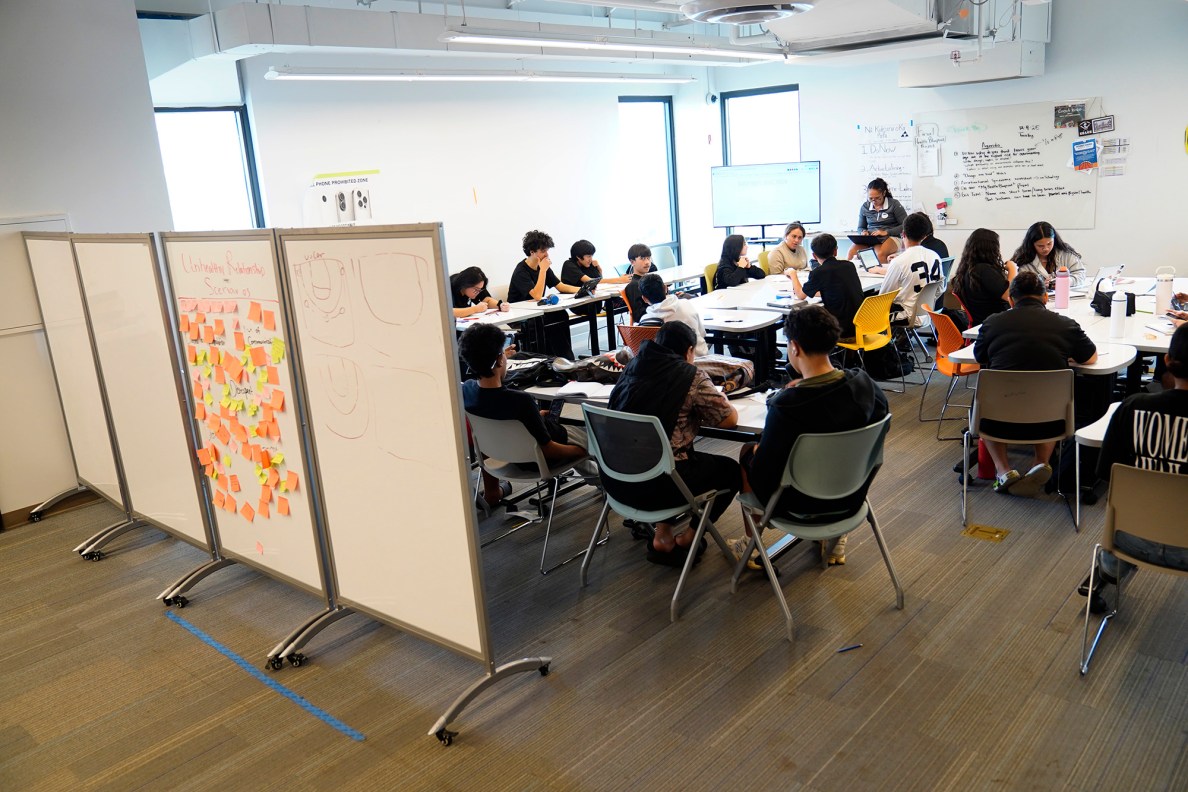
In some cases, boards have been able to recognize their shortcomings and make corrections without the commission’s intervention.
At DreamHouse, school leaders painted a rosy picture of the charter’s academic performance and finances last year, board chair Shaylan Arneho said. But the board began raising questions when members saw high turnover among its business managers and enrollment dropping mid-year.
Arneho frequently visited DreamHouse, giving her a better understanding of the campus culture and challenges, and the governing board included educators who could draw on their experience to know what questions to ask of leadership and staff, said Seder, the board’s vice chair.
The board assumed a more active role in overseeing DreamHouse in early 2025, Seder said, taking control of setting the monthly meeting agenda and talking to staff about the school, rather than solely relying on reports from the director. The board also directed the school to admit all students, rather than following its past enrollment cap of 100 kids per grade level, to increase its population and budget, Seder said.
DreamHouse is now on track to pay off its new high school center and will graduate its first senior class in the spring.
“Good things are not going to happen simply through good intentions,” Seder said. “It requires attention, it requires diligence and it requires more than just a passive thing that you can put on your resume.”
Civil Beat’s education reporting is supported by a grant from Chamberlin Family Philanthropy.
