

Wespac Looks To Expand Commercial Access To Hawaiʻi’s Papahānaumokuākea
Questions remain about whether fishing interests or legal disputes involving environmental concerns will win out.
Local fishery managers, moving in step with the Trump administration, want to eventually reopen large protected swaths of the Pacific to potentially all sorts of U.S. commercial fishing — not just the deep-sea tuna and swordfish sought by longline boats but nearshore lobsters and corals as well.
The Western Pacific Regional Fishery Management Council, commonly known as Wespac, will consider on Tuesday options drafted by its staff to lift the commercial bans in several marine national monuments, including Hawaiʻi’s Papahānaumokuākea.
Some of the options that the influential group will consider endorsing would allow commercial fishing to resume in Northwestern Hawaiian waters as close as 3 miles from shore.
The move comes in the wake of President Donald Trump’s order last April asking fishery officials to explore reopening the monuments to commercial fishing.
Wespac has for years opposed commercial fishing bans in the Pacific. A brewing legal battle leaves it unclear whether Wespac, backed by the Honolulu-based longline industry and other seafood interests, will ultimately prevail.
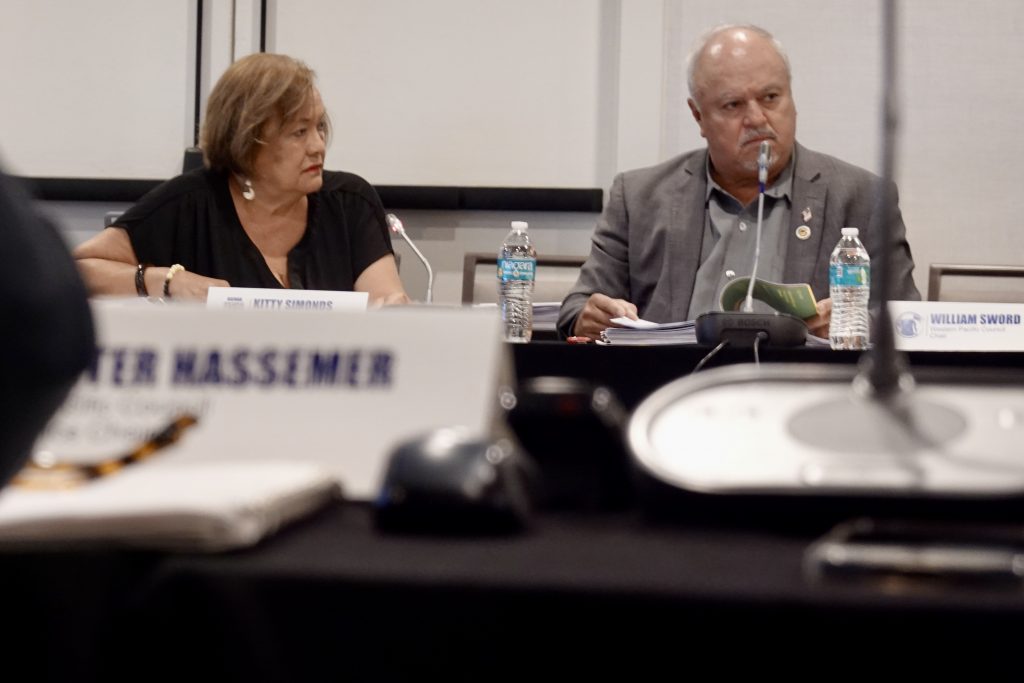
Kitty Simonds, Wespac’s longtime executive director, told Civil Beat on Monday that the group considers it a priority to resume bottomfishing and trolling in Papahānaumokuākea’s waters that extend 50 miles out from shore, and to restart longline fishing in the waters 50 to 200 miles out from shore.
“We haven’t changed what we’d like to see from the time of (establishing) the monument, right?” Simonds said. “We made our arguments.”
The Sanctuary Backstop
The seafood industry’s effort to lift bans that first emerged in the early 2000s are already being challenged in court. The environmental legal advocacy nonprofit Earthjustice is suing to stop commercial fishing from resuming in the Pacific Islands Heritage monument, which covers large, remote portions of the central Pacific.
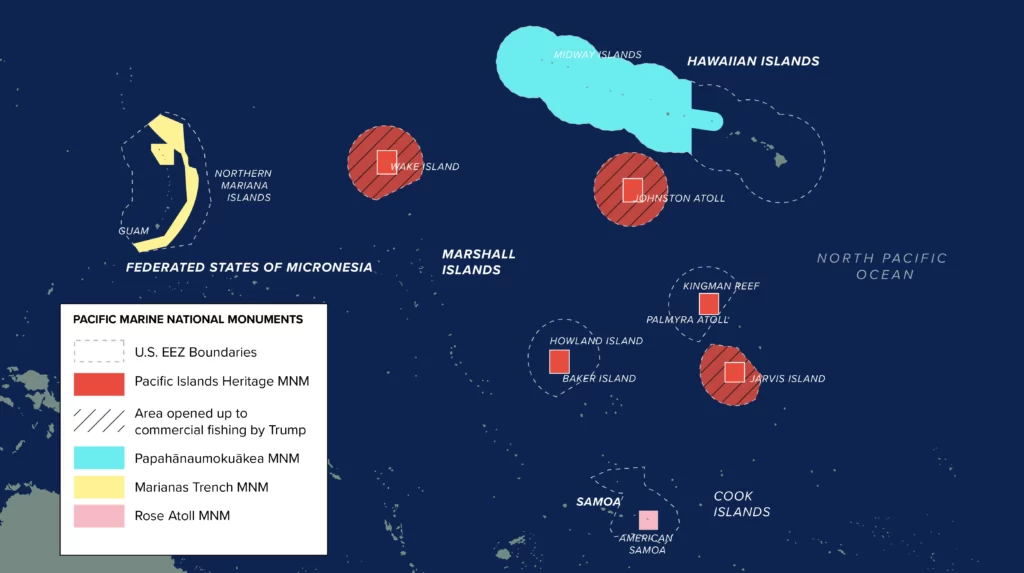
The suit contends that Trump overstepped his powers under the Antiquities Act in opening most of the monument waters back up to commercial fishing. Only Congress, Earthjustice attorney David Henkin argued, has the power to revoke such protections put in place by previous presidents.
At Papahānaumokuākea, the farthest islands in the Hawaiian archipelago, Wespac and proponents of lifting the bans face another wrinkle. This spring, Congress gave Papahānaumokuākea an added layer of protection by creating a marine national sanctuary covering the same waters as the existing monument.
“They were so smart,” Simonds said of the interests looking to keep commercial fishing out of the waters. “They got those regulations in that last week of Biden’s administration. So I think that we have to deal with the monument first and then deal with the sanctuaries.”
Simonds said it would fall to National Oceanic and Atmospheric Administration leaders to change the regulations at Hawaiʻi’s newest marine national sanctuary to permit commercial fishing there.
William Aila, a former state Department of Land and Natural Resources director and Native Hawaiian member of Papahānaumokuākea’s Cultural Working Group, said any changes to the fishing regulations there would have to comply with the goals and objectives of the sanctuary.
How Trump’s recent order “is going to trump — excuse the pun — the national marine sanctuary law is something that I don’t think that they’ve thought through well,” Aila said of the administration and Wespac. “I don’t think it can be done legally.”
The issue would also complicate efforts to reopen commercial fishing in Rose Atoll Marine National Monument, which falls within the larger Marine National Sanctuary of American Samoa.
Looking At Lobsters
The options that Wespac will consider Tuesday include reopening the Northwestern Hawaiian Islands’ spiny lobster fishery, which crashed decades ago due to overfishing and helped lead to the Northwest Hawaiian Islands Coral Reef Ecosystem Reserve.
That protected area, created under President Bill Clinton, led to what eventually became the Papahānaumokuākea monument, created under George W. Bush in 2006.
The spiny lobster debacle, Aila said, is “a classic case of mismanagement.”
Fishers started taking slipper lobsters and reporting them as spiny lobsters, Aila said, to make it seem the numbers were healthy. Then, he said, the fishery swiftly collapsed. Eventually, lobster fishing was banned there and the lobster fishers were compensated for their boats and equipment.
The lobsters are a key component in the diet of the critically endangered Hawaiian monk seal, Aila added.
“I don’t trust Westpac managing any fishery up there,” Aila said. “Even the bottom fishery, the numbers started to crash.”
Simonds said more research needs to be done to determine how many lobsters could be trapped at Papahānaumokuākea while keeping that fishery sustainable. She advocated for reopening those waters to commercial fishing so that the vessels also could conduct research on the fishing stocks there.
She suggested that local billionaires, particularly Facebook founder Mark Zuckerberg, could help fund research aimed at keeping the fisheries in Hawaiʻi sustainable for commercial activity.
Simonds added that she wants to see bottomfishing reopened in those waters because currently Hawaiʻi imports most of its bottomfish species to eat from Japan, such as onaga and opakapaka.
“We look at the whole picture, right? It’s not just the fishing (and) the protected species,” Simonds said. “But it’s the market, the trades (and) the trade-offs.”
Wespac’s meeting starts 11 a.m. Tuesday and can be viewed virtually here. The council expects to take up the draft commercial fishing options around 2 p.m.
Read the council’s full proposal below.
Civil Beat’s coverage of climate change and the environment is supported by The Healy Foundation, the Marisla Fund of the Hawai‘i Community Foundation and the Frost Family Foundation.

