Maui Fire Survivors Face Tough Choices When Federal Housing Program Ends
The state is seeking another extension to the FEMA housing program that thousands of Maui residents have relied on since losing their homes in the 2023 wildfires. It’s currently set to end Feb. 28.
Hundreds of wildfire survivors on Maui are preparing to soon be uprooted and forced to once again find new living arrangements if the federally funded housing program that they have relied on since losing their homes in the August 2023 blaze ends next month as scheduled.
The Federal Emergency Management Agency is still reviewing the state’s request to extend the Individuals and Households Program through Feb. 10, 2027. The program has provided rental assistance and temporary housing for thousands of fire survivors since late 2023.
Steven Hew said his life was turned upside down when his family’s generational home was destroyed in the Lahaina fire. He finally gained some sense of stability about a year ago, he said, when he applied for FEMA-funded housing and was placed in a studio apartment in Kahana, between Kāʻanapali and Nāpili in West Maui.
“I had a roof over my head, and I was able to get two jobs and save some money,” Hew said about how he benefited from his new living arrangement.
If the programs aren’t extended, Hew said he would likely need to quit his restaurant jobs in Lahaina so that he could stay with friends on other parts of the island or relocate to join family in Washington state or Las Vegas.
“Maui is home, definitely. A lot of my friends are here, and it means a lot to me,” he said. “But it’s never going to be the same after the fire. A lot of people will probably have to make that decision to leave.”
The Individuals and Households Program, which includes the continued temporary housing assistance and the direct housing programs, has played a critical role in Maui’s recovery efforts since wildfires killed at least 102 people, destroyed thousands of structures and displaced more than 12,000 residents in Lahaina and Kula. Almost 1,300 households have been placed in units leased directly from landlords or in temporary units, including one of 167 modular homes at the Kilohana Temporary Group Housing Project in Lahaina, and others have been provided with rental assistance.
Many people who were enrolled in federally funded housing programs have since moved into rebuilt homes, relocated off island or found alternative housing. But as of Tuesday, 656 households were still in temporary housing — down from 798 in October — and 295 households were relying on rental assistance provided by FEMA, according to a statement emailed to Civil Beat on Tuesday by the agency .
Federal officials are still reviewing the state’s request to extend and the agency is working with nonprofit leaders, local and state officials and other federal agencies “to navigate the unique recovery challenges on the island,” the statement said. However, it added that federally funded housing is only “intended to provide disaster survivors a short-term housing solution while they develop their permanent housing plan.”
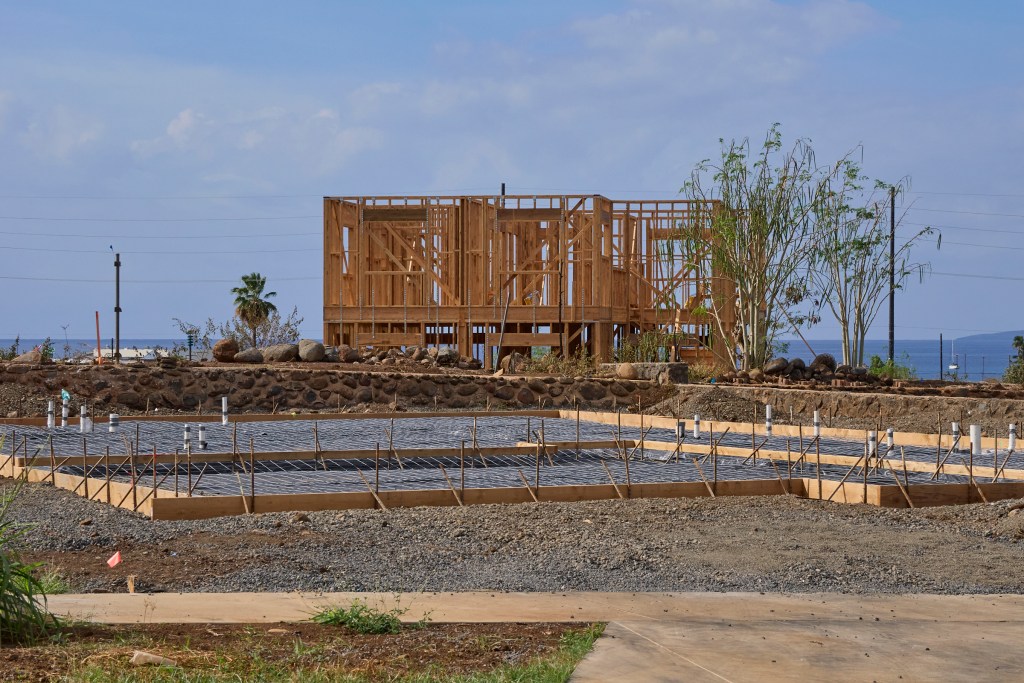
Maui County Council member Tamara Paltin, who represents West Maui, said she understood that FEMA’s ultimate goal is to help survivors get back on their feet. Unfortunately, homes have only been rebuilt on 112 of the 1,399 residential properties cleared by the U.S. Army Corps of Engineers, and Paltin said the factors that contributed to the island’s longstanding housing shortage have only been amplified since the fires.
“I feel like we are making steady progress with the resources that we have at our disposal,” she said about Maui’s post-wildfire recovery. “But it’s very difficult to find any housing, especially within their price point, and especially within the areas where they live, work and go to school.”

More than 90% of households that were enrolled in FEMA’s direct housing program in May of last year were renters before the 2023 fires. But rent prices on the island have increased significantly over the last two and a half years, with the median monthly cost of studio and one-bedroom units jumping from around $1,200 in July 2023 to around $1,700 in August 2025, according to data collected by the University of Hawaiʻi Economic Research Organization. The difference was even more pronounced for larger units, with the median rent doubling from about $1,400 to about $2,800 per month for units with three or more bedrooms, according to UHERO.
Not only is the Maui rental market ill prepared to handle a sudden influx of hundreds of survivors seeking new housing, but it would be cruel to force another move onto survivors who may be only just beginning the process of rebuilding their lives, said Nara Boone, a cofounder of the nonprofit Maui Housing Hui.
“Some people feel paralyzed because they have been through this so many times,” Boone said. “It’s just torturous for a lot of people to know that they’re maybe having to endure this again.”
“They’ve already lost all their belongings,” she added. “They are trying to prepare, but it’s hard to prepare when you have no place else to go.”
‘This Is An Untenable Situation’
The federal government has contributed approximately $3 billion to Maui’s recovery, including more than $80 million in individual assistance for Maui residents; $448 million in federal disaster loans approved by the U.S. Small Business Administration; $1.3 billion in mission assignments to fast-track debris removal, school construction and infrastructure repair; and a $1.6 billion grant intended in part to fund long-term, permanent housing solutions, according to the FEMA spokesperson.
Due to the severity of the devastation caused by the Maui wildfires, FEMA approved a previous request from the state to extend federal housing programs to Feb. 10 of this year from February 2025. Earlier this month, the agency announced that the deadline would be moved back an additional two and a half weeks.

FEMA has been scaling back its housing programs for months. Citing no more unmet needs, the agency in August canceled over $2 million worth of contracts with a private company that had been managing residential units rented to fire survivors.
Paltin told Civil Beat that hundreds of factory-built temporary housing units have been installed on the Westside, apartment buildings that were destroyed during the fires have been rebuilt and more than a hundred homes have been completed in Lahaina and Kula. Still, not nearly enough temporary or permanent housing has been built to support the hundreds of households relying on federal housing programs, and there are not enough resources to help survivors who may not be able to find housing.
“This is an untenable situation,” Paltin said during a council meeting on Jan. 7.
Council members voted unanimously to advance legislation that would increase the Department of Housing’s fiscal year 2026 funding by incorporating $2 million in insurance proceeds collected after the Komohana Hale apartments were damaged in the Lahaina fire. The new funding would be used to rebuild the apartment complex.
“We can’t wait any longer,” Paltin said during the meeting, urging her colleagues to prioritize taking action that moves new affordable housing projects forward quickly. “Dragging our feet is just not acceptable.”
The council took steps to increase the island’s housing stock in December, when members voted 5-3 to pass Bill 9, which would phase out thousands of the island’s short-term vacation rentals in hopes of freeing up more units for long-term housing. When Mayor Richard Bissen initially proposed it in May 2024, the legislation was to have taken effect on July 1, 2025 in West Maui and Jan. 1 of this year in the rest of the county. But the implementation dates were pushed back until Jan. 1, 2029 and Jan. 1, 2031, respectively, after lengthy review and approval processes by the county planning commissions and council.
Fire Survivors Feel Forgotten
State and county officials said they were hopeful FEMA will approve the continuation of federal housing programs, but they were also preparing to help survivors transition out of those programs “when that time comes,” said Trista Speer, state Department of Human Services deputy director.
“We want to emphasize that the State and County is committed to working together to ensure all Maui wildfire survivors, whether they are involved in a federal or non-federal funded program, continue to receive necessary support for their recovery,” Speer said in a statement Monday. “We recognize that the most pressing need has almost always been housing support — and we are proud that we have always been able to find solutions to meet that important need.”
Hew was trying to hold onto local and state government officials’ repeated assurances. “I think that’s what a lot of people are riding on,” he said.
He felt frustrated though by the lack of resources or real plan for those survivors who lose their FEMA-provided housing.
“It seems like a lot of the fire survivors are really forgotten,” Hew said. “The last couple of years, I’ve really had to live my life one day at a time. Like everyone else, I’m just waiting to see what’s going to happen.”
Civil Beat’s coverage of Maui County is supported in part by a grant from the Nuestro Futuro Foundation.