

Foreign Oil Floods Into the Islands — But Venezuelan Crude Is Too Tainted
Over the past decade, crude from countries, such as Libya, Russia and Argentina have helped keep the lights on in the Aloha State.
As President Donald Trump tries to open up Venezuela’s vast oil reserves to U.S. companies, Hawaiʻi will largely be sitting on the sidelines. That’s because the Aloha State powers most of its electrical grid with oil from other countries.
Hawaiʻi is among the top importers of foreign oil in the country, according to data from the U.S. Energy Information Administration. In 2024, more than 24 million barrels of crude were shipped to the islands from outside the U.S., ranking the state in the top 10 per capita along with Montana, Illinois, Delaware and North Dakota — all of which serve as distribution hubs for other parts of the country.
And while most of the oil imported into the U.S. comes from Canada and Mexico, Hawaiʻi’s comes from far-flung places, such as Libya, Argentina and, before its 2022 invasion of Ukraine, Russia. In fact, since 2016 data tracked by the Hawaiʻi State Energy Office shows that only about one-fifth of the islands’ oil was domestic.
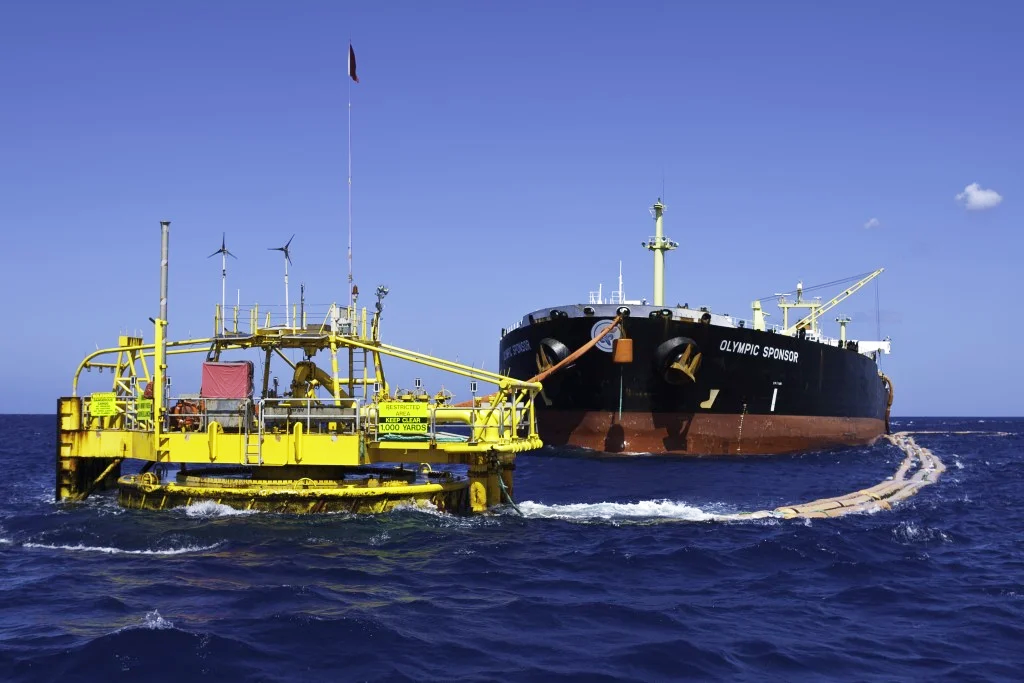
Hawaiʻi is among the most oil-dependent states in large part because it relies on it to generate nearly three-quarters of its electricity. As the state continues its push for more renewable sources of energy, Gov. Josh Green is seeking to reduce the islands’ reliance on oil by importing liquefied natural gas instead, which burns cleaner and is cheaper, but is still a fossil fuel.
There have been concerns for years about the Aloha State’s reliance on foreign oil and whether it underwrites corrupt regimes and questionable humanitarian records. Hawaiʻi was still importing oil from Russia, for instance, even after the country had been caught trying to influence the 2016 election. In Libya corruption in the oil industry threatens to undermine the country’s stability.
Par Hawaii, which runs the sole refinery on the islands and is Hawaiʻi’s only importer of crude, abandoned Russian oil in 2022 after the country launched its war in Ukraine. The company still relies heavily on Libyan crude while increasing its purchases from South America, most notably Argentina, which provided more than half of Hawaiʻi’s crude through the first three quarters of 2025.
So why does Hawaiʻi rely as heavily as it does on foreign oil?
Eric Wright, president of Par Hawaii, said it generally comes down to two things: The need for Hawaiian Electric Co. to burn low-sulfur fuel oil to comply with state and federal environmental regulations and — to a much lesser extent — the Jones Act, a 106-year-old maritime law that requires goods shipped between U.S. ports to be on ships that are U.S.-built, flagged and operated.

Most of Hawaiʻi’s domestic oil purchased by Par comes from the North Slope of Alaska, Wright said, which is the “most economical” because of its proximity to the islands. But the sulfur content in Alaskan oil is too high for electricity generation, he said, and must be mixed with low-sulfur oil, known as sweet crude, that comes from countries such as Libya and Nigeria in Africa and Argentina and Brazil in South America.
That also explains why Venezuelan crude is a no go for Hawaiʻi, Wright said: it’s too dense and loaded with sulfur, and is otherwise known as a heavy sour. The same is generally true for the oil coming out of Canada and Mexico, he said.
The Jones Act, meanwhile, further limits Hawaiʻi’s options for importing domestic oil.
“I’m neither for nor against the Jones Act, that’s a touchy political subject,” Wright said, “but just the facts are that there really isn’t a Jones Act fleet that can transport oil efficiently from the Gulf Coast to Hawaiʻi. You have to go through the Panama Canal and the ships that are large enough to haul crude that are Jones Act are in the Alaskan service.”
Even if the Jones Act were to disappear, he said the company would still need to import low-sulfur oil from Africa and South America to be compatible with its refinery and meet local demands.
As far as sourcing ethics go, Wright said Par Hawaii works with reputable oil trading companies in the international marketplace. It also follows federal law. “We rely on the U.S. government,” he said, “to make policy about who we can and can’t buy crude oil from and we follow that to a tee.”
“Data Dive” is supported in part by the Will J. Reid Foundation and Civil Beat’s coverage of climate change and the environment is supported by The Healy Foundation, the Marisla Fund of the Hawai‘i Community Foundation and the Frost Family Foundation.

