

Honolulu Fireworks Citations Offer Glimpse Into Use Of New Laws
Fireworks citations and fines were up on Oʻahu, but the jury is still out on how effective aerial drones will be.
Twice the number of citations were issued for fireworks offenses on Oʻahu in the second half of 2025 than in either of the previous two years — and it may be only the beginning.
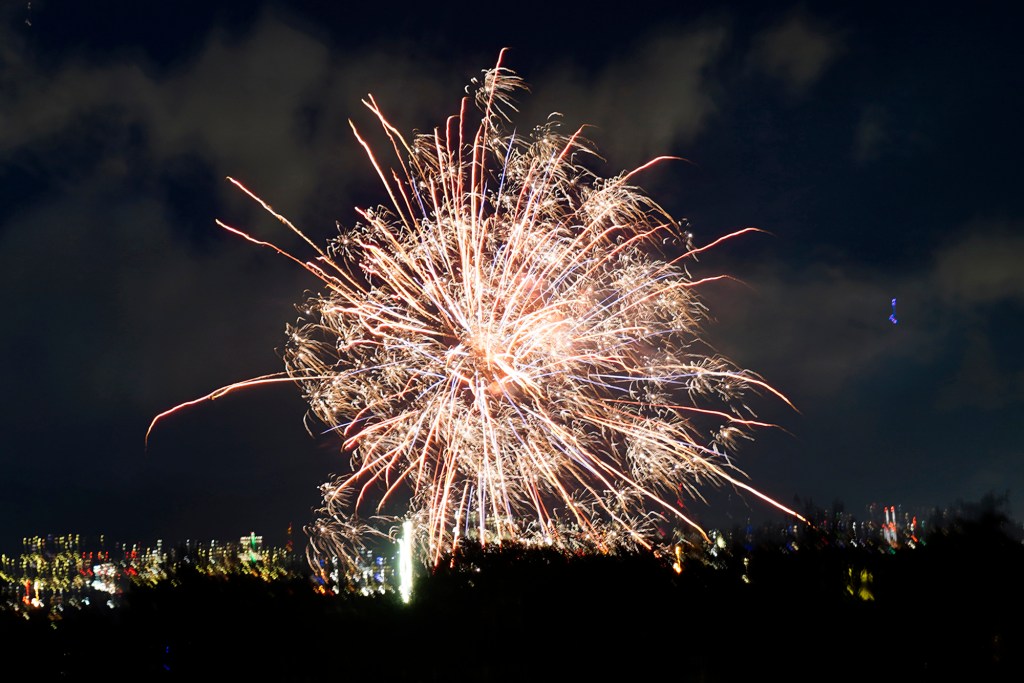
Newly released data show 47 citations were issued for fireworks-related violations from July 4, 2025 through Jan. 1. Twenty-nine of those citations were issued on New Year’s Eve.
The uptick can be largely attributed to laws that took effect in June, which provide additional tools to clamp down on the widespread use of illegal fireworks, including a more streamlined process for issuing fines and the ability to use aerial surveillance.
Mike Lambert — director of the state Department of Law Enforcement — said last week that while the department has made good progress on stemming the flow of illegal imports to the island, there needs to be more focus on the consumer side, including “issuing more citations in the coming year.”

Brian Lynch, assistant chief of HPD’s Regional Patrol Bureau told the Honolulu Police Commission last week that anecdotal evidence along with the data indicate that the new approach combining civil fines and additional surveillance “is already making a positive difference,” while acknowledging that challenges for HPD remain.
The Department of Law Enforcement began testing 10 drones last year as surveillance tools on Oʻahu to help identify fireworks violators. They may be rolled out to neighbor islands later.
However, Lynch told the commission that the drones proved less helpful than hoped. Coordinating officers on the ground to respond to what the drones were observing from the air was difficult, he said.
“Halfway through the night we weren’t getting any results so we put the drones away, we all piled in cars, and we went out,” Lynch told the Honolulu Police Commission about their initial deployment July 4.
Honolulu Mayor Rick Blangiardi had expressed disappointment in the citations tally earlier this month. But Lynch said progress in fireworks enforcement shouldn’t be measured by how many citations were issued but by the notable difference in people’s behavior.
Overall, he said, there was less fireworks activity leading up to midnight and far fewer injuries than in past years. Six people were transported to Honolulu hospitals with serious injuries from fireworks over New Year’s Eve, compared to 91 the previous year, and there were no reported deaths.
Court Data Offer Snapshot Of Enforcement
The most recent data available from the state judiciary provides the first opportunity to assess the effect of the legislation introduced after a massive explosion of illegal fireworks on New Year’s Eve 2024 killed six people and injured two dozen more. That single incident pushed fireworks-related deaths and injuries to their highest levels in 14 years.
The disaster galvanized support for the new laws, signed by Gov. Josh Green before the July 4 holiday, which elevated some serious firework offenses to felonies and gave police the ability to issue an immediate $300 fine for low-level offenses –– mainly for the use of fireworks without a permit.
County prosecutors and the state attorney general had long identified problems in the wording of the previous legislation as a major reason for the low levels of prosecutions in fireworks cases. Among the issues; the laws were heavily reliant on expert witnesses to establish the burden of proof for prosecution.
But Act 243 added fireworks to the existing court process used for traffic and emergency period infractions, giving police the ability to issue on-the-spot fines. New Year’s Eve was also the first major test for the unmanned drones that now can fly and record over private property under the new powers of Act 244, one of the other bills that became law last year.
Court records show what happened after the 47 citations were issued between July and January.
As of Jan. 21, the state had prevailed in a dozen cases, eight cases remained active, eight had been dismissed by the court, one case was dropped and another was still pending. Four of the active cases are scheduled to go before the courts later this month.
A Civil Beat investigation in 2023 found that 94% of all citations issued on Oʻahu between 2018 and 2022 ended in a dismissal or a dropped prosecution. Out of 48 charges brought on Oʻahu In 2023 and 2024, 45 were unsuccessful for various reasons, and three people paid fines when they pleaded no contest.

So the 12 confirmed Oʻahu prosecutions in 2025 so far represent at least a seven-year peak for the state.
Most of the citations resulted in small fines: a $300 ticket and $20 in fees for igniting fireworks without a permit, a total of $4,325. But that, too, was an increase from previous years, when the average fine paid was $50.
More charges will likely arise from five felony arrests made by the state Department of Law Enforcement on New Year’s Eve, Lambert said. In addition to those arrests, over the course of the year he noted that DLE seized approximately 80 tons of illegally shipped fireworks, executed 23 search warrants and initiated eight nuisance abatement processes against property owners.
Correction: The original story contained an error in a comment by Brian Lynch. This has been corrected.
Civil Beat police reporter Madeleine Valera contributed to this report.

