Reed Mahuna Tapped To Serve As Hawaiʻi County’s Next Police Chief
The 28-year veteran cop was born and raised on the Big Island.
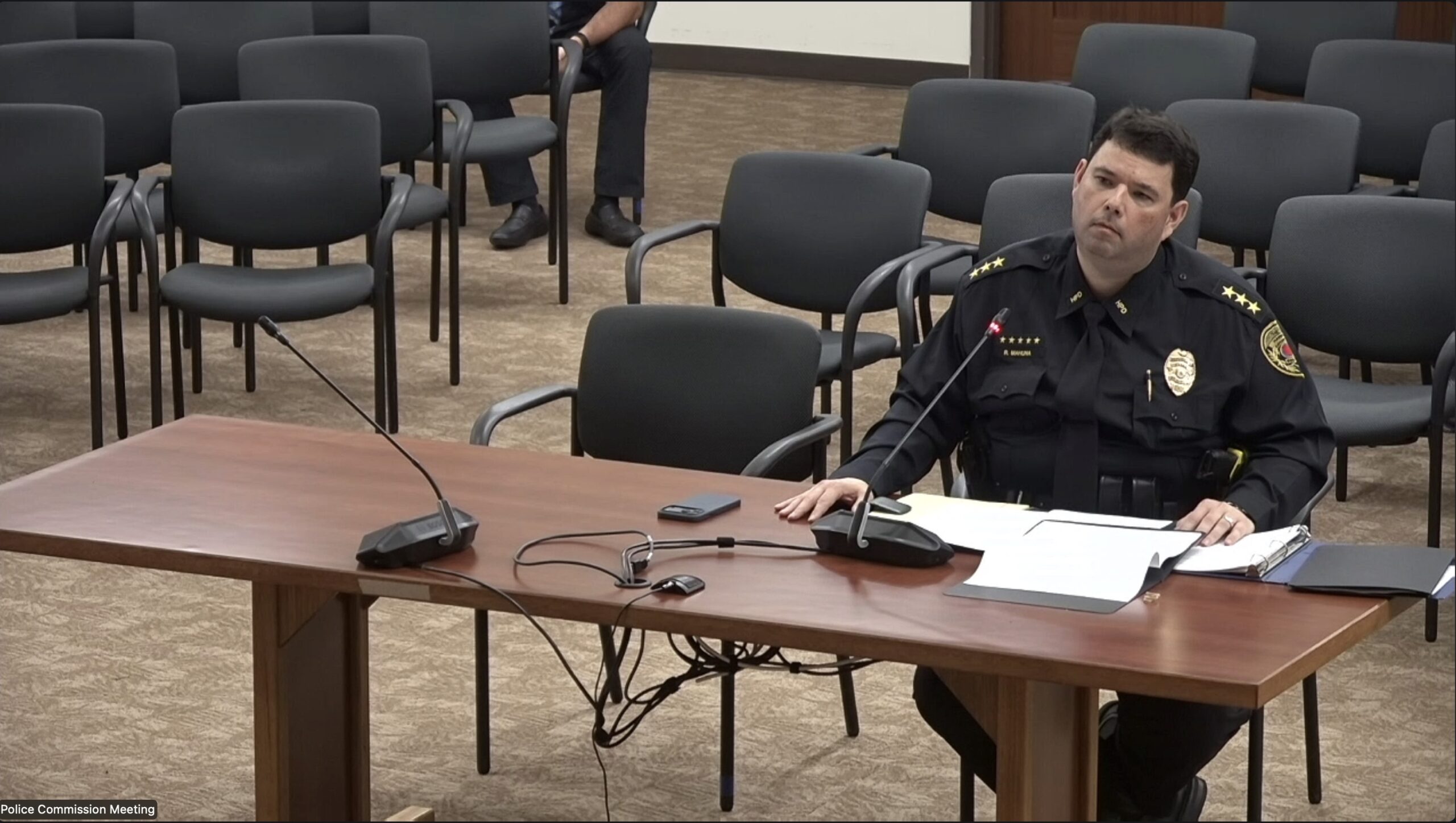
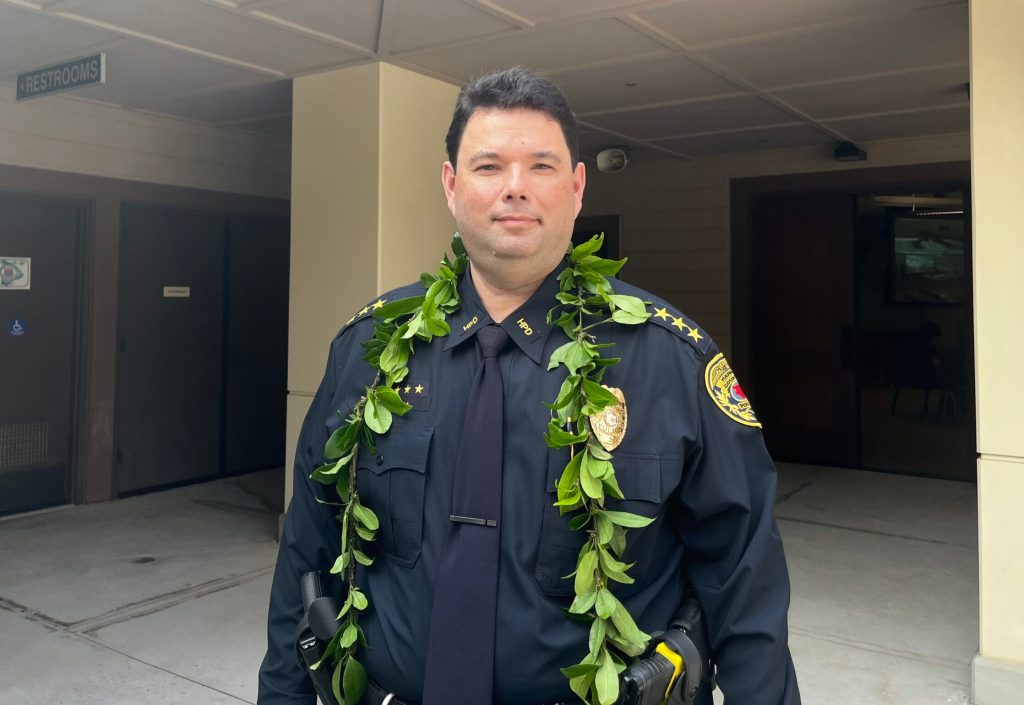
The Hawaiʻi County Police Commission unanimously chose longtime Big Island cop Reed Mahuna as the department’s next police chief after a two-day hearing that wrapped up Friday.
The 28-year veteran acted as interim chief after former chief Ben Moszkowicz was forced out in June. Public testimony overwhelmingly supported the commission’s decision as it interviewed eight finalists for several hours Thursday.
“Now that we have some permanency, there’s a vision that I have moving forward in the department that I am going to start to implement,” Mahuna told reporters Friday after the 7-0 vote. Commission Chair Greg Yamada abstained.
Mahuna’s appointment is conditional on a favorable criminal and investigative background check, medical and drug test. The commission will meet next month to discuss the results and officially offer him the job.
His first order of business is establishing a regular community engagement role for all of his commands. “I want my command staff out there, out in the community, just listening to people,” he said.
He plans to have that feedback channel back into the chief’s office, he said, and use the information to inform his decisions.
Mahuna has held many roles during his time in the Hawaiʻi County Police Department, including deputy chief and as a captain and major in various divisions. His father is retired police chief Lawrence Mahuna.
Public Support
The commission narrowed down the pool of applicants to eight — twice what it had in 2022 — heading into this week’s meeting. Earlier this month, Commission Vice Chair Wendy Botelho said the eight scored similarly during the selection process and the commission didn’t want to cut off people who would have been equally as qualified, she said.
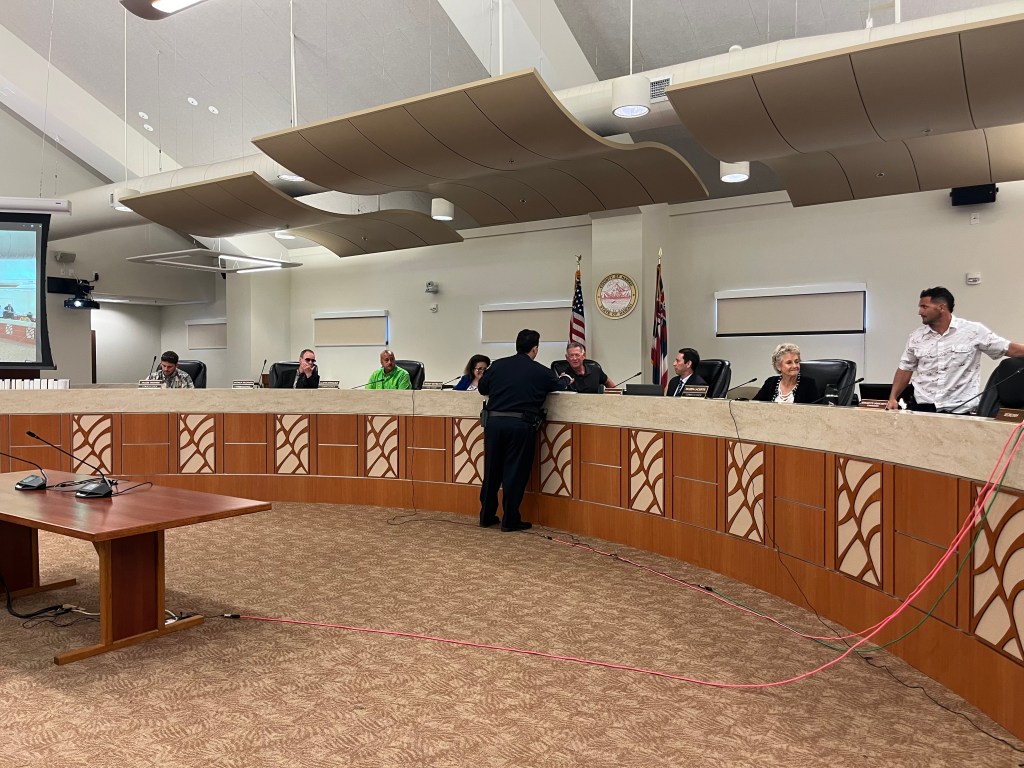
More than 30 people testified in person before the commission across the two-day hearing at the West Hawaiʻi Civic Center in Kailua-Kona. All but three supported Mahuna.
Endorsements included the State of Hawaiʻi Organization of Police Officers leadership, a former judge and former Gov. Linda Lingle.
“He doesn’t need a learning curve,” SHOPO President Don Faumuina said during public testimony on Thursday, “he’s already doing the work.”
Testifiers asked the commission to choose someone who understood and respected the culture of the community, would increase transparency, boost officer morale and move the department forward. Most said Mahuna was the person who best exemplified those qualities.
One person who didn’t support a particular candidate, Noelle Lindenmann, urged the commission to ask if candidates would collaborate with Immigration and Customs Enforcement. Two others recommended the same but also endorsed Mahuna.
The commission had already voted to ask whether the candidates would collaborate with federal agencies for immigration raids, Botelho said.
Hawaiʻi Police Department came under fire last year for agreements with federal agencies following multiple raids in Kona.
Mahuna told the commission that there was “no situation” in which HCPD would collaborate with ICE. But simply saying that wouldn’t be enough, he said. Under his tenure, Mahuna plans to meet with the community and stakeholders so they can speak to the department directly on its plans should further raids happen.
“ICE creates fear in the community and the police should calm that fear,” Mahuna told the commission.
The Police Commission also asked candidates how they’d hold themselves accountable to the public and local government, balance culture and law, pick between retention and recruitment, what they’d do if they made a harmful mistakes and how they’d conduct themselves during natural disasters and contentious issues like releasing body-cam footage after a fatal shooting.
Mahuna was quick and straightforward with his answers. He ended by asking the commission to allow him to unlock his full potential.
“Let me show you what I can do,” he said in his interview. “I will never let any of you or people from the community down.”
Time Limits
To avoid unfair advantages, the commission chose to interview all eight candidates in one day. To fit them all in, it restricted public testimony to two minutes instead of the allotted five and interview answers to three minutes.
The commission did not allow follow-up questions — partly for time, and partly to ensure interviews were the same for all candidates.
“It wouldn’t be fair to another person interviewing, because maybe the discussion wouldn’t have gone (the same) way as others,” Botelho said.
Despite scheduling to end interviews at 4:40 p.m, the final interview finished nearly two hours early. Botelho said the time restraint didn’t affect the commission’s ability to interview candidates. The application process, which included a review of resumes and a questionnaire, was enough to thoroughly review the prospective chiefs, she said.
Yamada, the commission chair, was the only member who abstained from voting. He said his first choice for chief was Anthony Kumamaru, a retired lieutenant from the Las Vegas Department of Public Safety. He said he had rather not vote than vote no on the motion to appoint Mahuna.
Commissioner Junior Fischer and Yamada were the only members who put up more than one candidate for discussion. Yamada requested at the start of Thursday’s meeting that commissioners offer three recommendations and move into discussions.
Yamada told Civil Beat he was not shocked commissioners only offered one — Mahuna.
“I may be the chairperson, but I’m still only one person,” he said. “I’m just there to guide and make suggestions.”