

State Lawmakers Want To Protect Hawaiʻi Kids From AI Chatbots
Proposed legislation comes in response to threats by Trump and local kids exposed to harmful content and manipulation.
Worried that children are being exploited by chatbots, lawmakers will again push for a bill to require organizations that use artificial intelligence in commercial transactions to publicly disclose that information to consumers.
The concern is that modern chatbots are now so advanced in engaging in human-like conversations, it can be very difficult for users — especially kids — to determine if they are speaking with a chatbot or a real person.
House Bill 639, authored by Rep. Trish La Chica with the support of other Democrats and several Republicans, did not pass in the last session.
But the legislation has new life and new support, thanks to a move by President Donald Trump to prohibit states from regulating AI and after a lawmaker heard from a Hawaiʻi mom about a disturbing relationship between her 12-year-old daughter and a chatbot.
Last month, Trump issued an executive order exerting federal control over AI regulations. As Civil Beat reported, the order was immediately denounced by the governors of both red and blue states, who say they don’t want the feds preventing them from enacting and enforcing their own AI safety laws.
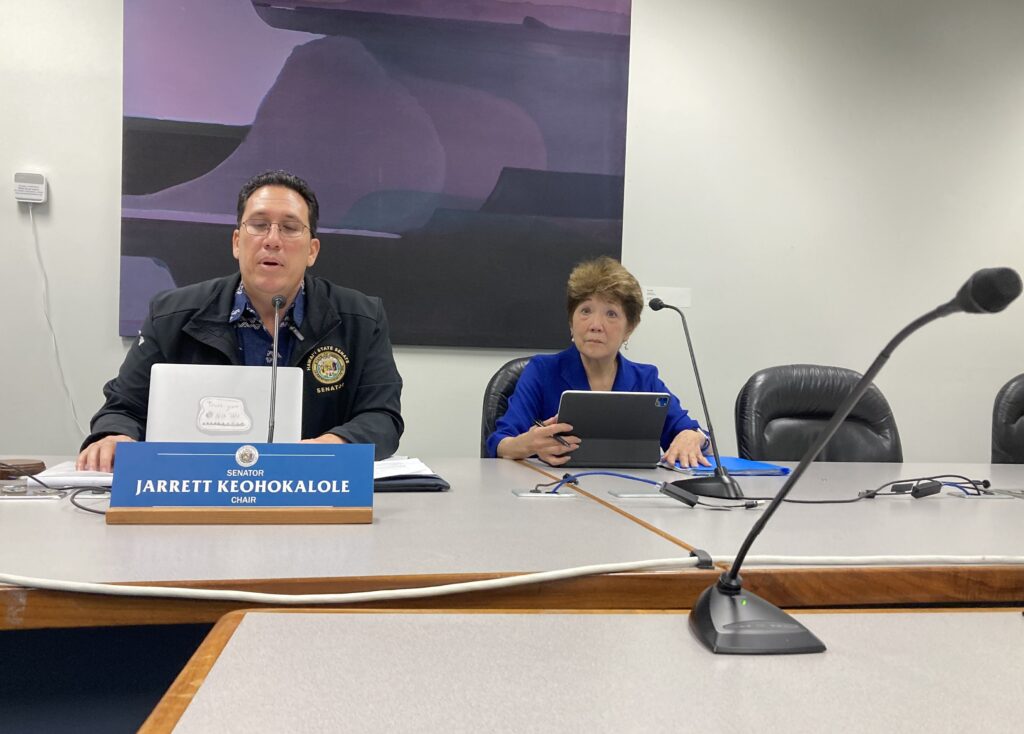
On Wednesday, Sen. Jarrett Keohokalole chaired a hearing at the State Capitol and released screenshots and transcripts showing that a 12-year-old Hawaiʻi resident was involved in a “disturbing pattern” with fictional AI personas engaging in “aggressive, romantically suggestive grooming of the girl.”

Keohokalole said at the briefing that he’ll introduce legislation to help prevent such a scenario from happening again. It will be based in part on the bill from La Chica, who was at the briefing and wants to see the issue addressed this session.
Lawmakers would likely also consider legislation defying Trump’s recent executive order, said Keohokalole, who is running for Hawaiʻi’s 1st Congressional District seat this year. The issue of regulating AI has gained urgency, because Congress has not taken a lead on AI regulation while Trump has embraced AI and the high-tech companies investing billions of dollars in research and development.
Keohokalole focused much of his hearing, part of the Senate Commerce and Consumer Protection Committee that he chairs, on the incident involving the 12-year-old. He learned from the girl’s parents that the child had managed to register to use a chatbot by saying that she was an adult.
While the legal dimensions of AI chatbots are a priority, Keohokalole said the issue goes beyond the law.
“We need to have a conversation in the community among families and parents to make sure that folks understand that if your child is glued to their screen, this might be one of the things that you want to start paying attention to and looking out for,” he said.
The briefing received support from presenters representing education, the governor’s office, the Attorney General’s Office and an AI expert. The general consensus was that guardrails are needed as soon as possible because generative AI is growing rapidly and exponentially.
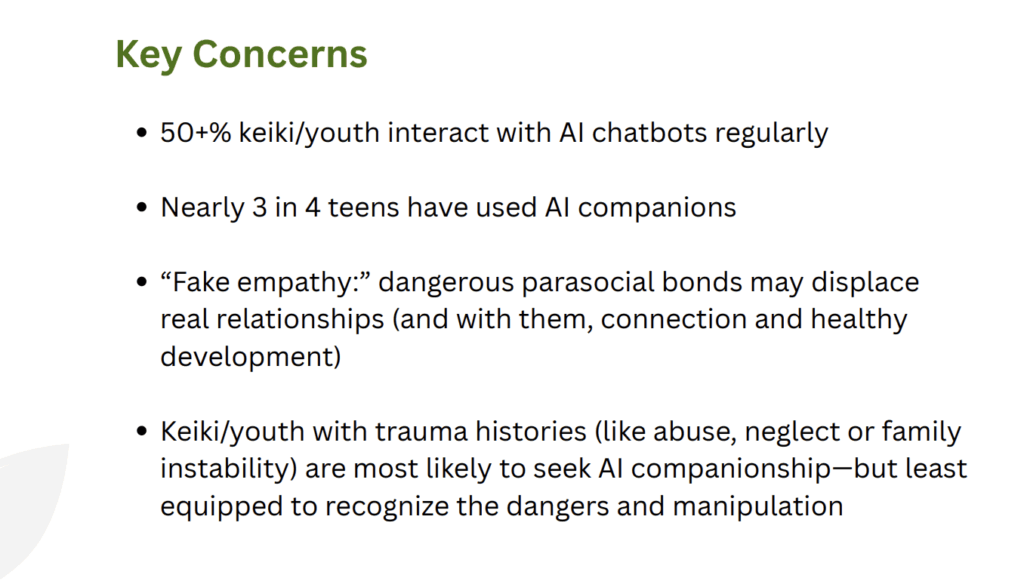
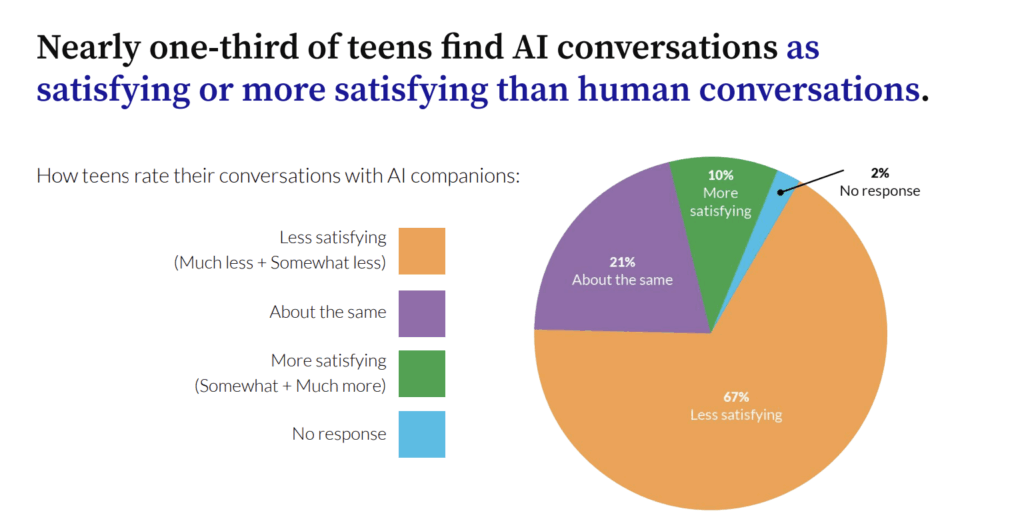
AI is especially adept at luring youth by utilizing models or digital algorithms to prioritize “people-pleasing” and agreement over accuracy and truth.
While new laws regulating AI can help, human oversight remains “the overall guardrail” for both students, teachers and staff, said Heidi Armstrong, deputy superintendent of academics with the Hawai’i Department of Education.
Armstrong and Chelsea Okamoto, a deputy director AG, said they would work with legislators to craft the legislation.
Okamoto cautioned that taking on Trump and big tech would be challenging, because their lobbyists work in a fashion similar to tobacco companies who have long pushed for less regulation and more profit and the expense of consumers.
Explore detailed legislator profiles, voting records and what happens in hearings on Digital Democracy.
Still, Okamoto and others said, legislators should not be discouraged by fear of retaliation by the Trump administration. While the White House has threatened to withhold federal funds for areas like broadband if states resist federal control, the legal soundness of the AI executive order is uncertain and already being challenged in court.
As a model, legislators were advised to look to Senate Bill 243, which went into effect in California Jan. 1. Its author, state Sen. Steve Padilla, a Democrat from San Diego, touts the new law as a “first-of-its-kind” in the nation.
The law requires chatbot operators to “implement critical, reasonable, and attainable” safeguards around interactions with AI chatbots and provide families with a private right to pursue legal actions “against noncompliant and negligent” developers.
“This technology can be a powerful educational and research tool, but left to their own devices the Tech Industry is incentivized to capture young people’s attention and hold it at the expense of their real world relationships,” he said in October after the bill passed the California Assembly.

