Free Buses For Keiki? Supporters Hopeful After Statewide Bill Axed
A proposal for statewide free transit died last week at the Legislature, but supporters still have hope for a proposal to make transit free for youth.
Free public transit in Hawaiʻi may be too popular for its own good.
The idea is in vogue, with cities such as Kansas City and Albuquerque diving in and local politicians elsewhere in places including New York City campaigning on it. Maui County provides it to those under the age of 24 and the Big Island extends it to all users.
Supporters of a statewide free transit bill in Hawaiʻi said the change would benefit not just current riders but attract flocks of new riders who might try the system out — and get hooked. In fact Honolulu transportation director Roger Morton estimates it could draw 20 million more riders a year, a 50% increase, bringing the total on par with the roughly 60 million riders who used the system just before the Covid-19 pandemic.
But the prospect that making transit free would increase use has ended up being its downfall.
“We don’t want to create a situation where all of a sudden we have overloaded buses,” Morton told legislators last week.
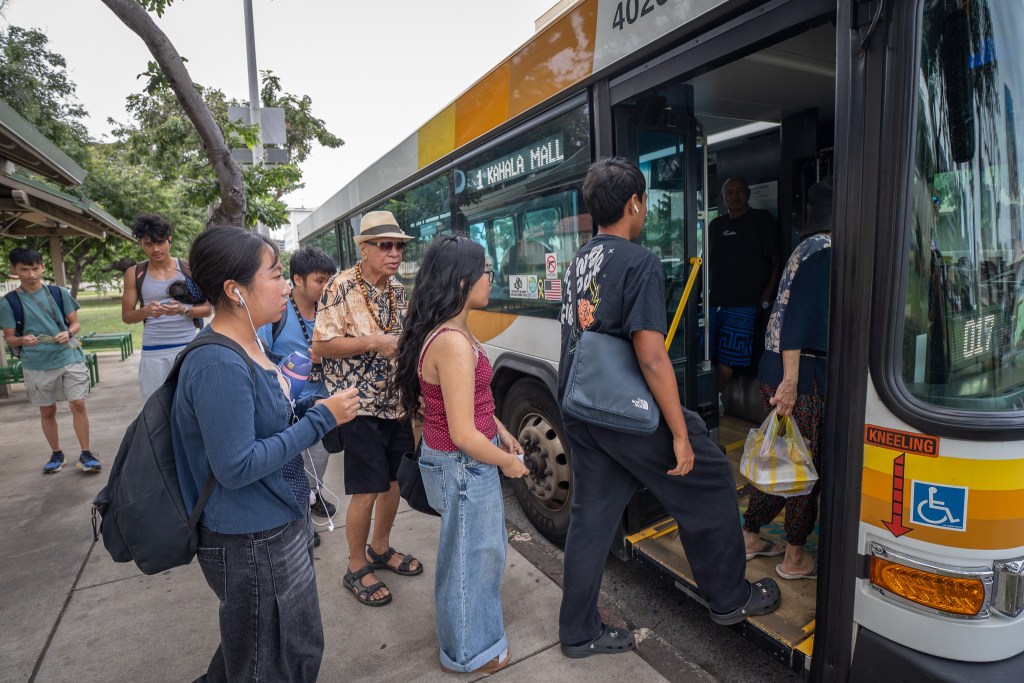
Even though the city shouldered that many riders before, Morton told Civil Beat that he’s concerned about pressure on the more popular routes, already near capacity during peak hours. He cited Route 13, which passes through Waikīkī on its way to the University of Hawaiʻi Mānoa.
That was the end of House Bill 2451, killed last week by Rep. Nicole Lowen’s House Energy and Environmental Protection Committee.
For frequent rider Nicole Nash, 52, free buses would have been a welcome relief.
Nash lives near McCully Shopping Center and takes Route 3 and Route 1 to her job as a site manager in Salt Lake and Route 6 to her church in Kakaʻako. While she doesn’t struggle to pay the fare, she said getting rid of it would allow her to save more money each month.
“It would be amazing,” she said. “It’s expensive over here.”
One glimmer of hope remains for transit boosters: Another bill proposes a smaller program of free rides for young people. So far, it remains alive in the Legislature.
Big Island Has Seen Success With Free Transit
The Big Island has had an on-again off-again relationship with free transit. Buses were free for six years starting in 2005 and they’ve been free again since 2022, with a recent extension to 2028.
The new era began after use of the county’s Hele-On system plummeted following the pandemic, Hawaiʻi County Mass Transit Administrator Zachary Bergum said. Making buses fare-free was intended to stoke ridership.
“We wanted people to feel safe riding the bus again,” he said.
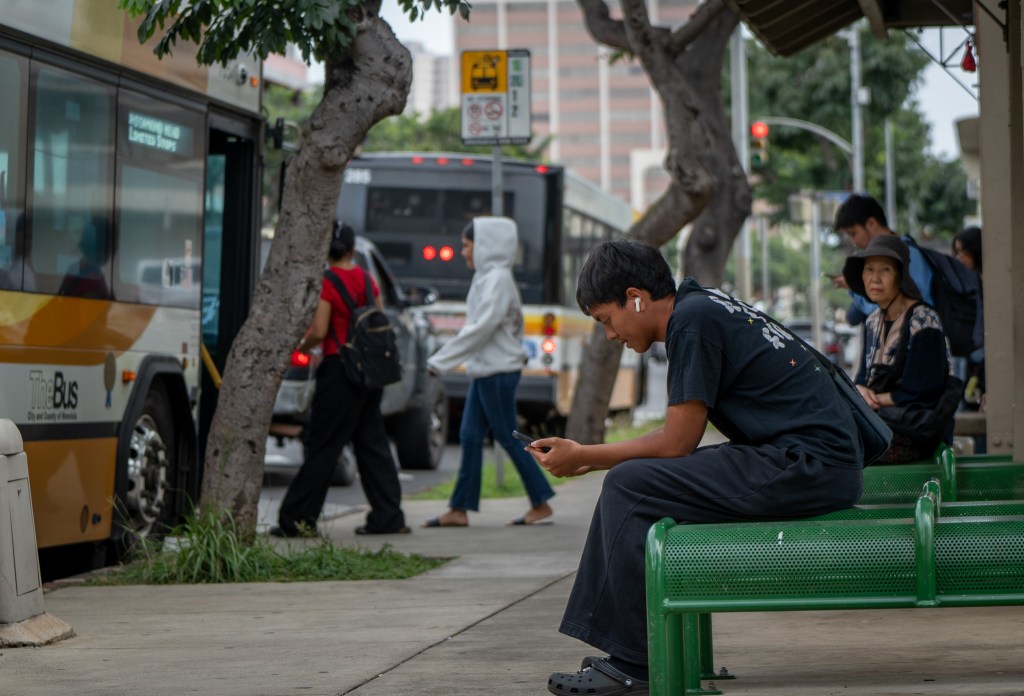
Fares weren’t contributing much revenue anyway. Only about $376,000 had come in from fares during the year before the system went free, Bergum said, with keiki and kūpuna paying $1 each and everyone in between paying $2. That’s dwarfed by Honolulu’s almost $50 million in fare revenue.
And it worked. Hele-On’s ridership ballooned from about 325,000 annual riders in 2021 to about a million now. Rather than overwhelm the system – as Morton fears would happen on Oʻahu – Bergum said the extra riders filled in a system that had been running far below capacity. Hele-On had increased frequency and added new routes before making rides free, he said, which had essentially doubled their offerings.
“We didn’t have to expand,” he said. “We had already expanded.”
Hele-On pays for it all using grants from the state Department of Transportation, Bergum said.
The stop-start cadence on the Big Island has been similar to what Kansas City, Missouri, experienced recently. City council members there voted unanimously in 2019 to direct the city manager to find funding for free transit to make up for the cut in annual revenue of about $9 million.
Transit ended up becoming free during the Covid-19 pandemic, when the federal government made large infusions of money. Once that money ran out, Kansas City began planning to reinstate fares. Riders will have to pay $2 a ride starting around June, local NPR station KCUR reported.
Critics Say Free For Some Is Not Optimal
Rather than make all transit free in Hawaiʻi, Lowen and Morton recommended making it free for smaller groups of people such as students or state workers. A patchwork like this already exists: Honolulu offers free transit for city employees, and the state offers free transit for public school students during the school year if they are in middle school or high school and live at least a mile and a half from their school.
Several places – including San Diego, San Francisco and Washington state – started offering free transit for all youth after the pandemic.
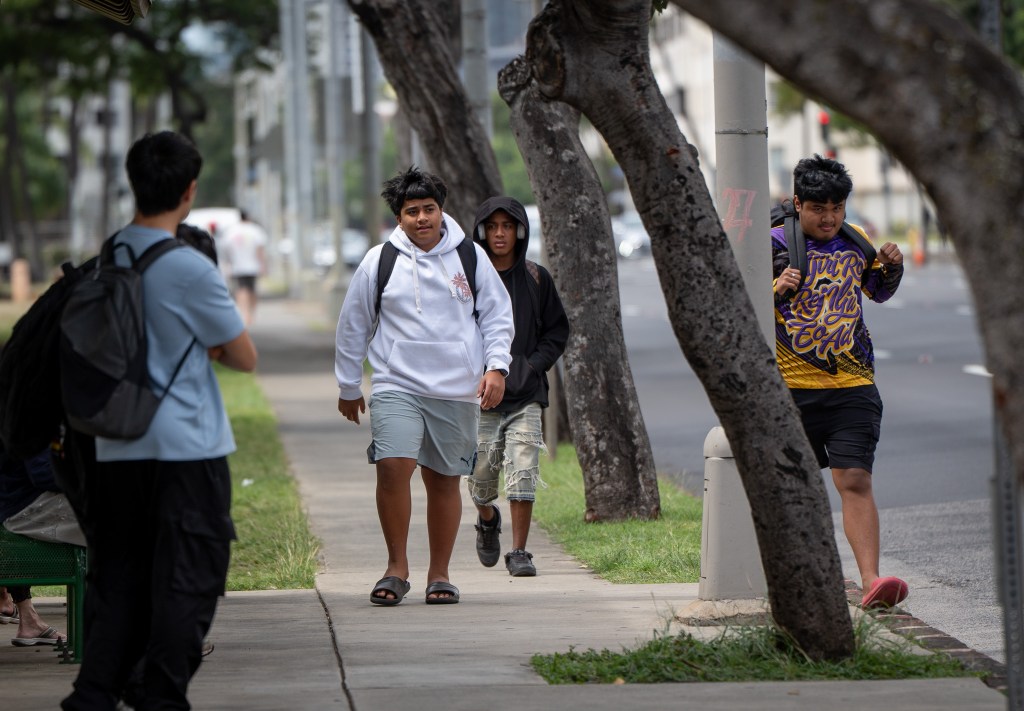
House Bill 1879 would make transit free for all youth, though an amendment would require the state to prioritize low-income riders if there’s not enough funding. Another bill offering free transit to other small groups, such as employees at the state Department of Transportation, also died on Friday.
But limiting access to subgroups based on income or requiring them to use transit passes not only reduces consistent access but increases the administrative burden of determining which applicants qualify, according to a report released Wednesday by Hawaiʻi Appleseed Center for Law and Economic Justice.
Abbey Seitz, director of transportation equity at Appleseed, pointed to Alexandria, Virginia, another locale that made transit free for everyone and saw ridership increase, eclipsing pre-pandemic levels.
Some of its busier routes have become overcrowded, according to a recent annual report prepared by Alexandria Transit Company, especially on routes that serve large populations of high school students. The agency had to turn to larger buses and run more trips to meet this demand, which increased costs.
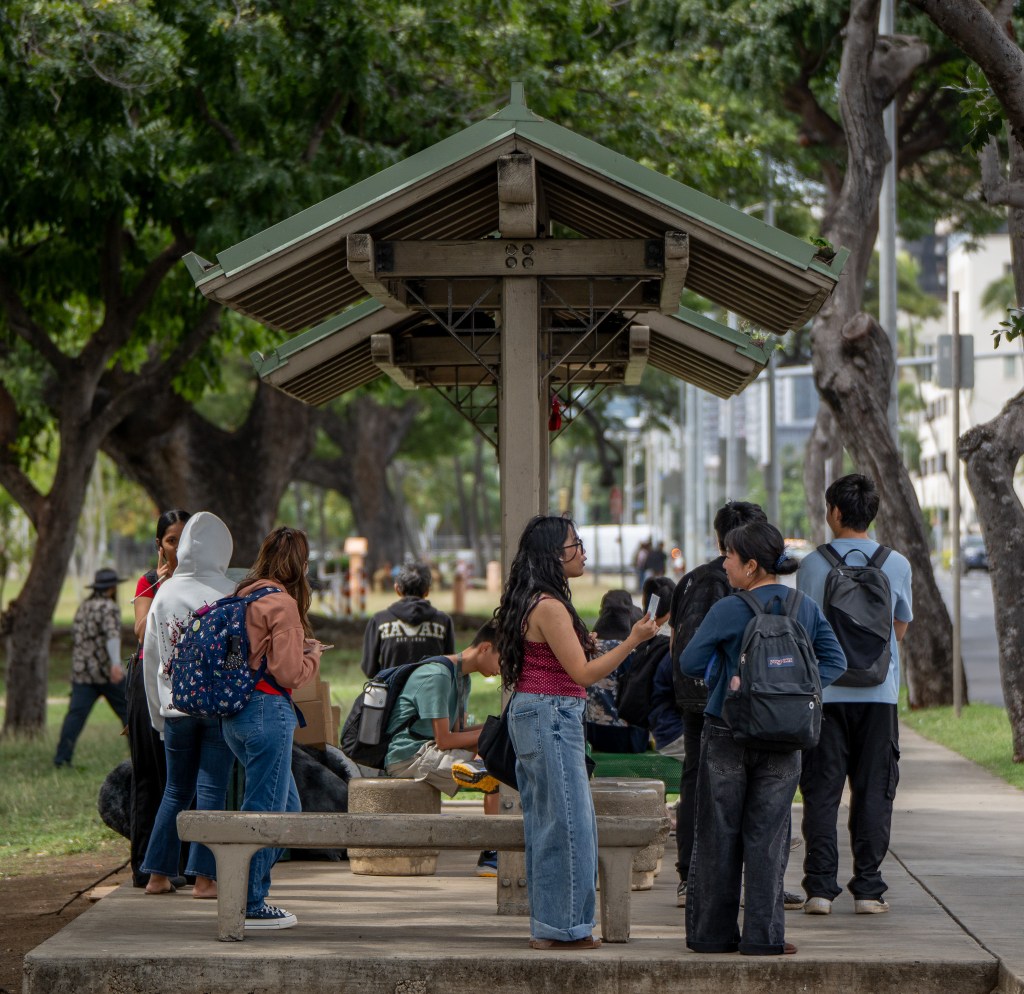
“Being prepared for that is important,” Seitz said.
One crucial ingredient in making a free transit plan work in Hawaiʻi would be identifying a sustainable funding source. The now-dead bill for all-free transit, introduced by Rep. Kim Coco Iwamoto, would have increased the tax on a 42-gallon barrel of imported oil from $1.05 to $3.35, which Iwamoto said would have raised gasoline prices by a few cents per gallon.
Increasing the barrel tax to fund free transit is meant to nudge people toward more sustainable transportation, Iwamoto said. She envisions faster bus service thanks to less car traffic.
“All of these kinds of benefits,” she said, “I think are really important.”
The Legislature’s surviving free transit bill redirects existing barrel tax revenue to fund the free transit for youth. Morton, the city transportation director, told legislators he wants a more durable source of funding.
Economic downturns could threaten barrel tax revenue, he said, and “that’s when we really need public transit the most.”
Civil Beat’s coverage of climate change and the environment is supported by The Healy Foundation, the Marisla Fund of the Hawai‘i Community Foundation and the Frost Family Foundation. “Hawaiʻi’s Changing Economy” is supported by a grant from the Hawaiʻi Community Foundation as part of its work to build equity for all through the CHANGE Framework.