

Hawaiʻi County Inspectors Missed Illegal Rentals In Factory That Burned
The county subsidized rentals in an office building 30 feet away on the same property, but overlooked illegal units in the adjacent poi factory.
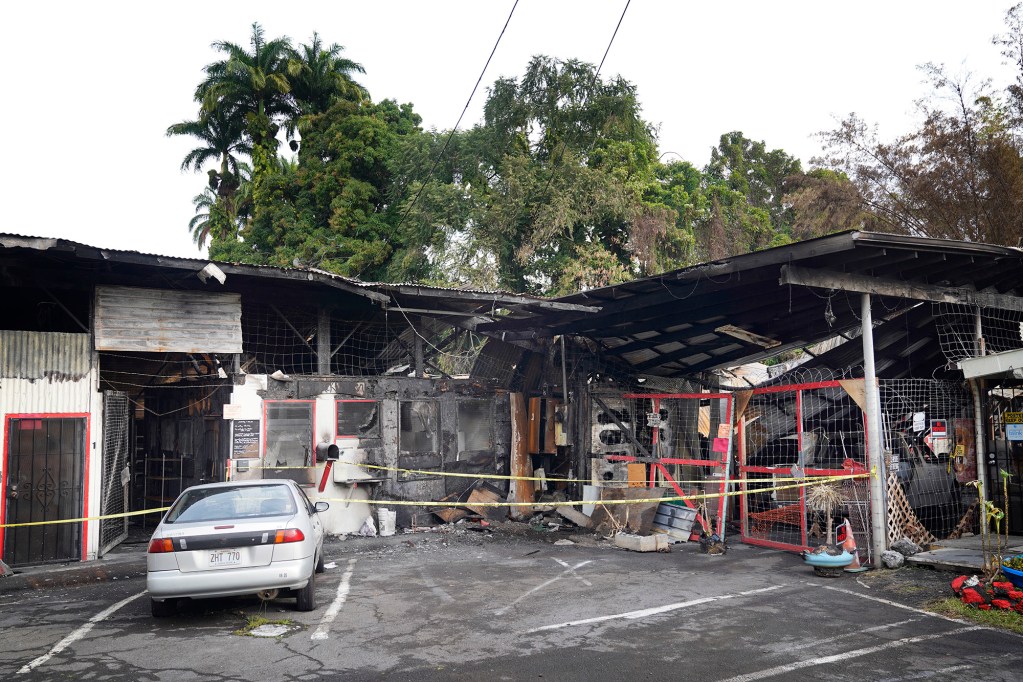
After an old poi factory burned down in Hilo in November, killing two people who had been living there, Hawaiʻi County’s fire chief said he was unaware that the building had been illegally converted into apartments.
Because no one had sought a plan approval for the site and there had been no complaints about it, he said, the building had never had a fire inspection. It also lacked a certificate of occupancy, which is required when a building is converted to a new use.
Yet the county was providing Section 8 housing assistance to tenants living in an office building 30 feet away on the same property from at least 2017 until last year. That building survived the fire.
County officials, who visited the site several times to approve housing vouchers for the converted office building, apparently missed the fact that people were being housed illegally right next-door in the building that later burned.
In a written statement the county responded that its inspections “apply only to the unit in the program and do not cover other buildings or structures on the property.”
Allan Yoza, who converted the Puʻueo Poi Factory to rentals without a county plan approval before selling it four years before the fire, still rents out properties to tenants who receive the housing subsidies. He and his companies also are marketing other Big Island properties for sale, promising large returns to investors if they rent out the properties by the room.
In one case he is advertising single room rentals not allowed by county zoning.
Voice messages and texts left on three phone numbers linked to Yoza’s businesses this week were not returned.
How It Happened
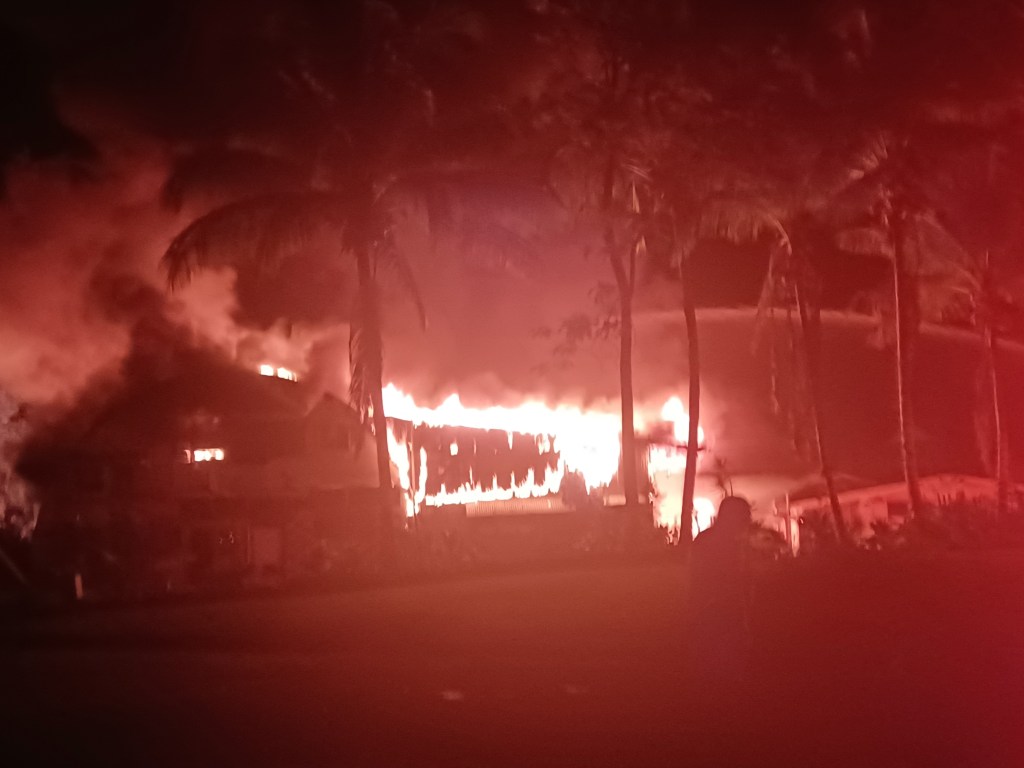
The massive blaze on Nov. 29 killed residents Neilla Lee, 56, and Antoinette Amii, 72. The early morning fire is still under investigation, but fire officials have ruled out arson.
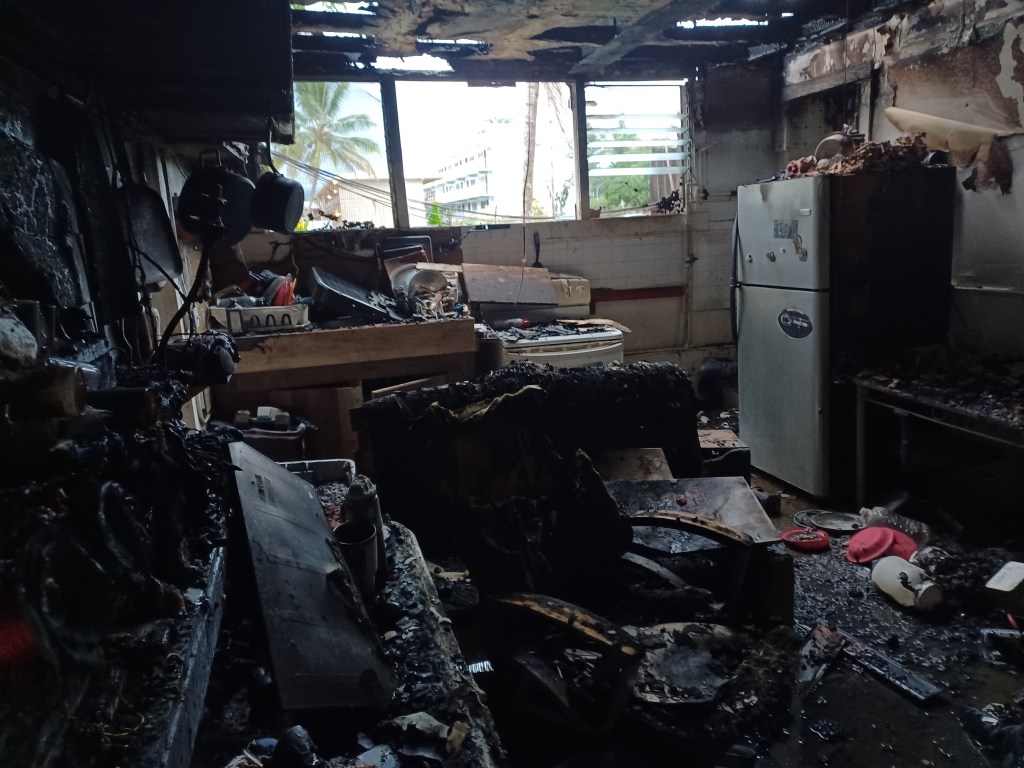
Resident Michael Herscock said in an interview that the fire started in the apartment of one of the victims on the second floor. Herscock burned his hands and feet helping tenants escape through windows on the first floor. But he couldn’t get up the stairs to the second floor because of the intense flames.
The fire that killed the two women also displaced more than 20 other residents, Herscock estimated.
The two buildings on the site — the factory and adjacent office — date from the early 1960s. Property records show that some of the poi factory workers might once have lived at the site as a permitted use grandfathered into the property.
Land records show the county has been taxing the property at the rate for apartments since at least 2019, collecting nearly $30,000 in that time. The factory is in a zone that allows for residential dwellings, but the ones at the poi factory never got the required plan approval or certificate of occupancy, the county said.
Yoza’s company Affordable Hawaiʻi Properties bought the former Puʻueo Poi Factory building and adjacent office in 2018 for $228,375 in cash following the death of factory owner Gilbert Chang. The ownership was then transferred to AMYMDH LLC in 2018 and, at some point before 2022, the factory was converted to rentals.
When Yoza and business partner Michael Harvey put the buildings on the market in 2022 for $450,000 cash, their advertisement touted the income potential, saying that investors could gross as much as $160,000 a year if almost all of the 23 units were occupied.
“Being sold as a Cashflow machine, not for looks. A ‘diamond in the rough!’” the ad said.
Leroy Sajulga said in an interview that he bought the property from Yoza and Harvey in 2022 as an investment.
Owners Didn’t Seek Approval
Sajulga said he never checked to see if the conversion to housing units had been approved by the county.
After the fire, Hawaiʻi County Fire Chief Kazuo Todd told Civil Beat that the building had not gotten a fire inspection, which would only be triggered by a complaint or as part of the plan approval when it was converted to housing. Todd died unexpectedly of natural causes a few days later, on Dec. 14.
Hawaiʻi Mayor Kimo Alameda said the fire raised questions about whether other unsafe buildings had been illegally converted to housing.
County planning director Jeff Darrow said in a written statement that “changing the use from a poi factory to residential dwellings would likely have required the owner to have submitted for a Plan Approval through the Planning Department, which was not done in this case.”
Compliance with local codes is mandatory to receive access to affordable housing subsidies that come from the U.S. Department of Housing and Urban Development to Hawaiʻi County’s Office of Housing and Community Development.
The county is also required to conduct an initial inspection to ensure the building complies with housing quality standards, and reinspect at least every two years.

For the office adjacent to the poi factory, county officials say they did a required HUD inspection in 2023, at which point the factory had already been converted to housing. They inspected again in early 2025, but that time, the units did not meet the standards. The tenants’ subsidies for that dwelling ended at that point.
Since county officials apparently did not know about the poi factory conversion, they had no reason to do a fire inspection there. While state regulations require annual fire inspections for state public schools and airports, most other buildings are inspected far less frequently, sometimes only once every five years.
Todd said most inspections on the Big Island are either complaint-driven, or occur when the planning department is considering a change in building use.
In this instance, the county had no record of complaints about the poi factory, according to county spokesperson Tom Callis. The last permit on the property records that might have prompted an inspection was issued in 1993.
Rough Conditions
Herscock, a former emergency medical technician and firefighter who lived in the converted factory from December 2020 until the day of the fire, said that some of the residents had addiction and mental health issues.
When Yoza owned the building, conditions were rough, he said.
“Allan had extension cords running up the hallway so that people could get power to their apartment,” he said.
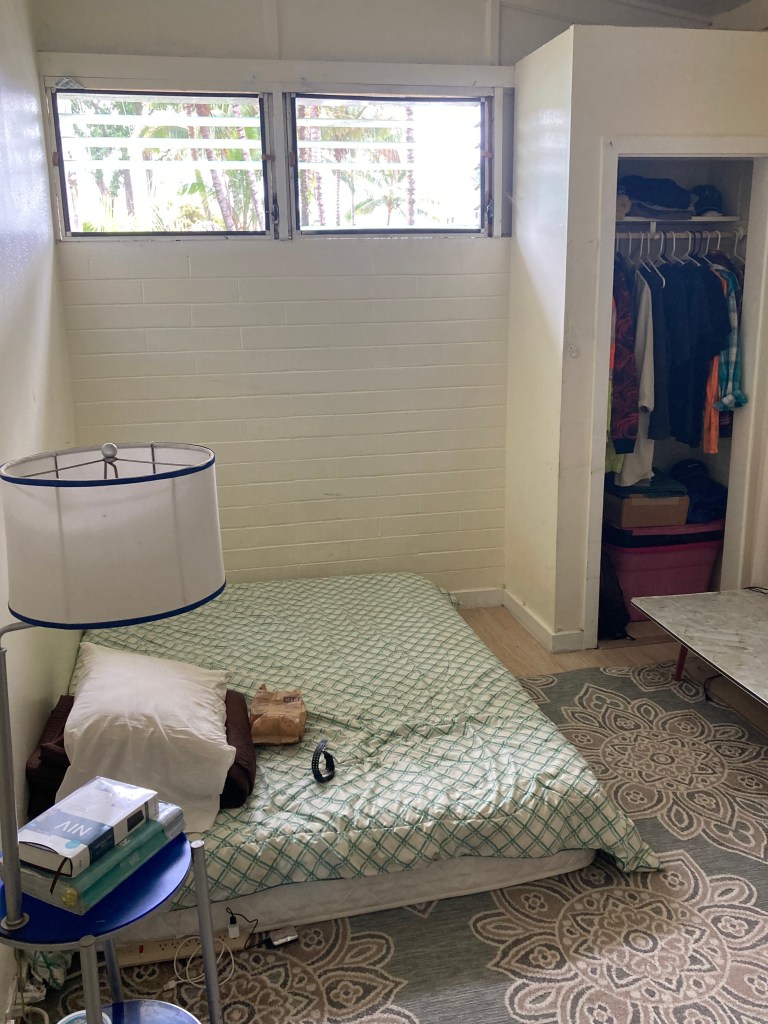
He said that Sajulga spent two years making improvements, including new appliances and floor coverings, freshly painted walls and new bathroom fixtures.
Sajulga said he did not apply for a permit because the work involved internal renovations like new plumbing and electrical wiring and not alterations to the structure.
Herscock paid $800 a month for his one-bedroom studio with a bathroom. Other tenants who shared facilities paid less.
Every apartment in the building had a fire extinguisher and smoke alarm, Herscock said.
“Now whether or not residents kept those smoke alarms, I can’t say,” said Herscock, who has since moved to North Carolina.
Big Island Housing Crunch
Yoza, who converted the poi factory into housing, has on at least one other occasion advertised housing units at odds with the county’s zoning laws.
He owns a portfolio of at least 55 buildings and parcels on the Big Island under his own name, the limited liability company Affordable Hawaiʻi Properties and other entities such as the company behind the sale of the poi factory, AMYMDH LLC.
That LLC name is an acronym of the initials of Yoza and business partner Harvey, the owner of an organic noni juice company whose name appears on the poi factory sales documents.
Yoza and Harvey were recently offering for sale 82-D Hoku Street in downtown Hilo for $495,000, describing it as a “High-Cash-Flow Investment.” .

The listing says the 4,322 square foot home has “nine rentable rooms,” three bathrooms and two full kitchens, “making it ideal for shared housing and multi-tenant use. Renting by the room produces higher income, steadier cash flow, and reduced vacancy risk compared to renting as a single household.”
However, the zoning and size of the building only allows for one family or up to five unrelated individuals to live there, county planning director Darrow said.
Yoza bought the former Buddhist temple building for $75,000 in 2022 using a 401(k) trust and then transferred the building in 2024 to another trust that names Michael Harvey and his wife Radha Harvey as members.
The Big Island faces a chronic housing supply shortage, and more than 50% of renters are burdened by the cost, state data show. The Hawaiʻi Housing Finance and Development Corporation projects that 19,000 new units are needed on the Big Island by 2027 to meet demand.
In that environment, Yoza and Harvey have established a niche offering single rooms for rent, blocks of land with buses or cabins on them — most for sale with owner-finance and negotiable rates for cash.
Civil Beat’s reporting on economic inequality is supported by the Hawaiʻi Community Foundation as part of its work to build equity for all through the CHANGE Framework; and by the Cooke Foundation.

