Hawaiʻi Homeowners Need More Options To Get Rid Of All Cesspools By 2050
State lawmakers are taking up a bill this week that would create a low-interest loan program.
Miloliʻi, on Hawaiʻi island’s leeward coast, is renowned for its dedication to traditional fishing practices, but the rural village has no municipal sewer system, leaving the 500 residents in and around that area to rely mostly on cesspools they can’t afford to replace.
“Most of my ʻohana, my family, we’ve been there for many generations,” Miloliʻi native Kaimi Kaupiko said. Typically, it costs tens of thousands of dollars to convert a cesspool to septic or some other treatment system.
“We don’t have those types of funds,” Kaimi said, “to upgrade systems or find a better solution.”
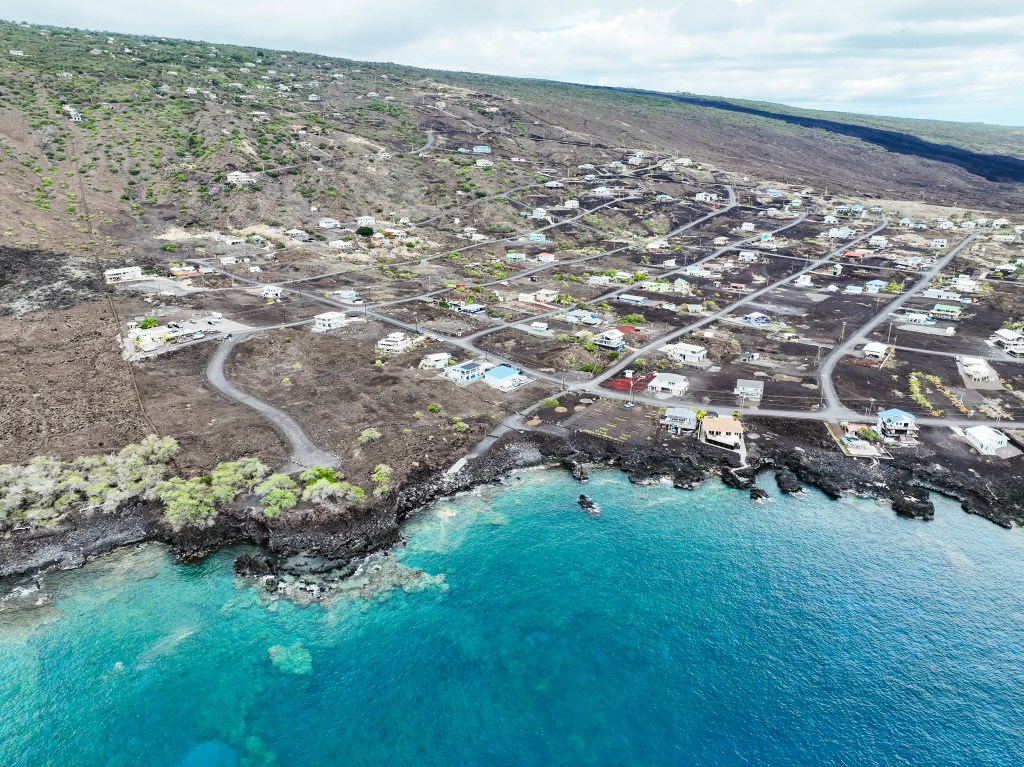
All property owners in Hawaiʻi have until 2050 to get rid of their cesspools under state law. But daunting cost challenges such as those seen in Miloliʻi have left 83,000 cesspools intact across the island state, with only a few hundred getting removed annually.
This year, key lawmakers and clean-water advocates hope to ramp up progress with a low-interest loan program for the cesspools’ removal. It would be run by the state’s Green Infrastructure Authority, which typically helps finance solar and clean-energy projects.
“It’s so desperately needed,” said Stuart Coleman, executive director and cofounder of the Honolulu-based nonprofit WAI: Wastewater Alternatives and Innovation. “To make that (2050) deadline without some kind of a fund and a program to help people out, it’s going to be very hard.”
The state in 2022 created a popular $5 million grant program through the Department of Health offering low- and moderate-income property owners up to $20,000 each to help remove their cesspools. The money ran out within a week of the grant’s launch. Nonetheless, the Legislature failed to extend it last year.

A loan program stands a greater chance of passing the Legislature this year, Coleman said, as state leaders grapple with a more limited budget, largely due to cuts and policy changes on the federal level under President Trump.
“If there’s been cuts to, you know, essential services like food assistance and health care, then there’s going to be prioritization to make up the funding gap for those first, right?” Hawaiʻi island Rep. Nicole Lowen said.
It makes cesspool funding “a bit more challenging,” she said, even as the biggest obstacle to getting rid of the reef-killing pits is the need for those dollars.
House lawmakers in the Energy and Environmental Protection Committee, which Lowen chairs, will take up the measure on Thursday.
Slowly Shoveling Out
The state’s new “green fee” tax might provide some funding for cesspool removal, too. Gov. Josh Green still hasn’t released his list of preferred green-fee projects, but his volunteer green fee advisory council recommended $1 million go toward a cesspool-conversion project at Hōnaunau, about 20 miles up the coast from Miloliʻi.
Most of the state’s cesspools — some 50,000 — are found on Hawaiʻi island. Last month, the county’s mayor, Kimo Alameda, asked state lawmakers to provide some flexibility on the 2050 deadline.
Specifically, he asked that the deadline for Priority 2 cesspools, which typically don’t lie close to the coast or cause as much damage, be extended to 2060. He asked that the Priority 3 cesspools, deemed even less urgent, be extended to 2070.

“There’s no way, mathematically, we can make that conversion,” Alameda said. “Fifty-thousand cesspools (we’ve) got to convert — that’s like eight cesspools a day.”
Hawaiʻi County released its own cesspool conversion task force report in December with a host of recommendations specific to several communities on the island, including Miloliʻi — the island’s fastest-growing area.
The report noted that septic is not a good alternative there because effluent likely would still seep through the porous rock substrates into the ocean, and suggested that one option might be a community wastewater reclamation facility that would provide recycled water for irrigation and cleaning.
It also said that the county cannot — and should not — do it alone.
“The view of this task force is that the County government has a central role to play, but cannot — and should not — shoulder the cost and implementation burden for the entirety of this effort alone,” the report said. “Alongside the County, the State, as well as community organizations and nonprofits, private companies and individual property owners all have a role to play in bringing these solutions to fruition.”
Overall, the state faces an average of around 3,400 cesspools that need to be removed each year to hit the deadline. Currently, no more than 400 are being removed.
“We’ve already been kicking this can down the road for decades,” Coleman said. “We’re way behind.”
University of Hawaiʻi Mānoa researchers are developing a new solar-powered method, dubbed a “Honu Hub,” that might treat sewage at the source and substantially save on the costs to convert from a cesspool.
That project is being funded with a $5 million National Science Foundation grant. The research is still in its early phases.
“It’s important that we take action and we have to hope that better, cheaper solutions come along,” Lowen said, adding that in the meantime, “We’re kind of stuck working with the solutions that we have.”
Civil Beat’s coverage of environmental issues on Hawaiʻi island is supported in part by a grant from the Dorrance Family Foundation; coverage of climate change and the environment is supported by The Healy Foundation, the Marisla Fund of the Hawai‘i Community Foundation and the Frost Family Foundation.