Hawaiʻi Mayors Scrap Controversial Tax Pitch In Election Year
The mayors decided against asking the Legislature for a 20-year extension of the general excise tax surcharge for rail and other transportation projects to allow time for more due diligence.
Hawaiʻi’s four county mayors have had second thoughts about their plan to ask lawmakers this year to wade into the controversial issue of extending the half-percent general excise tax surcharge that funds the Honolulu rail project.
Honolulu Mayor Rick Blangiardi said in December that the mayors planned to ask the Legislature this session to extend the lucrative excise surcharge by 20 years. But the mayors didn’t follow through last month by submitting a bill to lawmakers to actually extend the tax.
Honolulu City Managing Director Mike Formby said in a statement this week that “the Mayors agreed to postpone a request for a GET extension until 2027 as the counties, particularly Honolulu as it relates to rail, required additional time to complete their financial due diligence on estimated years needed for an extension.”
He added: “The counties are not dropping their plan for a GET extension, they are making sure they provide the Legislature the information it needs to fully vet the proposal.”
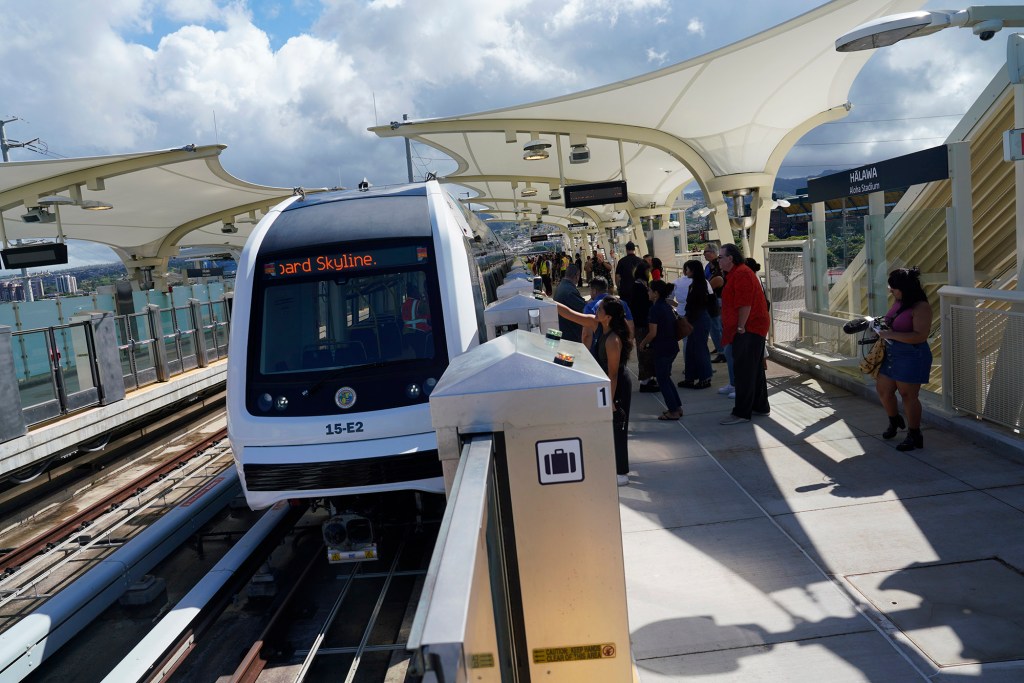
Some key state lawmakers expressed doubts earlier this year about extending the excise tax surcharge, and the debate over the issue is certain to be contentious. The mayors’ decision to push the issue into next year serves to move that debate out of 2026, which is an election year.
John Hart, communications professor at Hawaiʻi Pacific University, said getting an excise tax extension passed in an election year would have been particularly difficult “because anyone who’s going to run against you is going to say, ‘Hey, you voted to raise taxes on us again.'”
“Politicians, especially in an election year, don’t want to be raising taxes. You’re handing your opponent one of the best arguments they have,” Hart said. “People are sensitive to that right now.”
Extending The Extensions
The excise surcharge began in 2007 as a temporary tax on Oʻahu residents and visitors to help finance construction of the city rail project, but state lawmakers extended the surcharge in 2015 and again in 2017 to cover cost overruns on the project. The surcharge is now scheduled to expire at the end of 2030.
Years ago state lawmakers allowed the three other counties on the neighbor islands to impose the excise tax surcharge on their residents and visitors, and that money has become an important source of funding for transportation projects for each of the counties.
The excise tax surcharge generated more than $351 million for Honolulu in 2024, money that was used to help fund the rail project. Maui County received about $77 million that year from the surcharge, and Hawaiʻi County received more than $74 million. Kauaʻi County received nearly $37 million in surcharge revenue that year, which was used for county transportation projects.
Kauaʻi Mayor Derek Kawakami said Thursday that money was a “gift from the Legislature” that allowed his administration to resurface 252 lane miles since 2018. It improved the roads, created local jobs and supported the local businesses that contracted with the county to do the road work, he said.
Still, Kawakami said the mayors decided that “maybe this is not the right time and place to be lobbying for an extension when we know that our colleagues at the Legislature have some very tough decisions to make.”
This year the state is scrambling to find ways to balance the budget at a time when the federal government is cutting funding for basic social programs such as Medicaid and food aid for low-income families provided by the Supplemental Nutrition Assistance Program.
Every year lawmakers are “stuck between a rock and a hard place,” Kawakami said, “and I think this upcoming session is going to be a very big challenge, and I think the mayors are cognizant of that fact.”