Operation Reverse Robinhood: Big Island Lawyer Gets 6 Years For Scam
Gary Zamber is the first of the four defendants to be sentenced for conspiring to take advantage of loopholes in the Big Island’s system for handing out affordable housing credits to developers.
In the end, Gary Zamber didn’t become a rich man for his role in the Big Island affordable housing scandal. Over the roughly seven years that he and three other residents conspired to exploit a system meant to encourage developers to build affordable housing, Zamber pocketed about $177,000 — far less than his co-conspirators.
During his sentencing hearing on Friday, U.S. District Judge Jill Otake said she found Zamber to be the least culpable of the four men who fraudulently obtained almost $11 million worth of land and affordable housing credits. But she still held him heavily responsible, sentencing him to 70 months in prison and three years of supervised release, highlighting the impact of his actions on affordable housing stock and the public’s trust in the government.
“This state is in a crisis regarding housing. You know that. I know you know that,” Otake said during Zamber’s sentencing hearing at the federal district court in Honolulu. “Crimes like this make affordable housing even less reachable.”
Zamber was also ordered to pay a $1,000 fine and turn over $124,270 that he received through the deal.
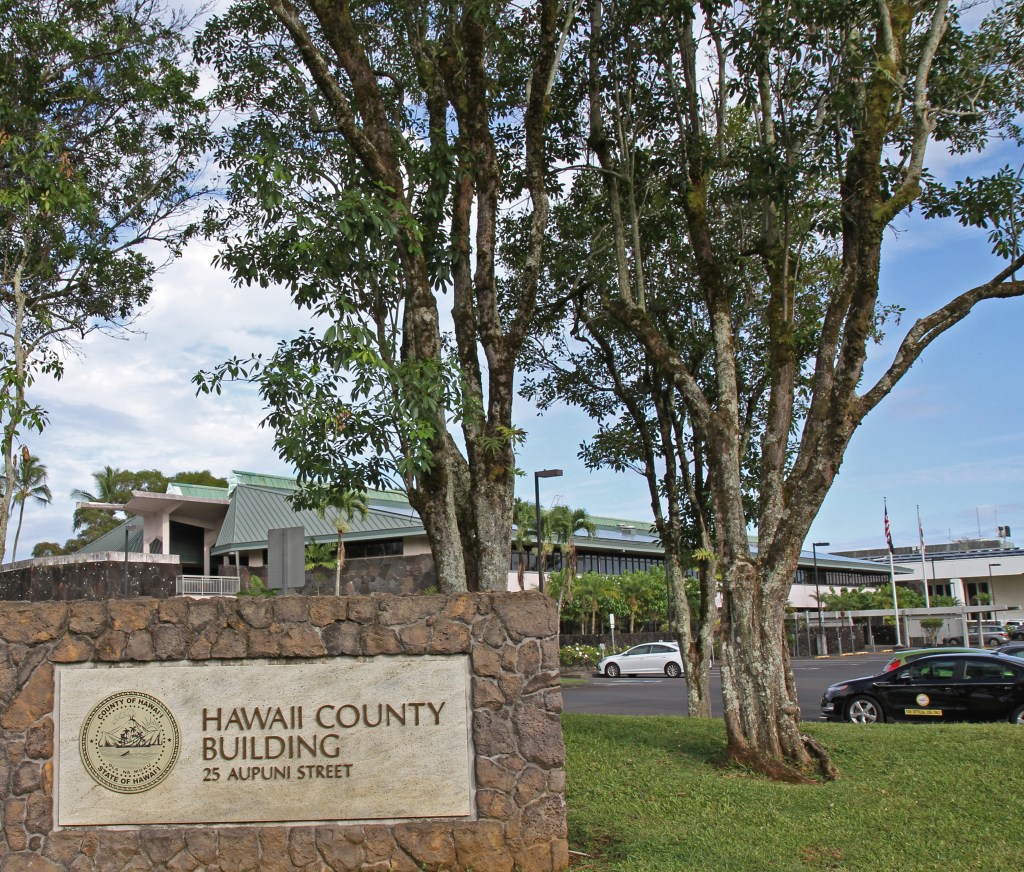
The lawyer’s sentencing marks a pivotal moment in the downfall of a scheme that prosecutors say stretched from 2014 to 2021. Along with attorney Paul Sulla and businessman Rajesh Budhabhatti, Zamber was convicted of exploiting Hawaiʻi County’s system for awarding valuable affordable housing credits.
The linchpin of the scheme, former county housing specialist Alan Rudo, used his position at the Hawaiʻi County Office of Housing and Community Development to award affordable housing credits to three LLCs controlled by Rudo, Zamber, Sulla and Budhabhatti. The group then sold the credits and land to other developers, raking in the proceeds. In exchange, Rudo admitted to seeking or accepting about $1.9 million in bribes and kickbacks.
Zamber, Sulla and Budhabhatti were convicted last June of one count of conspiracy to commit honest services wire fraud and nine counts of honest services wire fraud. Sulla was also convicted of money laundering. Rudo pleaded guilty to conspiracy to commit honest services wire fraud in July 2022 and later testified against the three others. Zamber is the first of four players to be sentenced.
“I believed that what I was doing was going to build more public housing,” Zamber told the judge during his sentencing. “I did not ask enough questions. I relied on others where I should have verified,” he said. “Those are errors of judgment — my errors.”
Millions In Credits And No Affordable Units
In Hawaiʻi, developers who want to rezone a property to build homes are required to fulfill affordable housing requirements by either building affordable units for low-to moderate-income families or donating land for another developer to build those homes.
By building more units than required, developers can receive excess credits that can be sold to someone else to fulfill affordable housing mandates on another project. The price tag for these credits can be in the tens of thousands.
Prosecutors say Zamber, Sulla, Rudo and Budhabhatti took advantage of flaws in this system. The scheme relied on Rudo, a county housing specialist, who was in charge of both drafting agreements that gave developers affordable housing credits and making sure developers followed through on building the units.
Rudo used his position to ensure that the county approved three affordable housing agreements that would benefit the other defendants’ development companies — Luna Loa Developments LLC; West View Developments LLC; and Plumeria at Waikoloa LLC.
One deal transferred 212 affordable housing credits to Luna Loa Developments LLC, which was created by Budhabhatti and partly owned by Budhabhatti, Zamber and Rudo, according to court records. In exchange, Luna Loa was required to develop 106 affordable units. Instead, the company sold some of the excess credits for at least $350,000, without building a single unit.
In another agreement, an LLC owned by Zamber, Budhabhatti and Rudo was supposed to build a total of 52 affordable units after receiving 104 affordable housing credits. Instead, the company, West View Developments LLC, traded 46 credits and $14,000 for 13 acres of land in Kailua-Kona. The company later sold a portion of that land and two housing credits in separate transactions for more than $1 million, according to court records.
The defendants also failed to build affordable housing on land in Waikoloa that was transferred to an LLC operated by Rudo, Sulla and Zamber to satisfy another unnamed developer’s affordable housing requirements. Instead, the defendants sold the property for $1.5 million.
All told, FBI investigators found that these three transactions brought in land and excess affordable housing credits worth at least $10.98 million.
Prosecutors told the judge during Zamber’s sentencing that they could not quantify the amount of affordable housing stock lost as a result of the scheme. While the defendants didn’t build any affordable housing units, they did transfer land or credits to other developers who did. All told, prosecutors and defense attorney Gary Springstead agreed that the Luna Loa project resulted in a loss of 46 affordable units that didn’t get built. The West View project promised 52 units, and a developer who took over the obligation has signed up to build 111 units, but it’s unclear whether they’ve been built.
Operation Reverse Robinhood
After receiving a tip from a county employee, the FBI launched a three-year investigation into the scheme in 2018, dubbed Operation Reverse Robinhood.
On July 18, 2022, Rudo pleaded guilty to conspiracy to commit honest services wire fraud. The other three were indicted a week later.
As part of his plea agreement, Rudo handed over his interest in the recovered funds and housing credits, as well as property connected to the charges. He later testified against the other three as the prosecution’s star witness in a three-week trial that ended with a jury finding Zamber, Sulla and Badhabhatti guilty last June.
Zamber’s involvement in the scheme was minor compared to his co-conspirators and he pocketed significantly less money, both factors that the judge took into account when determining his sentence.
“Having sat through the entire trial, I can say that I viewed him as the least culpable of these defendants,” the judge said, pointing to how Rudo and Budhabhatti exercised the most decision-making authority and even discussed cutting Zamber out of the deal.
Even though the land and excess affordable housing credits were valued at $11 million, none of the co-conspirators pocketed anywhere close to that amount. Sulla made nearly $400,000, Budhabhatti made more than $1 million and Rudo close to $2 million, according to Zamber’s defense attorney.
But the issue of fairness when assessing the varying levels of culpability is complicated by Rudo’s plea deal with prosecutors. In exchange for testifying against the others, Rudo and prosecutors stipulated that the total amount lost through the scheme was $1.5 million to $3.5 million. That’s significantly less than the $11 million that the judge weighed when calculating Zamber’s sentence or that will be used in Sulla and Badhabhatti’s sentencing. A lower amount could factor into a lesser sentence for Rudo.
Still, the judge was not convinced that Zamber was without fault. His role and standing as an attorney, she argued, gave the scheme legitimacy. The deal, while complex, was not so complicated that it appeared to be legal. “What I cannot believe is that as a lawyer you didn’t know what was going on,” she said.
Springstead told Civil Beat that he disagrees with the judge’s assertion.
When Zamber stood to address the judge, he focused on what he said was a personal dedication to public service that stemmed from being raised by parents in the medical field. He said he often took pro bono cases to represent clients who couldn’t afford an attorney.
“I grew up with service as a hallmark of how we should live,” he said, his voice cracking with a sob.
After this experience, he said he is “more aware that good intentions aren’t enough.”
Since the housing scandal became public knowledge, the county Office of Housing and Community Development has instituted changes to prevent such fraud, including divvying up responsibilities so the same person isn’t in charge of both granting credits to developers and making sure the units get built. The county also banned the practice of preemptively issuing affordable housing credits.
Sentencing for each of the defendants has been repeatedly pushed back. Budhabhatti is currently set to be sentenced on Friday, and Rudo has a sentencing hearing scheduled for March 6. Sulla’s sentencing, which had been scheduled for Thursday, has been continued to an unannounced date.
Zamber will be required to self-report to prison by March 13. Springstead said his client maintains his innocence and plans to appeal.