UPDATED: ‘Catastrophic’ North Shore Flooding Prompts Evacuation, Alerts
Emergency flash flood alert extended on Oʻahu to the north half of the island at 8 a.m., southern half at 10:30 a.m. Wahiawā Dam could fail.
EDITORS’ NOTE: This is an evolving story and will be updated frequently.
The low-lying areas of Haleʻiwa, Waialua and Mokulēʻia on the North Shore of Oʻahu were overwhelmed by catastrophic flooding early on Friday morning, prompting county alerts to residents to evacuate or move to higher ground.
“If you are trapped, go to the highest level,” the Honolulu emergency department wrote in an emergency alert at 3:42 a.m. “Stay out of attics without a way to the roof.” An emergency shelter was opened at Waialua High and Intermediate School and running on generators, only to later be evacuated itself to higher ground.
SEARCH THE MAP: Look up your address on the evacuation map here.
Just before 8 a.m., the National Weather Service extended a flash flood emergency warning to the northern half of Oʻahu, emphasizing that even with rains subsiding some, runoff continues and more rain is on the way. After 10:30 a.m. the warning stretched to the rest of the island and, by then, nearly 9,000 people were without power.
Gov. Josh Green shut down all state offices before noon, saying, it would “allow families to focus on getting to safety and will support emergency operations.”
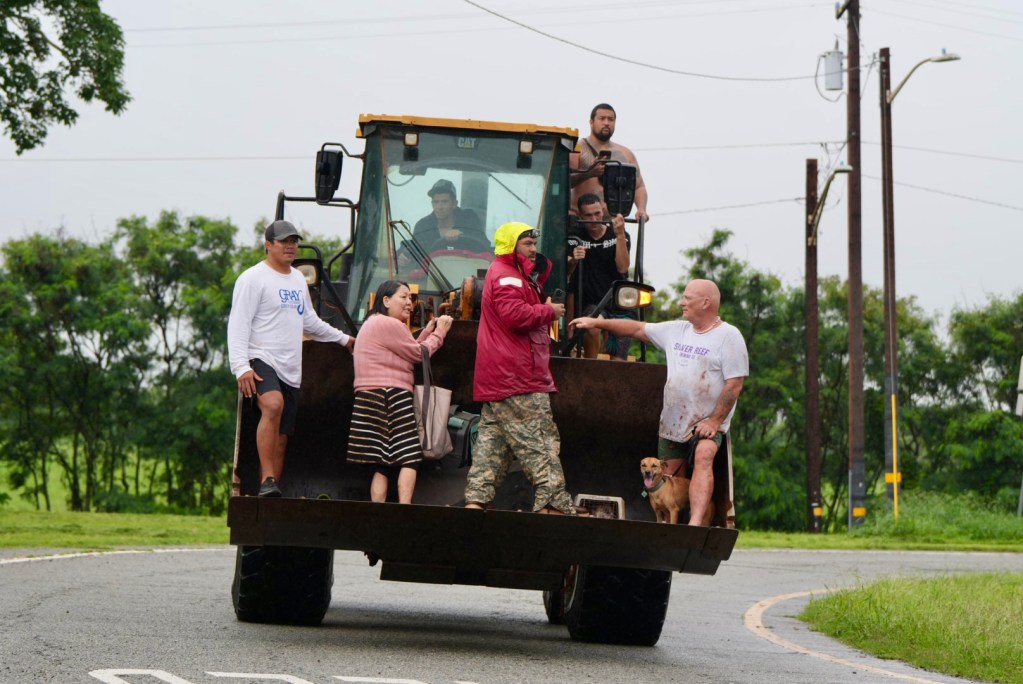
The county urged residents to avoid rushing water that could sweep them away and advised reserving 911 only for life-threatening emergencies. Saturated ground and more severe than expected overnight rainfall were the culprits.
The Wahiawā Dam above the North Shore towns also had risen within less than 3 inches of the 84-foot evacuation level by 4:30 a.m. It continued rising, with water pouring over its spillway at a pace of 1,500 gallons per second and, just before 8:30 a.m., the county posted an “imminent dam failure” notification.
Flash flooding had come on quickly, as the storm dropped up to 12 inches overnight. The county’s alerts urged the community to evacuate Haleʻiwa and Waialua immediately, in the middle of the night, but it’s unclear how passable roads were even then. Videos on social media showed homes, cars and roads inundated with fast-moving floodwater.
Racquel Achiu, a member of the North Shore Neighborhood Board, said she couldn’t believe what was happening at her Waialua farm, with water rising so quickly, over the course of an hour.
Sirens were going off. Her family was in the dark, without electricity, and water was “chest high” in her pasture, she said, where she waded out to save livestock from drowning.
“We are completely cut off,” she said in a text to Civil Beat early Friday morning. “Can’t see a damn thing… It’s so bad.”
It caught the Department of Emergency Management by surprise, according to spokesperson Molly Pierce, which had been preparing for a lesser storm. The first wireless flash flood warnings were issued at 11:39 p.m., she said.

“The National Weather Service had forecast that there may be some potential for severe weather earlier in the week,” Pierce said, “but they did not have any understanding of what the severity of that would be.”
About 5,500 people live in the evacuation zone but whether they could get out varied neighborhood by neighborhood, Pierce said, which is why they were telling people to go to the highest floor or the roof of their home, where emergency personnel will try to get to them. Lifeguards and firefighters were searching on Jet Skis and the National Guard, which has high water vehicles, also stepped up to help.
“There’s no exit possibility for a lot of folks right now.”
Hawaiʻi State Rep. Amy Perruso
North Shore State Rep. Amy Perruso said emergency services personnel were having a hard time reaching people and, with their personal vehicles underwater, she was worried that people wouldn’t be able to evacuate on their own.
“There’s no exit possibility for a lot of folks right now,” Perruso said.
Achiu’s family wasn’t able to sleep and later in the morning she said she spotted catfish swimming in her pasture. With the roads flooded so severely, she wondered whether the emergency shelter at the school was accessible to the community.
Perruso said just over 100 people were sheltering at Waialua High School as of 6:30 a.m. It had lost power earlier in the morning, she said, but its generators had kicked in. Two hours later, with the dam failure looming, the city and county sent a bus to that shelter to move 186 people and 45 dogs to higher ground, according to Mayor’s Office spokesman Ian Scheuring. They were being taken to Wahiawā District Park and Leilehua High School.
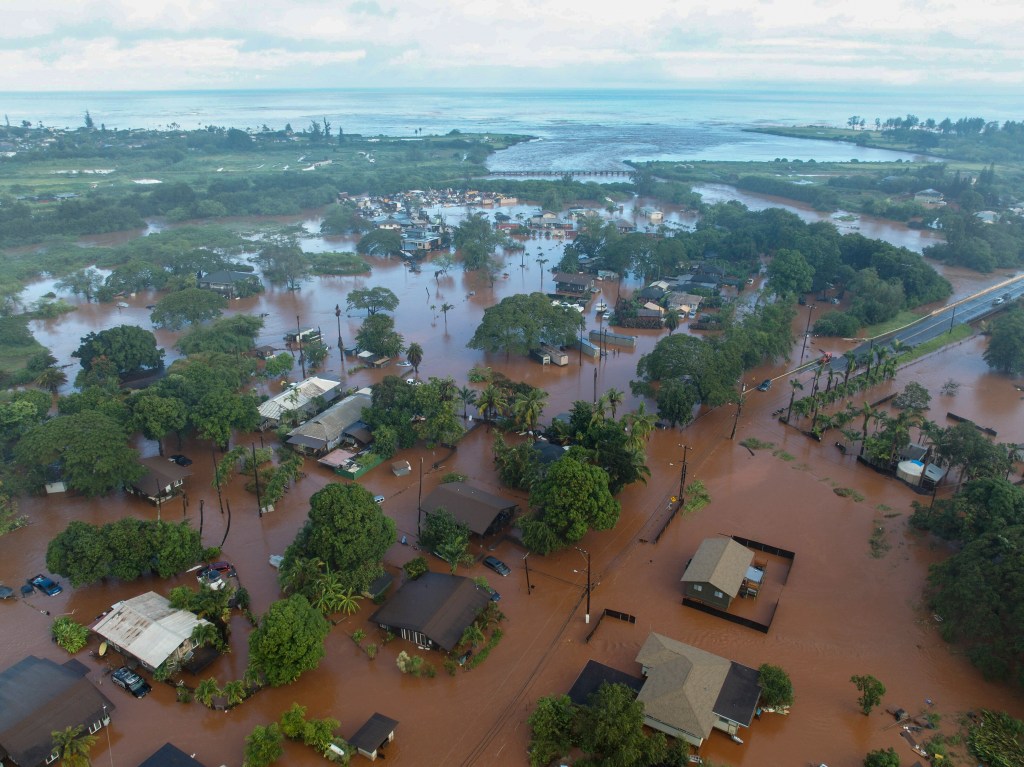
Multiple road closures had been announced through HNL alerts throughout the night due to “hazardous conditions” and Farrington Highway, the main road out of the area was among them, shut down in both directions at Keaau Beach Park due to “extreme flooding.” Landslides also were reported.
Attorney Denise Antolini, who lives near Pūpūkea, said Kamehameha Highway and Ke Nui road were impassable, and she spotted at least three cars stuck in the water there. Although Kamehameha Highway is a known spot for flooding, Antolini called it “the worst I’ve ever seen in 35 years”
Other parts of the island, and elsewhere in Hawaiʻi, also were issued flood watches and flood warnings but the two North Shore towns had reached the highest level — an evacuation early Friday morning. The National Weather Service said:
“This is a FLASH FLOOD EMERGENCY for Northern Oahu. This is a
PARTICULARLY DANGEROUS SITUATION. SEEK HIGHER GROUND NOW!
HAZARD…Heavy rain producing life threatening flash flooding.
SOURCE…Emergency management.
IMPACT…Flooding in drainages, streams, rivers, roads,
closures possible in some areas. Landslides are
possible in steep terrain.”
The current inundation comes days after the Kona Low storm hit the North Shore, flooding roadways, prompting evacuation notices but only a single limited evacuation in the area, of Otake Camp. Although officials said the Wahiawā Dam was not responsible for the flooding, concerns lingered about the body of water and the condition of its spillway, which could fail, putting the lives of more than 2,500 people at risk, according to federal government estimates.
A Civil Beat investigation published today reported that the Dole Food Co. has known for nearly five decades that the century-old dam could flood in heavy rainfall yet did little to maintain it. Even before last week’s Kona low, the state had warned the international company repeatedly about safety issues and required significant improvements, most of which were not made.

Contributing: Blaze Lovell, Thomas Heaton