

Controversy Engulfs HECO’s Proposed $1 Billion Power Plant
The state energy office and Hawaiʻi’s largest utility are at odds over upgrades to a major Oʻahu power plant that have been in the works for years.
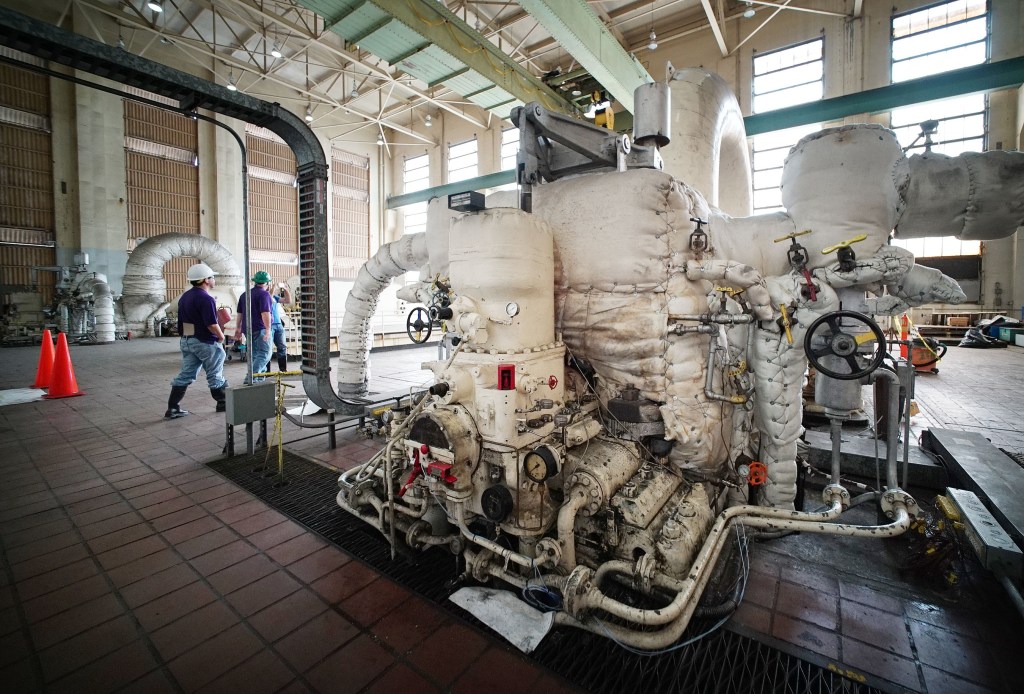
Hawaiʻi’s top energy official has set off a fierce battle with the state’s largest utility by asking energy regulators to hold off on approving a $1.15 billion power plant upgrade on Oʻahu that Hawaiian Electric Co. says is vital to maintaining reliable power on Oʻahu.
The Hawaiʻi Public Utilities Commission is expected to make a decision on the proposal Friday, following a yearslong public process in which HECO laid out plans to replace aging, steam-powered generators at its Waiau power plant. The proposal calls for installing six generators that can use oil or biofuels.
Generators remain a central supplier of electricity to Hawaiʻi, even as state law requires all of the electricity sold in the state to be produced using renewable resources by 2045. While the state’s energy policy calls for expanding wind and solar farms to produce more electricity, generators burning renewable biofuels are expected to be part of the mix.

Gov. Josh Green has revived the previously abandoned idea of using natural gas to fuel generators between now and 2045, as a lower-cost, cleaner-burning replacement for oil now used in the generators. But critics have questioned the idea of bringing another new fossil fuel into Hawaiʻi’s energy economy. And now HECO, which hasn’t opposed using natural gas, has accused the State Energy Office of trying to derail its generator project in favor of a natural gas project.
HECO has estimated the Waiau upgrades would increase monthly electric bills of typical residential customers by $4.23 after it’s up and running.
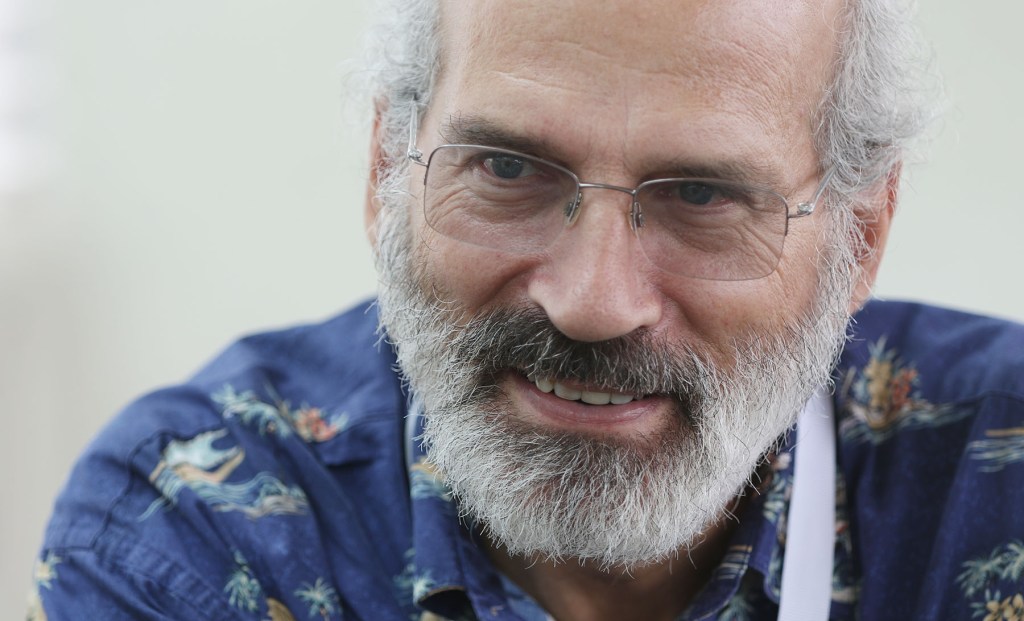
In a searing, 11-page critique dated Monday, Hawaiʻi Chief Energy Officer Mark Glick asks the PUC to take more time to consider the proposed Waiau project’s overall costs, costs to customers, greenhouse gas emissions and other factors. Glick wants the PUC to push back decision making until September.
The letter has set off a fierce, behind-the-scenes battle between the energy office and the state’s largest utility. Even a frequent HECO antagonist has sided with the utility.
HECO has fired back with a point-by-point rebuttal of Glick’s critique. The utility has seized on Glick’s mention of JERA Americas, the U.S. unit of a Japanese energy giant with which Green entered a strategic partnership in October. JERA is one of the world’s largest natural gas suppliers, and the agreement is viewed as the first step in bringing natural gas to Hawaiʻi.
While the strategic partnership agreement contained no specifics about any JERA project, Glick’s letter filled in some blanks. Glick wrote that the energy office is aware of another big generator project that could provide a lot of electricity “at materially lower cost to ratepayers.”
In addition, Glick wrote, JERA Americas has access to low-cost capital to immediately fund such a facility, allowing it to come online faster than the 2033 date HECO anticipates.
“This alternative underscores the importance of ensuring that the Commission’s record clearly evaluates whether the Waiau Repower Project, at its revised cost, remains the most cost-effective option available to meet O’ahu’s firm capacity needs,” Glick wrote.
HECO Accuses Energy Chief Of Favoring Japanese Firm
HECO jumped on the mention of JERA to accuse the energy office of favoring the Japanese company over HECO in the office’s 11th-hour appeal to the PUC.
“Mr. Glick’s apparent motivation in filing its late public comments is to derail the Waiau Repower Project so that Mr. Glick can instead advance a preordained JERA project that Mr. Glick claims would deliver 500 MW of firm capacity at a lower cost and on a faster timeline, with details purportedly forthcoming by mid-year,” Brendan Bailey, HECO’s vice president for resource procurement, wrote.
In a rare move, Life of the Land vice president for consumer issues Henry Curtis, a frequent adversary of HECO, sided with the utility. Part of Curtis’ criticism involved the energy office’s decision to wait until the last minute to submit an objection rather than participating as a formal party in the yearslong public process the PUC used to assess HECO’s proposed power plant.
Curtis also criticized Glick for failing to note that JERA’s plant would likely use natural gas shipped to Hawaiʻi in super-cooled liquid form. The energy office, Curtis wrote, “said the Application should be assessed relative to an ‘alternative’ without mentioning that the alternative would be powered by Liquefied Natural Gas.”
If the PUC wants to delay approving HECO’s project to consider the alternative, Curtis wrote, the PUC should also give more time for parties like Life of the Land to weigh in on the alternative.
Legislators Grill Energy Chief, Question Study
The day before the PUC was expected to decide the issue, members of the House Energy and Environmental Protection Committee were grilling Glick about a January 2025 study focusing on how to fuel power plants while the state transitions to renewables, and how those plants will be fueled after the 2045 deadline.
The study identified liquefied natural gas as “the most cost-effective transitional fuel to be used until carbon-emitting fossil fuels can be permanently eliminated by 2045.”
Called in to rebut the study was Matthias Fripp, a former University of Hawaiʻi electrical engineering professor who now works for Energy Innovation: Policy and Technology, a San Francisco firm led by Sonia Aggarwal, former President Joe Biden’s special assistant for Climate Policy, Innovation, and Deployment.
In a bombshell assertion, Fripp said the energy office’s study contained a $1.2 billion error that obfuscated the costs of LNG, which Fripp said were greater than its benefits. Questioned by the committee’s chair, Rep. Nicole Lowen, Fripp said he was staking his professional reputation on his statement that the state’s study contained a major blunder.
“I’m sticking my neck out saying this is an error,” Fripp said.
Glick told Lowen that he would analyze Fripp’s critique and report back to the committee.
Fripp, Glick said in an interview, “had a completely different methodology in his mind” when he said the office failed to include the cost of natural gas in its calculations.
“We unequivocally stand by our study,” Glick said.
Civil Beat’s coverage of climate change and the environment is supported by The Healy Foundation, the Marisla Fund of the Hawai‘i Community Foundation and the Frost Family Foundation.

