

From Free Meals To Teacher Safety, An Array Of Bills For Hawaiʻi Schools
Proposals have made it halfway through the legislative session, and some advocates are cautiously optimistic that legislation that failed in past years will make it this year.
Halfway through the legislative session, lawmakers are making progress on tackling some of the largest problems facing schools: ongoing teacher harassment, millions in unspent construction funds and the question of expanded access to free school meals.
Proposals to address these challenges aren’t new, with many of the bills on their third or fourth attempt to pass through the Legislature. But some education advocates and lawmakers are hopeful this is the year for change, despite the state’s budget constraints and pushback from school leaders on bills that challenge the status quo.
On the facilities front, lawmakers remain skeptical of the Department of Education’s approach to repairing its campuses after school leaders surrendered millions in construction funds two years ago. Despite the department’s insistence that it’s doing a better job managing school facilities, some legislators want to place the responsibility of running deferred maintenance projects and developing campus modernization plans on the School Facilities Authority, a state agency responsible for the construction of public preschools and teacher housing.
“The usual way to fix schools is not working,” said Riki Fujitani, the authority’s director, in a legislative hearing about the bills. “This is a better way.”

Other recurring proposals aim to build on legislative wins from last year. After lawmakers set aside $3.9 million to expand access to free school meals, families and educators are urging the state to take the next step by providing free breakfasts and lunches to all students in the state.
But advocacy groups and the education department have cited drastically different costs for establishing a universal school meal program, raising questions from lawmakers.
Bills that would increase protections against teacher harassment are making their fourth pass through the Legislature since 2022. While past bills have stalled after opposition from the DOE, teachers and advocates are hopeful the measure will have more success this year after a high-profile incident involving the assault of Moanalua High School Assistant Athletic Director Natalie Iwamoto last year. But not all families are happy with the measure, which would increase penalties for harassing educators.
“What happened to Natalie is a catalyst, because it played out so publicly, but a group of us have tried to slowly chip away at this,” said Lindsay Chambers, a former DOE employee who has helped draft legislation against teacher harassment. “I think we’re seeing a shift in the tide and momentum in our favor.”
Free Meals For All
Universal access to free school meals has been a top priority for families and teachers in recent years, with more than 15 proposals introduced over the past three sessions. But it was only last spring that advocates secured a major win: a law that requires the DOE to provide free school meals to students whose families make up to 300% of the federal poverty level by next school year.
Now, students and educators are pushing the state to take the next step by committing to providing all students with free breakfast and lunch by the end of the decade. As of last fall, nine states offer free school meals to all students.
“We cannot expect our kids to have excellent academic outcomes if we’re not even meeting their basic needs,” said Rep. Trish La Chica, who introduced the bill for free school meals. The measure passed through the House and is awaiting a hearing in the Senate Education Committee.
Daniela Spoto, deputy director of Hawaiʻi Appleseed, said she’s hopeful the extended timeline to establish a free meal program will make the proposal more feasible for lawmakers and the education department. The bill won’t have any immediate impact on the state’s budget, since the program won’t start until the 2029-30 academic year.

But despite strong public support for the bill, Spoto said she’s worried that the different price estimates for the program could make it harder to pass. Appleseed and the Hawaiʻi Public Health Institute have both estimated the initiative could cost $32.5 million, since the state would need to make up the revenue it currently earns through the sale of student meals and account for a possible increase in the number of kids participating in the breakfast and lunch program.
The department currently receives almost $80 million in state funds for its meal program, although it’s requested an additional $1.5 million this year to cover increased costs from inflation and purchasing more local food.
But DOE estimates it would cost roughly $111 million to run a universal free meal program. The costs may run even higher if fewer students submit their meal benefit applications, which determine how much funding Hawaiʻi receives from the federal government for school meals, Superintendent Keith Hayashi said in his testimony to the Legislature.
Spoto said it’s unclear how the department arrived at its number, although it may include the costs the state is already incurring for its school meal program. But the drastically different estimates could confuse lawmakers on the true costs of the program, making it harder for the proposal to pass, she said.
“I think that they are just confusing legislators with their conflation of the cost of the bill versus the cost of the program,” Spoto said. “I think that it’s misleading, and it’s been causing a lot of confusion and a lot of frustration.”
Who Should Handle Facilities?
DOE drew the ire of lawmakers and the public in 2024 when it proposed surrendering $465 million in funds for the construction and repair of playgrounds, auditoriums and other school facilities. Two years later, school leaders say they’re doing a better job managing their construction projects.
Between 2025 and 2026, the department requested to lapse $41 million across 36 construction projects, a significant drop from more than 150 projects it proposed to lapse two years ago. Lawmakers also gave DOE more flexibility in spending its construction money last year, giving school leaders more say in which projects they want to prioritize and making it easier for the department to spend its funds.
Some lawmakers remain skeptical of DOE’s abilities to spend construction money, with a handful of bills proposing to move the planning and management of some campus projects from the education department to the School Facilities Authority.
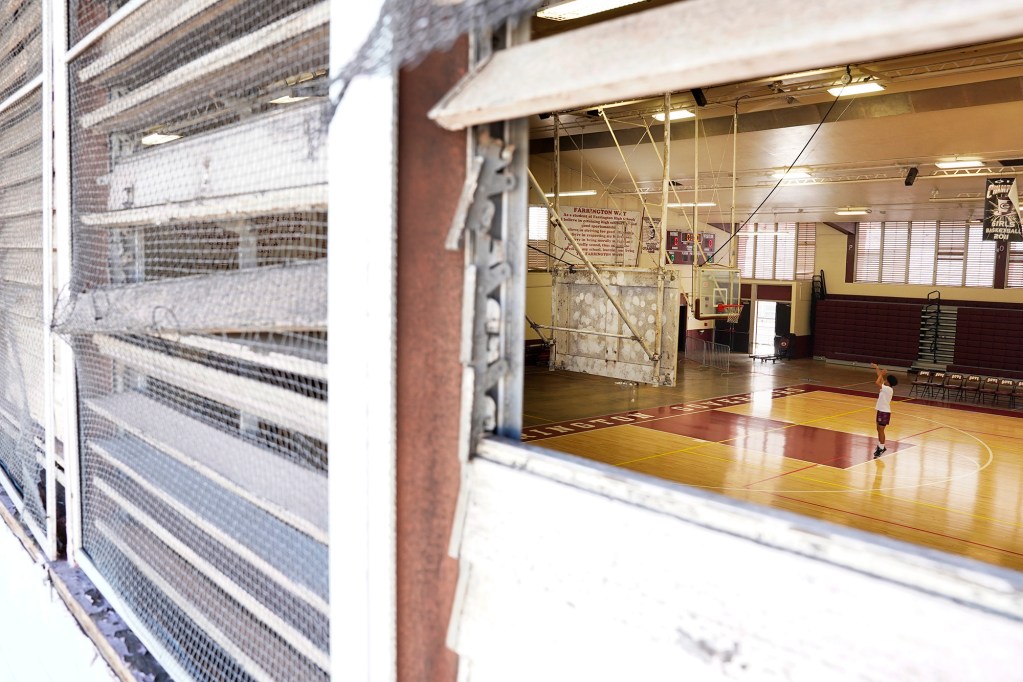
One proposal would task the authority with creating a database that rates the quality of school facilities and prioritizes construction projects based on campuses’ needs. The information would be available to lawmakers as well as the public.
Currently, lawmakers have limited information on the status of construction projects in their districts, said La Chica, who introduced the House version of the bill. Having more information about campus conditions across the state can help lawmakers make better informed decisions on where to direct construction money, creating a more equitable process for prioritizing school repairs, she said.
Lawmakers are also debating a proposal to move the management of deferred maintenance – major repair projects like reroofing buildings or replacing air conditioning systems – from the DOE to district managers who would report to the School Facilities Authority. Moving deferred maintenance to the authority would create more local control and address the significant backlog of unspent funds built up over the years, the bill said.
One version of the bill passed in the House and is scheduled for a hearing in the Senate Education Committee on Friday.
Sen. Troy Hashimoto, who introduced the Senate version, said the department seems to lack the necessary data to keep lawmakers updated on how deferred maintenance projects are progressing in specific districts, making it hard for the Legislature to understand the scope of the deferred maintenance backlog and what’s causing the delays.

“When you take a look at the state number, it’s so big that it’s hard for some of the legislators to do anything about it,” Hashimoto said about the deferred maintenance backlog.
At the end of 2023, DOE had more than 3,240 deferred maintenance projects with an estimated cost of $729 million, according to its Facilities Needs Report.
But DOE is fighting lawmakers’ efforts to move facilities oversight to the School Facilities Authority. The department already has the software needed to track the quality and funding of facilities, said Deputy Superintendent Jesse Souki, and is able to oversee its deferred maintenance projects through managers working on each island.
Moving these initiatives to a different agency would only duplicate DOE’s efforts and create more costs for the state, Souki said.
“This bill really is a solution without a problem,” Souki said.
More Protections For Educators
Entering into the legislative session, school employee safety was top of mind for lawmakers and teachers after a parent assaulted an athletic director and received a lifetime ban from DOE campuses in late 2025.
Videos of the assault were widely circulated online and outraged the public and the school employees’ union, which argued that DOE has long lacked necessary safeguards.
In response, lawmakers introduced a handful of bills requiring DOE to adopt stronger policies to protect its workers, such as giving employees paid time off to seek restraining orders and formally investigating all incidents of harassment and reporting cases to law enforcement.
One of the bills died after crossover when it failed to receive a hearing in the House Education Committee, but another passed in the House and is awaiting a hearing in the Senate.
While lawmakers have considered but deferred similar proposals since 2022, Chambers is hopeful this year will be different. The education department has previously pushed back on some proposals mandating its response to employee harassment but has strongly supported similar measures this year, and the bill provides important accountability measures for schools to keep workers safe, she said.

The bill has faced strong opposition from some families, who argue the proposal could criminalize parents who advocate for their kids. Under the current version of the bill, harassing an educational worker would be a misdemeanor, up from the current charge of a petty misdemeanor. The state’s definition of harassment would also be expanded to include incidents that disrupt or interfere with a school’s operations.
Consequences for a misdemeanor include up to a year in jail and $2,000 in fines. In comparison, a petty misdemeanor is punishable by up to 30 days in jail and a $1,000 fine.
Julianne King, founder of Hawaiʻi Autism Foundation, said she’s concerned the bill’s harassment provisions could silence families, particularly those who need to constantly advocate for their children with disabilities. The bill’s current definition of harassment seems overly broad, she said, adding that she’s worried it could penalize parents who question authority or repeatedly testify at school board meetings to express their frustration about their kids’ education.
“It’s a scary law for the disability world,” she said, adding that the state’s current laws around harassment should be enough to protect teachers.
Hashimoto said he’s unsure if changing the penalties and legal definition for the harassment of school workers is the best solution. The change would ideally make people think twice before threatening or assaulting teachers, he said, but he would like to have more discussions about whether a misdemeanor charge is appropriate for harassment in schools.
“We hope that, because of the legislation that we pass, people will pause and not do the bad things that we see in the community,” he said.
Civil Beat’s education reporting is supported by a grant from Chamberlin Family Philanthropy.

