

Kaua‘i Mayor Kawakami To Challenge Luke For Lieutenant Governor
The term-limited mayor announced his run for the state’s second-highest office as Luke faces scrutiny in campaign finance investigation.
Kaua‘i Mayor Derek Kawakami has officially entered the race to unseat Lt. Gov. Sylvia Luke in the Democratic primary election this August.
He made the announcement Tuesday in front of a crowd of roughly 80 supporters at Kilohana Plantation in Līhu‘e, roughly a month after Luke revealed that investigators may think she is the influential state lawmaker who accepted $35,000 in a paper bag in 2022.
The candidate filing deadline is June 2, leaving ample time for more candidates to file to run. Kawakami has been a popular two-term mayor on the Garden Isle but it has historically been hard for candidates from Kauaʻi to win a statewide office. And some of the biggest public worker unions in Hawaiʻi have announced their intent to stick with Luke while the influential carpenters union waits to decide who it will throw its money behind.
“I get a chance to follow my heart,” Kawakami told supporters Tuesday morning. “As a competitor I can handle a loss. But what was weighing heavy was if I didn’t give myself a chance.”
Housing, Tax Reform Among Accomplishments
Kawakami, 49, is a third-generation Kaua‘i resident who was first elected mayor in 2018. For a decade before that, he served on the Kaua‘i County Council and was the third Kawakami to represent Kauaʻi in the state House.
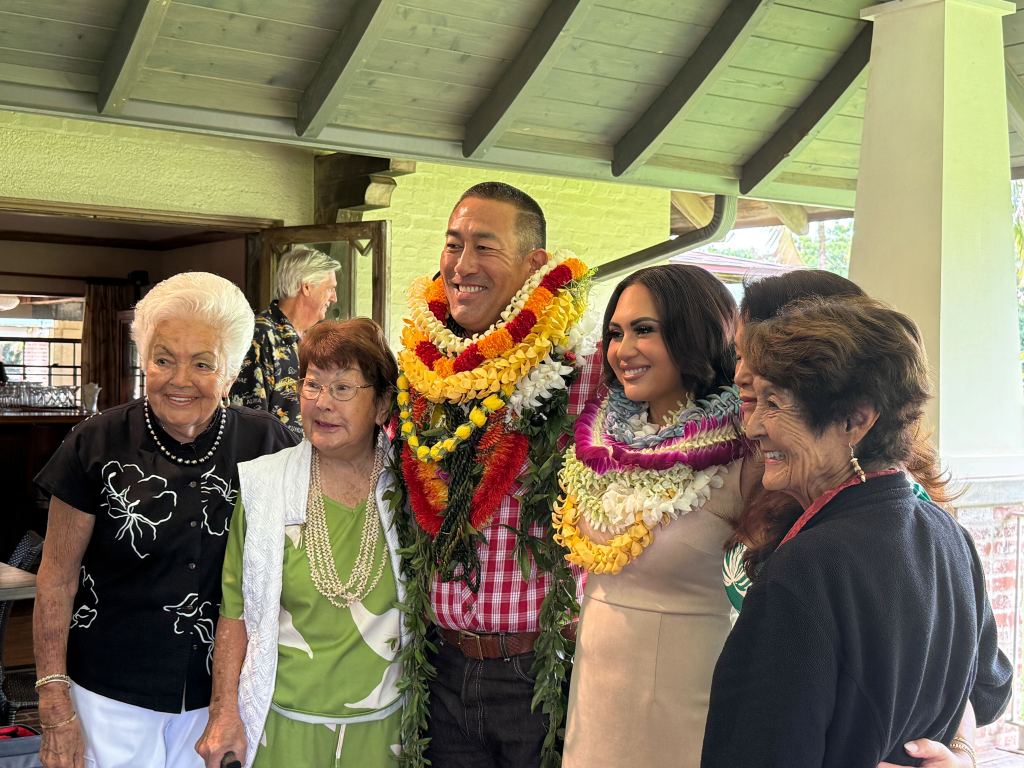
Born in Hilo, Kawakami is a graduate of Kaua‘i High School, Kaua‘i Community College and Chaminade University. His family founded and operated the Big Save grocery chain on Kaua‘i until 2011, when it was sold to the parent company of Times Supermarket.
During his State of the County address last week, Kawakami touted his administration’s progress on affordable housing. The county has become the largest affordable housing developer on the island after building hundreds of units in the Lima Ola, Hā‘upu View, Koa‘e Makana and other projects on county land. Thousands more units are planned.
Kawakami’s administration, with council support, overhauled the county’s property taxes so that vacation rentals, hotels, resorts and non-owner-occupied residences pay higher rates and owner-occupied residences pay the lowest rates.
“That is structural reform, not just rate increases, and it reflects a tax system built around Kauaʻi’s values,” he said during his address. “That protects our residents.”
During the pandemic, he garnered statewide attention for imposing the toughest restrictions in the state, such as a nightly curfew, highway checkpoints and electric monitoring bracelets to track the movement of tourists.
He also posted a variety of videos on social media — everything from showing off his dance moves to making a mask out of a T-shirt to demonstrate how to properly remove disposable gloves. He continues to use social media to share weekly video updates about county activities. He’s also known for pitching in for his staff in and among his regular duties. He’s helped crews fill potholes, driven landfill compactors, shadowed inspectors, assisted building permit clerks, conducted home visits with the elderly affairs office and served as a park caretaker.
‘A Positive, Younger, Political Force’
For years Kawakami has publicly considered running for higher office. In fall 2024, his office confirmed that Kawakami would seek Kaua‘i’s sole state Senate seat, held by Senate President Ron Kouchi for the last 16 years. Kouchi’s office held a gathering at The Pacific Club in Honolulu in Kawakami’s honor, with individual tickets costing $1,350.
But with Kouchi not vacating his seat just yet, Kawakami’s Senate campaign declaration filed with the state Campaign Spending Commission now seems to have been a placeholder until he announced his lieutenant governor run.
“Things in politics and in life change, and people have to be able to adapt as well. And this is no different than that,” Kawakami told Civil Beat Tuesday.
Gary Hooser, a former Kaua‘i council member and senator who unsuccessfully ran for lieutenant governor in 2010, said he believes Kawakami has a decent shot because he has the statewide name recognition and funds necessary to win such a large race.
“He’s seen I think by most people as a positive, younger, local political force,” Hooser said.
Aside from Hooser, the other Kaua‘i candidate to run for lieutenant governor in recent years was former Mayor Bernard Carvalho, who received 18% of the Democratic vote during the 2018 primary. Josh Green advanced to the general election in that race, with 30% of the vote.
Kawakami told Civil Beat that he hopes to work with Green as LG.
“His initiatives align with our initiatives here because at the end of the day, he’s trying to address housing, he’s trying to address cost of living, he’s trying to tackle homelessness, and these are all priorities we’ve been working on,” Kawakami said.
While Luke has not been charged with any wrongdoing, and has denied she took the money, political observers say that by admitting to failing to report thousands of dollars in campaign donations, she damaged her reputation.
“I think he has avoided being painted by the corruption and ugliness that currently wraps around Sylvia Luke,” Hooser said. “There’s no question about that.”
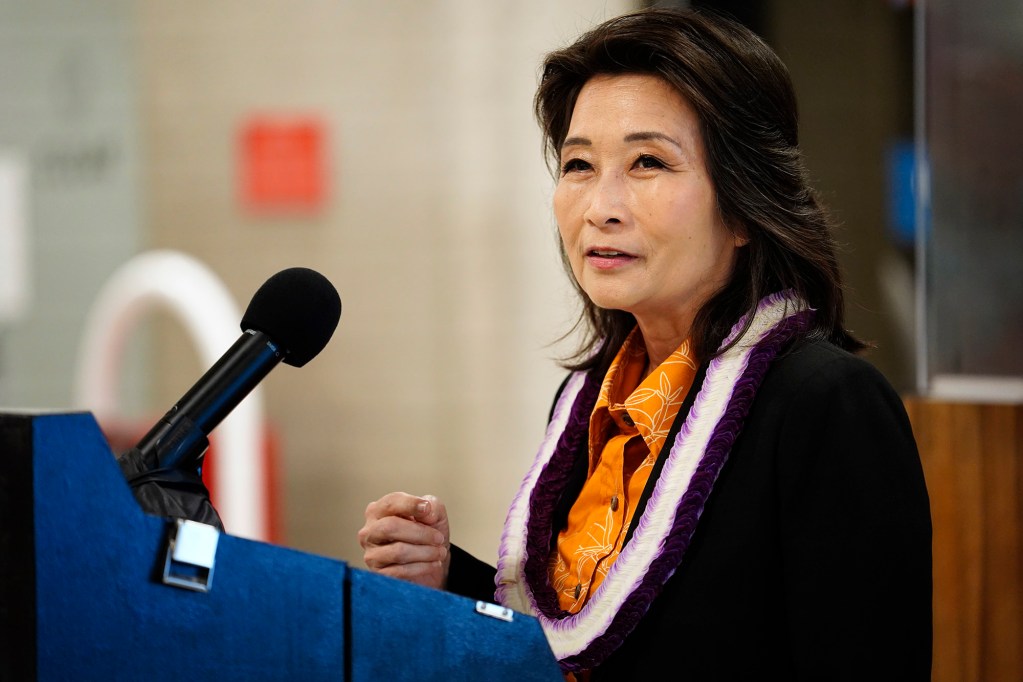
During the last lieutenant governor election, a super PAC backed by the Hawai‘i Regional Council of Carpenters and Pacific Resource Partnership spent over $2 million to support Luke’s then-opponent Ikaika Anderson.
Andrew Pereira, director of public affairs at PRP, said the organization didn’t want to comment on Kawakami’s political future but that it would like to see a lieutenant governor candidate with honesty, integrity and a record of public service. Mark Anthony Clemente, political director of the Hawai‘i Regional Council of Carpenters, said in an email that the union has not taken a stance on this year’s lieutenant governor’s race. The carpenters union has contributed to Kawakami’s campaigns in the past though.
“More broadly, when we evaluate candidates for statewide office, we look for honest and caring leaders who understand the importance of strengthening Hawaiʻi’s workforce, supporting responsible housing development, investing in infrastructure, and ensuring that local workers have access to good-paying jobs with strong training opportunities,” he said. “Those issues are critical to our members and to the long-term stability of Hawaiʻi’s economy.”
Since announcing her unreported campaign donations earlier this month, Luke has still received statements of support from the University of Hawai‘i Professional Assembly, ILWU Local 142, United Public Workers AFSCME Local 146 and the 13,000-strong Hawai‘i State Teachers Association.
“LG Luke has a long-standing track record as a no-nonsense, straight-shooting legislator and former chair for the House Finance Committee, and there is no reason to believe she is not being truthful with the public,” UHPA said in its statement Monday.
Colin Moore, a political scientist at the University of Hawai‘i Mānoa, said Luke will need to keep her core supporters on board if she does decide to run again. It’ll be a telling sign early in the race, he said, if they decide to stay out of the race or not endorse her.
“That can indicate that they really are concerned that she can’t win,” he said.
Ultimately, the lieutenant governor’s race will come down to public trust, charisma and name recognition, Moore said. Lieutenant governors carry out duties assigned by the governor and run the state when the governor is away or unable to fulfill the office’s duties. Beyond that, the office doesn’t carry much power and is generally seen more as a stepping stone on the path to becoming governor one day.
“It’s convincing voters that if the governor is away, I can be trusted to lead in a crisis,” Moore said. “I think that’s why this is particularly tough for Sylvia Luke because trust is really the only thing that voters are voting on for the lieutenant governor.”
Kawakami said people want leaders they can relate to, and he thinks people can see that in him. He’s open about his flaws and vulnerabilities. If he tells a community a wrong date for a bridge reopening, he’ll go back to say he was wrong.
“I think it’s the small things like that, that really help to rebuild trust because oftentimes I think people in leadership positions think that people should just trust us,” he told Civil Beat. “But so many people have been hurt over the years.”
Major Backers Include Honolulu Developers
Kawakami had $256,333 on hand, according to his latest campaign spending report. During this election period, which began the day after the last general election, he received $296,985 in contributions and spent $126,157.
Luke won her 2022 lieutenant governor seat with a whopping $1.4 million in contributions — twice the amount that Green had when he won lieutenant governor in 2018. She had $641,350 on hand at the end of 2025.
Moore said Kawakami has done well for a neighbor island mayor when it comes to fundraising, despite Kaua‘i being the smallest county. During his last re-election campaign, he brought in $209,795 — more than 21 times the amount his next-highest opponent received. This time around, his approach to Covid and his social media videos contributed to his statewide presence.
“I suspect that he will be able to raise the money he needs,” he said.
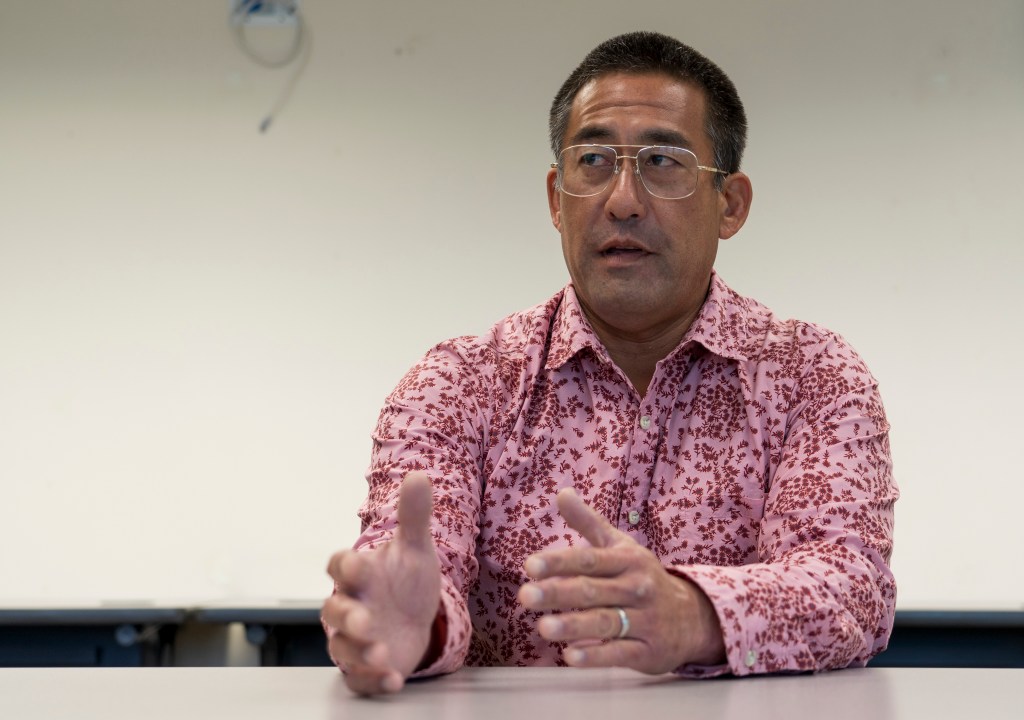
The vast majority of Kawakami’s contributions for this election period came in during August and September 2024, right when he confirmed his plan to run for Kouchi’s Senate seat.
Kawakami’s largest donors gave $4,000 each, the maximum individual contribution for mayor or state legislative races. The maximum for the lieutenant governor race is $6,000. His top donors include former First Hawaiian Bank CEO Walter Dods, Lorraine and Thomas Mull of Princeville, Ironworkers Local 625, Central Pacific Bank State Political Action Committee, Honolulu-based attorney Mitchell Imanaka, Hawaii Regional Council of Carpenters, Dowling Company Inc.’s Everett Dowling, Gary’s Service Vice President Shelley Konishi, ABC Stores President Paul Kosasa, California-based Somers West Corp.
Other notable donors include Jeffrey Stone, Chynna Stone, Kendall Kim and H. Burkley Showe of The Resort Group, the Honolulu-based master developer of the Princeville Resort. Honolulu-based developer Stanford Carr and his wife, Kathy, each gave $2,500. Eleven high-level employees of the Honolulu-based Bowers & Kubota architecture and engineering firm collectively gave $10,000. Kyle Watase, vice president of Mark Development, which has built several housing projects on the island and is currently building 96 rental units in Līhu‘e, gave $2,500.
Patrick Kobayashi, Alana Pakkala Kobayashi and Susan Kobayashi of Honolulu-based developer Kobayashi Group collectively gave $4,000. Mohannad Mohanna and Michael Costa of Highridge Costa each gave $2,500. Highridge Costa will be re-developing the Hawai‘i Public Housing Authority’s 36-unit Kapa‘a Homes. Former Hawai‘i Community Foundation CEO Micah Kāne gave $2,000.
Aloun Farms President Alec Sou gave $2,000, Shioi Construction Chairman Conrad Murashige gave $2,500, and Kikiaola Land Company gave $1,000.
Civil Beat’s reporting on Kauaʻi is supported in part by a grant from the G. N. Wilcox Trust.

